
EDITION 68 - AUGUST 24, 2026

Your window into the stories, history, and ongoing work to preserve Yosemite’s climbing legacy.
A Note from the Editor
Yosemite Valley continues to remain in the 90s while Tuolumne Meadows has stayed in the 70s, although the dry meadows and recent change in the crisp cool air herald the welcome reprieve of Fall’s approach.
Taylor Martin recently finished another new route in the Valley, this time in the Ribbon Falls Amphitheatre. Of the new route Martin wrote: “9 new pitches of climbing in the A3 range. The climb is a very direct line up the wall and sports a fun mix of free and aid climbing… This took me 5 days of climbing, and I chose to fix almost entirely to the summit and rappel down to a warm bed each night. I’m quite pleased with how the line turned out, and it should be a fun repeatable experience for people looking to do loads of beaking in the A3 grade. This climb requires a lot of them!”. She named the new route Destiny Express, 5.10 A3.
Tree Removal along Glacier Point Road and Big Oak Flat Road continues between 8am and 4pm, with traffic delays averaging 15 minutes. Crews are working to reduce the amount of dry fuels to mitigate wildfire risk and to remove hazard trees from the roadsides.
The Mist Trail continues to detour to the John Muir Trail during ongoing repair work on the lower sections from Monday to Thursday between 7am and 3:30pm through to the end of October. The trail continues to be open Friday to Sunday and in the evenings, unless the trail crew is unable to make the trail safe for the evening on some days.
Tree clearing and ditch digging along the road in Tuolumne Meadows continues to be underway for water and wastewater infrastructure upgrades. Traffic delays have been minor to nonexistent.
August 22 was Junior Ranger Day in Yosemite, with free special programs occurring at the Mariposa Grove, Tuolumne Grove, and throughout Yosemite Valley beginning at 9am. Some of the programs included Naturalist Walks, Mule Packing Demos, Photography Walks, Bear Walks and Ranger Talks. In front of the Exploration Center, Activity Tables included demonstrations from Climbing Rangers, Interpretation, Hospitality, Geology, and the Indian Cultural Program.
The Yosemite Art Trail begins today on August 24 and will continue until August 30. There will be art themed drop-in programs with opportunity for visitors to create their own Yosemite inspired artworks with hands-on activities. Gatherings will occur daily during this time at the Tuolumne Grove Trailhead from 2pm - 3:30pm, the Yosemite Valley Welcome Center Plaza from 3pm - 4pm, at the Tuolumne Meadows Parsons Memorial Lodge from 10am to 4pm, and at Glacier Point from 9am to 3:30pm. Come celebrate the beauty of Yosemite and express your creativity!
In the spirit of the recent Annual Tuolumne Meadows Poetry Festival and the current Yosemite Art Trail, both of which have events hosted by the historic and inspiring space of the Parsons Memorial Lodge, I use this week’s feature to give a brief overview of some of the special historic buildings still being used in Yosemite National Park.
Miles Fullman
Editor, YCA News Brief
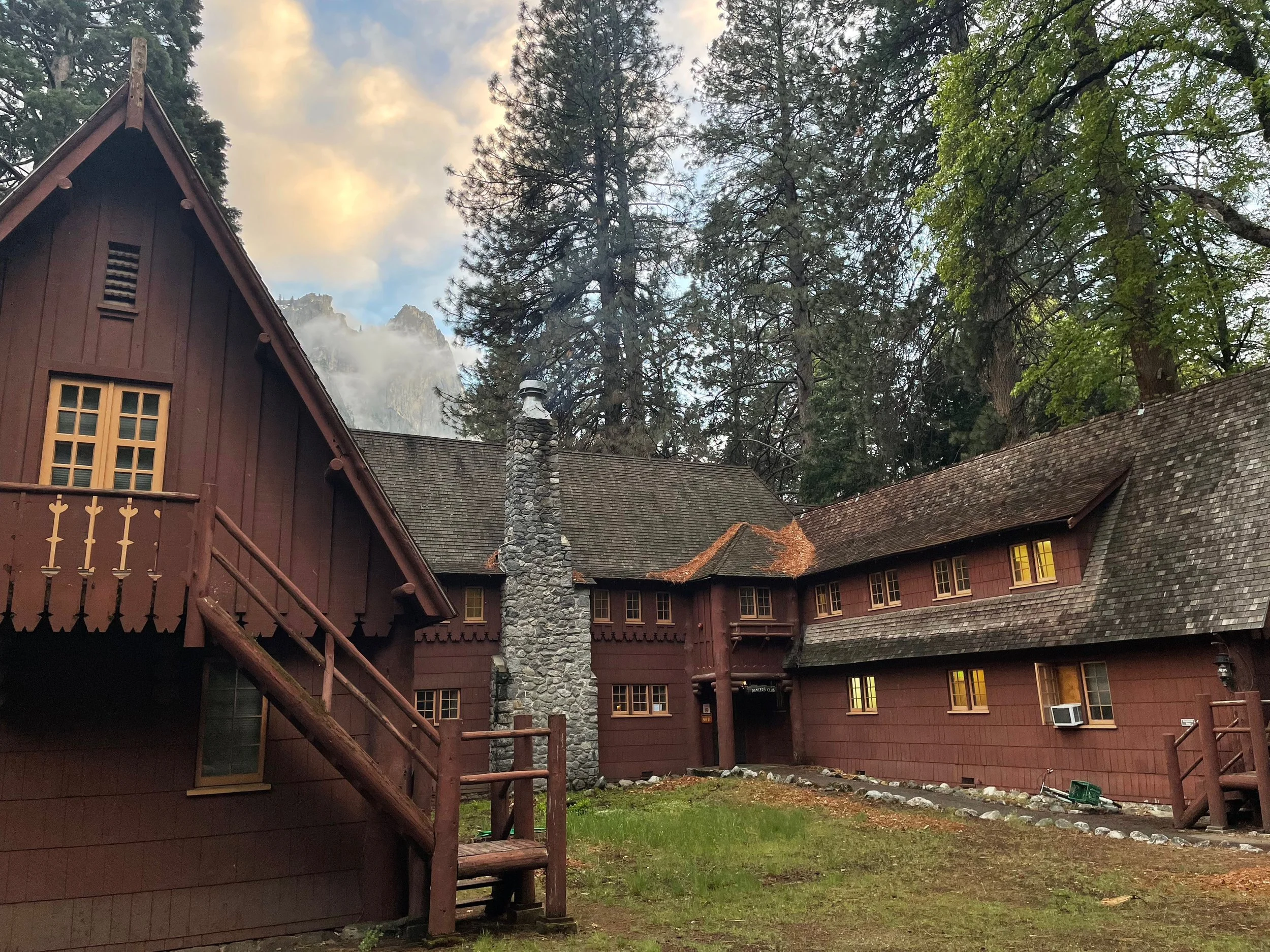
The Yosemite Valley Ranger’s Club in Springtime. Photo: Miles Fullman
Historic Places in Yosemite National Park
Yosemite National Park is home to numerous buildings and places of historic significance. Five buildings in Yosemite have been designated as National Historic Landmarks, the highest distinction possible within the National Register framework. These five landmarks are Wawona Hotel, LeConte Memorial Lodge (now renamed as the Yosemite Conservation Heritage Center), Ahwahnee Hotel, Ranger’s Club, and Parsons Memorial Lodge.
Other locations have been designated as National Historic Places and include the Yosemite Museum (the first structure to be built as a museum in the entire National Park system which opened in 1926), the Ansel Adams Gallery (which has operated since 1902), the Chapel (the oldest structure in Yosemite, built in 1879), and several others.
Yosemite Conservation Heritage Center (Formerly LeConte Memorial Lodge)
LeConte Memorial Lodge was designed by architect John White and constructed in 1903 in a Tudor revival style below Glacier Point where Curry Village is now. Fifteen years after its construction the proprietoress of Curry Village requested that the Sierra Club move the building so she could meet the demand that outstripped the available tent cabins she had. The Sierra Club finally agreed and the structure was moved and rebuilt according to the original plans and reopened in its current location in 1919.
The building is regionally significant for being the principal foothold of the Sierra Club in the mountain range which they took their name from and were most active in. The club used the building to disseminate information to visitors and club members and garner support for their conservationist activities. The building is still used to this day by both the National Park Service and the Sierra Club as a meeting place and is open to the public for appreciation of its building and use of its mountain library.
Ahwahnee Hotel
The Ahwahnee Hotel, designed by Gilbert Stanley Underwood and opened in 1927, is undoubtedly one of the most iconic buildings in Yosemite. It stands as an example of the rustic style that is emblematic of national park architecture. Soon after opening, the hotel received many dignitaries and famous people who came to visit the park and stay in the grand hotel. In 1943 the hotel was temporarily taken over during the war by the U.S. Navy for use as a convalescence hospital for wounded soldiers. Today the hotel remains one of the most recognizable buildings in Yosemite Valley and the National Park Service system as a whole.
Ranger’s Club
Stephen Tying Mather was a millionaire who lobbied for the creation of the National Park Service (which started in 1916) and later became its first director. He had a soft spot for Yosemite, and in 1915 he donated funds to purchase Tioga Road so that it could be transferred to federal ownership. By 1919, Yosemite had 21 civilian rangers who replaced the military personnel who had manned the park prior to their service. Recognizing the need for housing which would encourage a professional workforce in the park, Mather had the Ranger’s Club constructed in 1920. The building, now over a century old, is still used to house park rangers to this day.
Parsons Memorial Lodge
The Parsons Memorial Lodge is a beautiful stone and log built structure nestled in Tuolumne Meadows, a 20 minute walk from the road. The stones for the building were gathered nearby, and the structure was built in 1915. The original roof beam structure still supports the roof against the winter snows which can be very heavy. In 1973 the National Park Service acquired custodianship of the building from the Sierra Club. The Parsons Lodge is one of the earliest examples of the rustic style which would become iconic in park service architecture. The Lodge is named after Edward Taylor Parsons, who joined the Sierra Club in 1900 and eventually became its director. The building was erected for use as a club headquarters and a library and reading room, for control over Soda Springs, and for access to the high country. The Lodge is still used throughout the summer for sharing music and poetry as well as other events.
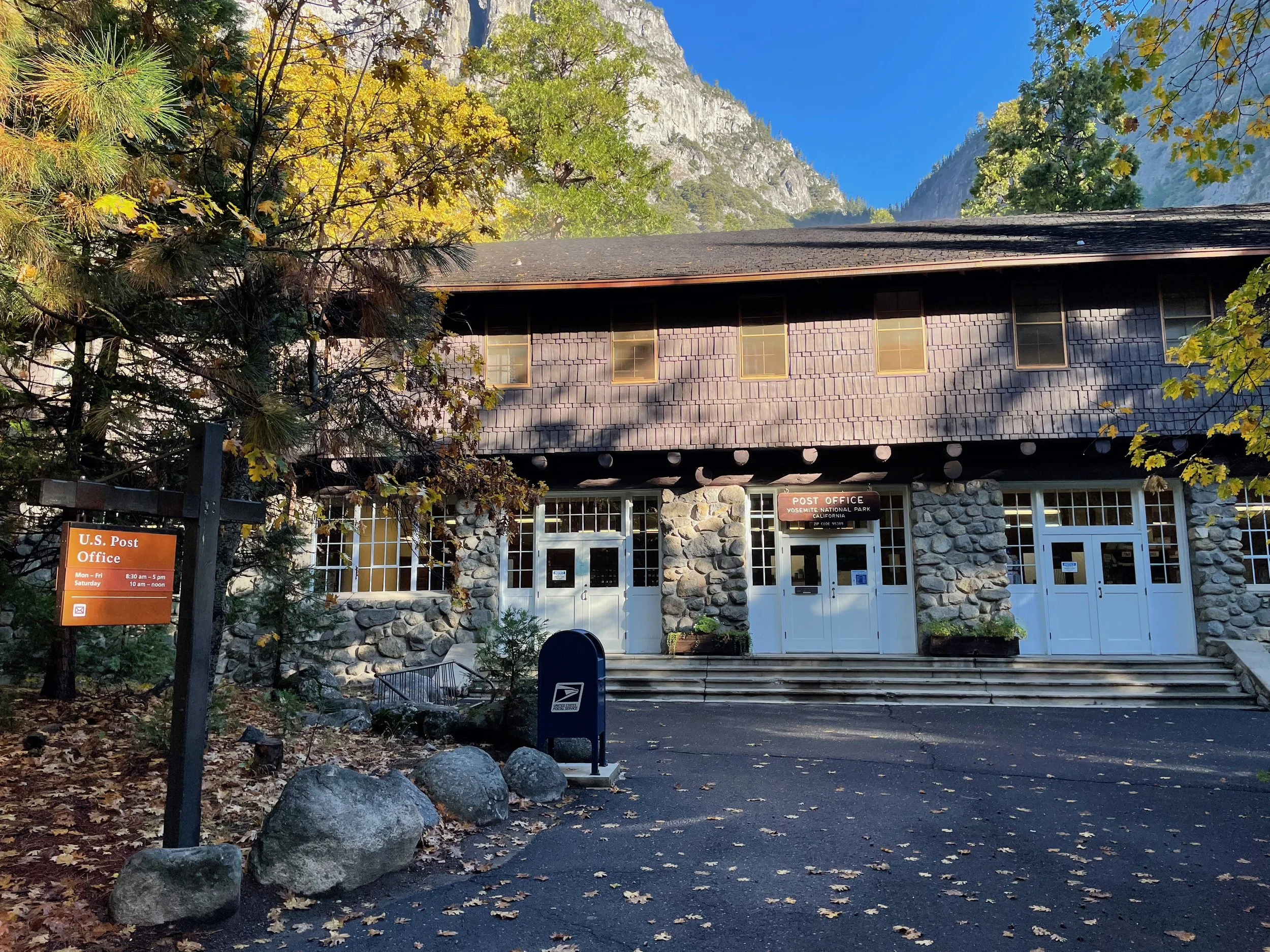
The Yosemite Valley Post Office opened in 1925 and is another great example of NPS Rustic Style architecture. Photo: Miles Fullman

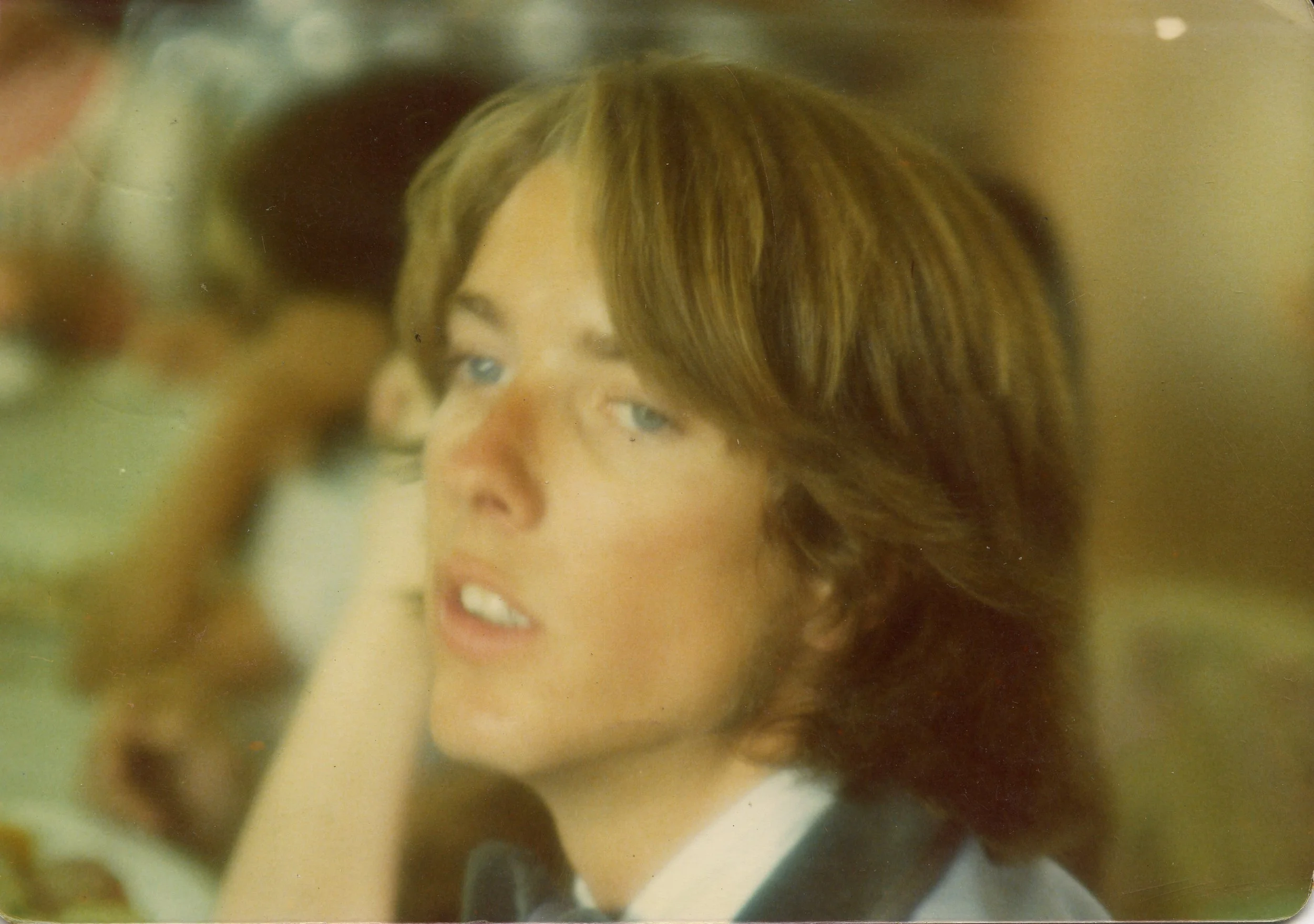
A young Chris Falkenstein. Photo: Ken Yager Collection
Chris Falkenstein
I first heard of Chris Falkenstein in 1977 through a couple of my climbing partners. They talked about him being the most gifted free climber they had ever climbed with. This was high praise coming from Bob Finn and Donny Reid whom I considered to be very good free climbers. He is credited with being the first person to free Pancake Flake on the Nose of El Capitan. At 5.10a it is not a big deal these days, but Chris did it in the early 1970s. It is an extremely exposed pitch being right above the Great Roof. It was gutsy considering he was wearing E.B.’s and protected it with hexes and stoppers.
Eight years later, I took a ski instructor job at Badger Pass. I was pleased to see that Chris was working ski patrol that year. He was the only employee that I had met before, and we spent a lot of time together skiing. He looked the same, as when I had met him previously. He was a mostly quiet person and could often be overlooked in a crowd. He preferred to stay away from the limelight. Medium height, slim build, Chris had thick sandy brown hair and big white teeth often seen in a smile under his mustache. Chris loved photography. He also loved computers and often helped me fix mine, he helped me set up the YCA website. Chris was generous with his time and would help his friends. He would also post important information about Yosemite National Park. Often the information was to keep people out of trouble. He shared road closures, extreme weather reports, fire information and any other events that may impact the local population and park visitors. If Chris didn’t agree with something, he would speak up. Throughout our friendship he remained true to his beliefs.
I was impressed by Chris’s skiing. It looked effortless for him, and it did not matter what kind of snow he was skiing. Even in the worst crusty snow, he skied fast and in perfect form. Chris was one of the most natural athletes I have ever met. He excelled at alpine and cross-country skiing, climbing, ice hockey, and mountain biking. He was someone who was good at anything he tried.
In 1991, KPIX TV out of San Francisco hired both of us to help them cover Mike Corbett and Mark Wellman’s climb of Tis-a-ack on Half Dome. Chris was hired to take video coverage on the wall. My job was to assist him with getting the footage and hoof it down to the Valley floor to the satellite truck in time to transmit it for the evening news. My other tasks were bringing supplies and battery packs back up to the tv crew camped on the shoulder below the sub-dome. It was cold and there was a little bit of inclement weather which slowed Corbett and Wellman down. They had planned for a week that stretched out to 13 days. I ran down to Valley floor and back up 14 times in 13 days. By the end it felt effortless and was only taking me about 45 minutes to go up the Death Slabs from Mirror Lake to our camp.
Chris and I started up the climb with them and filmed on the first 3 pitches. Towards the end of the climb, Chris and I rappelled in from the top and were able to get some exposed long shots that were quite impressive. As the climb dragged on, we had to make up stories for the news to keep it interesting. The best story we did was a piece on all the trash that had been dropped from the Cables Route in the last 120 years. The trash landed in a concentrated spot, mostly consisting of cameras and water bottles. Nowadays you can add cellphones to that list.
It was a fun time. There was a lot of storytelling with beers around the campfire at the end of the workday with reporters and tv crews. I enjoyed learning about the tv news business. Ken Bastida, the KPIX News reporter, was an entertaining guy and I found his stories fascinating. Chris and I worked together every day, often just the two of us because of the technical nature of getting footage. We worked well together and bonded. We both had a good work ethic and worked hard during the day, only unwinding when the work was done.
A couple years later Mike Corbett asked me to video him and take photos of him climbing his 50th route on El Capitan. John Flynn, a writer for the SF Examiner, was going to climb it with him. He was going to write about it for Image Magazine, a supplemental insert for the SF Examiner. I needed to find a climbing partner who could help me and I was able to recruit Chris. I had never climbed a climb with him before. We had rigged together and spent time on the rock before, so I knew he had the skills. Another reason I asked him was because of his photography skills, which were much better than mine. To my surprise, Chris agreed and we started getting our gear together. We decided I was to bring my video camera, and he would bring his camera for taking stills. Murray Barnett a comical, fun-loving character asked if he could join us for the climb. I knew Murray had climbed El Cap 6 or 7 times before and figured he knew what he was doing so Chris and I agreed it would be nice to have more help. Murray had the nickname of Murky Bongwater, an infamous name that was linked to many outrageous exploits. These exploits were generally on the edge of legality, and he became the subject of many campfire discussions.
We decided to climb as a team ahead of Mike and John so we could get better video and photos showing the exposure of climbing El Capitan. We cast off on the lower section of the Salathe Wall with Corbett and Flynn climbing separately behind us. Chris and I figured out quickly that Murray didn’t lead. In fact, there was a lot he didn’t know, and we realized we would have to keep an eye on him, so he didn’t do anything dangerous. Murray was entertaining and he always had a happy demeanor. Murray would say the most outrageous and entertaining things. He kept Chris and I laughing all day long and we never regretted having Murray along.
Chris and I took turns leading while the other was filming. Murray just jumared and I would have him help with the hauling. It was challenging to film and still climb ahead of them as a party of three. Chris was the perfect partner, and we were able to climb at the same pace as Mike and John without holding them up. We brought portaledges so that we could always stay one rope length ahead of the guys below. Our first hanging bivouac was at the start of the Integral Connection. It is at the start of the traverse and blank crack-less section. We each picked one of the horizontal bolts to hang our ledges from. It was getting chilly and all three of us put on our matching red North Face jackets that had been given to us for the climb. I set up my portaledge quickly and started filming Mike and John climbing to Grey Ledge and setting up their camp for the evening. Chris set up his ledge to the right of me and got in to rest. Murray started setting up his ledge to the left of me. While I was filming there was the continuous sound of aluminum poles clanking together which was ruining any sound that I could pick up. A bit annoyed, I swung the camera up to Murray and he had a tangled mess and was quizzically looking at it trying to figure out how to put it together. He had been working on it for 10 minutes and had made no progress, I started to giggle and swung the camera back down to the guys below and decided not to complain about the noise. I continued to swing the camera up occasionally to document Murray’s progress. I was dying at this point and Chris was giggling too. I finished filming and looked over at Murray. He had worked on it for over an hour and had made no progress. I put the camera away and swung over to untangle his mess. He was thankful after I set it up for him. I asked him if he had slept on a portaledge on the 6 El Cap routes he had done. He said lots of times, but he had never set one up before. I was amazed that no one taught him how and I asked more questions. Murray wasn’t really a climber; he knew how to jumar safely and that was about it. He was funny as hell though and he kept us entertained. Murray mentioned that on his last route he had learned what a pitch was. He assumed when his partners said something like, “That was a good pitch,” that they were pitching stuff off the wall and Murray would try to spot whatever it was that they had thrown off. Near the summit he finally asked, “By the way, what is a pitch?” He was surprised that it meant a rope length of climbing.
The next morning, we started breaking down our hanging bivouac and packing our haulbags. This was only the second time that Chris had climbed El Cap. He had done the Nose in 1972, I believe. Things had changed since he had last climbed it. Shoes were better, we had modern cams and devices to belay safely. Sleeping in hammocks was passe and we enjoyed the comfort of having portaledges to sleep on. Wall climbing was a lot more popular than it was in the 1970s. Not only had the gear changed but the way to deal with human waste was different than before. There were so few climbers that people rappelled down to the side of the route and just pulled down their pants off, letting it loose. Ropes were pulled up so that they were not in the way. The routes were done so rarely that the routes were cleaned by rainstorms by the time another party got on the climb. This worked well until the 1980s. It was getting messy up there from the increased climbing activity. Climbers started going in paper bags and throwing them out from the wall to land on the ground for later retrieval when they had dried out. The problem was they wouldn’t always clear the wall and would get hung up on the way down. It continued to get worse as these bag bombs became more frequent. Chris had never pooped in a bag before and after completing it he asked what to do next. I said roll the top of the bag up and throw it out from the wall. Well Chris only heard the roll the top of the bag up part. He proceeded to just drop it without throwing it away from the wall. He had forgotten that Mike and John were laying in their sleeping bags catching a last few minutes of rest on Grey Ledges below. I watched with horror as it headed straight towards the sleeping climbers below. It landed inches to the left of John Flynn’s face with a loud bang and thankfully it stayed intact. John’s eyes popped wide open and he bolted upright wondering what happened. Murray started laughing and yelled, “Incoming!” John was a good sport, and he grabbed the bag, tossing it off to continue its journey. Murray took it upon himself to yell, “Incoming!” every time a poop bag was thrown off the wall. Murray was worth his weight in gold for entertainment value alone. The rest of the climb went smoothly, and the nights were spent in laughter. Murray was basically a self-propelled haul bag. He was careful and was safe enough to be responsible for himself.
I don’t think Chris or Murray ever climbed El Cap again. It was one of my more memorable experiences up there in large part due to Murray’s comedic nature. Chris and I were in stitches the whole way up. I never climbed with Chris again, but we did spend a lot of time together as we both lived in El Portal and were neighbors for about 25 years. Nearly 50 years after I first met Chris, he succumbed to cancer after a long battle. Climbing has lost another good one. Take care buddy, I miss you.
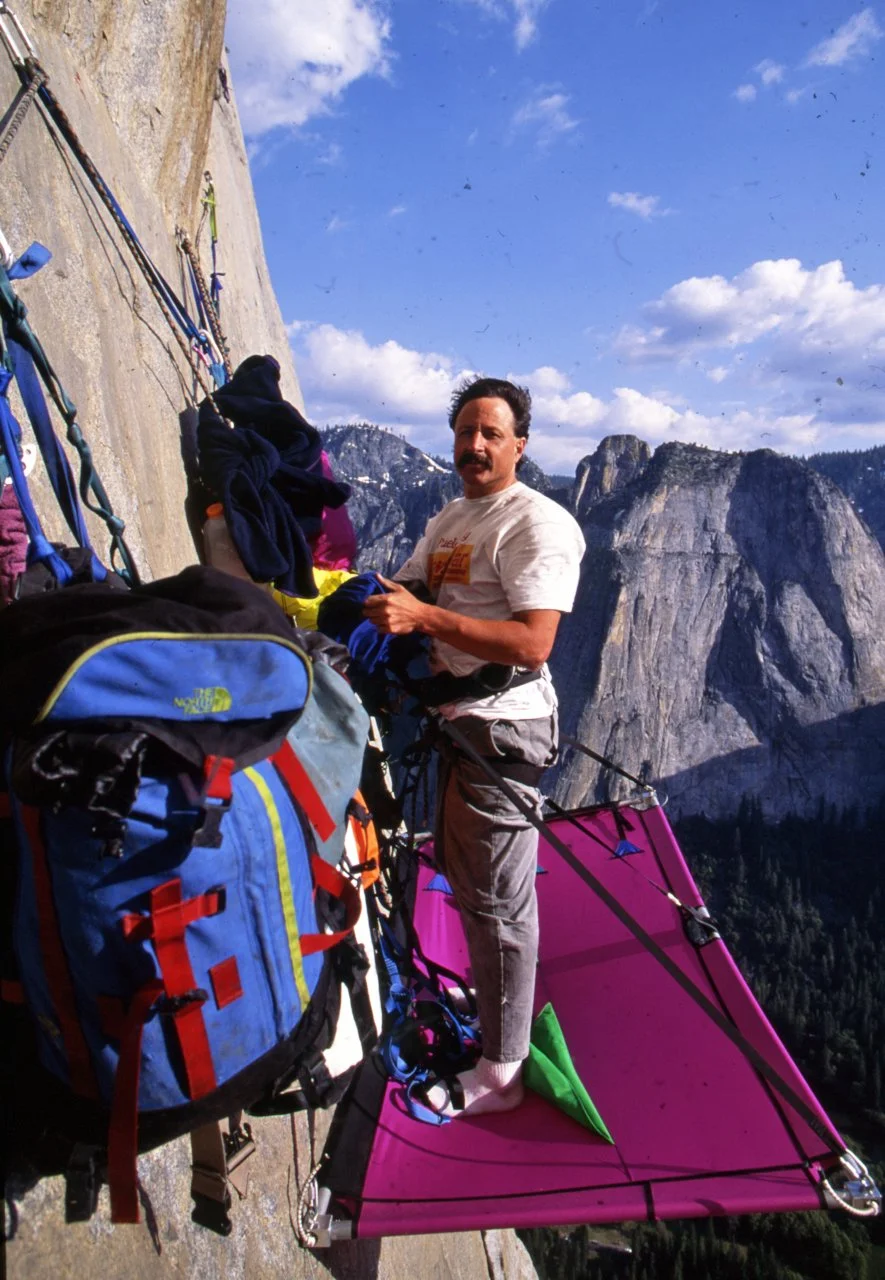
Ken Yager standing on a portaledge during the El Capitan climb described above. Photo: Ken Yager Collection
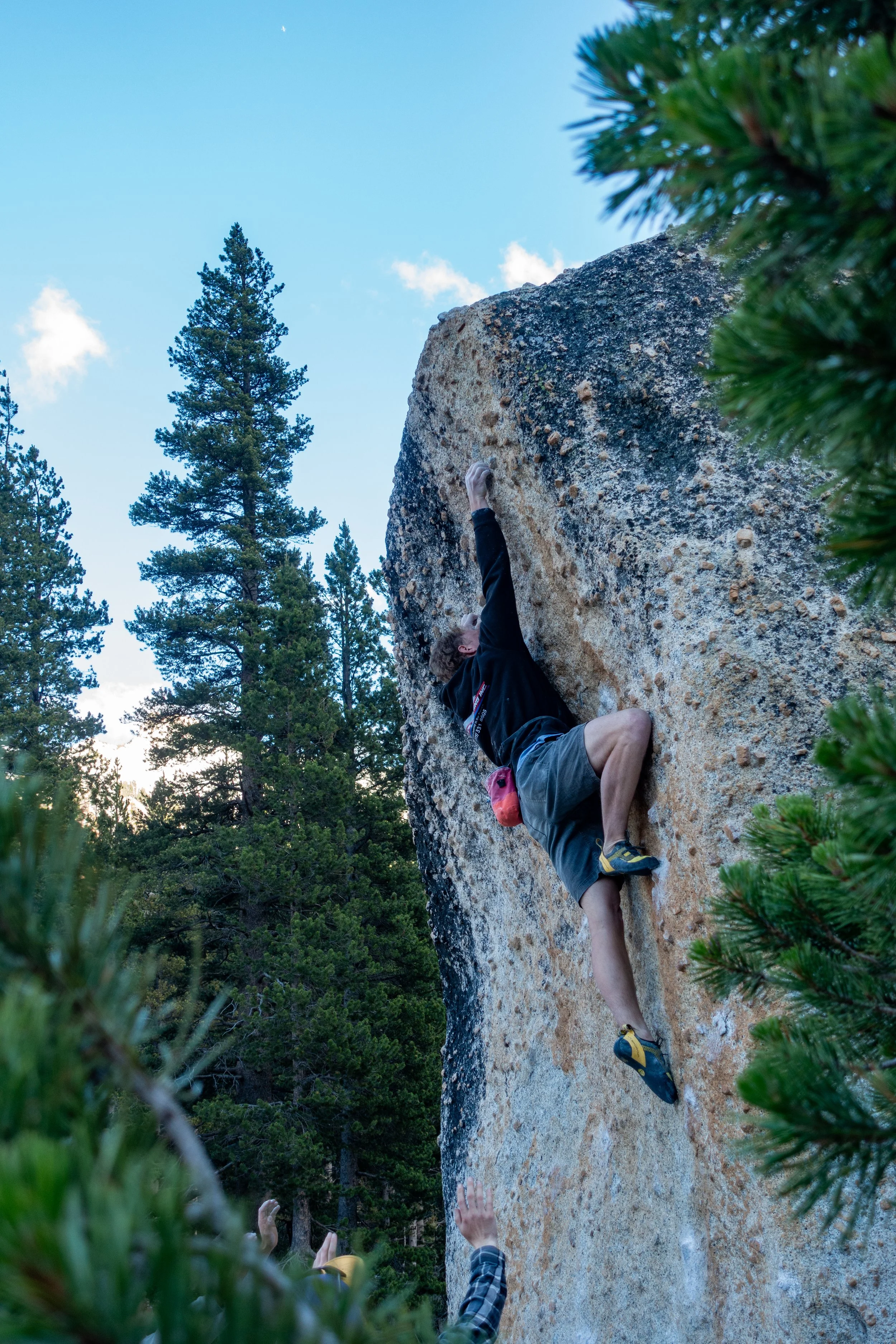
PHOTO OF
THE WEEK
Matt Barnard climbs The Scoop in Tuolumne Meadows. Photo: Miles Fullman

Stay up to date on the latest climbing closures in effect!
Get your permits, do your research, and hit the wall!
Visit the Yosemite Climbing Museum!
The Yosemite Climbing Museum chronicles the evolution of modern day rock climbing from 1869 to the present.
The YCA News Brief is made possible by a generous grant, provided by Sundari Krishnamurthy and her husband, Jerry Gallwas