
EDITION 67 - AUGUST 17, 2026

Your window into the stories, history, and ongoing work to preserve Yosemite’s climbing legacy.
A Note from the Editor
A storm system moved through the Sierra for a few days this past week, bringing rain to the high country and creating eight new wildfire starts due to lightning on the early morning of August 12. As of August 13, several of these starts remained uncontained. The parkwide fire restriction remains in place for anywhere below 8,000 feet and above 9,600 feet.
Thankfully, the storm cycle also brought relief after the heat wave the park had been suffering, lowering temperatures in the Valley down into the 80s for the rest of the week with cooler temperatures in Tuolumne.
The wider Yosemite community recently lost two beloved climbers. Fiona Layton died in a rappelling accident in Norway a few weeks ago. Last week, local Sierra climber Jake Whisenant fell to his death while climbing a first ascent in Sequoia Kings National Park. Both of them had a hugely positive impact on the broader Yosemite climbing community and they will be sorely missed. Our hearts and thoughts go out to their families and friends and we will continue to carry them with us.
Last week, federal contractors rolled into Big Bend National Park with heavy machinery and began to bulldoze roads through National Park land to begin construction of the border wall. This marks the first use of federal border-construction waiver authority inside National Park boundaries.
The Department of Homeland Security has waived numerous environmental and historic preservation laws to facilitate the construction of border facilities through national monuments and other federally protected lands. Big Bend is the first National Park to have its protections waived for this purpose.
The Parsons Memorial Lodge Summer Series has been ongoing every weekend throughout the summer and culminated in its 30th Annual Tuolumne Meadows Poetry Festival this past weekend on Saturday August 15 and Sunday August 16, with morning poetry workshops and afternoon music and readings from featured poets. Parsons Lodge is supported by the Yosemite Conservancy and your donations can help preserve the beautiful building and its wonderful traditions.
For this week’s feature I spoke with Katy Stockton about her transition from working as a first responder for Yosemite Search and Rescue to working for Responder Alliance and developing and distributing tools for fostering stress resilience among first responders and outdoor professionals.
Miles Fullman
Editor, YCA News Brief
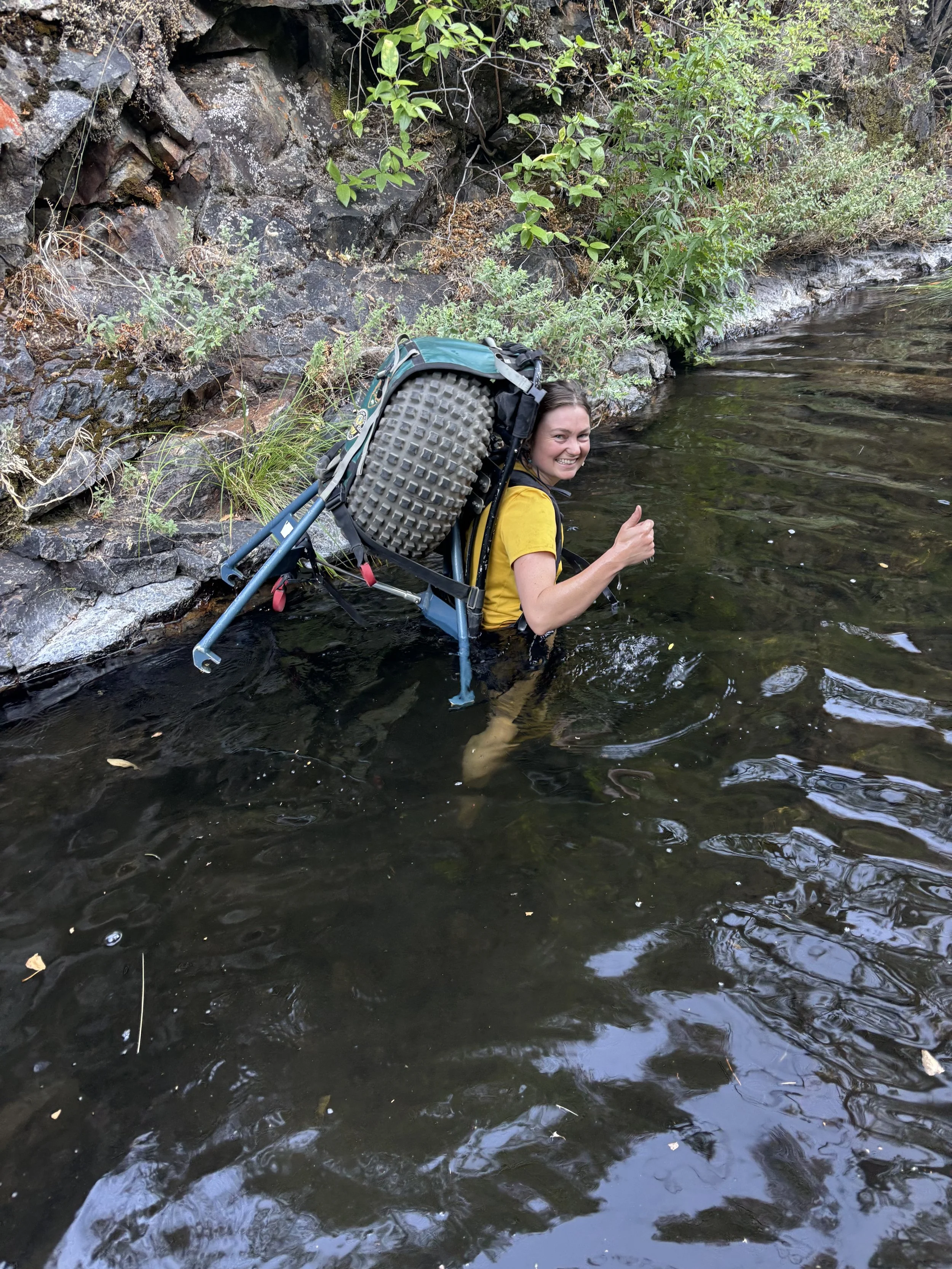
Katy Stockton carries the litter wheel through the lower Merced on a rescue. Photo: Josh Stricker
Beyond the Rescue with Responder Alliance
Katy Stockton first came to Yosemite in 2022. She spent two summers working for Yosemite Search and Rescue on the Tuolumne Meadows site before moving down to the Valley site for another two seasons. After volunteering her time as a first responder in the park, she shifted her focus to working for Responder Alliance where she helps to develop and distribute resources for promoting stress resilience and preventing burnout among other first responders and outdoor professionals.
Responder Alliance is a small female run organization founded and led by Laura McGladrey, who is currently a Nurse Practitioner and a clinician with the Stress Trauma Adversity Research and Treatment Center. McGladrey’s mission has been to lower the alarmingly high rates of burnout, substance abuse, divorce, and suicide among first responders by developing better resources to mitigate stress injuries caused by the traumatic nature of their work.
Responder Alliance researched and developed a new format for post incident support. The most common current practice for supporting first responders post incident is a reactive method composed of a single After Action Review or debrief. Responder Alliance has instead developed what it is calling a proactive method, which encourages responders to track their stress and burnout levels over a longer period of time. This method engenders increased awareness and strives to aid responders in monitoring their own capacity for continued emergency response.
Stockton is not the only member of the organization who formerly worked in emergency response. Of the three women currently running the company, Stockton is one of two former YOSAR members. Josie Mckee, current Director of Education also formerly worked in the Valley for Yosemite Search and Rescue. She is currently pursuing a masters in Performance Psychology and providing mental training to athletes.
Historically, Yosemite Search and Rescue has utilized Responder Alliance resources to perform three in-season check-ins with SAR-siters, monitoring levels of stress as the busy season progresses. Moose Mutlow is also an instructor for Responder Alliance, teaching incident support to various first response teams around the country. Additionally Mutlow offers his own Family Liaison Officer training to Yosemite National Park employees, courses which are designed to train people to support families of the injured or deceased when accidents happen in the park and also to prevent stress injury among responders.
Yosemite has had a variety of mental health resources available to first responders over the years. The Yosemite Conservancy worked to source funding to provide free mental health resources to employees and responders throughout the park. Some of the resources that were able to be provided included therapy offered in Mariposa. For several years, Jenny Buczko, a licensed professional clinical counselor, ran the seasonal checkins with the SAR sites and offered individual sessions throughout the year as well.
In sum, Yosemite has been not only the crucible for many of the current leading techniques in technical and helicopter rescue. It has also been the site of innovation surrounding the ways in which we think about first responder mental health, critical stress injuries, and stress management. Since the YOSAR team is at the cutting edge of helicopter and vertical rescue, it’s imperative to ensure they have the resources available to be able to continue to make life critical decisions in stressful environments, and more importantly be able to enjoy a long and fulfilling life outside of work.
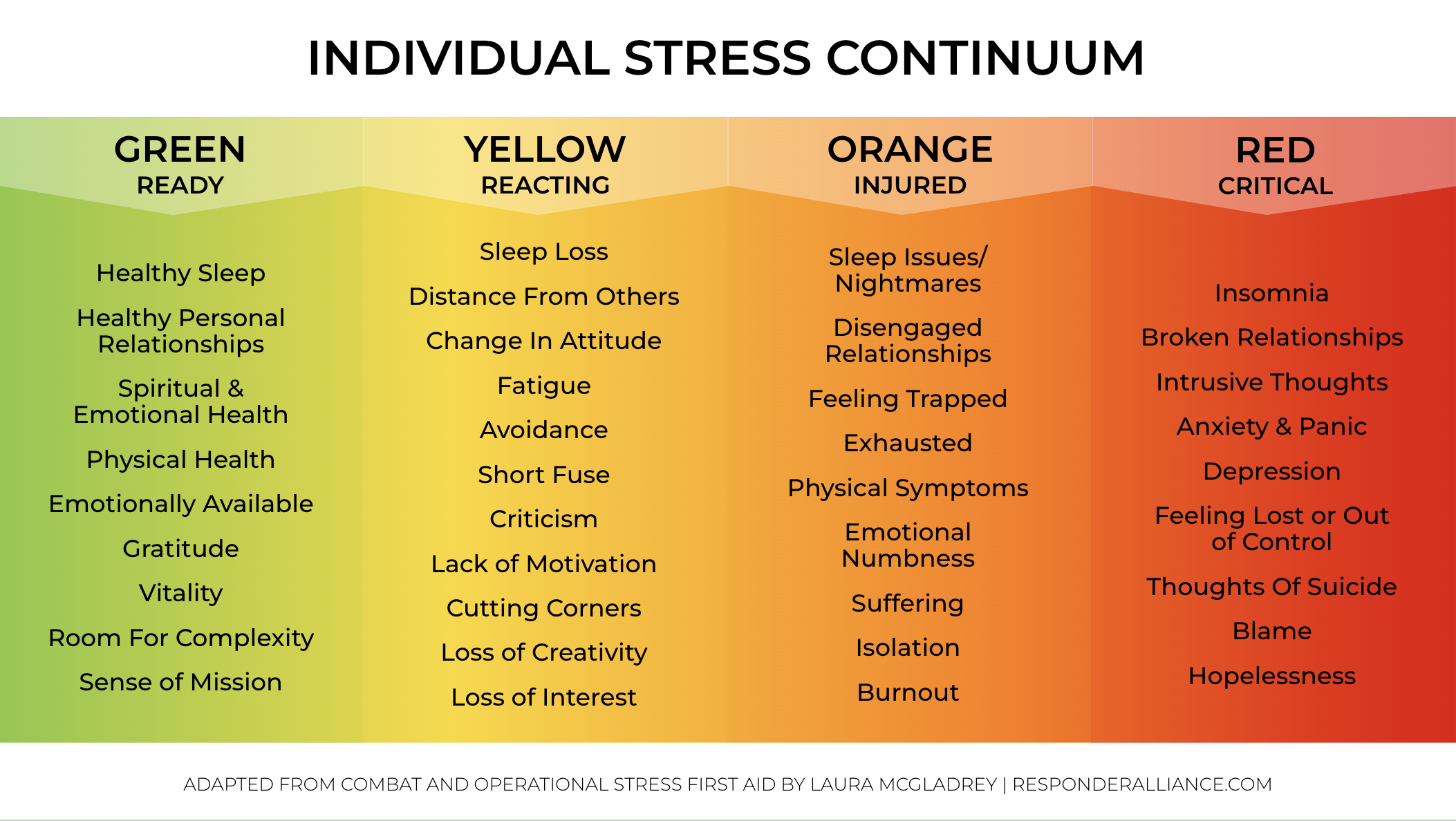
One of Responder Alliance’s stress management tools. Photo: Responder Alliance

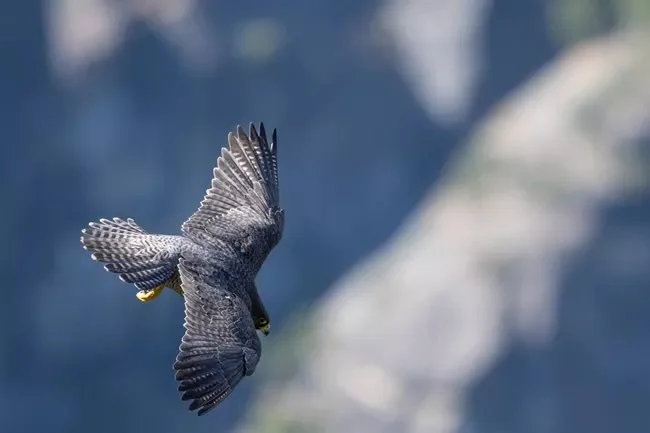
Photo: Yosemite NPS
Peregrines - Published by Climbing Magazine (Jan. 2025)
In the 1950’s and 1960’s the Peregrine declined in big numbers until they were listed as endangered in 1973.
The decline was due to the prevalent use of DDT. The food source for Peregrines are migratory birds which at that time had measurable amounts of DDT in them. Even after DDT was banned in the US these migratory birds were still picking up DDT from their travels to Mexico. Through this food source Peregrines were ingesting high enough amounts of DDT to affect the thickness of their eggshells. These eggs were too vulnerable to hatch in the wild.
In 1978, climbers Dale Bard, Hugh Burton, Bruce Hawkins and Ron Kauk climbed the first ascent of New Jersey Turnpike on the Southeast Face of El Capitan. When they veered off to the right of the North American Wall they were divebombed by a couple of very angry birds because they were climbing very near their eyrie. After the climb they reported their experience and the birds were identified as a pair of Peregrine Falcons. The last time a pair of nesting Peregrines had been spotted in the Park was in 1941 on Mount Broderick.
Shortly after the climb in 1978 the Santa Cruz Predatory Bird Research Group hired Dale Bard and Werner Braun to climb up to the eyrie to gather egg shell samples for testing. In 1982 they started a bold plan of hatching the thin walled eggs in a laboratory and then placing the hatched young in occupied nests. The idea was to fool the birds into thinking that their eggs had hatched naturally when they were away from the eyrie. The tricky part is taking the eggs from an inhabited nest.
In 1986, I ran into Walt Shipley, Troy Johnson and others at the Deli and joined them for a beer. I had recently met both Walt and Troy so did not know either of them well. In his animated way, Walt asked me if I would be interested in helping them with some work the next day. I needed the money so I asked for some details. Apparently, he and Troy had been hired by Rob Roy Ramey III from the Raptor Institute out of Santa Cruz to switch a laboratory hatched baby Peregrine with an egg from a newly found eyrie near El Cap Tree. El Cap Tree is a large Jeffery Pine that is miraculously growing out of a large ledge 300 – 400 feet up the overhanging SouthEast Face of El Capitan. Walt and Troy had fixed ropes 300 feet straight up close to El Cap Tree and then horizontally about 60 feet to within 20 feet of the nest. Walt said they were offering $200 each to do the switch and they were going up in the morning and needed a third climber. That was a lot of money at the time for a Yosemite climber so I said I was all in and told Walt it sounded interesting. He said it would be a piece of cake. We agreed to meet at 8 am in El Cap Meadow the following morning and he would introduce me to the rest of the team. We shook hands on it. All I needed to bring were my ascenders, aiders and some slings to attach myself to the anchors. Walt bought me another beer and said “You’re gonna love this Yager”. He had this lopsided grin and a twinkle in his eye that I got to know real well over the years. I should have known there was something he wasn’t telling me.
I met the rest of the crew the next morning in El Cap Meadow and we laid out our gear by the cars and packed up. Rob Roy Ramey III was in charge of the operation. Bob Roney worked for NPS and was along to film the it for historical purposes. The young bird was going to be carried up behind us so as not to frighten it with a lot of commotion. I was hired not only to climb up and help with the egg and young Peregrine switch, but to assist Bob Roney and keep an eye on him to make sure he was safe while he filmed the whole procedure. Bob Roney had a giant VHS video camera that was creatively wrapped in tape and several pieces of webbing so that he wouldn’t drop it. He was also using caving equipment instead of the more traditional climbing setup with Jumars, aiders and daisys. This was the first time I had seen any caving equipment before. It seemed safe enough and Bob seemed comfortable with his system so I didn’t worry about him too much. Prior to leaving the ground the fledgling arrived and I observed the young caged bird being fed fresh meat with the use of a hand puppet that looked like an adult Peregrine. The young bird grabbed the meat violently and ripping it to shreds like it hadn’t eaten in days. For some reason I found the whole scenario to be absolutely hilarious. I was making good money and and it was turning out to be an interesting day. I really had no idea what I was getting into.
Peregrines are about the size and shape of a football with wings. They appear to have the density of a medicine ball. Peregrines are the fastest bird in the world they can reach 240 mph. They get progressively more agitated and disturbed as you get closer to their nest. They try to protect their eggs and young by swooping at you all the while being very vocal with high pitched shrieks.
As we jumared the ropes the parents left the nest and were soaring up high to see what we were doing. As a climber, I felt very vulnerable being attached to the rock and I was not very mobile. Even though I was terrified, I was fascinated watching these birds trying to scare us off. I thought they were doing a pretty good job. The Peregrines would swoop at high speed then fly upward until they stalled out several hundred feet above me. When they lost their airspeed they would do a perfectly executed wingover tucking their wings in and dropping like a rock picking up speed at a frightening pace. Just when I thought I was going to die they would flare their wings above my neck and glide off just inches from me. I would see their dropping shadow next to mine and could not help but flinch every time it happened. I could not only feel the breeze from the air turbulence as they flew by, but I could hear them coming. It sounded like a medium sized rock falling a long distance, a reverberating whooshing sound similar to a turbine. Both the male and female were protecting the eggs in the eyrie by continuously dive bombing us. This was unnerving and continued the whole time until we left the area completely.
As best as we could we ignored the diving birds. I was placed close to the nest and Rob climbed into it and the birds went nuts. I had never seen a Peregrine eyrie before and it was much bigger than I had imagined. It was big enough that I could have easily curled up in it and taken a nap. The eggs Rob found in the nest were placed in foam protected containers and passed climber to climber to the right much like a fireman in a bucket brigade with the only difference being that we were were hanging on ropes on the side of El Capitan. After the eggs were passed to the right where Bob was filming we took the young bird in its cage and passed it to the left from climber to climber to Rob in the nest. Rob gingerly took the young bird out of the cage and placed it gently in the nest. Rob supervised the whole process and was the only one that was allowed in the nest. One of the adults hit him on his pack pretty hard. The slap it made was really loud. Didn’t seem to faze him at all like it happened all the time, but it terrified me. I got the feeling they could take us out anytime they wanted to as we were not very mobile due to being attached to ropes on the side of El Capitan. I suddenly had visions of them shredding my neck with their talons as they dove by. After seeing Rob getting hit I was eager to get the hell out of there.
As soon as the switch was completed we took the pack with the eggs and started rappelling. Within a half hour the adult pair were back at the nest feeding their new baby like nothing had happened.
Before that day I knew very little about Peregrine Falcons. I thought that the project had a very slim chance of working. I am glad I was wrong. Today there are at least 15 documented pairs of falcons in the Park. In 1986 there were only two known pairs, one in the Valley and one in Hetch Hetchy. Without help Peregrines probably would have disappeared from the Park. I am proud that I was able to have a small part in their future survival.
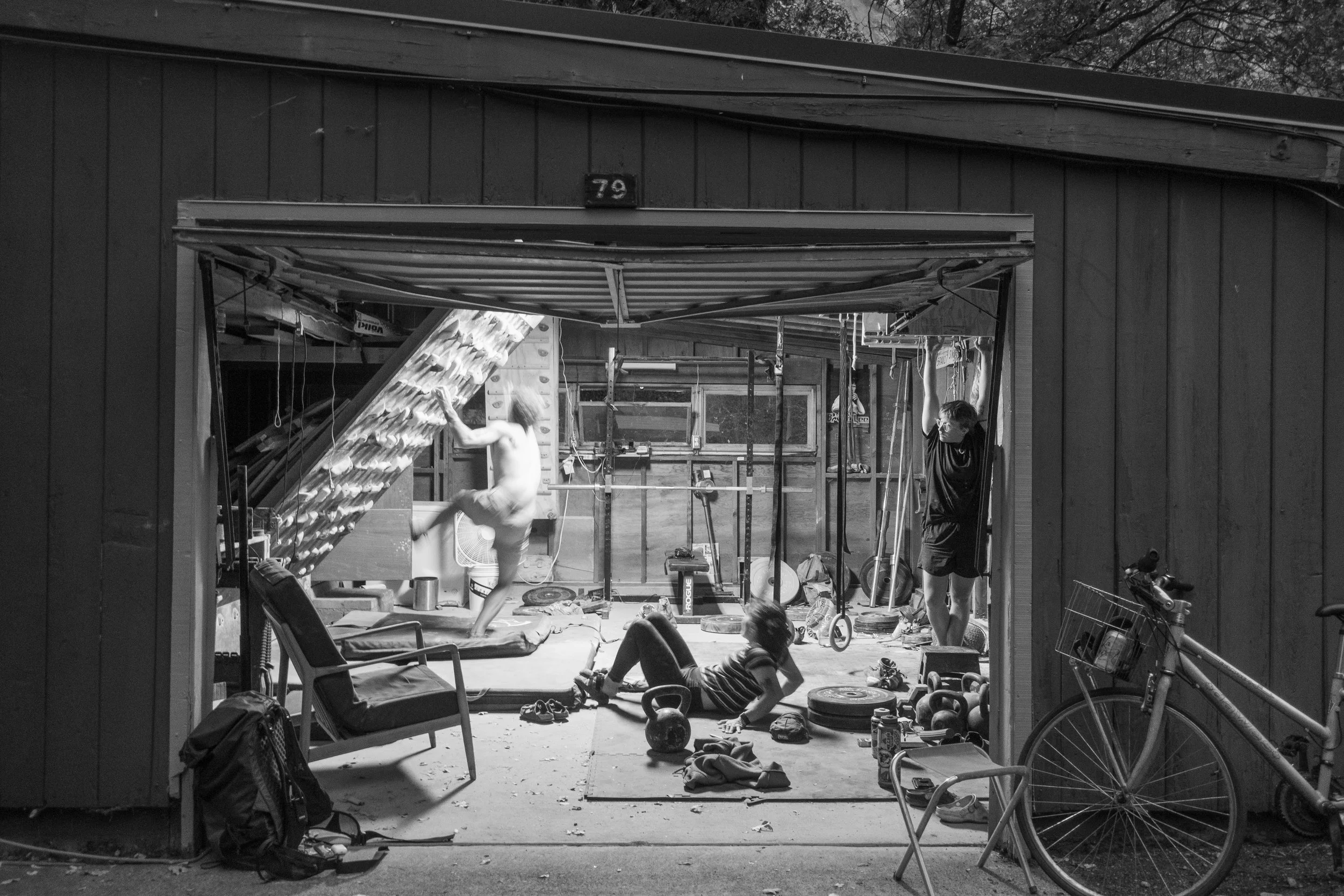
PHOTO OF
THE WEEK
Summer garage sessions: finding ways to stay strong in the August heat. Photo: Miles Fullman

Stay up to date on the latest climbing closures in effect!
Get your permits, do your research, and hit the wall!
Visit the Yosemite Climbing Museum!
The Yosemite Climbing Museum chronicles the evolution of modern day rock climbing from 1869 to the present.
The YCA News Brief is made possible by a generous grant, provided by Sundari Krishnamurthy and her husband, Jerry Gallwas