
EDITION 66 - AUGUST 11, 2026

Your window into the stories, history, and ongoing work to preserve Yosemite’s climbing legacy.
A Note from the Editor
Extreme heat advisories have been in place for Southern California. Yosemite Valley has been experiencing triple digit temperatures all week, and even Tuolumne Meadows has been feeling hot while consistently in the eighties during the daytime.
Fire season is upon us with the recent heat. The Gann Fire to the northeast of the park in Calaveras County is 78% contained as of August 10 and has burned 10,339 acres. Some of the smoke reached the park earlier in the week.
As we wait for the weather to hopefully cool down in September, we can also look forward to Facelift! This year the Groveland Facelift will be on September 12 and Yosemite Facelift will take place from September 23 to 27. You can register for the annual cleanup and celebration at the following link:
Register for Yosemite Facelift 2026!
For this week’s feature I had the opportunity to speak with Amber Smith about her new Embodied Climbing School after we climbed alongside each other on Mt Goode earlier in the week.
Miles Fullman
Editor, YCA News Brief
The Embodied Climbing School. Design: Amber Smith
Amber Smith starts the Embodied Climbing School
Amber Smith lives in Bishop with her partner Chris Trainor and beloved 5 chickens. Their home fills with friends from Yosemite each winter. Amber is an AMGA Certified Rock Guide who formerly worked four seasons for the Yosemite Mountaineering School. Last year Amber founded the Embodied Climbing School to fill gaps she saw in dominant climbing culture.
On August 6 I had the pleasure of climbing Mt Goode alongside Amber, who had just returned from a joyful trip to the Bugaboos with three close girlfriends. I took the chance to catch up with her about some of the exciting things she has been working on with her new program.
1. Give us a bit of background about yourself. Where are you from, what brought you to Yosemite, and how long did you work and live in the park? When did you settle in Bishop?
In 2012 I moved to Portland, Oregon and I fell in love with Smith Rock and Mount Hood. I learned many skills for both rock climbing and mountaineering during that era. Then, in 2016, I moved to Washington, and began working with both a youth outdoor education nonprofit and also private guiding services. I spent the next six years climbing and guiding many of the alpine peaks in the North Cascades. I was often in very remote places with many objective hazards and although inspiring, it was emotionally and spiritually demanding. Also around that time, I started hanging out and climbing in Yosemite Valley, and I noticed there was a cohesive community of crusher women. Being less remote and more connected in a community was enticing to me and eventually led me to seek employment at Yosemite Mountainteering School. I worked there for four years and it was awesome! This year, I decided to settle in Bishop, so I could stay connected to my Yosemite community, while also pursuing my business The Embodied Climbing School, and grow a garden.
2. What inspired you to create the Embodied Climbing School?
I saw that many experienced climbers in my community had a complicated relationship with climbing. After many years of pushing, loss, and risk exposure, they were struggling to access joy that they once had. I wanted to offer a way to engage with climbing that prioritized pleasure, play, and presence. I do this through nervous system education and embodiment practices. It’s like mindset training, except it’s mind-body-spirit training for climbing.
3. How has your relationship with climbing evolved over the years?
I’ve had eras of performance, I’ve had eras of burnout, I’ve had eras of grief, and eras of motivation. No matter what though, climbing continues to captivate me like nothing else. I’ve managed the ebb and flow of this sport and my life by continually trying to be a beginner. In climbing, this means I keep trying disciplines and styles that I am not good at. I took the last several years away from alpine terrain and mostly bouldered. I got pretty strong and comfortable bouldering, so now I am excited to be back in the mountains. I’ve always been naturally good at slabs and vert, so I’ve stayed engaged and in love with the sport by challenging myself on roofs.
4. What are some positive outcomes from this work you’ve been doing, both in your own life and in your climbing?
One of my favorite sections of my course, The Embodied Climber Course, explores consent. Mostly the idea of getting consent from yourself for everything you do. There is a lot of forcing and pressure in our sport, and also a lot of risk. I teach that when we enter into risk, it should be a HELL YES from ourselves. When we do things that we don’t consent to, we break down our self-trust. I think that is the origin of a lot of folk’s ‘mindset’ challenges in climbing. You need to trust yourself when you say to yourself, “I consent to this, I am safe-enough, it’s time to go for it.” The ramifications of this in life outside climbing are obviously huge.
5. Have you had any course participants share positive changes in their lives or their relationship with climbing as a result of taking one of your courses?
Definitely. One student shared she felt like, “It was a birthing; A new way of being and engaging on the rock.” The sneaky thing about the Embodied Climbing School is that the tools we use on the rock are also tools for living better and for creative social change.
6. Can you talk about your collaboration with Ana Ally’s somatic practice for the webinar that you both hosted together this week on August 5th?
Ana Ally is a somatic integrative health coach and she has taught me so many things about emotion and how to process it. We taught a webinar last week titled, “Why Climbing Feels Different Now.” In that webinar we explored trauma, fear, and burnout in climbing from your body’s perspective.
7. Can you give a brief overview of your course offerings, their scope and intent?
My flagship course is The Embodied Climber Course. This is a 5-week course that explores mind-body connection in climbing for more joy, presence, and confidence on the rock. It’s hosted virtually and pricing is income based because accessibility is my priority. That program was so successful, I then created an intermediate level course extension, where for 3 months, graduates of the first course explored each topic more deeply. Lately, I’ve been focused on one on one relationships where I combine the curriculum from both programs specifically for the individual’s needs.
8. Are there any upcoming offerings you would like to share about?
I’m offering private Embodied Climber Courses to individuals and small groups. If you are interested to learn more, email me at embodiedclimbing@gmail.com.
Interested in changing your relationship to fear and risk management in your own climbing? Check out Amber’s course offerings at their website:
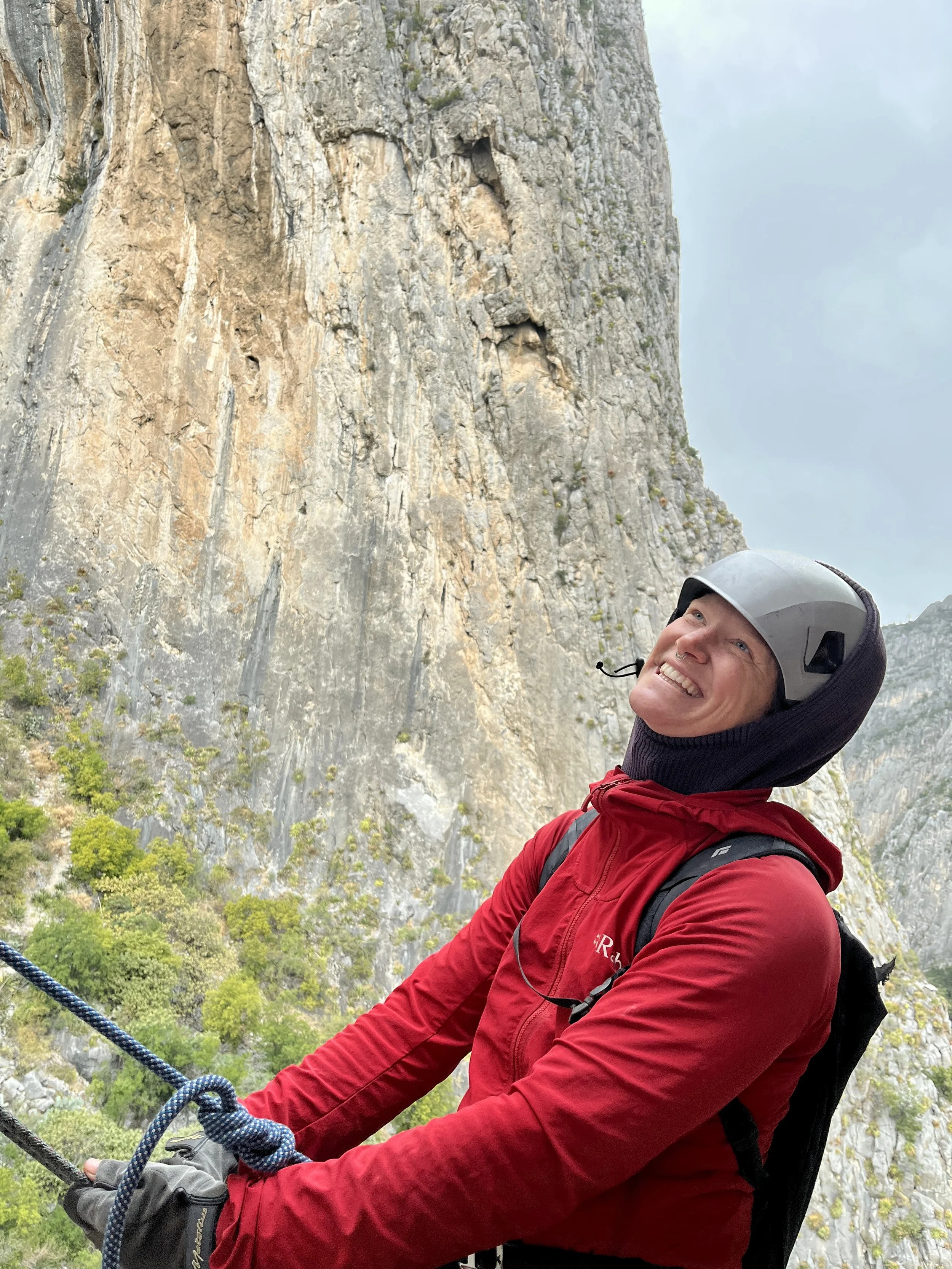
Amber Smith guiding in El Potrero Chico. Photo: Amber Smith collection

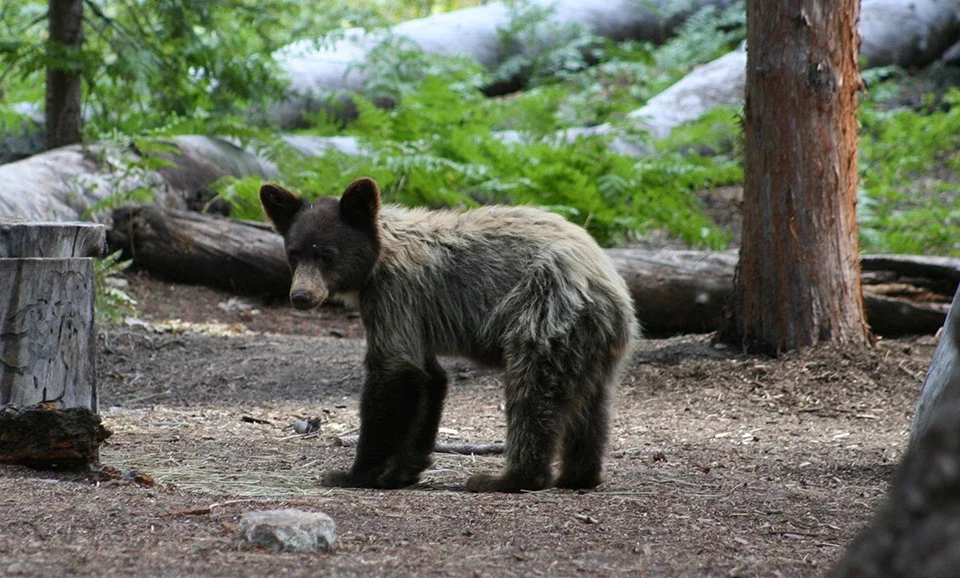
Photo: Yosemite NPS
Animals: On and Off the Rock
Wild animals are strange creatures. I have spent most of my life living in or near wild places, sometimes indoors, sometimes outdoors. The following are some of my more memorable encounters with the wildlife.
Birds:
I moved to Camp 4 in December of 1976. Shortly after moving in, racoons damaged the mosquito screen and broke the zipper on my tent leaving it wide open. A fat robin started appearing every morning and would be standing next to me when I woke up hopping around on its feet watching me. I felt a special kinship to this bird as it became a familiar friend greeting me every morning. It had no fear at all. I had no idea what time it would fly in or hop its way in. I didn’t know whether it was at night or early in the morning. I only knew it had chosen to hang out with me and was comfortable in my tent. This went on for about 5 months until I was kicked out of camp as summer season started. I moved to a cave in Curry Village taking on a more low-profile lifestyle to avoid LEO. I missed my feathered friend after that.
While working as a climbing guide for YMS, I would often introduce clients to crack climbing on a regular circuit that included Sunnyside Jamcrack, a soft two pitch 5.9 near Lower Yosemite Falls. I had it so dialed that I was leading both pitches in one and placing only three pieces of gear. It felt solid. One morning I had a client that had climbed a lot, climbed pretty hard, and was learning how to crack climb. He wanted to push himself and do some climb 5.9 to 5.10 crack climbing. I decided to start with Sunnyside Jamcrack to see what his skill level was. I flaked the rope out, grabbed 3 cams and started climbed as he put me on belay. I used the third cam just before the 5.9 crux and started running it out to the anchor on easier climbing. I was about a body length from the bolted anchor when I saw a moving shadow and suddenly something hit me on the side of the head nearly knocking me off the rock. I held on and turned my head watching a goshawk flying away from me. It turned in mid-air and flew right at me again. I fended it off with my free arm knocking it past me. It turned around once again coming at what appeared to be my head or neck. I slapped it again pushing it by me. The angry bird came at me twice more. I started using my fist and finally connected solidly on its body. The goshawk decided to leave me alone and flew away after that. With a sigh of relief, I climbed up and clipped myself into the anchor. I pulled the rope up tight and put him on belay. My client wasn’t moving. I leaned back to see what was going on and yelled down. “Are you coming up?” He didn’t say a word. He vehemently shook his head no in exaggerated movements and started untying from the rope. I rappelled down to him and suggested we go climb Bishops Terrace. He said he was done for the day, and I gave him a ride back to the shop. I tried to pro-rate the day and reimburse him because he did not get any climbing in. He refused and said I had earned it. It was the only time where I felt like I didn’t give the client their full value. I never saw him again and sometimes wonder if he gave up climbing after that.
Bears:
I have had a lot of interactions with black bears. I had never seen a bear until my first visit to Yosemite in 1972. Every night you would hear screaming and banging of pots and pans in the middle of the night. It would start in one end of the campground and slowly make its way through the campground waking everyone up. If the bear started to mess around with your stuff, quite often yelling wasn’t enough and tossing rocks at their flanks kept them moving on to the next campsite. Before going to sleep every night, I would stockpile rocks next to me that could be thrown at the bears and scare them off. It was a time when bears were fed garbage for the tourist’s amusement. This trained them to look to humans for a food source. It was before any bear education programs. It was before bear boxes. To protect your food, you hung it up in a tree at least 15 feet up over a branch. The food was split in two and these were counterbalanced over the branch by using a long stick to push the lower bag up to the other one hopefully out of reach. I learned to have a pile of small rocks by my tent entrance to chase off the bears during the inevitable late-night visit. If the bears were not chased off, they were persistent enough to eventually get your food bags if you didn’t chase them off. Sometimes they would get in the tree and chew through the rope dropping the food bags to the ground. Another common tactic was for momma bear to send the cubs out the tree branch and have them jump onto the bags and start chewing the bags up and dropping the food down. To camp in Yosemite, it was understood you would be woken up at night to deal with these unwanted and persistent intruders.
I went on one or two backpacking trips with my mom, stepfather and my brother every summer. On one of them, I hiked ahead of everyone else after leaving Budd Lake on our way out from a 4-day loop. The trail curved around a large tree, and I nearly walked right into a huge bear. I immediately stopped. It walked closer to me and stared at me from about 2 feet away. I saw two bear cubs behind it crossing the trail. I was tempted to drop my pack and make a run for it but I held my ground. It walked closer and sniffed my face, then turned to watch the cubs. Once they had crossed the trail, the mother bear followed them and walked off. I had an adrenaline rush after that. I had survived walking into a mom and her 2 cubs. It gave me a new confidence, and I have never been frightened by bears.
I moved to a very empty Camp 4 in the winter of 1976. This was before bear boxes. I set up my large blue Sears canvas tent and hung my food up in my haulbag counterbalanced with a pack as I had learned. I had been told the bears were worse than ever. I felt confident as I had dealt with bears on all of my Yosemite climbing trips and on several backpacking trips never once losing my food. My first night I was woken up by a bear and chased it off by yelling and throwing stones from the pile by my tent. I had barely gotten back to sleep when it came back waking me up once again. This went on all night for the next three nights. When the bears weren’t trying to get my food, the racoons were. I did not realize that I was the only one in camp with food. The few other people in camp stored their food in vehicle trunks whether they were operational or not. There were very few campers in the other campgrounds and the bears were hungry. My food bags were an attractive prize. By the third night I was exhausted and woke up to hearing rope sliding over something. Somehow it had jumped on the bags and untied the rope. I poked my head out of the tent and saw a bear running off with my brand-new Forrest haulbag in its jaws. The rope tied to it was running over the branch at a fast pace. I jumped up and grabbed the rope bracing my foot against the tree putting the haulbag on a hip belay. We tug of warred for a bit and the top sleeve was ripped out of my bag spilling its contents. I pulled the empty bag back to me dismayed at the damage to my new haulbag. The bear stood there standing tall, guarding a pile of all my food. For the next six months I did not store food in camp again. This eliminated the bear activity, and my sleep was much more restful.
About a year later I was camping in Tuolumne Meadows and a bear once again got ahold of my haulbag and went running off with it, my lead rope was being dragged with it. I once again jumped up grabbing the rope yelling and throwing rocks. My friends Grant and Big Mike ran over and scared the bear off but not before it had ripped the bottom out of my haulbag ruining it.
My family and I lived off the grid in a trailer at Hazel Green, an 80-acre parcel on the Yosemite Park boundary along Highway 120. Hazel Green is remote and can be reached via a lengthy drive on dirt roads after the snow has melted. We chose to park in a turnout along Highway 140 and would hike in about ¾ of a mile in the Summer and ski in during the winter. At night you could see the city lights of Madera many miles away. Hazel Green was the quietest place I have ever lived. The stars were amazing. We had a large water storage tank that we filled with a water pump from the year-round spring. Refrigerators, hot water heaters, and lights all used propane. I lived there with my family. I would carry as much as I could to and from the car to reduce the number of trips. By spring time I was lean and strong from skiing in and out while towing a full sled with a child on my back and bags under my arms. There was an abundant amount of wildlife. The NPS was doing a scientific study on mountain lions in the vicinity which made my wife nervous. She would walk out carrying a knife early in the mornings to the car on her way to work. She would forget them on her way back in if it was light out. Every now and then I would walk out to gather the kitchen knives from her car. It felt like a pioneering life. One night, while my family was visiting relatives in Indiana, I woke up to the sound of glass breaking in the kitchen. I thought my cat had knocked some dishes off the counter. I grabbed my headlamp and walked naked to the kitchen sink. I flicked on my headlamp and was face to face with a large bear. He had broken the glass out of the kitchen window over the sink and had stuck his head in and was now less than a foot away. I yelled and raised my arms. He pulled his head out of the window frame and ran off. I opened the front door and continued yelling and chasing him off. I then went back to bed, and he returned waking me up again. I continued to chase him off repeatedly until it became light. The following night I mixed up a bunch of dried habaneros in peanut butter and made a sandwich heavy on the peanut butter. I left it on the front porch where he had stuck his head through the window which now had a cardboard patch. I went to bed that night wondering what would happen. I heard him shuffling around outside the front door for a bit then I heard him walk off. I slept well that night and never saw him again. We did have one other incident out there with a different bear.
It was late spring after our first winter at Hazel Green and we had moved from the trailer into the line cabin which was a lot more comfortable. We had just gotten our four-wheel drive truck out of the shop after having the right front panel replaced. It looked brand new again. The snow was gone so we drove 20 miles to the cabin on the mostly dirt road. That night while reading we heard some shuffling around on the porch. I got up and opened the door and frightened a large light brown bear. It knocked our skis and a tall propane tank over which frightened the bear further. The bear ran off looking back at me. It ran full tilt right into our truck. In fact, it ran into the quarter panel that we had just replaced less than 24 hours ago. It was about as dented as it was when we brought it to the shop. I never put in a second insurance claim because I did not think they would believe me. That dent is still visible on the truck today.
I lived in El Portal for a total of 30 years during three different points in my life. It is often isolated by natural disasters. Flooding, fires, rockslides, you name it. Roughly 700 people live in El Portal. They have a lot of community events, and the parents help at the elementary school. Because of the shared hardships and frequent events, the community is very close. El Portal lays alongside the Merced River as it flows outside of Yosemite National Park. On the East end of town Crane Creek spills into the Merced River. We lived near where the two waterways met. It is a beautiful place with a view of Parkline Slab and some of the wonders leading into the Valley floor. Because of the proximity to water there is all kinds of wildlife. I saw herons and eagles flying over the river from my porch. I found scat from all types of animals in my yard that had passed through at night. You knew when the mountain lions were around because people’s pets started disappearing. I would find bear scat in my yard nearly every day. There was a giant fluffy whitish dog that lived up the street. Probably the biggest dog I had ever seen. It must have weighed 140 pounds. It was super friendly and I would pet it whenever it visited. One night I was drinking beers with my friend Jeff, and we went outside to have a cigarette. As I was talking to Jeff, I saw out of the corner of my eye that the neighbor’s dog had sat next to me. I put my hand out and turned to pet it on the head when I realized it was not my neighbor’s dog but a light-colored bear. I got within a couple of inches of touching it, when surprised, I quickly moved my hand back. The quick movement startled the bear, and it turned and ran up the steps through my yard. I turned back to Jeff and said, “Did you see that?” He said “Yep”. We started laughing, cracked open another beer and smoked another cigarette both not really believing what we had just seen. We still talk about it to this day.
Over the years, NPS has developed programs to help protect the bears and to keep them wild. They implemented a nighttime bear patrol program. The idea was to catch the pesky bears in the act and shoot them with rubber bullets hopefully scaring them off from further human interaction. They worked in teams of two. One person would have a large dog on a leash that tracked the bears. The other person would follow with a rifle loaded with the rubber bullets. After a day of guiding in Tuolumne, I was enjoying a beer around the campfire with the other guides behind the Rat Room. It was late and suddenly a giant dog comes running by at full speed dragging an NPS employee along behind it on a leash. The ranger was trying to stop the dog to no avail. A few minutes after they disappeared, a lone ranger with a rifle walked up to our fire and asked us if we had seen his partner with the dog. We pointed in the direction they had run off, and he ran after them to catch up. We found this highly amusing.
Raccoons:
Besides the bears, racoons were the biggest pests in Camp 4 during the winter of ‘76/’77. These stealthy creatures travelled in packs and were known to climb onto the food bags. They would reach inside or tear holes into the bags and pull food out dropping it to the ground. Chasing them off became another nightly ritual. I had a giant two room blue Sears canvas tent that I could stand up in. My sleeping area had a head-to-toe zipper to access the front porch section that had flaps that could be tied back letting fresh air and sunlight in. I had the largest tent in camp, and it became a party tent as I met more people. One night coming home with some friends from the Lodge I stepped into the tent porch feeling for my candle and a bunch of racoons ran out of my sleeping area between my legs. Approximately 20 racoons in all had ripped through the screen and ruined the zipper. I have no idea why. There was no food in there. After that my tent remained open to the world for the next six months. I would kick the tent from the outside chasing racoons out every time I returned. They liked hanging out in my tent when I wasn’t there for some reason. Other than initially ruining my sleeping area entrance they did no further damage.
Coyotes:
Coyotes are interesting. In Yosemite they mostly travel alone or in small numbers quietly hunting during the day. On moonlit winter nights the coyotes gather in packs and are quite vocal with their yips and howling. While sleeping outside you can hear packs of coyotes howling in the distance and adjacent packs would chime in until the coyotes close by were howling too and then it would fade off into the distance. A giant wave of sound that on some evenings would travel back and forth across the Valley. I remember walking late at night in the snow to my cave and being followed by a pack of coyotes. When they followed me onto Stoneman Bridge I could see 30-40 of them. They never got much closer than 50 feet but the fact they were following me was spooky. Another time while working as a flagman on a road project in El Cap Meadow there was a scrawny mangy looking coyote that was hanging out every day. It would lurk in the distance then wander back and forth almost like it was watching everybody work. It started to get more comfortable after a while and came closer. We got used to seeing it and barely paid it any attention. It was just always there. I pulled out my lunch one day and I started eating leftover barbecued chicken. The coyote ran up almost taking it out of my hand. I yelled at it and shooed it off. I made sure not to bring it to lunch again while it was around. Apparently they love chicken. My friend Grant and I were once walking through the NPS housing area by the Village to Yosemite Lodge. We ran into a coyote that had a whole barbecued chicken in its mouth. It was prancing, holding its head up high with its fresh catch proudly clutched in its jaws. It had snagged it off someone’s untended barbecue. This was a common occurrence. Coyotes are quiet and move quickly when opportunity is found.
Snakes:
I have seen a lot of rattle snakes and had many close calls with them. I probably should have been bitten. I have stepped inches away from them and over them before spotting them. Fortunately, they are as scared of us as we are of them. I had started a route on the right side of El Capitan. With bags up there and pitches fixed my partner bailed on me. I couldn’t interest anyone else in the climb, so I went up the Zodiac Gully to get the gear. It was really hot and I hurried up to the base wearing a pair of flimsy shorts and no shirt. I was able to attach both bags together and got it on my back. I started back down struggling with the weight stumbling erratically like someone under the influence. At the top of the steep section the rocks I was standing on broke loose. I landed on my butt ripping my flimsy shorts at the seams. The shorts slid up my body as I started sliding down hill feet first on my back with a giant haulbag. I arched my back and road the haulbag down to keep from scraping my rear and back further. I dug my feet and hands in sending rocks down in front of me. No matter how hard I dug in and tried I could not stop myself. I was on this slow-motion slide down the gully, and I couldn’t do anything about it. Down the gully was a large rock that I would be able to straddle and stop myself if I could control my speed. On this rock I saw something start to move as I got closer. It was a rattle snake, and it was alarmed by all the debris being knocked down around it. Within ten feet of it the snake started to rattle and had its head up watching me still failing to stop. It reared back to strike falling downhill backward off the rock as I straddled it and finally stopped after sliding for several hundred feet. I got myself back up and pulled my torn shorts down to cover my genitals. The shorts were now a loin cloth. I walked around the rocks the snake had hidden in and continued down to the Valley floor. When I got to Devils Elbow there were people everywhere. A few started asking me climbing questions. I answered them best as I could as I walked towards my car at El Cap Bridge. It turned into a small crowd of people, and I felt subconscious pulling my loin cloth down further and holding it in place as I walked. I felt lucky to have made it to the car without exposing myself. I was even more relieved that I had somehow evaded being bitten despite the rattle snake trying to strike me. It would have bitten me in a bad place. I chuckled during my drive home to El Portal feeling like it was my lucky day.
Deer:
I was about 16 years old when my father asked me to take one of his graduate students and his brother on a back packing trip. They had never done one before, so I put the food together and packed up all three packs. We chose a hike called the Canyon Creek Lakes Trail in the Trinity Alps. I had never been there before. I heard there was a lot of granite, and I was excited to check out the climbing potential. We drove through Weaverville and parked at the trailhead at dusk. After building a fire we cooked up a steak, salad and potatoes enjoying our last fresh meal under the starlight. We donned our frame packs the next morning and started trudging up the trail. After several miles we branched out of the canyon to the left exiting on a plateau above the ridge. We set up camp overlooking the canyon we had exited and mountains looming behind us. The next morning, we decided to hike up to the top of Mount Hilton to have a look around. It got really hot as the sun rose higher in the sky. It was getting harder to weave through the brush and we stopped to sit in a small clearing. Shirts off, we found a little shade sitting on some boulders under a couple trees. We ate a snack and drank water in the heat. Energy was flagging. I heard some rustling in the brush behind me. As I turned to look, a small fawn jumped into my lap and latched onto my nipple. It had hard toothless gums and it yanked on my nipple suckling hard. “myum, myum, myum.” pulling hard and not letting go. It really hurt. It was so ridiculous my companions broke out in laughter, and I started laughing with them as this baby deer was tugging on my bare nipple. After I got it to let go it seemed perfectly content to sit with me. We wondered where the mother was and we hoped she would come claim her child soon. Meanwhile it had chosen me to be the surrogate mom. We decided to scrub our peak bagging plans and head back to camp. The fawn followed me back and we named it Hilton after the peak we were going to climb. We mixed up powdered milk and fed it to Hilton which he gobbled up quickly. He was hungry. I gave him apple sauce which he seemed to like too. Hilton climbed into the tent and slept with me. The next morning, we realized Momma deer was not going to show up, and we were trying to figure out what to do with Hilton. We debated and decided we would have to ditch him and let nature take its course. It was a tough decision to make. Hilton was a hungry one and we continued to feed it milk and applesauce the rest of the day. Apparently, applesauce and powdered milk might not be the best diet for a young fawn. That afternoon Hilton got the runs and started shitting all over camp including in my tent. The novelty of having a pet deer had disappeared and I kept my zipper closed all night. Hilton stayed outside my tent pooping all over the place. The next morning, we packed up and with our packs ready I mixed up the last of the milk and applesauce. When Hilton started eating, I said goodbye. With Hiltons back to us we put our packs on and high tailed it out of there. I felt guilty as hell. Like I had signed Hilton’s death warrant. Hiking back down to the canyon we continued up further and camped at a beautiful lake surrounded by granite walls. We spent several days exploring the surrounding area and fishing in the lake. On our last day we packed up and sat at the lake finishing lunch before hiking back to the car. We saw the first person we had seen in five days. He was several hundred feet across the lake from us and he yelled asking us if we had any powdered milk. We replied that no, we had run out. He then excitingly told us we would never guess what had happened to him. He then proceeded to tell us that he had a baby deer following him. Sure enough, we could see Hilton over there behind him on the trail. Somehow, we kept our composure and feigned amazement without laughing. He continued to walk on the trail around the lake with Hilton following behind. We shouldered our packs and started heading down the trail. Once out of earshot we laughed hysterically most of the way back to the car. I felt happy that Hilton was still alive, and I have always wondered if he made it to adulthood.
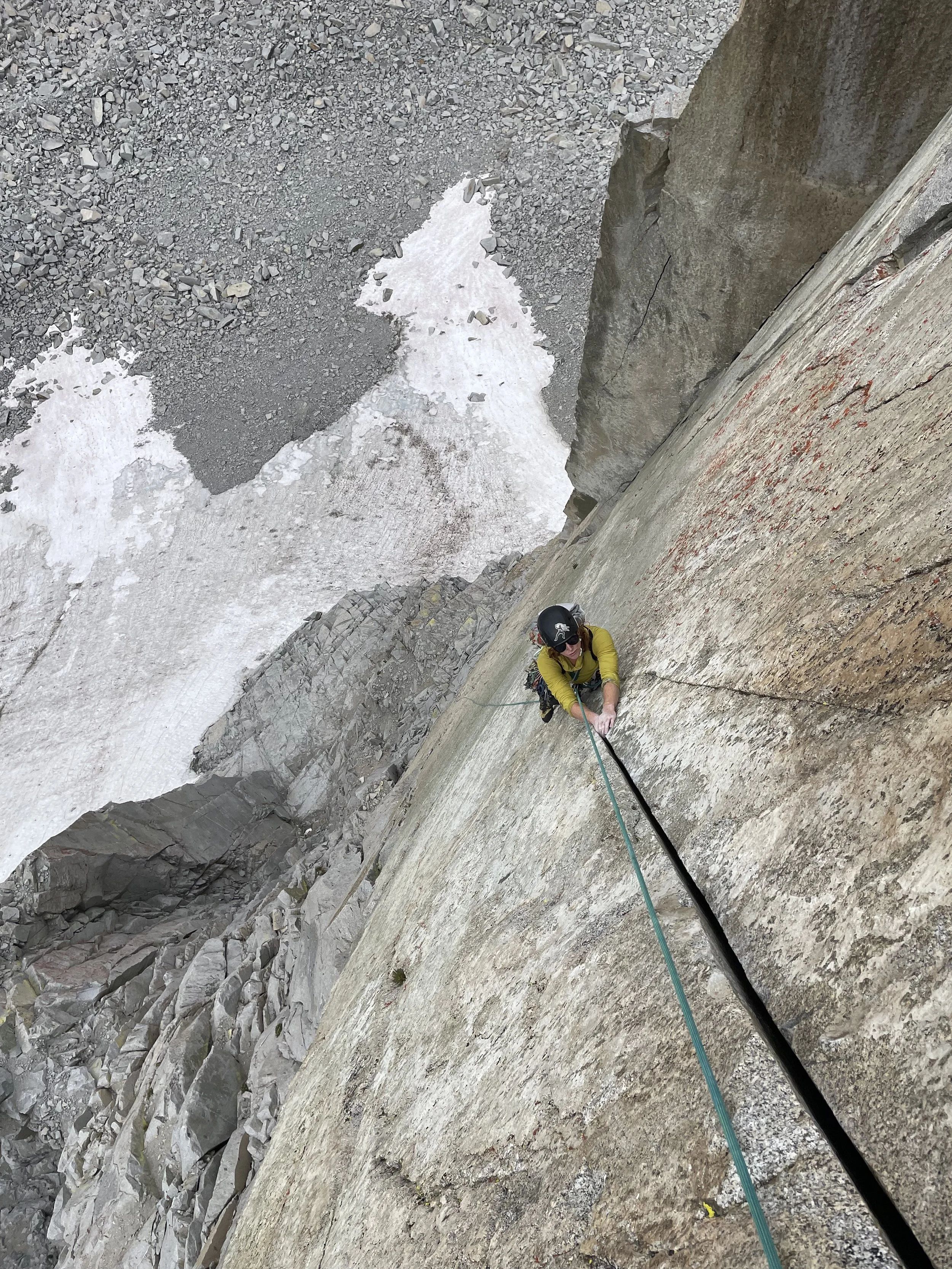
PHOTO OF
THE WEEK
Amber Smith climbing perfect fingers on Mt Goode’s “Sky Pilot”. Photo: Miles Fullman

Stay up to date on the latest climbing closures in effect!
Get your permits, do your research, and hit the wall!
Visit the Yosemite Climbing Museum!
The Yosemite Climbing Museum chronicles the evolution of modern day rock climbing from 1869 to the present.
The YCA News Brief is made possible by a generous grant, provided by Sundari Krishnamurthy and her husband, Jerry Gallwas