
EDITION 47 - MARCH 2, 2026

Your window into the stories, history, and ongoing work to preserve Yosemite’s climbing legacy.
A Note from the Editor
Pulling into Yosemite yesterday via Hwy. 140, I was surprised to hear the ranger at the entrance station tell my friend and me to “enjoy the snow.” Though storms have pummeled Yosemite recently—downing trees and making roads slick and dangerous—it had all melted in the Sierra foothills. The higher we drove into the Valley, the more we saw snow blanketing the Valley floor. Eric and I planned to climb Nutcracker on Manure Pile Buttress and I was concerned it would be out of condition.
When we pulled into the parking area, it was empty. When we reached the wall, I noticed water dripping down the first pitch of Nutcracker, making it out of the question.
On the way in, we passed a free soloist, Brian Ludovici, starting up C.S. Concerto. With our main objective out, we returned to C.S. and started up the first pitch, then linked into After Six. Brian lapped us several times that day. We struck up a conversation, and I handed him energy chews as he climbed past. He was aiming for 10 laps and got in seven before heading off to work.
Brian also told us about climbing with Laura Pineau and completing the Yosemite Picnic with her, which includes biking from El Cap Meadow to Tenaya Lake, swimming across it (and later back), climbing Tenaya Peak, Cathedral Peak, and Mathes Crest, and then riding back to the Valley. Stay tuned for a feature story on Brian in a future YCA News Brief.
Laura wrote of the Yosemite Picnic on FKT:
Maybe one of the craziest days of my life.
Brian and I are climbers which means we never bike or swim... We trained these disciplines for no more than 5 days each that same summer and decided to just go for it.
Started at 1:11 am on August 6th 2025, and finished the whole thing in 23h56min...
The hardest part for me was the swim as I was finishing with hypothermia both times... The second swim was done in the dark at 9 pm.
This week, Yosemite Mariposa County Tourism Bureau emailed:
Big News! Digital Passes Now Available
The National Park Service has begun rolling out digital passes through Recreation.gov, including digital America the Beautiful passes that can be stored on a mobile device for entry.
The YMCTB notes this could mean smoother entry and faster processing at the gates, with estimates showing 2–3 minutes saved per vehicle.
Non-Resident Fees Impacts on Tour Operators
The Non-Resident Fee is already affecting visitation for all Mariposa County businesses. The impact on local tour operators is catastrophic. This letter from IITA to the Department of the Interior [link not provided], supported by YMCTB, is an industry request to delay implementation of the NPS international visitor surcharge and America the Beautiful International Pass requirements for commercial tour operators.
Yosemite’s forecast: rain is possible tomorrow (March 1), but the week looks mostly clear.
For this week’s Founder’s Note, Ken Yager shares how he helped create an NPS-approved “Ask A Climber” telescope program and hired Tom Evans as the interpreter. And for this week’s feature story, I write about climbing with Eric Johnson during his first multi-pitch route in Yosemite.
Chris Van Leuven
Editor, YCA News Brief
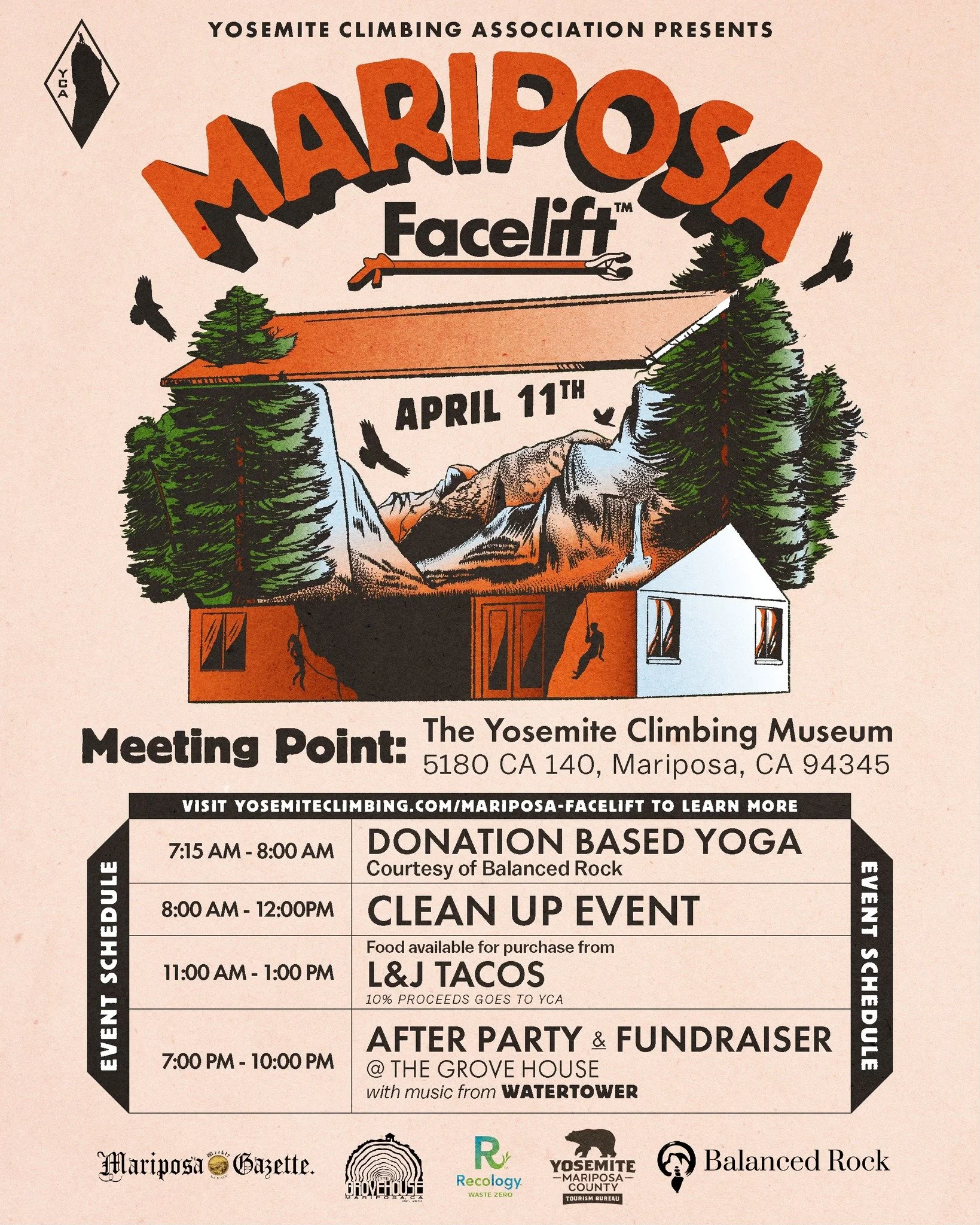
MARIPOSA: WE’LL SEE YOU NEXT MONTH!
Join the YCA on Saturday, April 11th @ the Yosemite Climbing Museum:
5180 CA 140, Mariposa, CA 95345
Upcoming Facelift events include:
Mariposa Facelift – April 11, 2026
Groveland Facelift – September 12, 2026
Yosemite Facelift – September 23–27, 2026
Oakhurst Facelift – October 24, 2026
Be sure to check out all Facelift event details here.
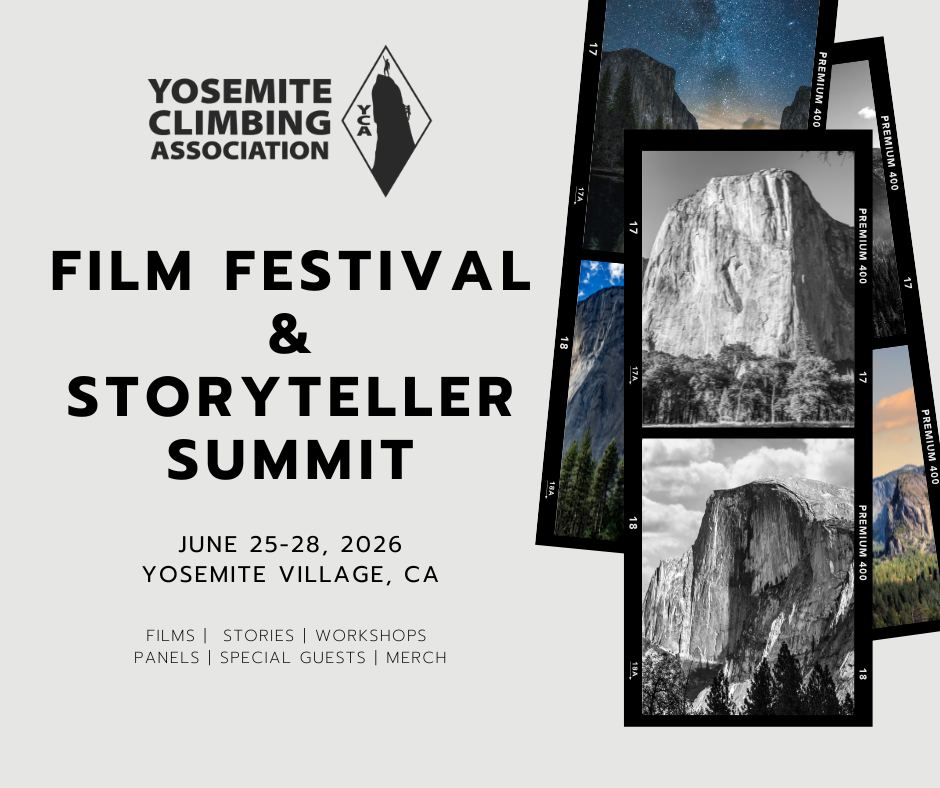
ICYMI: NEW DATES ANNOUNCED!
In coordination with the National Park Service, the Yosemite Film Festival & Storytelling Summit has moved to June 25-28, 2026.
Same vision. Same films. Same conversations. We’re excited to gather in Yosemite in early summer and will be sharing more soon. Visit our event page below to learn more.
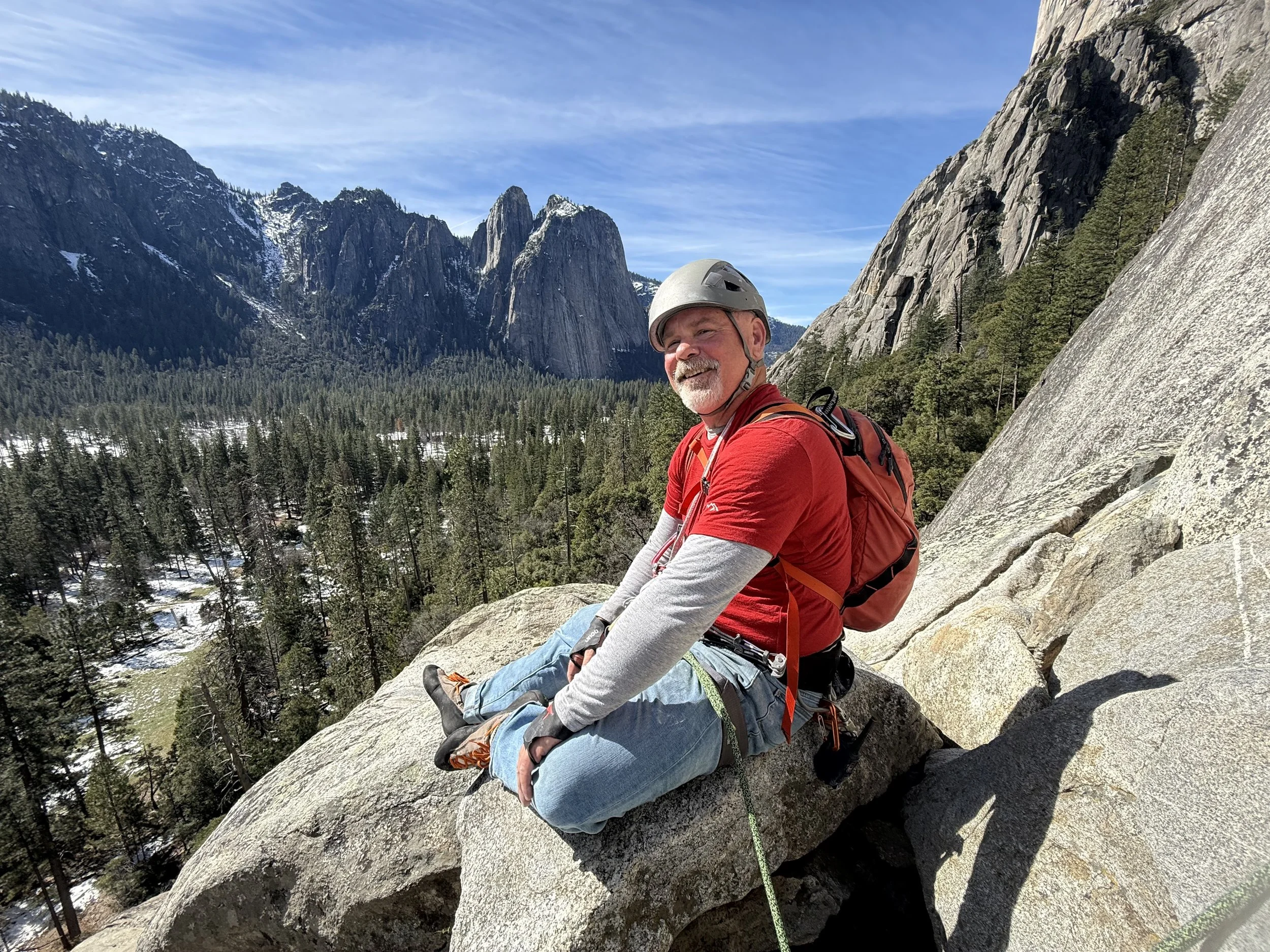
Eric Johnson enjoying his climb with Chris Van Leuven from C.S. to After Six. Photo: Chris Van Leuven
Eric Johnson’s First Multi-pitch Day in Yosemite
A first-timer’s nerves, small wins, and the kind of steady momentum that turns “what am I doing up here?” into “let’s do another pitch.”
Two weeks ago—before heavy weather brought snow to Yosemite Valley—Eric Johnson and I headed out for his first multipitch climb. Until then, we’d gone bouldering once around Mariposa and gone cragging once at Five and Dime in Yosemite, where he learned to belay and the basics of movement.
For Eric, life began in Yosemite. “My mom confirmed I was conceived at Porcupine Flat and my sister on our property where we live [in Mariposa],” he says. Retired and 61, Eric takes care of his aging mother, but otherwise has the kind of free days that, in many ways, parallel the climber’s lifestyle: flexible time, simple needs, and a deep pull toward the outdoors.
His passion is traveling the world and cycling. In early March, he’s heading to the Pacific Northwest, the South Island of New Zealand, Tasmania, and Nepal. When he returns home in June, he’ll be camping and bikepacking, and plans to continue climbing. He lives in a travel trailer and has a few small sheds where he keeps his equipment, and he’s hardly ever home, always out on some adventure. His property is situated near the top of a granite dome, at a high point in Mariposa, where he cooks in an outdoor kitchen with an endless 360-degree view of mountains and rolling hills in the distance.
Over the past few years, we’ve been doing longer and longer gravel and mountain bike rides in the Sierra foothills—some lasting up to six hours—when he’s around. He recently biked and backpacked solo in Death Valley. Last week, we did a 30-mile road ride in Mariposa under sunny skies, even though the road’s shoulders still had snow. The week before, we rode through ghost towns in the foothills, including Hornitos. Eric is always up for an adventure.
His routine on riverside bikepacking trips is pretty simple: “In the evenings, I go swimming, catch some trout, wake up super early, catch more trout, go for a bike ride, then have a fish fry.”
Now onto our first day on Manure Pile Buttress—linking After Seven into After Six. Eric was visibly nervous at the base. His hands were trembling, and he tripped up trying to put his harness on. I could feel his energy, but I also knew he could do it.
We went over techniques—how to smear and use your feet, and a few basic hand and finger-jamming techniques. He nodded, but later I realized he had no grasp of jamming. Then we were off.
The first 12 feet were the crux for him, where he was faced with a hand crack. That same theme showed up again yesterday when we headed up C.S. Concerto to After Six, but this time he had to layback or fist-jam, which he couldn’t wrap his head around, even though he watched Brian run right up it solo, and watched me lead it. Both days, when he couldn’t quite grasp what technique was needed, he did whatever he needed for upward progress: grabbing the rope, tugging on cams, catching his breath for a moment, then trying again. He took some falls and hung on the rope, but little by little, he got more of the hang of it.
One thing he didn’t do was stop moving, which made both outings fairly quick—two, maybe three hours for each route. Looking back on that first day, he said, “I was surprised by some things that I was able to do. Pleasantly surprised.”
I still chuckle about that day on our first multipitch route, where, toward the top, he had no idea when it was going to end. He’d point way out to the left, on the walls between El Cap and Manure Pile, and ask, “Are we going up there?”
“No,” I would reply, “we’re only a pitch from the top, then it’s all flat and an easy walk-off. We’re almost done!”
My only real feedback was for him to break his habit of doing the “elevator door” move—where, instead of jamming, he grabbed either side of the crack and tried to pull it apart to make progress. “That’s my signature move,” he says with a laugh. (It’s also a no-go.)
For me, it’s been super fun to be part of his climbing journey. We talked about it on the drive into the park yesterday: the emotions many new climbers feel are sharp at first, then start to dilute the more days you stack. It’s those first outings where everything feels intense—physical, mental, and loud in your body.
Eric gave it everything on the rock. He’d arrive at belays sweating and panting, having to lean into the mental side as much as the physical to keep moving upward. At the anchors, he’d guzzle water, mow down snacks, sweat, and breathe while I organized the rack, then dive back in again for the next pitch.
As we moved higher on After Six that first day, his movements became more fluid. He even said things like, “Earlier on the route, I couldn’t imagine standing on the tiny holds I’m standing on now.”
On our climb yesterday, where we made enough variations that it felt like a new experience. (He fell more because he was focusing on free climbing versus pulling on the rope.) But he only pulled through once, right off the ground. He nearly dropped a cam on day one but had no trouble on day two. Both outings were intense for him, but he also had an ear-to-ear grin. We’re already talking about going again when he’s back in June.
At the end of our call for this story, we brainstormed future adventures like climbing the South Pillar on Fresno Dome and descending Tenaya Canyon, with a simple thread running through it all: keep it safe, keep it moving, keep it fun.
As for what keeps drawing him to Yosemite: “Well, I mean, it’s arguably the most beautiful place in the world. It’s where I was conceived; it’s in me.”
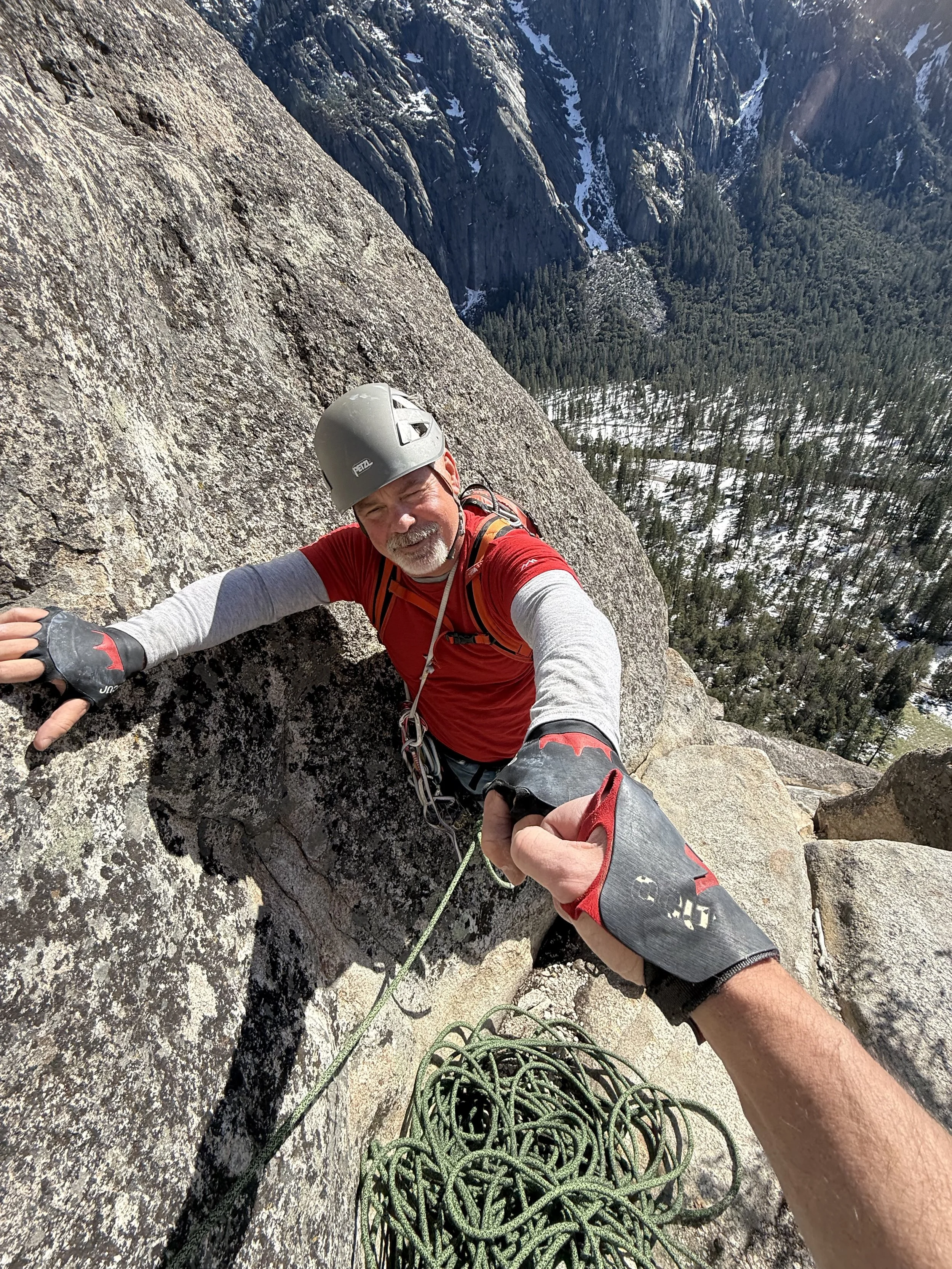
Eric Johnson climbing C.S. to After Six. Photo: Chris Van Leuven
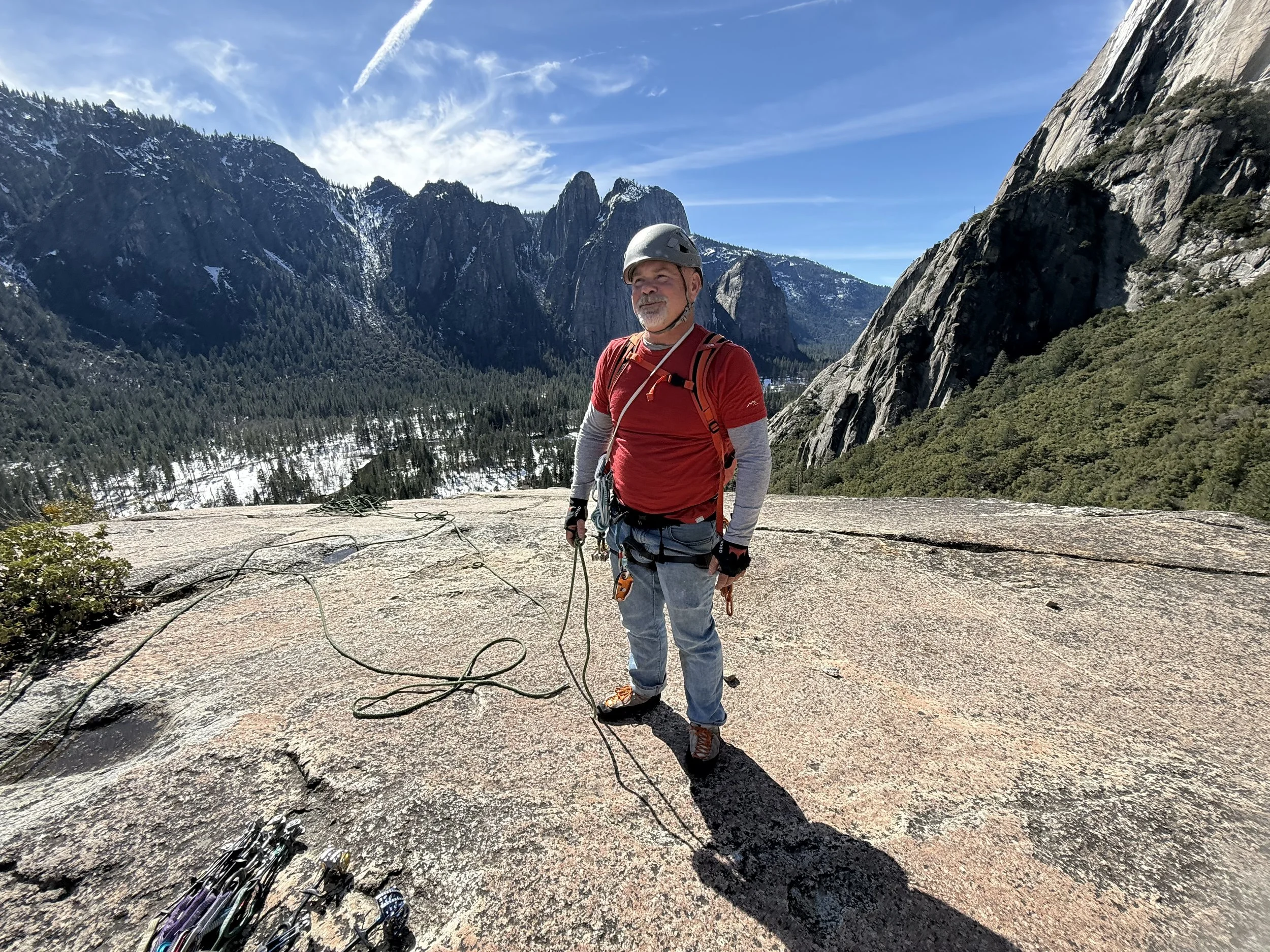
Eric Johnson climbing C.S. to After Six. Photo: Chris Van Leuven
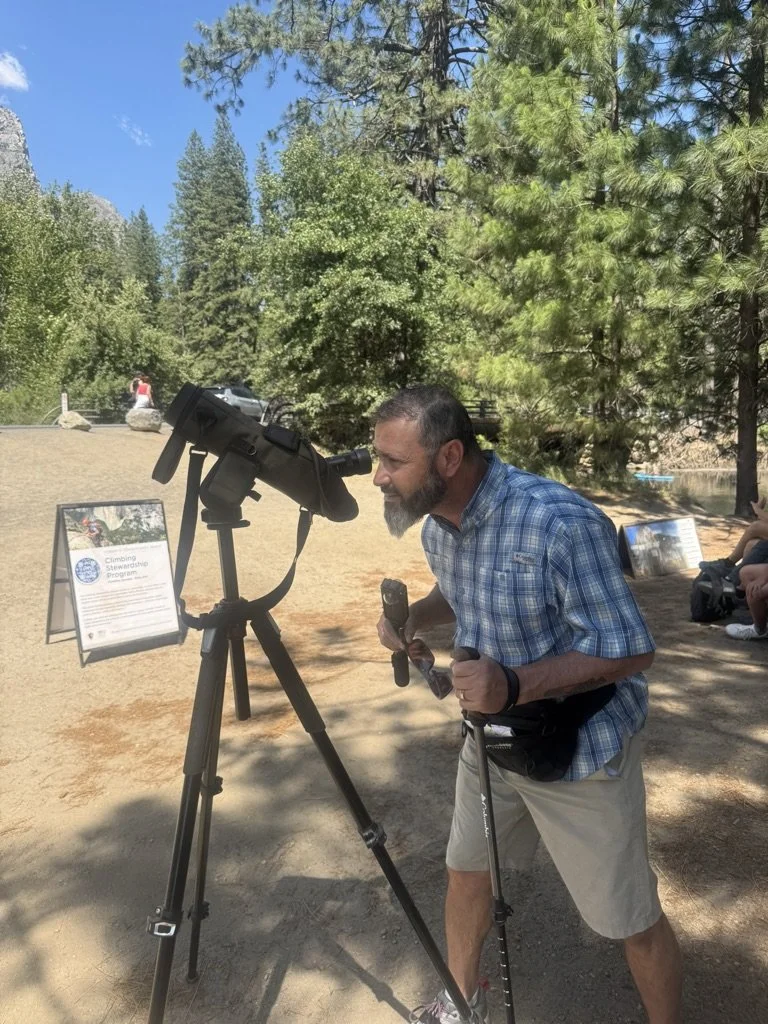
Photo: Ken Yager Collection
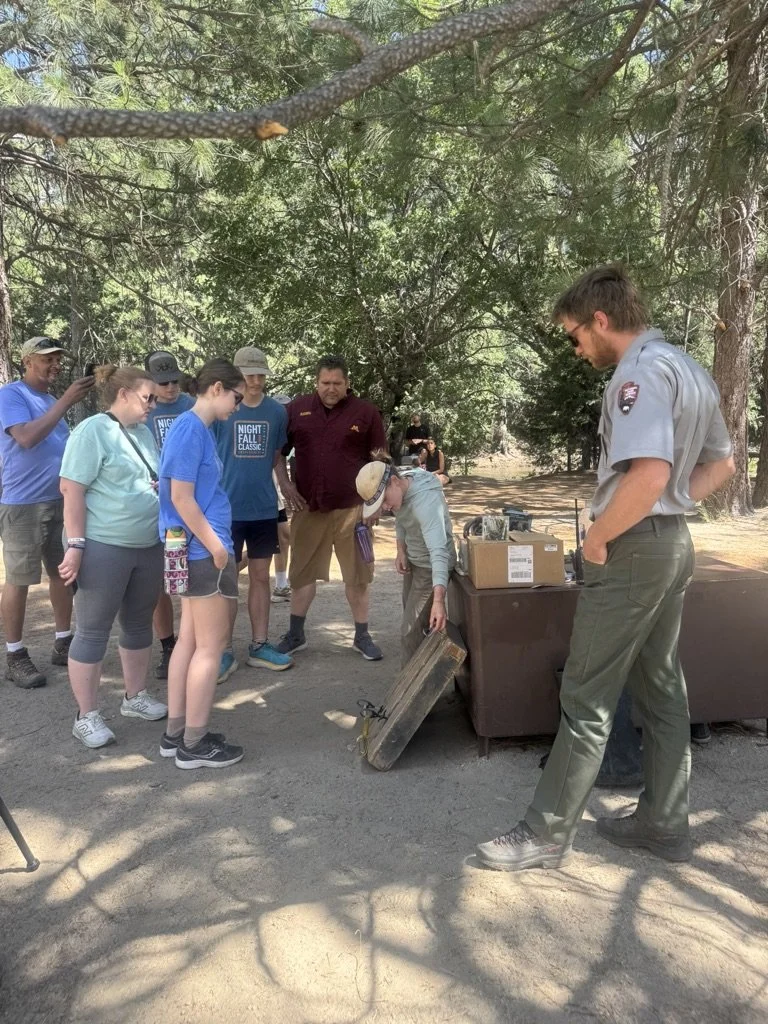
Photo: Ken Yager Collection
Ask A Climber and How It Started
Founder’s Log | By Ken Yager
For years, Tom Evans spent his summers in the meadow photographing climbers on El Capitan with a giant lens. While he worked, park visitors would wander over with questions—questions Tom always answered graciously. He’d even let people look through his camera while explaining what the climbers were doing up on the wall.
Tom always had a small crowd around him. Some were climbers, others weren’t. He’d take photos of climbers on the wall, and if they were willing to pay for the film and developing, he would give them the slides. It worked out to about fifty cents a slide. Tom didn’t make any money for his time—he just wanted his expenses covered. He was retired, and documenting climbers on El Capitan was his passion.
In a way, Tom was filling a role the park badly needed: climbing interpretation for non-climbers. He also offered climbers beautiful photos at cost while they were on the wall. If his brown van was there, I often stopped to say hello to him on my way home.
One afternoon in 2008, I stopped to visit Tom and could tell he was upset. I asked what was wrong. He told me he’d been fined and charged with selling the slides he’d taken without a permit. He hadn’t gone to court yet, but he was worried about being kicked out of the park. Apparently, even selling slides at cost was illegal. He admitted he didn’t know what to do and asked if I had any ideas.
I felt bad for him and thought it was a bogus charge. Tom was a real asset to park visitors. I drove home trying to figure out how I could help.
The only idea I could come up with was to create a climbing interpretation program, get it approved, and then secure funding. The more I thought about it, the more I believed it could work. First, I needed an NPS division chief who would approve and champion the program.
I had some experience with this because I’d previously created a climbing exhibit in the Yosemite Museum. It became the most popular exhibit ever shown in that space, tripling attendance compared to the previous record. Because of that success, I had the Park Service's ear.
I reached out to Steve Shackleton (Chief of Law Enforcement and Emergency Services) and Chris Stein (Chief of Interpretation). I proposed an idea: a knowledgeable person would set up two telescopes at El Capitan Bridge and answer questions as visitors watched climbers on the wall. Both liked the idea and asked for a proposal. I put one together, and Steve Shackleton signed off on it and agreed to sponsor the program.
Next came funding. The Yosemite Fund (now the Yosemite Conservancy) was the obvious choice. The Fund supported many park improvement projects that benefited visitors. To apply for a grant, the NPS chief had to submit a proposal for review by the Yosemite Fund. They’re inundated with proposals every year, and many are not approved. The proposal was submitted, and I waited—with fingers crossed.
I wasn’t optimistic. Climbers had a long history of being unwelcome. Much to my astonishment, the proposal was approved, and we had funding for the summer. I managed the program.
I bought the telescopes and made a hands-on interpretive display showing how climbing gear is placed in cracks. I also added other educational materials. To store everything, I got permission to commandeer a bear box that we could lock.
Then I asked Tom if he’d like to work for the Yosemite Climbing Association. I told him his job would be to set up the telescopes and talk with visitors—answering questions and explaining what they were seeing. He could also set up his camera if he wanted. I offered him $20 an hour and a legal campsite to stay in.
Tom was astonished—just as I was. He could do what he’d always done, except now he would be paid and have a free place to stay in the park. Neither of us could quite believe it. I still remember Tom saying, “Thanks, Ken—you saved my bacon!”
I’m really glad it all worked out. Tom’s knowledge benefited the park, and the program became popular immediately. It brought climbers and non-climbers together in a way that hadn’t really happened before.
Tom no longer works as an interpreter, but he can still be seen every summer taking photos. The program continues to this day and is currently one of the park’s most popular. More than 600 people a day look through the telescopes.
Climbing El Capitan has also become far more mainstream. Alex’s free solo ascent made him a household name, and climbing has reached a broader audience than ever before. NPS employees currently manage the telescopes, and there are now NPS Climbing Management and Climbing Stewards teams.
It has been great to see how the relationship between NPS and the climbing community has evolved—how the two groups have come together, and tensions have eased. I believe the current positive relationship is due to several factors: the telescope program, the Yosemite Facelift, the increasing number of park employees who are climbers, and, of course, the Free Solo documentary. All of these have made a noticeable difference.
The atmosphere today is much friendlier than it was in the 1970s. And that’s the story of how Ask A Climber came to be.
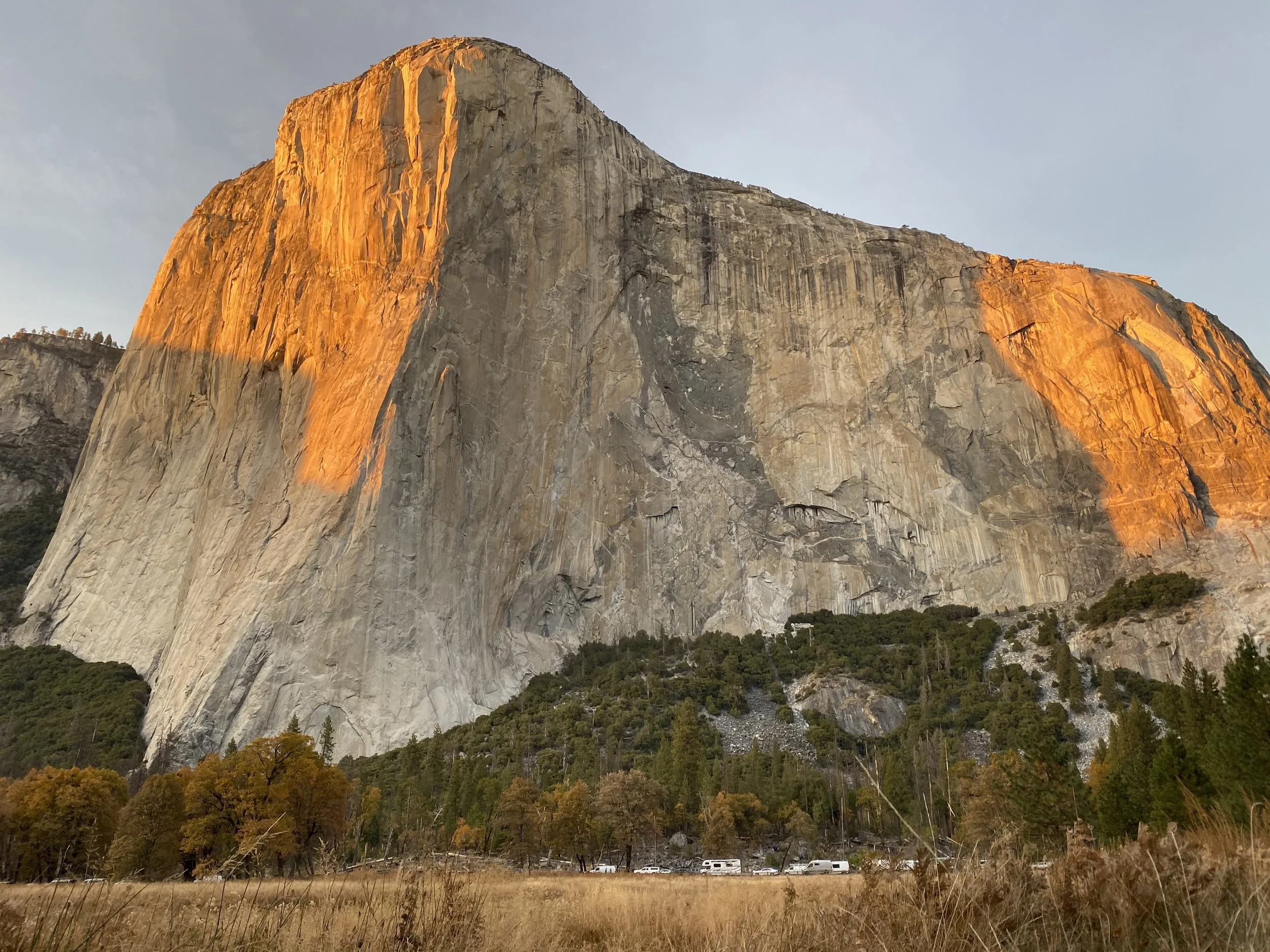
El Cap during sunset. Photo: Chris Van Leuven
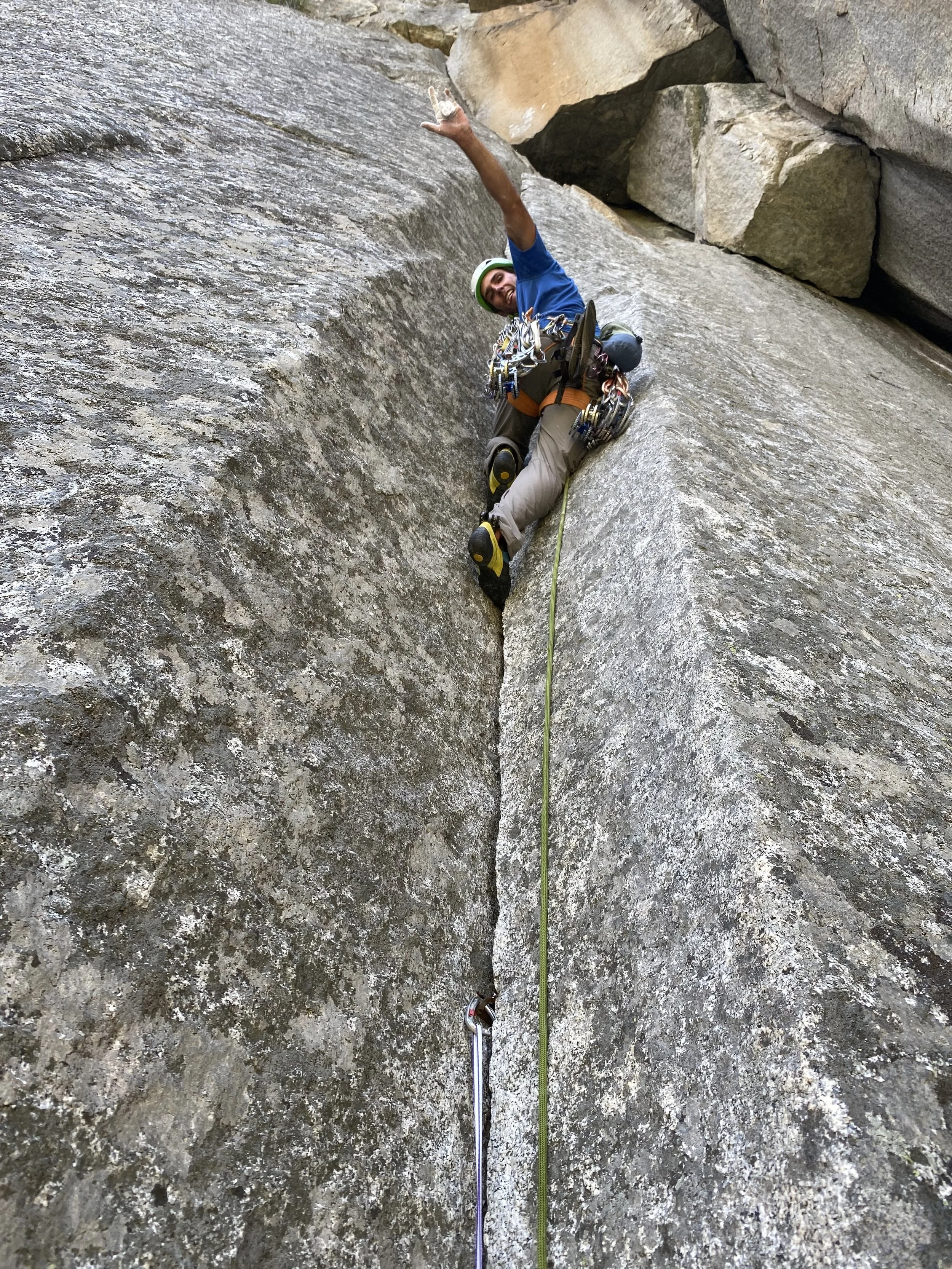
PHOTO OF
THE WEEK
Matt Cornell throws bull horns and a big smile on the North Face of the Rostrum. Photo: Chris Van Leuven

Stay up to date on the latest climbing closures in effect!
Get your permits, do your research, and hit the wall!
Visit the Yosemite Climbing Museum!
The Yosemite Climbing Museum chronicles the evolution of modern day rock climbing from 1869 to the present.
The YCA News Brief is made possible by a generous grant, provided by Sundari Krishnamurthy and her husband, Jerry Gallwas