
EDITION 46 - FEBRUARY 21, 2026

Your window into the stories, history, and ongoing work to preserve Yosemite’s climbing legacy.
A Note from the Editor
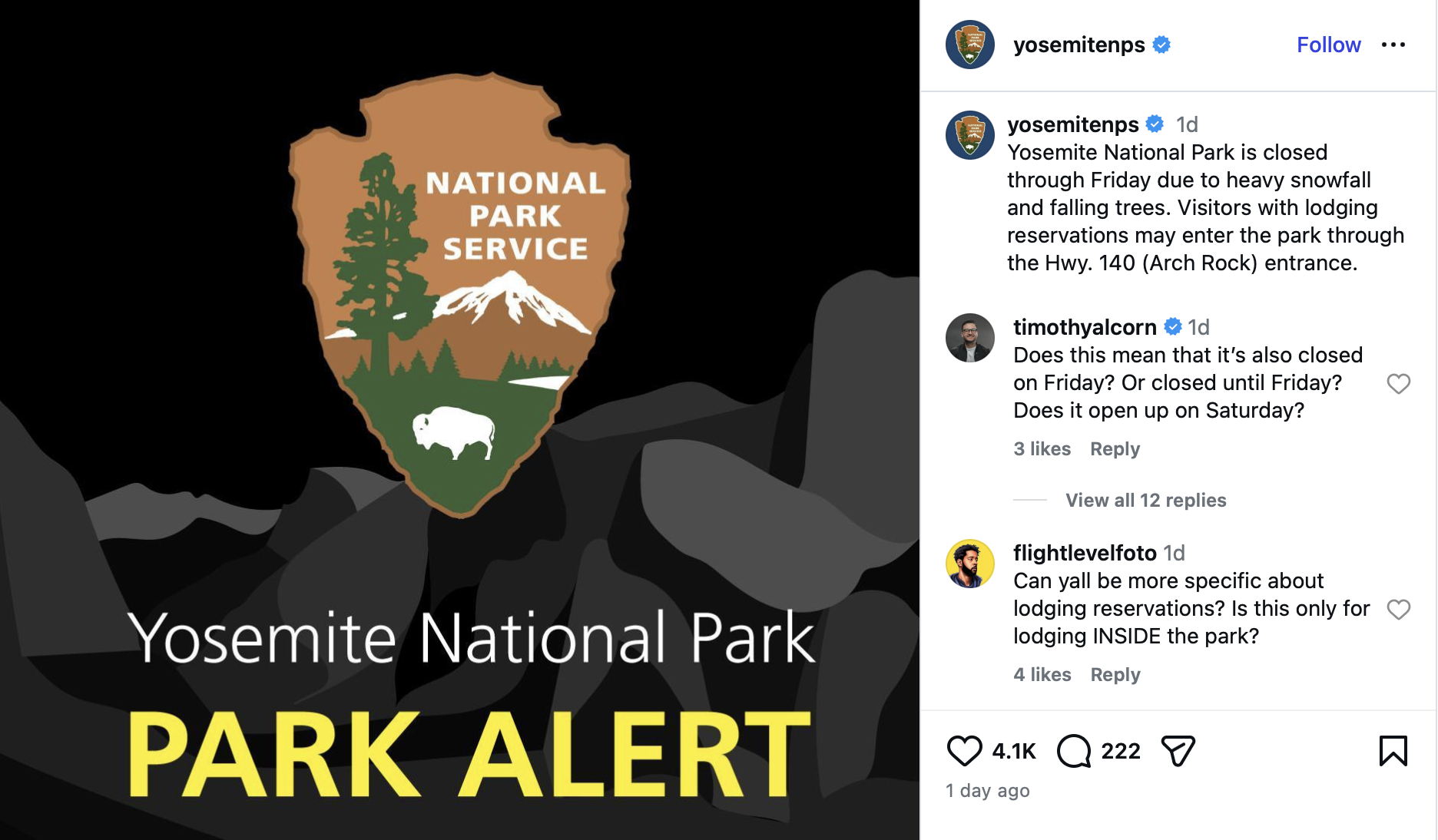
Well, winter has finally arrived in Yosemite. It’s been storming all week, with lots of snow, strong winds, and precipitation reaching the Sierra foothills. Yosemite was closed Friday, Feb. 20 due to the storm, and reopened Saturday, Feb. 21. Conditions can change quickly—check the NPS Current Conditions page before you drive.
Staff writer Summer Lin at the Los Angeles Times wrote:
Since Monday, Yosemite Valley and the park has received about 4 feet of snow and up to 52 inches in some areas, according to the National Weather Service in Hanford.
Next week, the park could get additional snowfall at elevations of about 9,000 to 10,000 feet, weather service meteorologist Emily Wilson said. Yosemite Valley could get rain because of higher temperatures, but the highest peaks could get an additional 12 to 18 inches of snow between Monday and Wednesday.
In an NPS park statement sent to me by the Yosemite Mariposa County Tourism Bureau:
Yosemite National Park is closed, due to heavy snowfall, high snow loading, widespread road closures, ongoing tree and limb failures, and potential avalanche conditions.
The closure remains in effect through midnight Friday, February 20, unless extended. Visitors with lodging reservations may enter the park through the Hwy. 140 entrance (Arch Rock). The park will reopen when conditions allow.
Learn more at NPS.gov/yosemite.
Earlier this week, the Yosemite Mariposa County Tourism Bureau also sent over this info:
Yosemite National Park will not require vehicle reservations in 2026
YOSEMITE NATIONAL PARK, Calif. – Yosemite National Park today [Feb. 18] announced it will no longer use a timed reservation system in 2026. The decision follows a comprehensive evaluation of traffic patterns, parking availability and visitor use during the 2025 season.
Park analysis found that most weekdays maintained available parking, stable traffic flow and visitation levels within the park’s operational capacity. These findings indicate that a season-wide reservation requirement is not the most effective approach for 2026.
In an article published earlier today, Krista Simmons at Sunset wrote: Visiting National Parks Without Reservations in 2026? Read This First.
She notes that first-come access may return at several parks in 2026, but crowd-management tools will stay in place—so the best plan is still to arrive early, travel midweek when possible, use shuttles (or walk/bike), and build in buffer time.
In a correction regarding the Glen Denny story I included in last week’s newsletter, Rick Sylvester wrote me:
Glen Denny didn’t, couldn’t have made the 7th ascent of the Nose. First, he was filming it. Second, while the filming was going on, there were some fixed ropes, Jose Luis Fonrouge from Argentina and I were making the Nose’s 14th ascent, following Wayne Goss and Jim (now Jamie) Logan’s ascent.
This week I also received an email from Rick Accomazzo, who asked if I knew the late Greg “Grug” Cameron and sent a link to his article, a remembrance of Dale Bard in the American Alpine Journal. Rick wrote:
Did you hear about the ground fall accident in Eldo that killed my friend, Greg Cameron? He fell on a 5.10 route; the rope ran over a corner and broke. Was in a coma for a couple of months but just died.
He was a Woodson local and under the radar off width expert in the 1970s. Inspired by Henry Barber’s free solo of the Steck Salathe, he free soloed the Lost Arrow Chimney on sight. And he did a fabled onsight, free solo FFA in Squamish of a 5.11 offwidth called Pipeline. Peter Croft told me that he and the Squamish locals were absolutely blown away when it was done in 1979.
Be careful out there!
I did know Greg and interviewed him in 2018 for a story in Gripped (recently updated and re-promoted). I wrote:
Born in Detroit and one of 11 kids, Grug’s family moved to California when he was five. He grew up in Poway, in San Diego County, known as “the city in the country.” He started climbing right around the time the famous California Stonemasters did, which began with Rick Accomazzo, John Long, Richard Harrison, John Bachar, Gibb Lewis, Mike Graham, and Rob Muir. But Grug wasn’t a Stonemaster; he was a Poway Mountaineer, “a different group of climbers through the ‘70s,” he says. If these groups were gangs, as in S.E. Hinton’s novel The Outsiders, the Stonemasters would be Socs, and the Poway Mountaineers would be the Greasers.
“I knew of the Stonemasters but I never felt competitive with them,” he says. “I was fine with having these guys doing these incredible things. We were just doing them afterwards.”
Grug, like many legends of climbing from that era, got turned onto the sport/lifestyle by his high school teacher. For example, at Carlmont High School in Belmont, Calif., the school’s mountaineering program churned out Ron Kauk and the late Scott Cosgrove. Even Jim Bridwell visited the school. It was Poway’s high school teacher, the late Gary Hepler, who hooked Grug onto climbing.
In Rick’s email, he also sent over his AAJ remembrance: Dale Bard, 1953–2025. He wrote:
During the 1970s and 1980s, Dale—who died October 1 in a Grand Junction hospital, at age 71, from cancer and complications from an intestinal tumor—spent 17 straight seasons in Yosemite National Park, climbing every day he could and establishing some of the boldest and most difficult rock climbs of the era.
Later in the story, he writes:
Dale was on the first ascents or first free ascents of numerous now-classic climbs in the Valley, such as Freestone (5.11c) with Bridwell and Ron Kauk; the perennially popular Central Pillar of Frenzy (5.10) with Bridwell, Ed Barry, and Roger Breedlove; Catchy Corner (5.11) with Bridwell; Blind Faith (5.11+) with Kauk; the technical and strenuous Owl Roof (5.12c) with Kauk; Roadside Attraction (5.12a) with Kauk and Werner Braun; and Fatal Mistake (5.12) with Braun. In 1977, Dale onsighted Phoenix (5.13a) using only nuts and hexes, when it had only previously been climbed with Friends, the prototype camming devices.
In Tuolumne, his major routes included Horseshoes and Hand Grenades (5.12a); the lovely Scorpion (5.11c) and the amazing and airy Oz (5.10d), both with Bob Locke; and the beautiful crack line of Blues Riff (5.11) with Locke, Claude Fiddler, and Allan Bard, Dale’s brother.
In this week’s Founder’s Note, Ken Yager recalls a pivotal summer in 1972 in Geneva while his dad worked at CERN, with weekends in Chamonix, where the climber campfires hooked him on the idea of bigger mountains. After an inexperienced, snow-storm-aborted attempt near the Dru and reading The White Spider, he tried to “do mountaineering” back home with a brutal winter ascent of Lover’s Leap—verglassed 5.6, deep snow, near-frostbite. He topped out shaken and decided he preferred warm hands and dry rock.
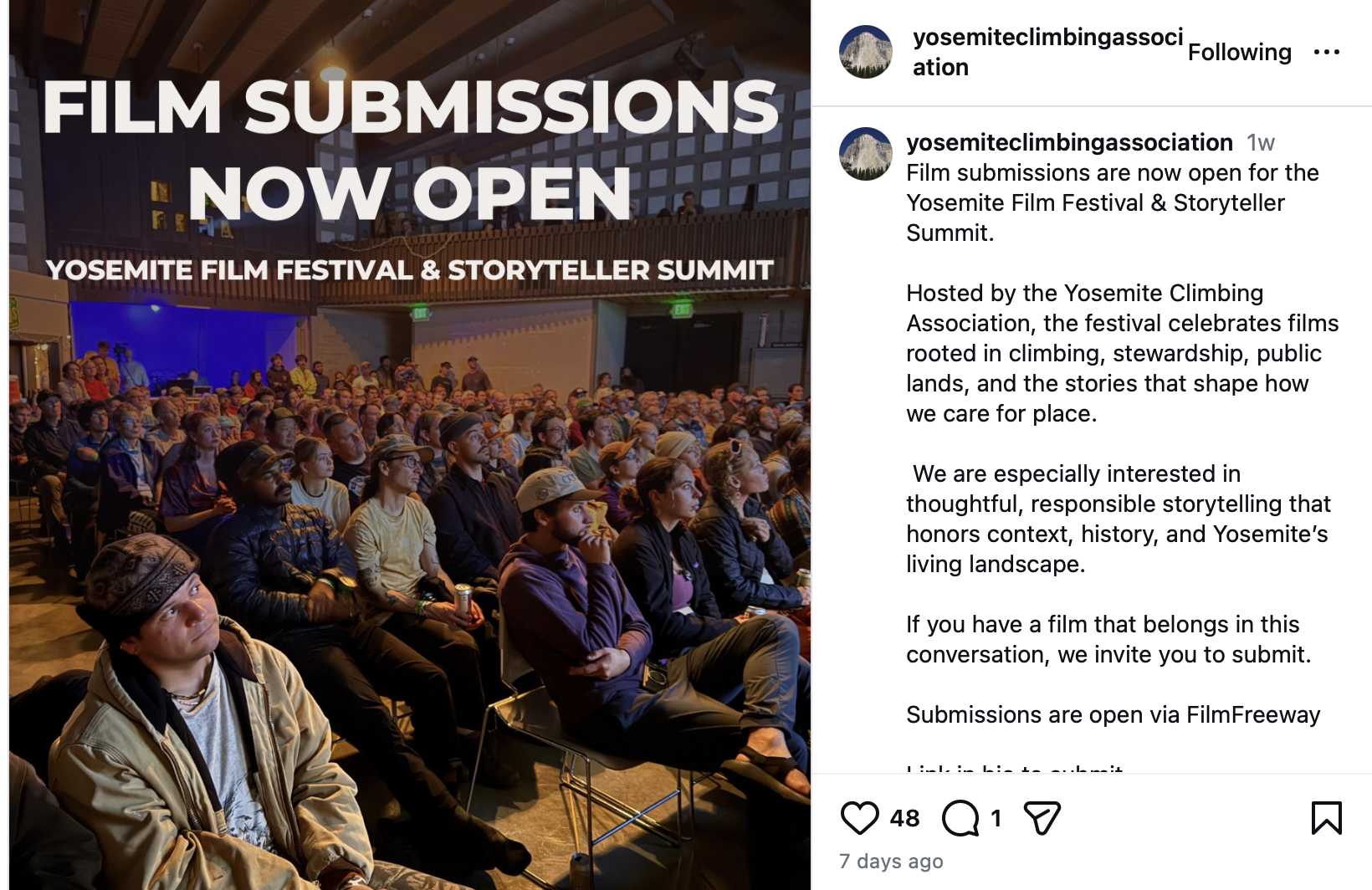
And for this week’s feature, I interview Miya Tsudome, a Bishop-based climber, photographer, and filmmaker who built her skills in Yosemite and now documents big wall ascents in real time. She’s helping with the YCA film festival coming up later this year. This summer, she’s headed to the Cirque of the Unclimbables in Canada’s Northwest Territories.
Chris Van Leuven
Editor, YCA News Brief
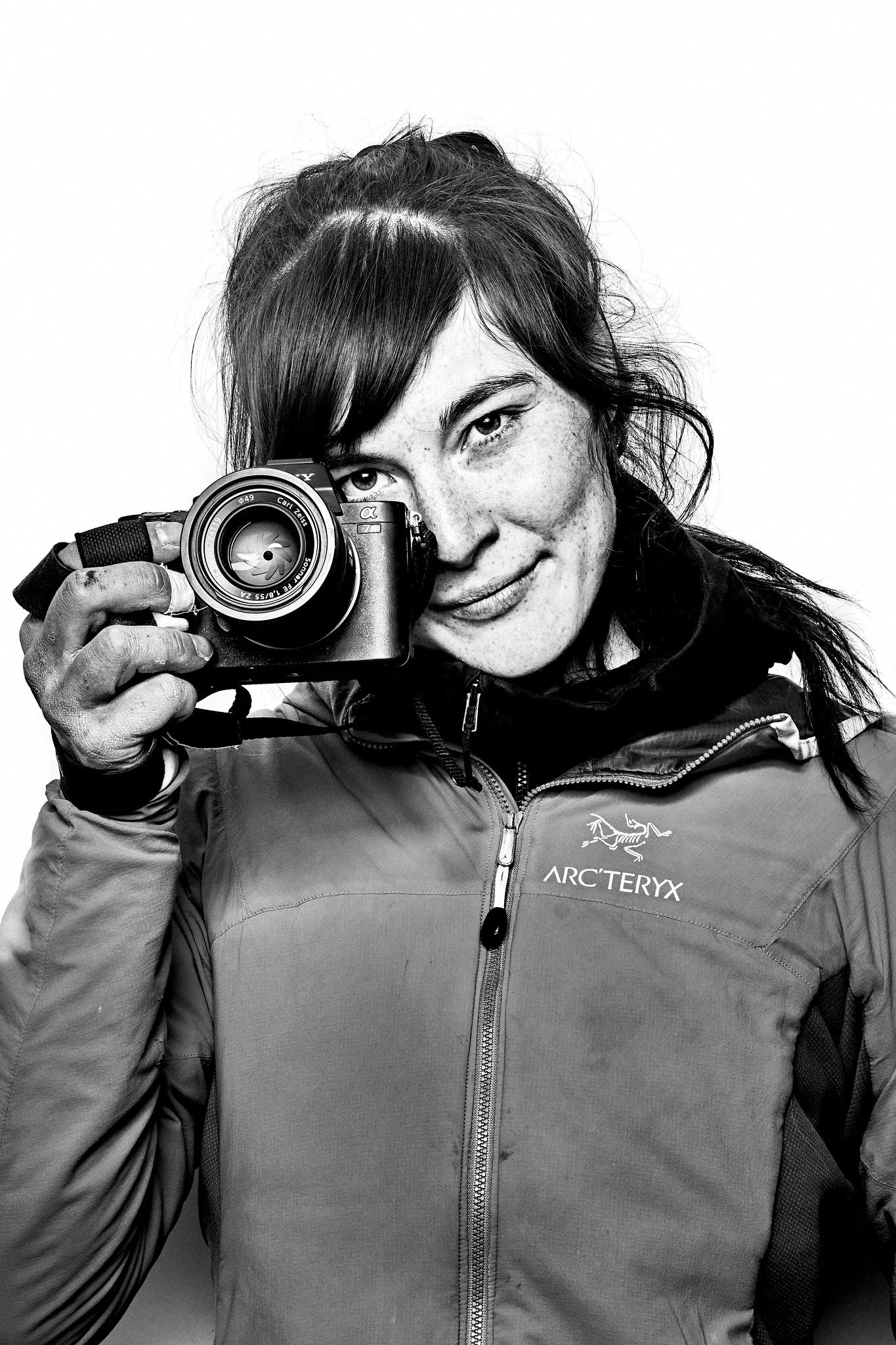
Miya Tsudome. Photo Clayton Boyd
Miya Tsudome Brings Big Wall Experience to YCA’s Film Festival
With years of experience in Yosemite and a career built on the walls, Tsudome is helping the Yosemite Climbing Association launch its Yosemite Film Festival and Storyteller Summit—while juggling the freelance hustle and a busy season of shoots and climbs.
After chatting with YCA board director Jim Thomsen about the upcoming Yosemite Film Festival and Storyteller Summit, he connected me with Bishop-based climber, photographer, and filmmaker Miya Tsudome. Jim reached out to Miya, came to Bishop, and met with her for lunch to discuss the festival. Miya told Jim—and later told me—that she’s excited to be involved and is helping however she can, especially with the festival’s filmmaker and photographer panels, workshops, and mentorship component.
“They thought that a film festival would be a great idea in addition to Facelift, and I agree. I’m just helping in the ways that I can. This year will be the testing year for the event, and they’ll have a lineup of films. We’re hoping to sell tickets to individuals looking to learn more about adventure filmmaking and climbing photography.”
I called Miya on a cold, stormy February day. We talked about how warm and clear it had been in Bishop leading up to the recent deluge. “It’s been perfect up until now,” she said. “We’ve had an amazing winter. But this storm is good for the mountains, so I’m happy about that. I don’t really ski, though. I’m not really a snow sports person. I’m just kind of a desert rat climber.”
Originally from just outside New York City in the Hudson Valley, Miya started climbing during her last year at Skidmore College, a small liberal arts college in upstate New York. At first, it didn’t “take off”—she thought she was uncoordinated, it felt too hard, and she didn’t think she’d get good at it—but she wanted more.
Soon after, a friend living in Berkeley bought her a one-way ticket to the Bay Area. With that open-ended ticket, she decided to do something bigger, heard about getting a summer job in Yosemite, and thought she’d try climbing again, plus backpacking and hiking. What she expected to be “one summer in California” became a full life-shift that led her to build her life around climbing.
Starting in 2014, she spent five years living and working in Yosemite. Her first season was at the Village Grill, then she bounced around concessionaire jobs, including stints around the Ahwahnee and Tuolumne, before guiding for Yosemite Mountain School for a season.
She didn’t study photo and film formally—she was an English lit major—but she always had a camera, and photography was a hobby that slowly turned into a calling. While in Yosemite, she bought a newer camera, and a friend encouraged her to submit photos to Patagonia.
“Someone was like, ‘Oh, you should submit your photos to Patagonia,’ and I was like, ‘What? Like, you can do that?'”
“I sold my first two photos, and that was the thing that opened the door for me.”
She said Yosemite gave her a real skill set for big wall environments—how to work on walls, stay out of the way of athletes, and feel comfortable up high. She sees the park as a place for inspiration and a testing-and-proving ground for the world’s best climbers, and a place of beauty: “So much media is created in Yosemite, and it’s an inspiring place for everybody. To have that be the place where it takes place seems pretty sweet.”
Before taking her motion and stills career to the next level, Miya interned under professional cameraman Corey Rich, where she learned not only to sharpen her eye behind the camera but also to build business acumen, crediting him with “passing knowledge and inspiration along to others.”
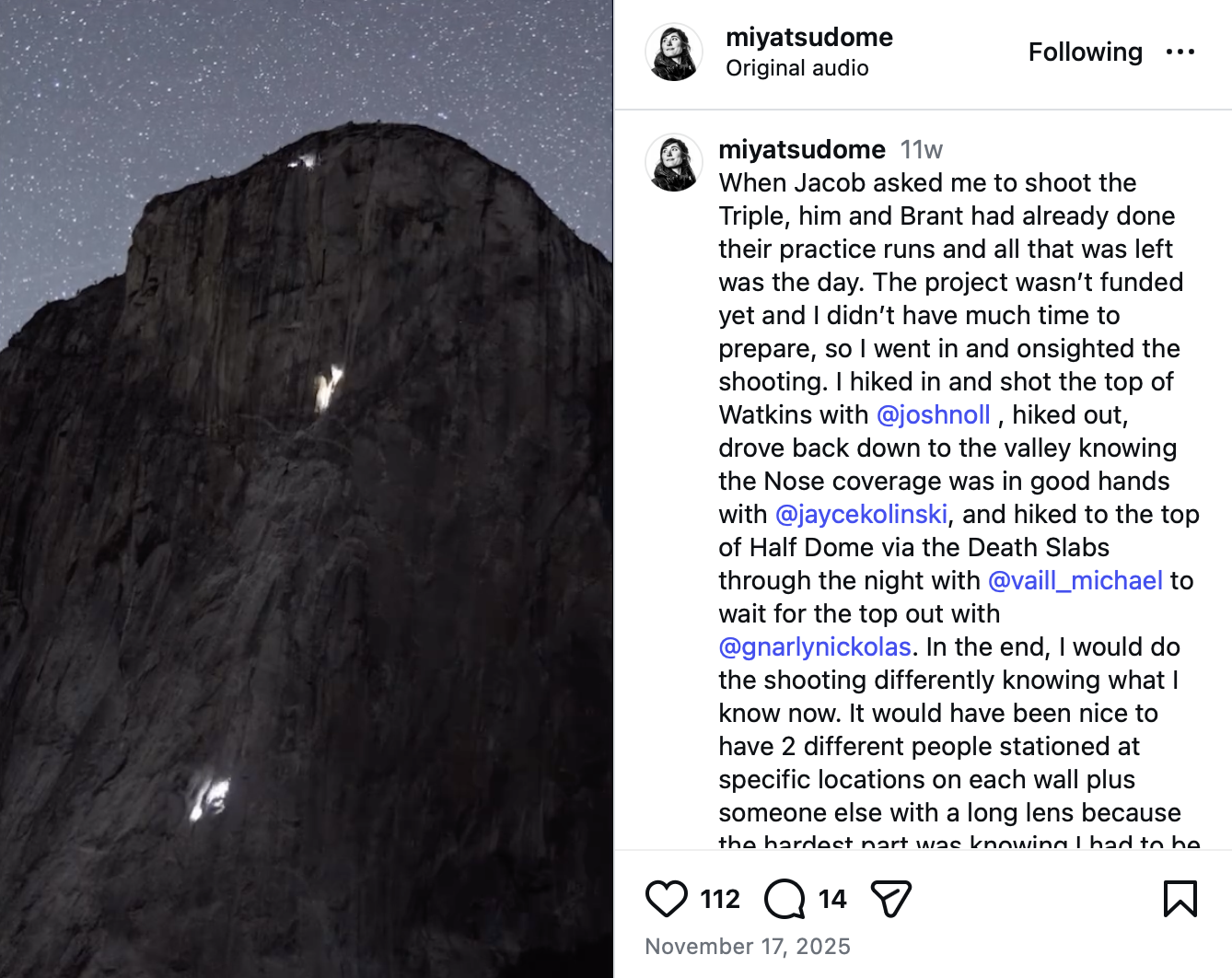
Before the call, I spent time on her website, and a few recent projects jumped out: documenting Leo Houlding and family during their six-day ascent of the Muir Wall on El Cap and filming Babsi Zangerl and Jacopo Larcher during Babsi’s flash of Freerider. She also filmed and directed the 2025 Yosemite Triple Crown project (El Cap, Mt. Watkins, and Half Dome in a day) with Brant Hysell and Jacob Cook. And I saw her current Gripped cover image of Laura Pineau making the first female ascent of Wet Lycra Nightmare on Leaning Tower.
Remy Mitchell on After 6, Manure Pile Buttress. Photo: Chris Van Leuven
As we talked, she shared her successes and also what she wrestles with, which is familiar to anyone who’s freelanced in the outdoor world. “I just feel very lucky that I’m able to incorporate my hobby, love for rock climbing, and passion for creativity. But it’s a difficult thing to do, to be able to make it work as a freelancer is something that I’m proud of.”
And, “Sometimes I’m all pinching myself that I get to do this for work.”
Regarding her upcoming plans, this summer she’s headed to the Cirque of the Unclimbables, home of the Lotus Flower Tower and the crown jewel, the 2,200-foot southeast face route first completed in 1968 by Harthon “Sandy” Bill, Tom Frost, and James McCarthy. She’ll be there on assignment for Patagonia as a filmmaker and part of the climbing team. The top priority is the Lotus Flower Tower; everything else is a bonus and depends on the weather.
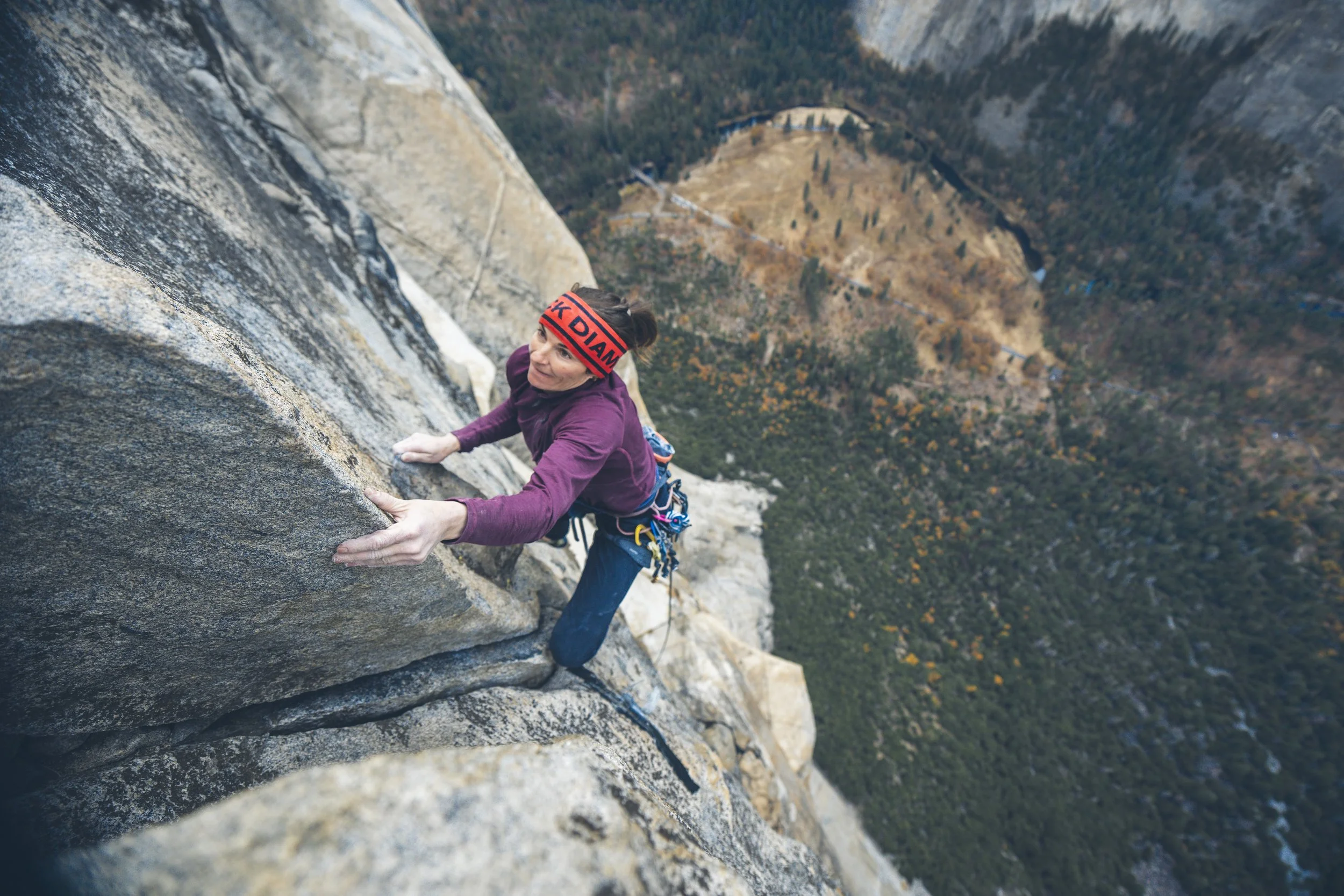
Babsi Zangerl nearing the top of Freerider having completed the first flash of El Cap in 2024. Photo: Miya Tsudome
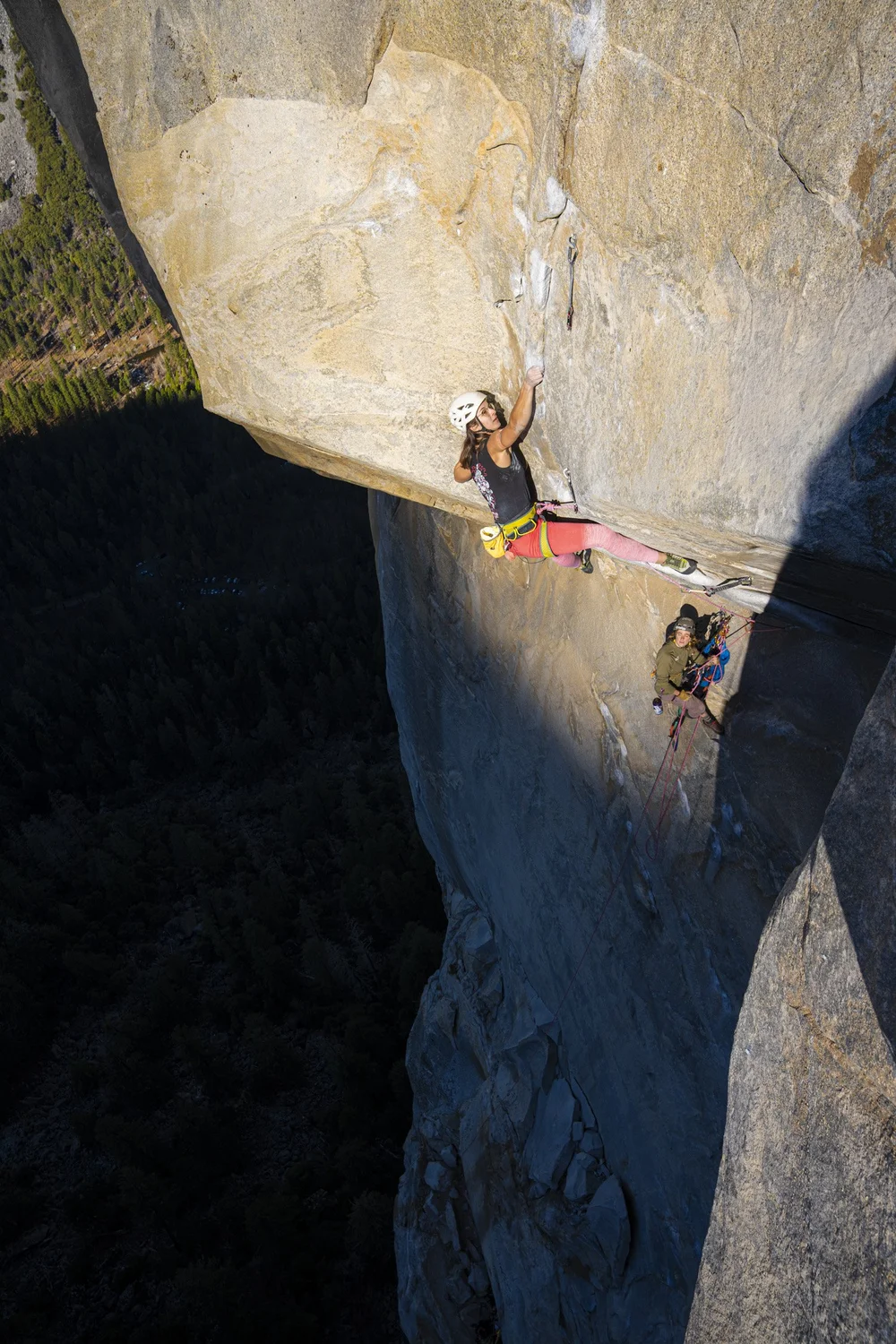
Laura Pineau making the first female ascent of Wet Lycra Nightmare, 5.13d. Photo: Miya Tsudome
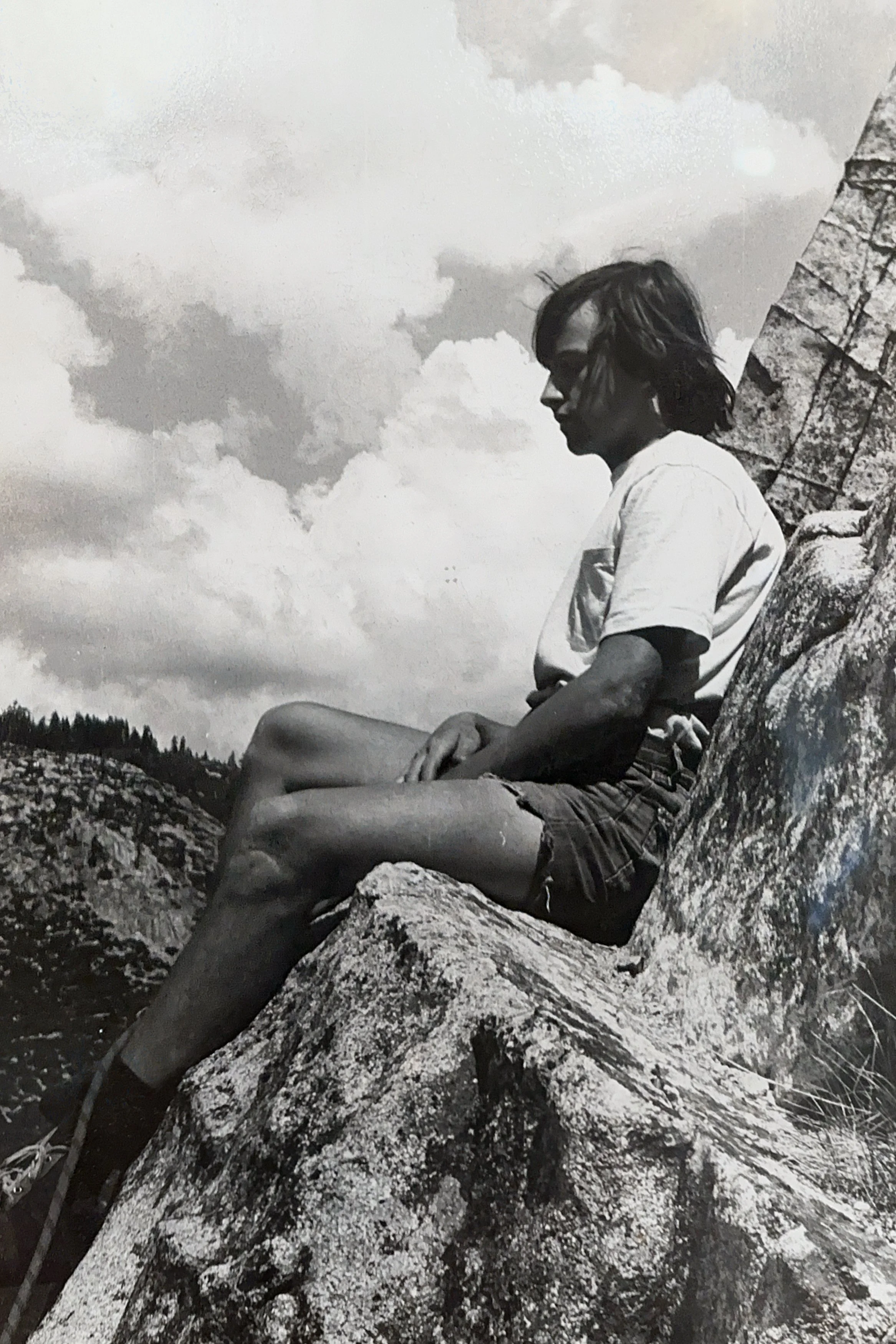
Photo: Ken Yager Collection
White Spider
Founder’s Log | By Ken Yager
I spent the summer of 1972 in Geneva, Switzerland. My father was a physics professor at UC Davis, and his research focused on particle physics. During that summer, he worked on an experiment at CERN. CERN was the largest proton accelerator at the time, aside from one in Russia. In 1974, the U.S. completed one called Fermilab in Batavia, Illinois. After that, my father conducted his experiments at Fermilab, which wasn’t as enjoyable as his time in Switzerland.
That summer, my brother and I had free rein in the city during the weekdays while our dad worked. I was 13, and my brother was 11. We had a blast exploring Geneva. We spent a lot of time on the lake and found a 10-meter diving platform accessible by climbing over a fence.
We had an allowance and bus passes. One of our chores was grocery shopping and buying other essentials. I had attended sixth grade the previous year in southern France, so I was fluent. My brother was not.
On weekends, we would take the train to Chamonix and camp in the climbers’ campground. It was called Snell Field, and all the climbers were staying there. I loved it. It was full of international climbers, and the evening campfires were amazing. I just sat back and absorbed it all. It became our favorite place to visit on weekends.
I had been climbing for a year and brought my gear. We did quite a bit of climbing on the practice crags in town. I heard about a 5.5 or 5.6 route on the Dru and wanted to try it. Somehow I convinced my father that the three of us should climb it.
We took the Chemin de Fer railway up to the Mer de Glace. We had rented ice axes and crampons. This was the first time any of us had used them. We had received no instructions. It took a while to get the crampons tight enough so they wouldn’t fall off. It took even longer to learn how to walk with them without tripping. You had to lift your legs high, or the crampon points would grab the ice and send you flying forward. We stayed well away from the yawning crevasses. I’m sure we were an amusing sight.
Once we crossed the glacier, we started hiking up to the Charpoua Hut below the Dru. It was a perfect, cloudless day. The trail was hot, very steep, and crowded. I remember a guy running up the trail with two cases of beer lashed to the top of a giant pack. As he ran past, people whispered his name in awe. Apparently, he was a well-known climbing guide. I was impressed and vowed I would train myself to carry heavier packs.
We made it to the hut, and it was nearly full. We paid for dinner and a place to sleep inside. The dinner was fancy, and we enjoyed hanging out in the warm hut after the gourmet meal until lights-out.
The sleeping area was a big bunk bed with six mattresses side by side on the bottom tier and six on the top. I assumed they would take money from 12 people—one per mattress. I was wrong. People kept showing up, and they took their money. They stacked us onto the beds like sardines. My brother and I shared half a mattress.
In the middle of the night, I had to get up to relieve myself outside. It was hard to get out of bed without disturbing everyone. I slipped outside and saw at least 20 more people sleeping on the porch and close to the building. Everyone was covered in about four inches of snow. The weather had changed.
In retrospect, it was a good thing it snowed. It may have saved our lives. I was not very experienced as a climber. I had never climbed on anything but dry rock. My brother and father had only climbed a few times before. We ended up hiking back down in the snow to the train.
My father always encouraged my brother and me to read, and he was always willing to buy us books. There were a few good bookstores in Geneva, and we frequented them. The bookstores had great mountaineering sections in all languages. I would spend hours looking through them.
My father bought me a copy of The White Spider by Heinrich Harrer. It’s the climbing history of the North Face of the Eiger, first climbed by Harrer and his team in 1938. I read that book repeatedly, mesmerized by the stories. I decided to get into mountaineering.
We returned to the States in late September, and I went back to school nearly a month after the school year had started. By then, I was so into climbing that it was all I could think about. I kept rock climbing, but I couldn’t stop thinking about how rad mountaineering would be.
So I decided I should do a winter ascent of Lover’s Leap. I talked my stepfather, Steve, into trying it with me. We drove up early on a cold Saturday morning, and the Leap looked evil. The north-facing rock was dark, with dikes covered in ice crisscrossing the face. A big storm had recently passed through and dumped about 4 feet of fresh snow. We should have turned around and driven home.
We parked at the Strawberry Lodge and started breaking trail through deep snow. It was tough. There was manzanita under the snow, and my feet kept getting caught in it. The snow was deep—frigid and fluffy. After several hours of struggling, we finally reached the base of the wall. We were soaking wet as we put on our swami belts and tied in.
We had picked a three-pitch climb called East Wall, rated 5.6 when dry.
I grabbed my rack of stoppers and hexes and started up the crux first pitch. The dikes had frozen puddles on top. I had to step and grab the high points of the dikes that stuck above the ice. Fortunately, the protection was okay. The climbing was sketchy, but I kept going.
At the crux, there’s a hand crack over a bulge. I placed a big hex in the ice-coated crack. As I climbed over the bulge, my mountaineering boot slipped out of the verglassed crack. Somehow, I managed to hang on with my hands and get past it with my heart racing.
I climbed the rest of the way to the ledge, built an anchor, and put Steve on a hip belay. By the time he reached me, I was shivering, and my hands were slightly frostbitten. They hurt really bad. I was in agony.
Steve gave me his Dachstein fingerless gloves to wear, grabbed the rack, and started leading the second pitch. A little sun began to hit us, and a cold wind picked up. I had never been so cold in my life. We made it to the top at dusk without further incident.
We broke trail in chest-deep snow on the descent and reached the car well into the dark. I called my father to tell him I was okay. The heater in the truck felt dreamy. My fingers and toes became painfully sensitive as they thawed.
On the drive home, I thought a lot about that day. I decided I liked staying warm, and I preferred climbing on dry rock. I didn’t want to end up like Toni Kurz on the Eiger.
I think I’ll stick with rock climbing.
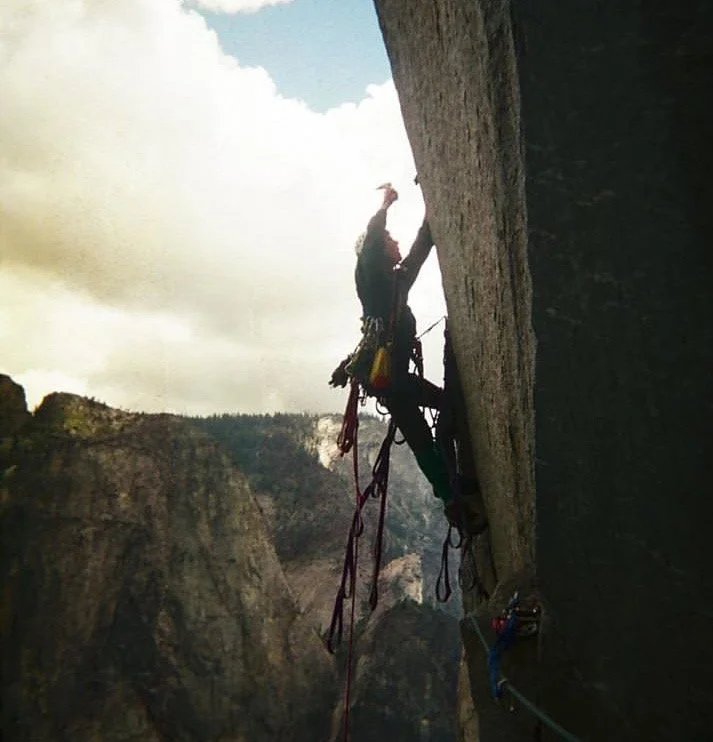
PHOTO OF
THE WEEK
1997 — Ben Zartman replacing a broken rivet on the Pacific Ocean Wall, El Cap. Photo: Chris Van Leuven

Stay up to date on the latest climbing closures in effect!
Get your permits, do your research, and hit the wall!
Visit the Yosemite Climbing Museum!
The Yosemite Climbing Museum chronicles the evolution of modern day rock climbing from 1869 to the present.
The YCA News Brief is made possible by a generous grant, provided by Sundari Krishnamurthy and her husband, Jerry Gallwas