

Your window into the stories, history, and ongoing work to preserve Yosemite’s climbing legacy.
A Note from the Editor
Hello YCA Community,
As the autumn sun dips lower over the rim and cold mornings set in, Valley season is visibly shifting. The crisp, cool air and dry days have delivered ideal conditions for high-end free climbing. On El Capitan, the headlamps belong to more free climbers than aid climbers.
Up high, Tioga Pass reopened to through traffic before winter locks down the high country for good. Bears are still active in their preparation for the winter and have been visible throughout the park. Please remember to store food properly and keep these bears wild!
On a personal note, I’ve packed up and left the park to wrap up another season, closing out the fall by spending time with friends and repeating a few classic routes. Thanks for following along with the YCA News Brief this far and I hope you all stay warm through the seasonal transitions.
Miles Fullman
Editor, YCA News Brief
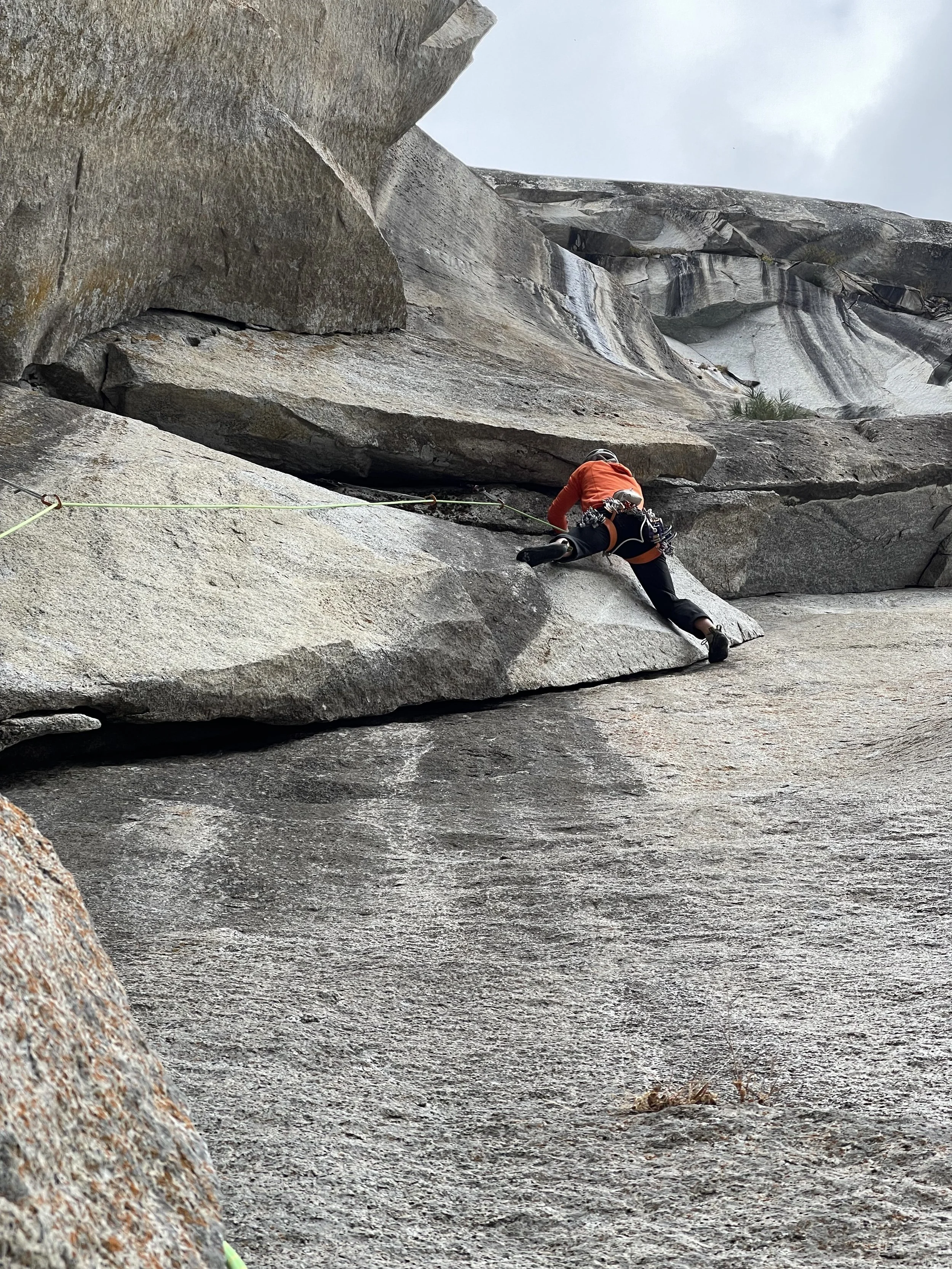
Climbing the wild steep flakes on pitch 4. Photo: Nick Ehman
Forgotten Classics: The Good Book
Between Camp 4 Wall and Middle Brother sits The Folly, a tower featuring an obvious right-facing corner that sweeps invitingly toward the top of the formation. Unfortunately, higher toward the top of the wall is an enormous rock scar that looms ominously above the tower…
Being so close to Camp 4, The Folly was the setting for several notable ascents put up by some of the most prominent denizens of the era. The tower itself was originally climbed in 1964 via its left side by Jim Bridwell and Layton Kor. Other notable figures left their own marks on the formation—including Eric Kohl, Ray Jardine, Walt Shipley, John Sherman, Todd Skinner, and the team of John Bachar and Tobin Sorenson, who established a harder direct start to The Good Book in 1975, two years after its first free ascent.
In his Yosemite Free Climbs guidebook, Don Reid describes The Good Book—also known as the Right Side of The Folly (5 pitches, 5.10d)—as “perhaps the best Yosemite crack climb of its grade. Steep, clean, and sustained crack climbing.”
The route boasts one of the most impressive first-ascensionist rosters around. First climbed in 1965 by Warren Harding and Tom Fender, the line was initially an aid climb that required a wide assortment of large pitons.
By the late 1960s and early 1970s, aid routes across the Valley were being freed at a rapid pace. The Good Book was first freed eight years after its initial ascent by an all-star crew consisting of Dale Bard, Jim Bridwell, Kevin Worrall, and Ron Kauk in 1973. The route quickly gained notoriety as a Valley classic—a granite crack-climbing testpiece. As Yosemite climbers redefined the limits of free climbing, the route secured its reputation as one of the cornerstones of this first wave of hard Valley free routes. Many of these 5.10+ lines established in the early 1970s remain stiffer and more demanding than 5.11s put up in later decades.
The same year Bridwell participated in the first free ascent of The Good Book, he published two influential articles: “Brave New World” and “The Innocent, the Ignorant, and the Insecure.” These articles serve as the first published introduction to letter-grade subdivisions (a, b, c, d) to the 5.10 rating. While 5.10 was first recognized in Yosemite with the 1961 ascent of Crack of Doom, it wasn't until 1973 that the grade gained wider acceptance in Yosemite. When the Yosemite Decimal System was established in the 1950s, it operated as a closed scale capped at 5.9. By the late 1960s, advancements in gear and physical performance outpaced this ceiling, creating a bottleneck where increasingly difficult routes were lumped into "5.9+"—giving the rating the fearsome reputation it still holds in the Valley today. That same resistance to grading climbs as harder than 5.9 persisted into a hesitance to grade climbs harder than 5.10, creating an array of 10+ routes around the Valley that feel much harder than advertised.
Standards for free climbing were evolving rapidly in the early 1970s. Several other classic 5.10d routes from this era illustrate the hesitance to bestow the grade of 5.11 on a route: Five and Dime (1971), Final Exam (1971), Finger Lickin’ (1973), and Mark of Art (1974) are all still humbling reminders of the level of mastery attained at this time.
Covering a wide variety of styles, The Good Book serves as a masterclass in Yosemite crack techniques: from the strenuous laybacking on the third pitch to the heel-toe cams and hand stacks required through the final offwidth, down to the wildly overhanging flakes leading to the steep fists and hands splitter. It is undeniably a classic Yosemite testpiece.
In later years, retro-bolts were added alongside the crack, sparking immediate controversy. These bolts were subsequently chopped by climbers who argued they were completely unnecessary given the route’s flawless natural protection. Even before spring-loaded camming devices revolutionized gear protection only a few years after the first free ascent, climbers were fiercely debating the ethics of bolting crack systems.
Unfortunately for this historic line, a massive rockfall in 1987 (along with subsequent major rockfalls off Middle Brother in 1998 and 1999) severely altered the wall, cascading down the route and heavily damaging the lower pitches. The first pitch remains noticeably affected, choked with vegetation and loose, questionable flakes across hard-to-protect sections. Evidence of the rockfall's power remains visible on the route today: a bolt on the first pitch warped by impact, and second-pitch anchor hangers bent by falling debris.
Despite the hazards, the route's quality still attracts top-tier climbers. Alex Honnold used the line as part of his free-solo training routine leading up to his historic 2017 free solo of El Capitan's Freerider. Photos by Jimmy Chin capturing Honnold high on The Good Book's sheer corner provided a striking visual record of the route's exposure.
While safety concerns make it difficult to recommend as a standard Valley classic today, The Good Book remains a compelling piece of Yosemite climbing history—a legendary line partially obscured by time and rockfall.
Routes fall in and out of vogue, but the history carved into these granite walls endures.
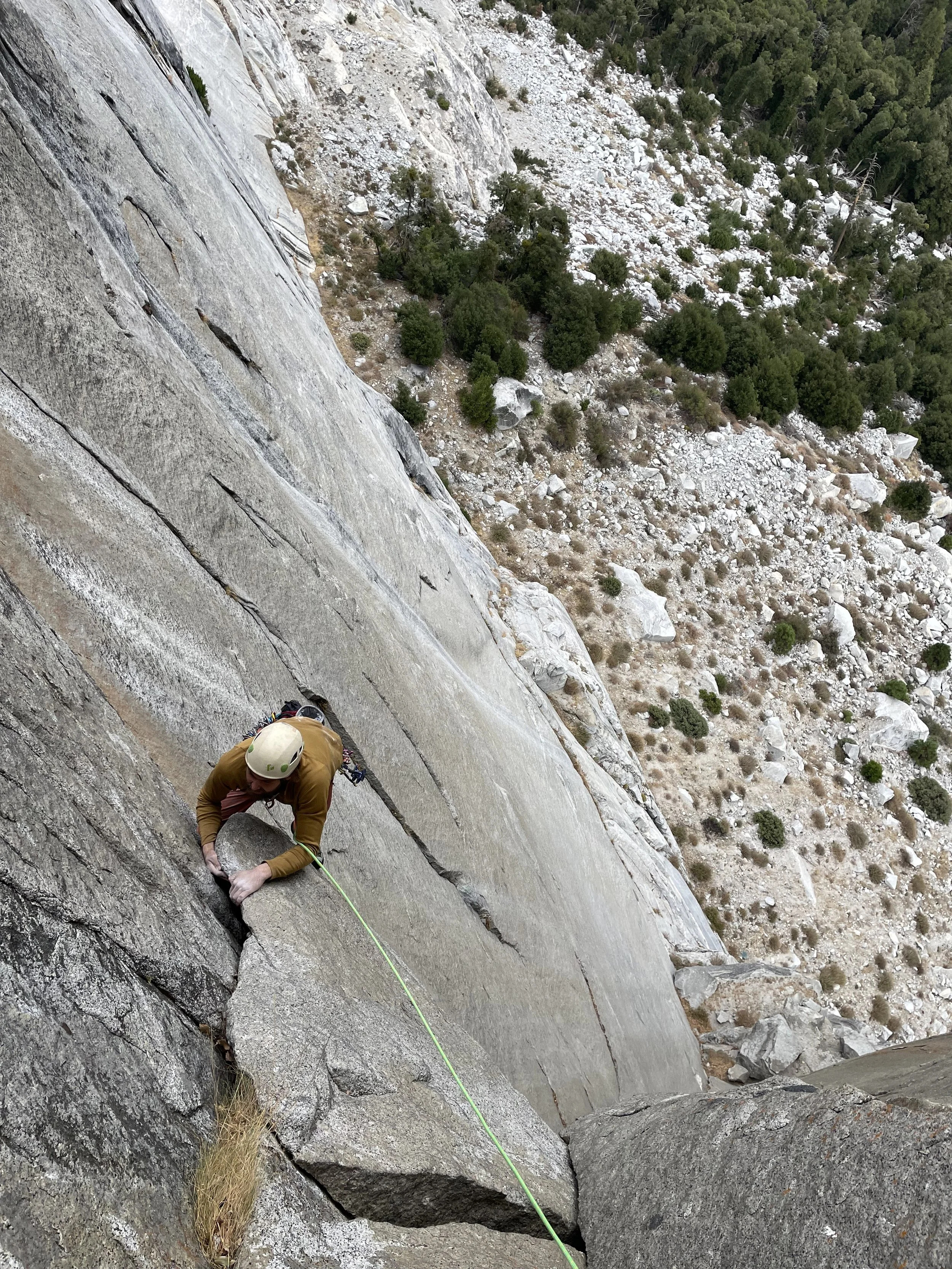
Nick coming up the overhanging flakes on pitch 4. Photo: Miles Fullman
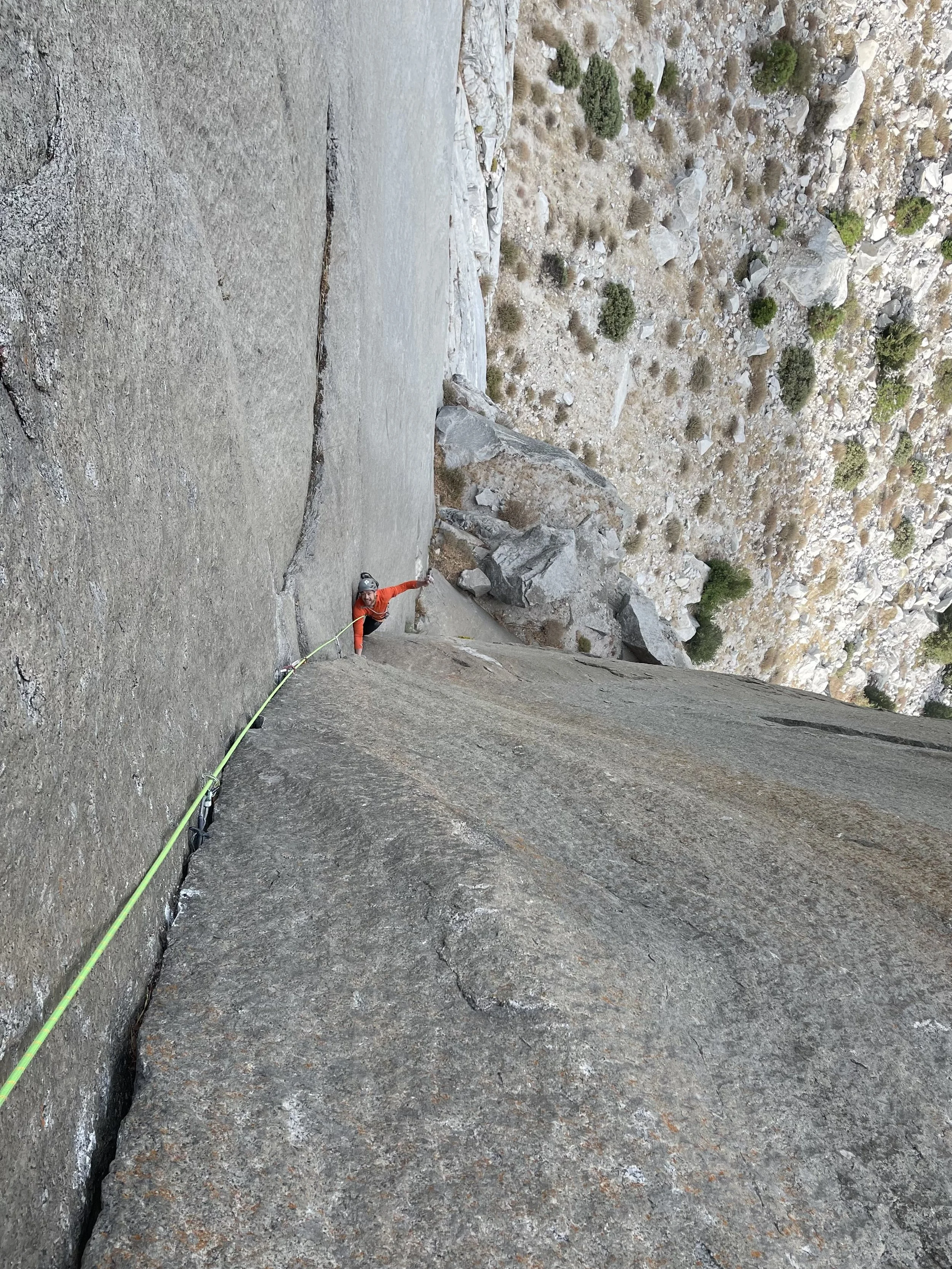
Climbing the stunning third pitch lieback. Photo: Nick Ehman
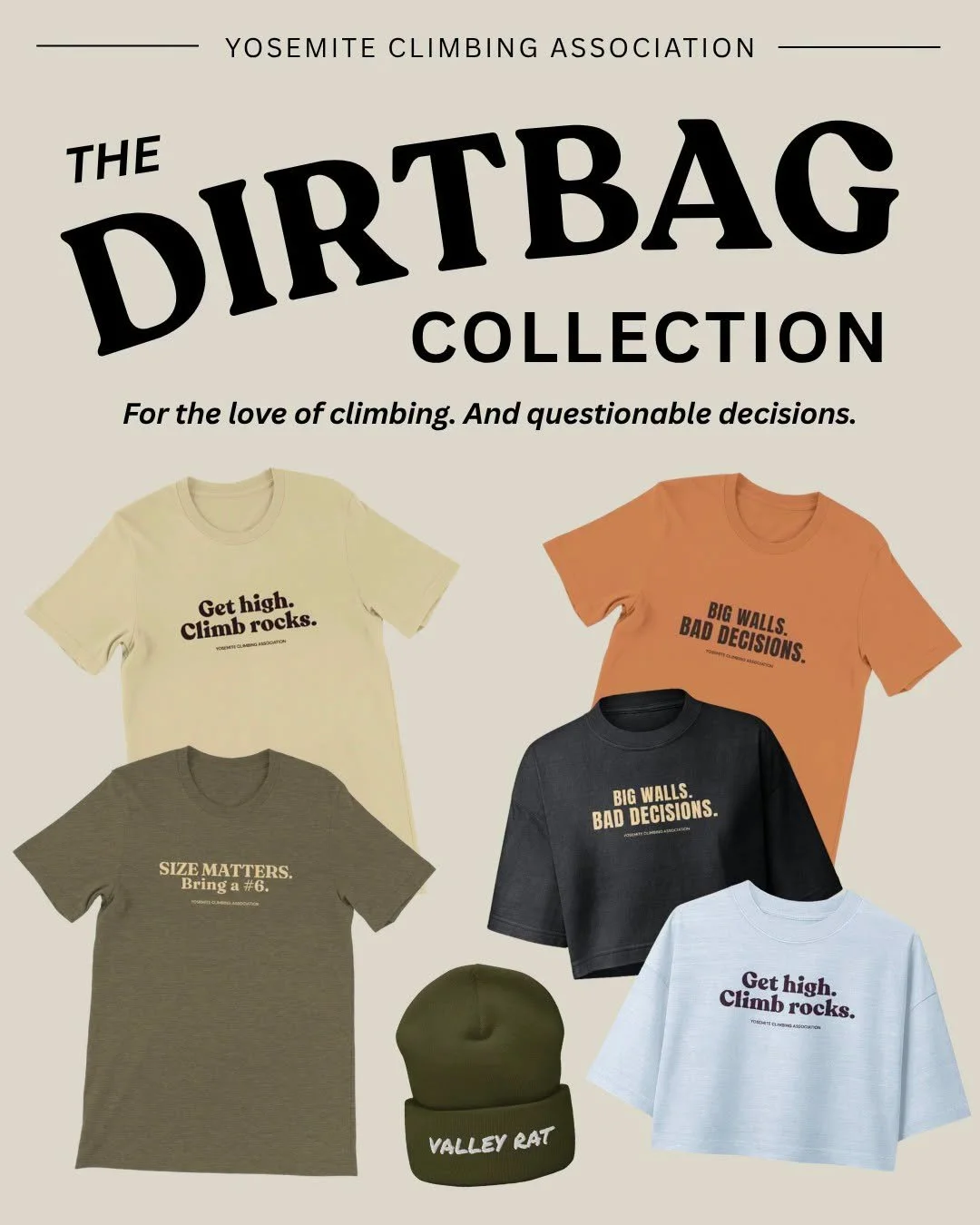
THE DIRTBAG COLLECTION IS OUT NOW!
For the dirtbags. The valley rats. The people who would rather be climbing.
Introducing the YCA Dirtbag Collection: a little climbing humor, a little attitude, and a whole lot of love for Yosemite.
Three tees and a Valley Rat beanie, made for the climbing community and everyone who feels at home among the granite.
And the best part? Every purchase supports the Yosemite Climbing Association and our work to preserve Yosemite's climbing history, care for the places we love, and inspire the next generation of climbers.
Good shirts. Good cause. Questionable climbing decisions.
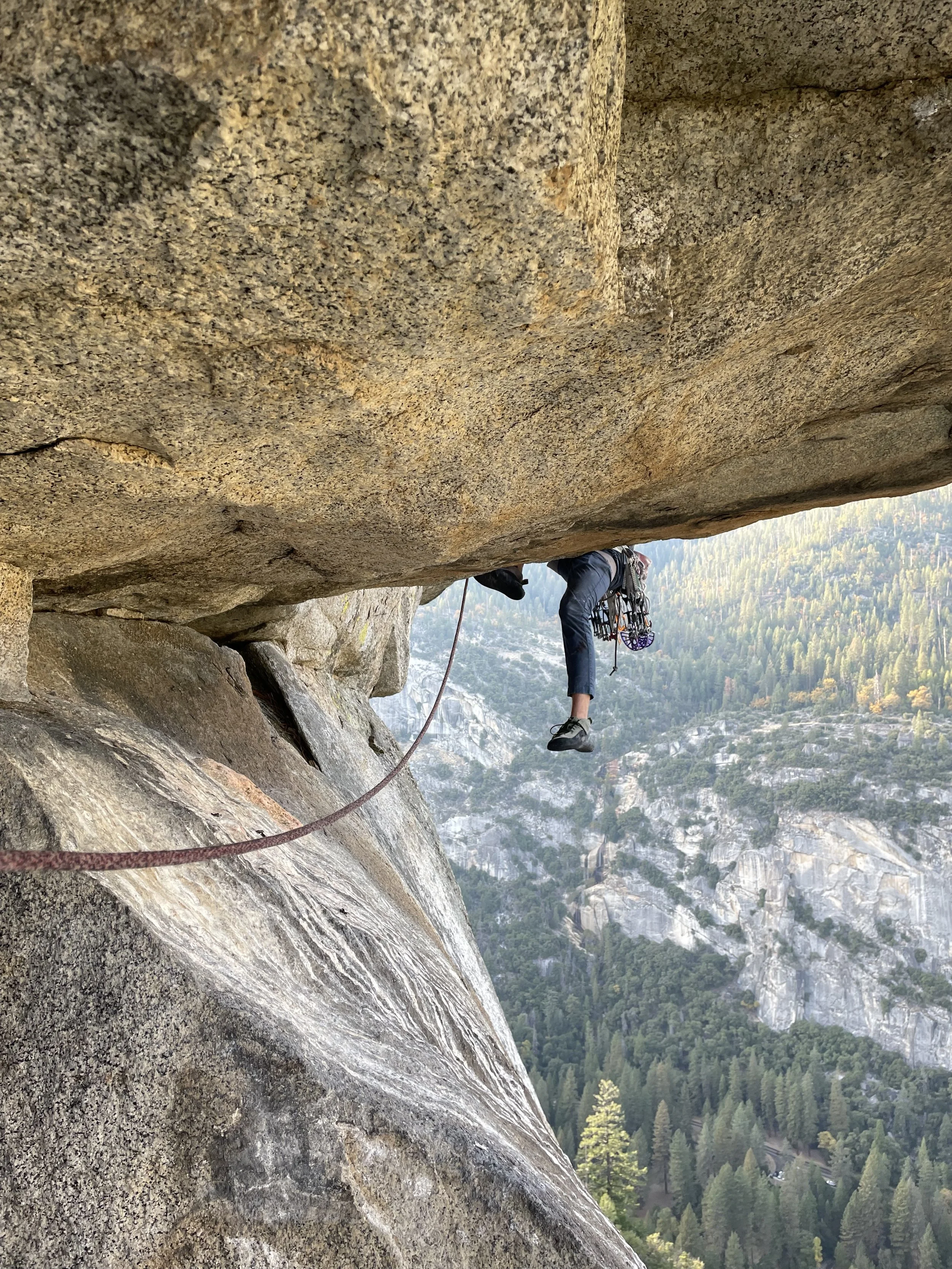
PHOTO OF
THE WEEK
KC Ellingford dangles out of view on the last pitch of the Rostrum. Photo: Miles Fullman

Stay up to date on the latest climbing closures in effect!
Get your permits, do your research, and hit the wall!
Visit the Yosemite Climbing Museum!
The Yosemite Climbing Museum chronicles the evolution of modern day rock climbing from 1869 to the present.
The YCA News Brief is made possible by a generous grant, provided by Sundari Krishnamurthy and her husband, Jerry Gallwas