

Your window into the stories, history, and ongoing work to preserve Yosemite’s climbing legacy.
A Note from the Editor
Hello YCA Community,
The seasonal shift arrived in force over the last few days as a sharp storm moved through the Valley, dropping fresh snow across the high country. High Sierra peaks, the summit of Half Dome, and the Valley rim are all frosted white, while the sudden precipitation brought Yosemite Falls temporarily back to life. With the snowfall, park officials issued temporary closures for both Tioga Road and Glacier Point Road, alongside seasonal reminders for peak fall bear activity and ongoing weekday delays at the El Capitan Bridge stabilization project. Temperatures remain crisp, and with a bit of luck, the granite will dry out heading into next week for solid autumn climbing conditions.
In this week’s feature profile, we take a look at the machinery and craftsmanship keeping Valley aid climbing moving forward. We sit down with Theron Moses of Moses Enterprises to trace how an Atascadero machine shop became a cornerstone of big wall hardware—from early collaborations with John Middendorf and Bryan Law to the engineering behind the newly released #4 Tomahawk.
Miles Fullman
Editor, YCA News Brief
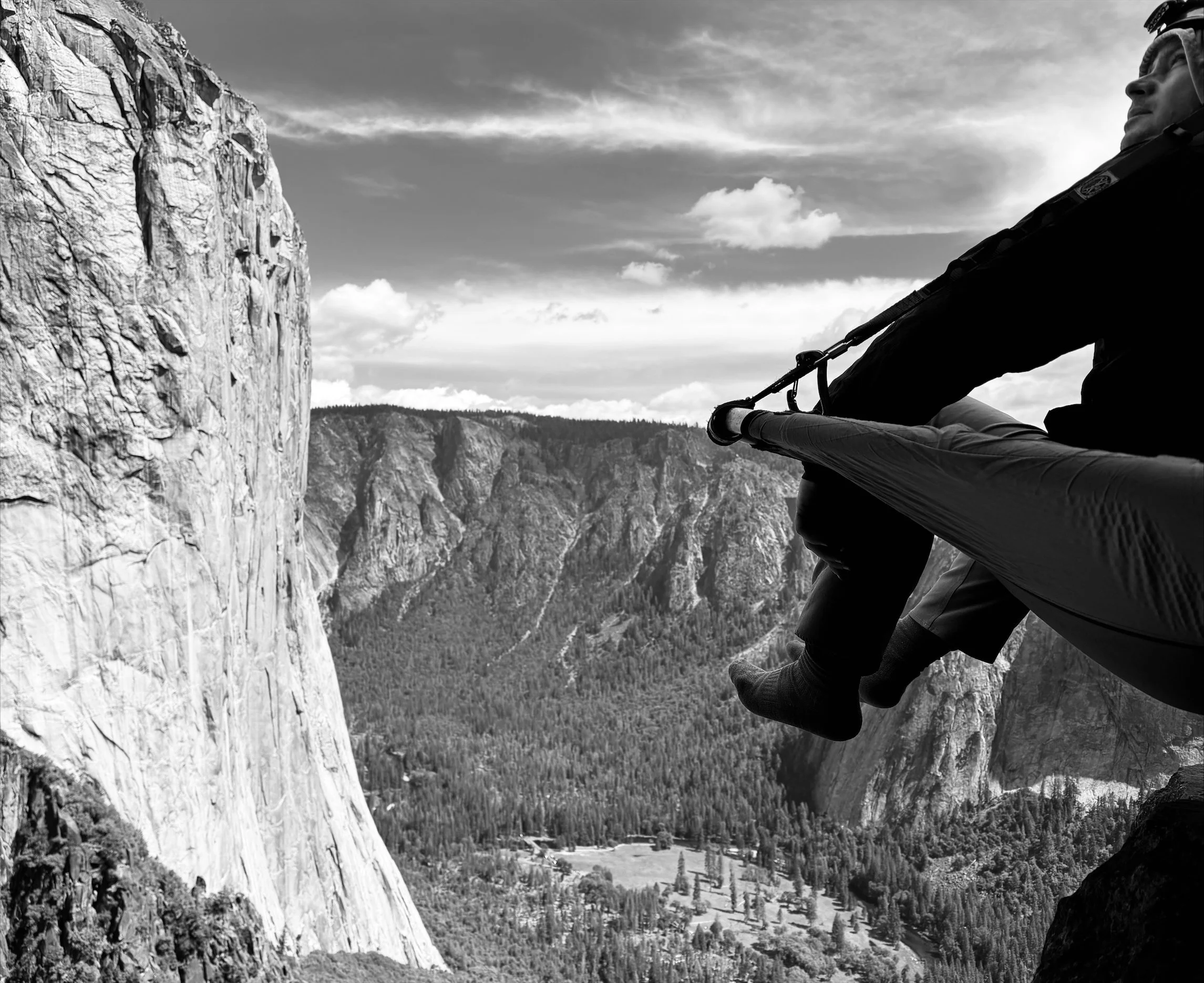
Hanging out on the portaledge at Rainbow Ledge, Laughing at the Void. Ribbon Falls Amphitheatre. May 2026. Photo: Justin Lawrence
Forged in Steel: How Theron Moses Keeps Yosemite Aid Climbing Moving Forward
Some of the most difficult to reach places on the walls of Yosemite have been made more accessible thanks to the tireless output of a 2,200-square-foot machine shop in Atascadero, California. From aluminum and copper heads and keyhole rivet hangers to Tomahawk beaks driven into expanding flakes on El Capitan, much of the hardware supporting modern aid climbers comes out of an industrial unit four hours down Highway 41 from the Valley.
Moses Enterprises didn’t start as a climbing brand. When founder Theron Moses set up shop in 1998, he was focused strictly on machinery maintenance and custom fabrication. But in 2001, the climbing bug bit hard.
"With machinery available, I dabbled in gear and manufactured my own Russian aiders, double portaledge, reproduced a Fish Captain Hook, and other small items," Moses recalls.
What transformed a machinist’s side hustle into a cornerstone of specialized big wall manufacturing was community engagement—specifically, the legendary D5 Hammer Project on SuperTopo between 2006 and 2010. Theron reached out to big wall pioneer John Middendorf, who sent over his original development paperwork, opening a window into classic hardware design.
"It was fascinating to see into his development process," Moses says. "I learned an amazing amount from him and the D5 project."
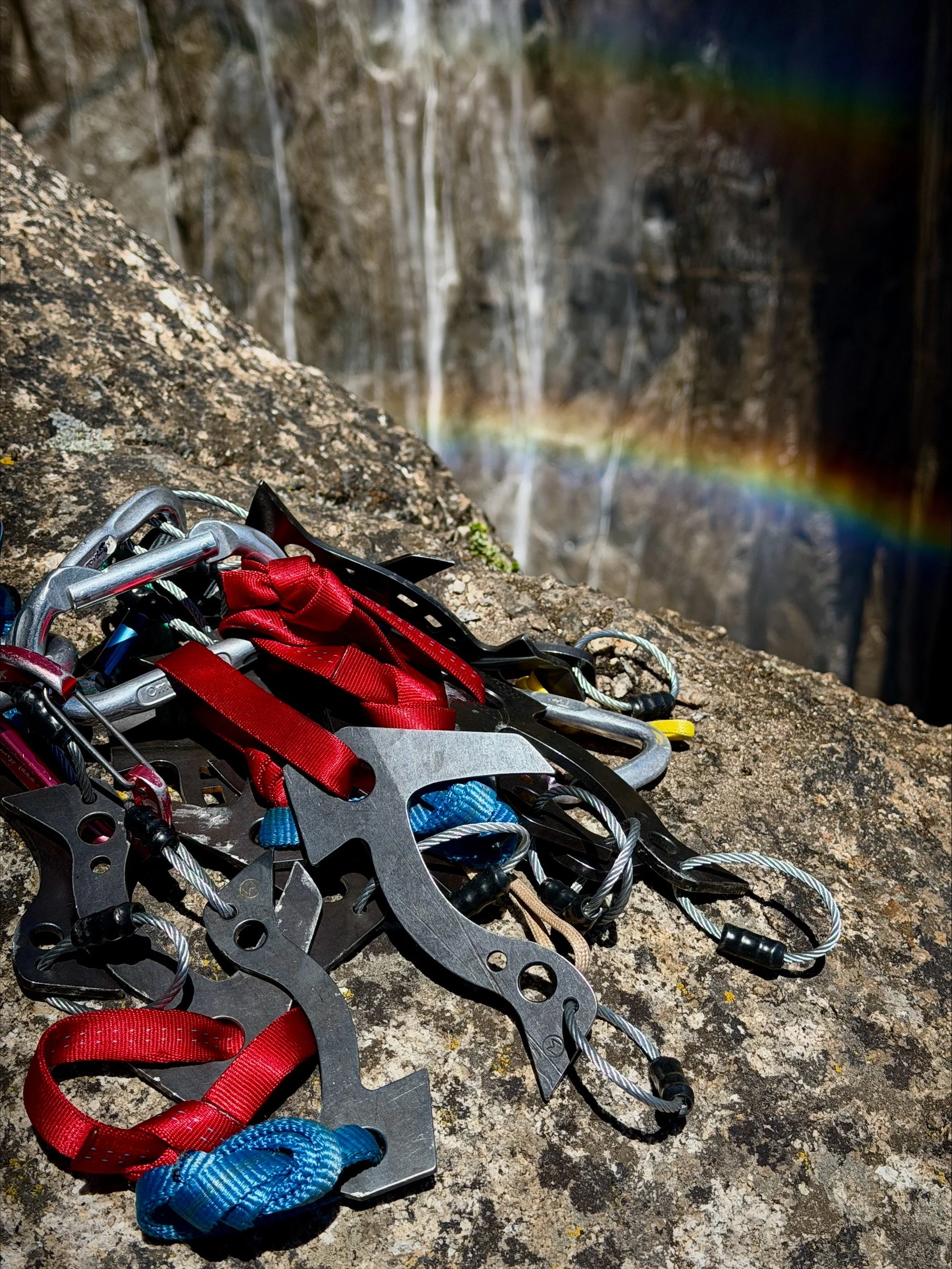
A thing of beauty… Tomahawks being used in the Ribbon Falls Amphitheatre. Photo: Justin Lawrence
The Evolution of the Beak: The Tomahawk Story
While the D5 project opened doors, the origin of Moses' flagship beak—the Tomahawk—stretches back even further into big wall history. Collaborator Bryan Law first sketched a crude mechanical drawing of the design in January 1996, drawing inspiration from his work at A5 Adventures in Flagstaff in 1993 and 1994. Running the A5 machine shop, Law spent countless hours stamping and swaging early A5 Birdbeaks.
"When you are looking at a box of 2000 beaks and you swage and swage and swage, you get to know a beak quite well… although I must say that it is more fun to hang from a beak on a big cliff than it is to stamp and swage one!" Law shares.
By the spring of 1997, Law was prototyping in a community college machine shop, fabricating oversized 1/4-inch aluminum plate versions known as "Mud Beaks." Driven into angled 3/8-inch holes as bomber bat-hook placements, these wild precursors—individually stamped with names like Hole Hugger, Dirt Hurts, Driller, Suck Sand, and Eat Mud—saw action on the first ascent of The Hazing on Fisher Towers' King Fisher.
The bridge between Law's early designs and full production was built online in April 2005 during a SuperTopo forum discussion about A5 gear. The thread connected Law and Theron Moses, initiating four years of phone calls, CAD models, and extensive physical prototyping. The long-distance partnership culminated in 2009 when the first production run of #1 Tomahawks hit the market—the two back-country innovators having only just met in person days before the release.
As Law noted upon the 2009 release: "Special thanks to John Middendorf for giving me the opportunity to work at A5, and the inspiration to keep innovating. Special thanks to Theron for his fine craftsmanship, and his patience throughout the multiple stages of prototyping that he endured over the years."
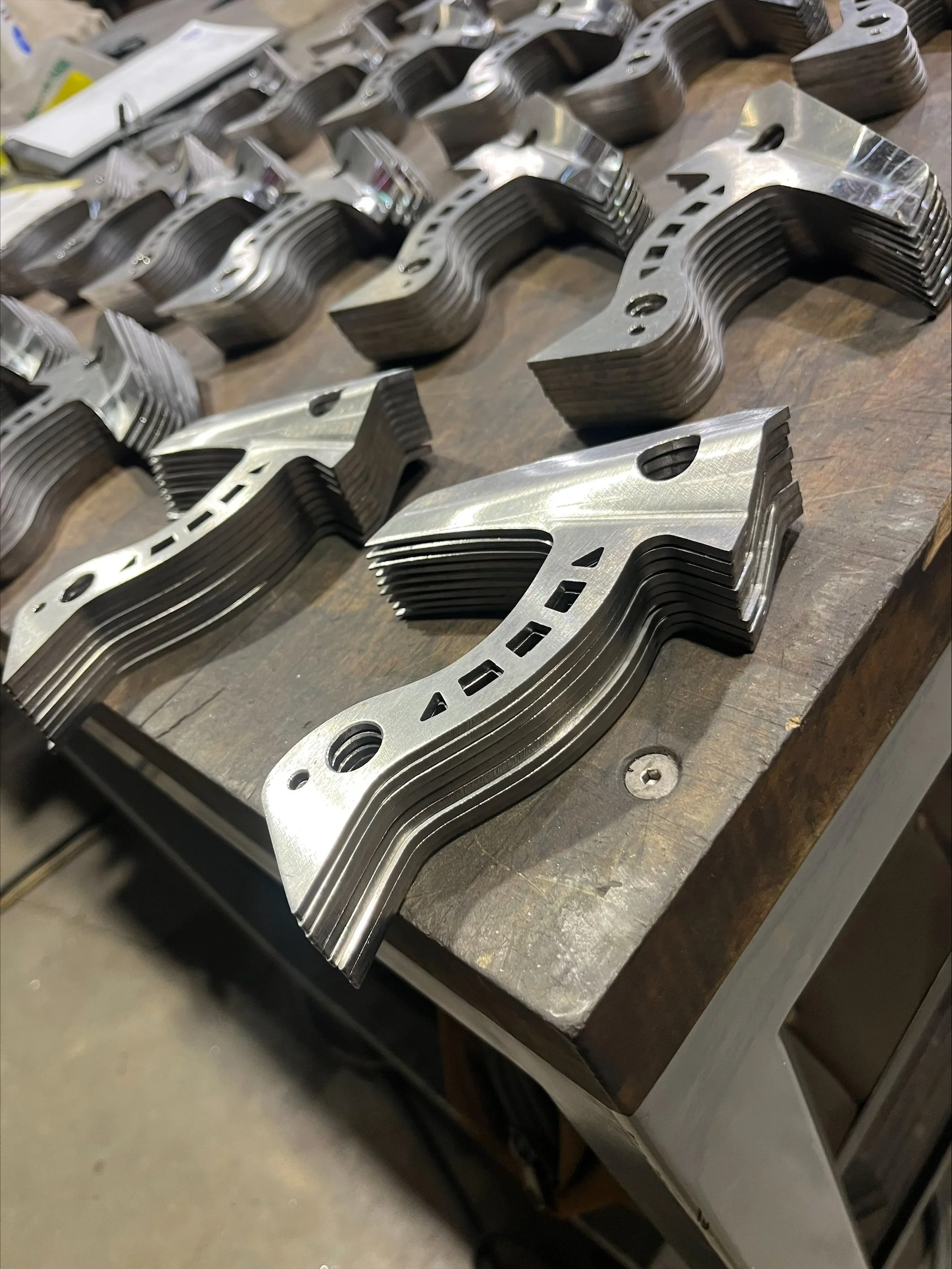
#4 Tomahawks in completion of the final forming, before tumble deburring. Photo: Theron Moses
Modern Manufacturing & The Expansion of the Line
That initial collaboration triggered a chain reaction throughout the aid community. Climbers facing unfilled equipment niches began reaching out directly. Erik Sloan needed keyhole rivet hangers. Soon after, Theron took the leap on running his own dedicated shop full-time, folding climbing production directly into the main line alongside custom machining, sign fabrication, CNC plasma cutting, and welding.
The catalog expanded rapidly. Larry Arthur of Mountain Tools connected Theron with Ed Leeper upon Leeper's retirement, bringing iconic cam hooks and Logan hooks under the Moses umbrella. Collaboration on tools followed quickly: in addition to a leashed blunt chisel and punch that Bryan made for placing heads, he designed and used the Butterknife during his clean-up of Zodiac on El Capitan in 2004. These three tools went into production, but with a refined leash groove cut on a lathe. Cable rivet hangers, heads and circleheads, and a Funkness device also went into production.
Today, climbing hardware makes up about a third of Moses Enterprises’ annual output. Developing clean-aid and hard-aid protection remains a meticulous process, often taking a year or two of design and field testing to bring a single piece from initial CAD draft to final production:
Raw Materials: U.S.-sourced, aircraft-grade 4130 chromoly steel complete with traceable certificates of origin.
Manufacturing Pipeline: Laser cutting, deburring, milling, custom forming, tumble deburring, and logo stamping, followed by certified heat treatment and tumbling cleanup.
Quality Control & Testing: Swaged cable gear undergoes third-party destructive batch testing alongside in-house width gauge verification on the first and randomly through the middle and last pieces of each run. Heat-treat batches include sample specimens returned with hardness verification certificates.
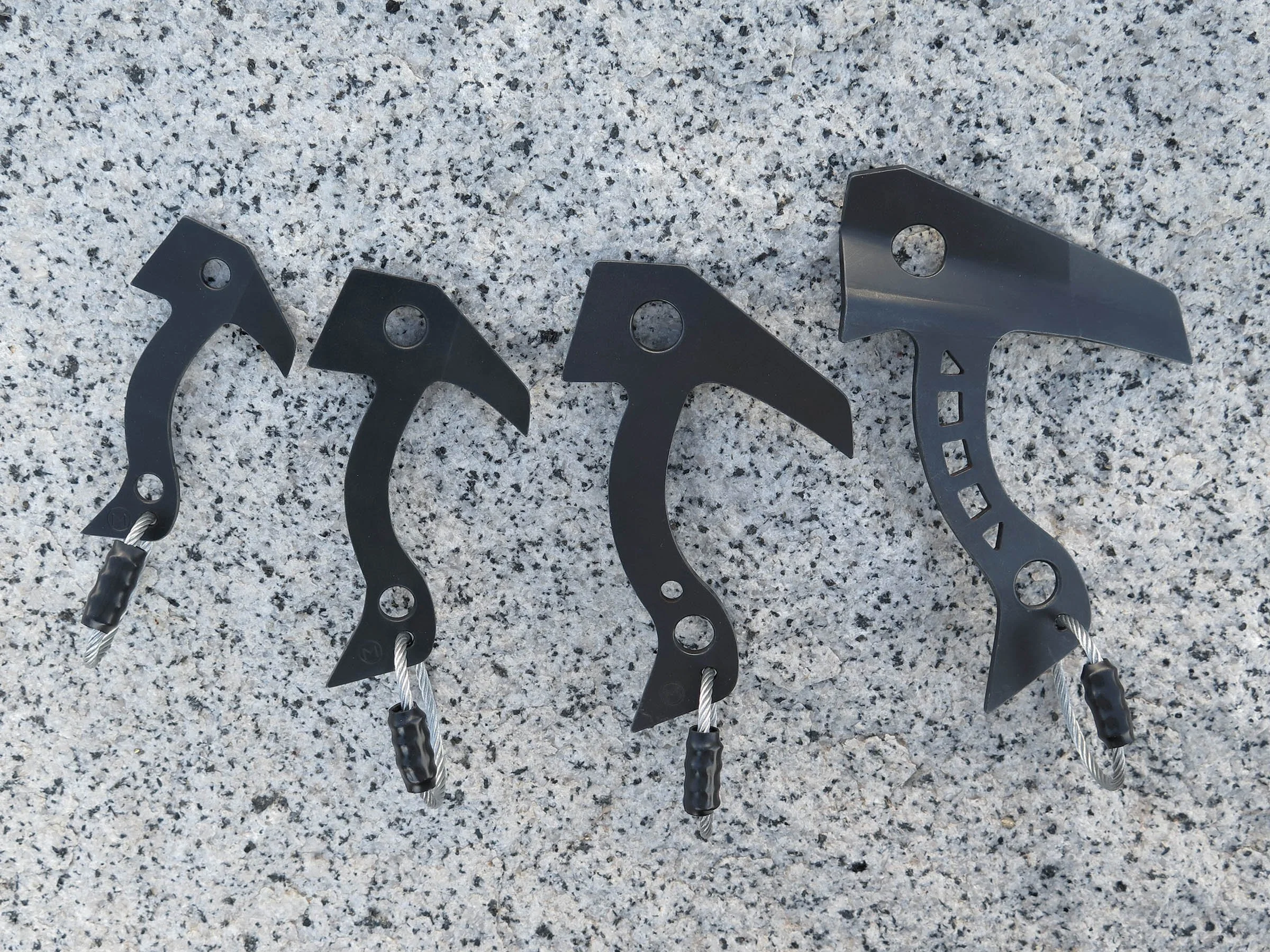
The current lineup of straight-in Tomahawks, including the new #4 Tomahawk at right. Photo: Bryan Law
Refining the Standard: The #4 Tomahawk
The latest testament to this collaborative pipeline is the newly released #4 Tomahawk. Beaks trace their lineage back to Jim "The Bird" Bridwell cutting off one side of a Chouinard Crack’n-Up, which Middendorf later refined into the A5 Birdbeak. While sizes #1 through #3 were long thought to be the logical end of the design, years of requests via DMs, emails, and forum posts pushed Theron and Bryan Law back to the drafting table to create a larger piece with classic Tomahawk holding power and easy extraction.
"One of the hurdles to overcome was weight," Moses explains. "The Tomahawks are known for being a bit hefty. The balance that was sought was weight versus functionality and durability... The #4 is the same weight as the #3 by using thinner material, forming part of the taper with bends, and utilizing lightening holes cut into the stem."
Beyond horizontal tapers, Tomahawks incorporate a slight vertical taper akin to a stopper, along with multiple angled striking surfaces designed to aid accurate placement and rapid cleaning from thin seams, small scars, and slight flares. The #4 also features a distinctive bend running the length of the blade and head and functions like a shallow angle piton, adding a springy character to the blade that increases holding power. The bend can also be used for the traditional, almost lost art of pin stacking.
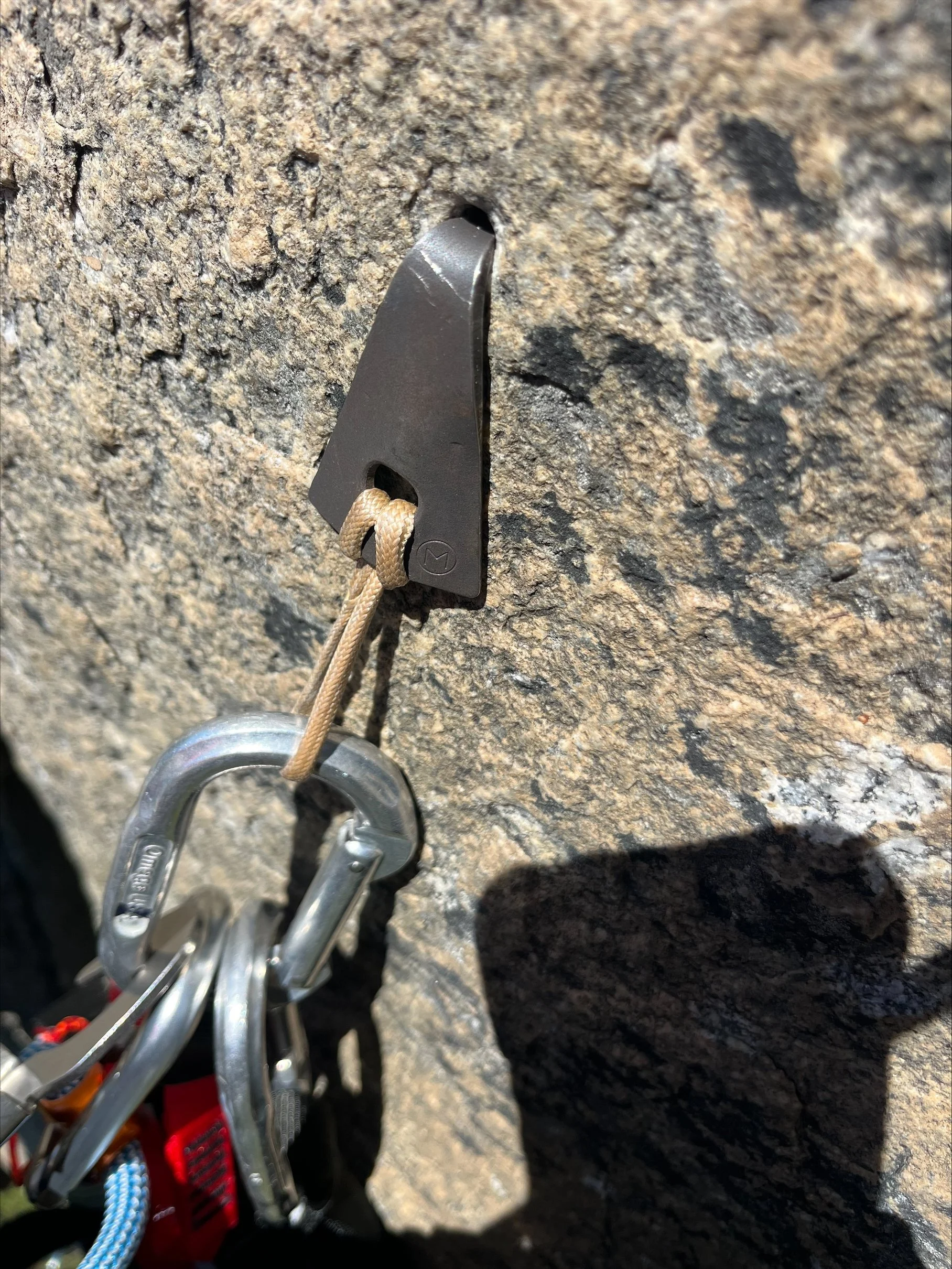
Theron Moses’ personal favorite piece of gear he has developed: the Pointed Logan Hook. Photo: Theron Moses
Testing on Granite
Despite running a full machine shop, Theron tests his creations on the rock. This past May, he put a rack of gear through its paces on Laughing at the Void in Ribbon Falls Amphitheatre, relying on prototype #4 Tomahawks, cam hooks, Logan hooks, a D5 hammer, Alfifi hooks, and large hook prototypes to navigate the route's long beak seams up to Rainbow Ledge.
That deep personal connection to Yosemite drives the work. Theron led his first climb, his first trad pitch, and his first big wall in the Valley.
"I don’t get to be in Yosemite enough," Moses admits. "I’m in The Valley and I’m scheming ways to get back and I haven’t left yet. Every trip involves a stop in El Cap Meadow... Sometimes I leave Yosemite at dusk just so I can see the headlamps light up on El Cap’s face."
Bryan Law has also been integral in thoroughly testing the Tomahawks to refine their designs throughout the development process.
Collaborations continue to fuel the shop’s momentum—working alongside Skot Richards on the Alfifi hook (forming and tumble deburring the hook/buckle ‘U’) and designing the upcoming Beak Bar, while gathering field feedback from hard-aid veterans like Marek Reganowicz, Paul Gagner, Oliver Tippet, Mark Hudon, Taylor Martin, and Steve Schneider.
Ask Theron about his personal favorite piece among his creations, however, and he'll give you a machinist's honest answer.
"Isn’t that like telling everyone who your favorite child is? A bit taboo," Moses laughs. "I love all my gear equally. The Tomahawks get all the glory. The Cam Hooks are a workhorse that many climbers find 'spooky' but hold when you exercise a little faith. I’ll admit I’m partial to the Pointed Logan Hook. I redrew the layout for them early on. The tip is just a bit more relieved than the original—a subtle change that allows the tip to reach a bit further into a bat hook hole and bite better but retains the hook's strength."
With the #4 now in production, prototyping is already moving forward on the #5 Tomahawk—with a handful of prototypes currently roaming in the wild—alongside large-format hooks, extended rivet hangers, and specialized beak bars.
For those hanging off thin steel high above the Valley floor, having a machinist in Atascadero who is fluent in the specialized needs posed by hard granite aid climbing guarantees that the future of granite big wall aid climbing gear remains in good hands.

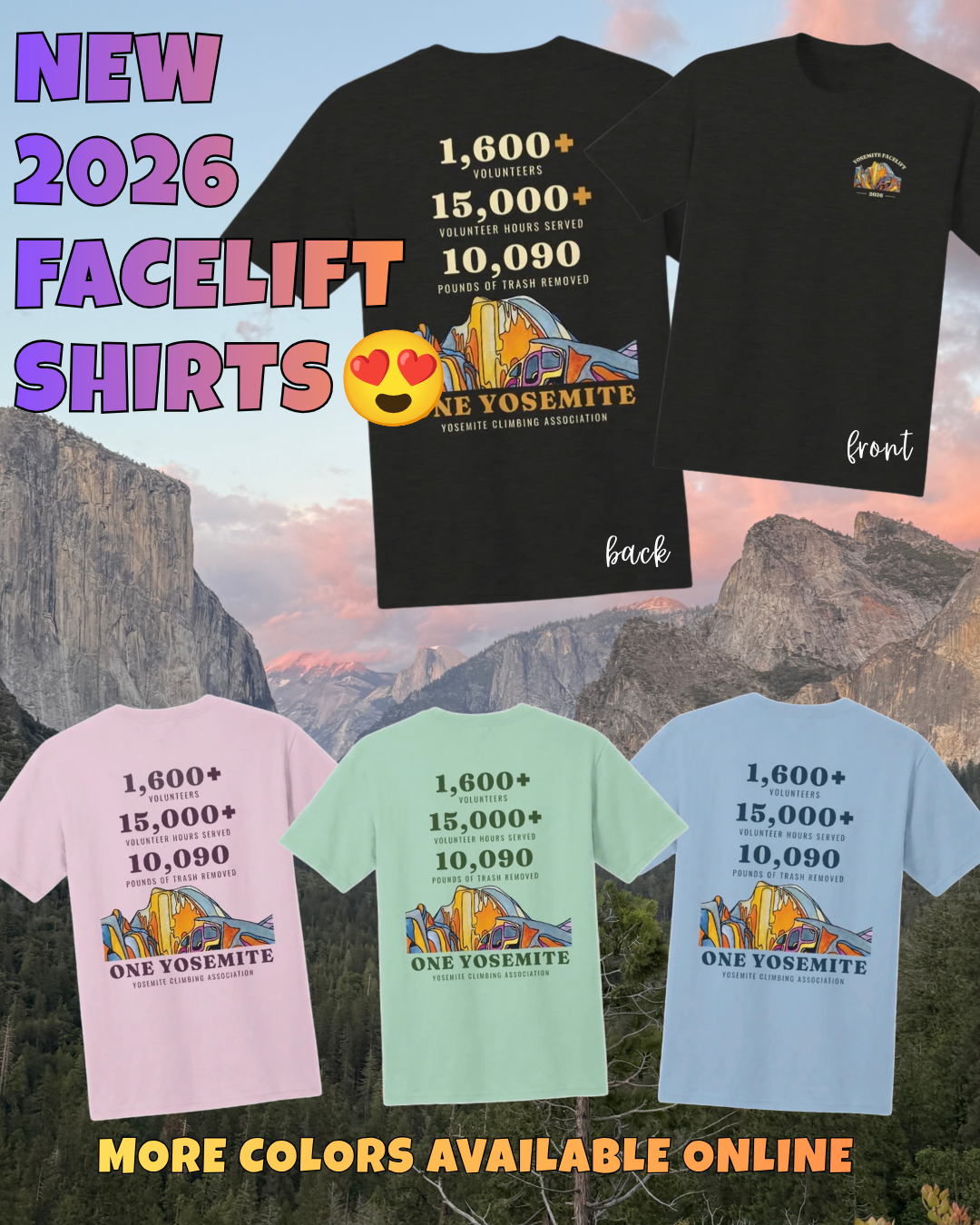
THE 2026 FACELIFT RECAP SHIRTS ARE HERE!
What does an incredible Facelift season look like? 1,625 volunteers. More than 15,000 hours. 10,090 pounds of trash removed from Yosemite.
We're celebrating this year's impact with a new Facelift recap shirt featuring the numbers that tell the story of what this community accomplished.
Grab yours and wear a little piece of Facelift history while supporting the work that makes it all possible.
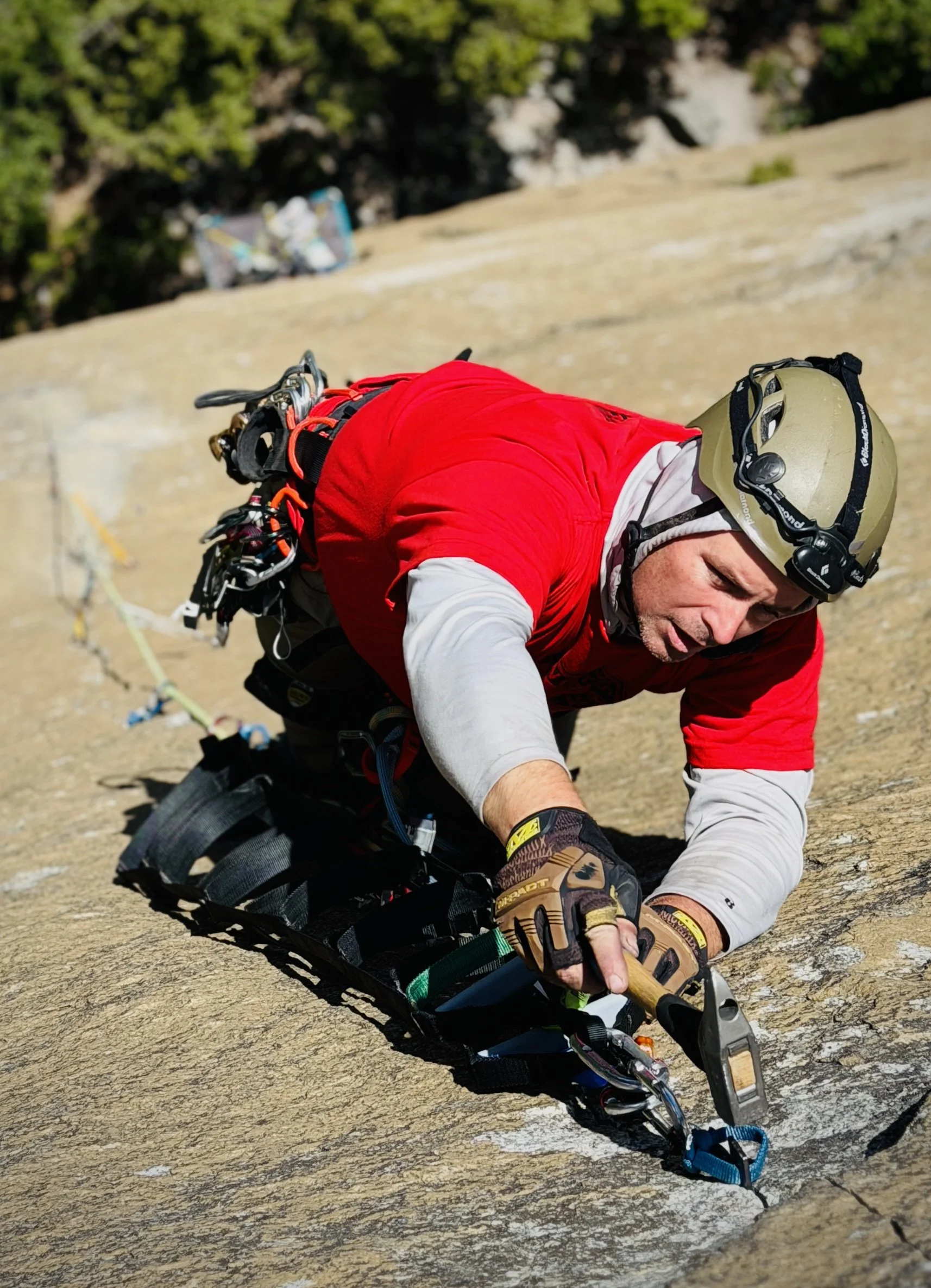
PHOTO OF
THE WEEK
Theron Moses placing a #4 Tomahawk on Laughing at the Void in Ribbon Falls Amphitheatre. Photo: Justin Lawrence

Stay up to date on the latest climbing closures in effect!
Get your permits, do your research, and hit the wall!
Visit the Yosemite Climbing Museum!
The Yosemite Climbing Museum chronicles the evolution of modern day rock climbing from 1869 to the present.
The YCA News Brief is made possible by a generous grant, provided by Sundari Krishnamurthy and her husband, Jerry Gallwas