
EDITION 76 - OCTOBER 26, 2026

Your window into the stories, history, and ongoing work to preserve Yosemite’s climbing legacy.
A Note from the Editor
Hello YCA Community,
As autumn settles deep into the Valley, crisp mornings and cool granite make this one of the most magical times of year to be in Yosemite. The leaves are turning across the Valley floor, the summer heat has finally broken, and fall wall season is in full swing.
A brief storm rolled across the Sierra over Wednesday and Thursday, bringing relief to the trees and halting any major wall climbing activity until Friday. El Capitan has been lit up by headlights again at night, a welcome sight after the hot summer nights. Tioga Pass temporarily closed due to snowfall, beginning on Wednesday, October 21st at 5am. The pass reopened at 2pm on Friday, October 23rd. Check the NPS website for current updates on road conditions in the park.
The Oakhurst Facelift just happened on Saturday, October 24th, celebrating our beloved gateway community just outside the park. The community cleanup, gear giveaway, and post cleanup celebration at South Gate Brewing were a huge success - thank you to everyone who showed up and helped do their part.
Earlier this week Adriana Sabella topped out Disorderly Conduct on El Capitan, making the first solo ascent and the seventh ascent overall after 18 days on the wall. She shared the following inspirational words on social media soon after her experience:
“If you want something, if you truly truly want something, you have to think of it with everything in your body. You have to dream it. You have to taste it. You have to feel it under your fingers. You have to yearn for it. You have to work for it. You cannot forget it ever. Every breath, every step, every movement you make takes you a little bit closer. I had granite in my ears, I had granite in my teeth. Blood sweat tears, terror contentment belonging, desperate moments, peaceful moments, evolutions of sun and moon. At night I press my hand to the wall before sleeping. At the top, my face. Say thank you for giving me something so elemental to believe in.”
As always, thank you for reading, supporting the Yosemite Climbing Association, and taking care of the places we love. See you out on the rock!
Climb safe and stay warm,
Miles Fullman
Editor, YCA News Brief
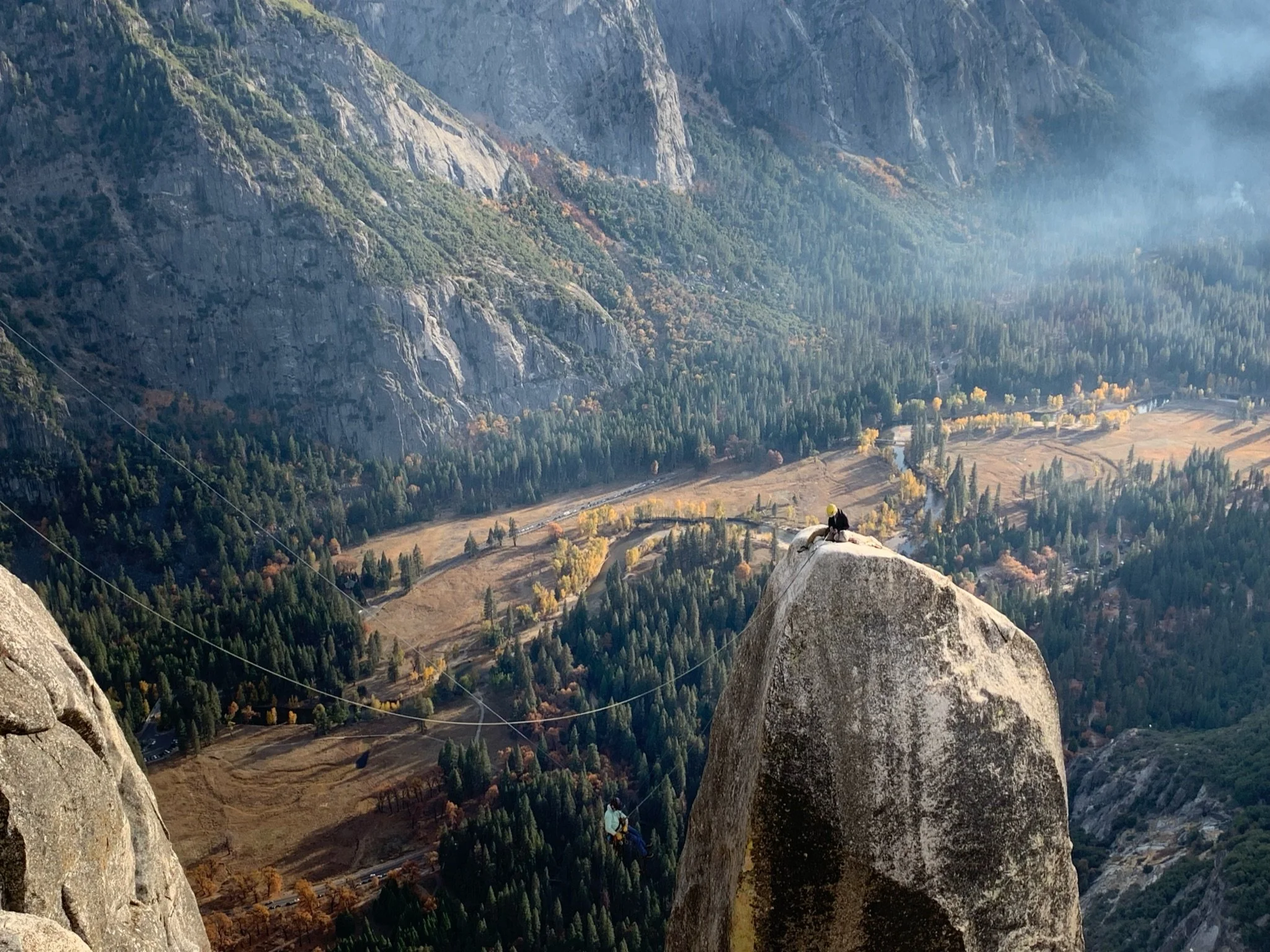
The iconic Lost Arrow Spire tyrolean traverse. Photo: Cody Hays
The Impossible Lost Arrow Spire
Ushering in the Big Wall Era in Yosemite Valley
The Lost Arrow Spire takes its name from a tragic Indigenous Ahwahneechee (Miwok) legend passed down through Valley history. According to the tale, a young hunter named Kos-su’-kah slipped and fell into the chasm behind the needle while signaling his betrothed, Tee-hee’-nay, with a bow and arrow. Devastated by the loss, Tee-hee’-nay recovered his body from the dark abyss before passing away from heartbreak at the rim. In memory of the tragic lovers and the signal arrow that was never shot, the Ahwahneechee named the towering granite pinnacle Hum-mo’, translated as "The Lost Arrow."
Standing detached from the sheer granite walls adjacent to Yosemite Falls, the Lost Arrow Spire long stood as a monument to the seemingly impossible. Rising 1,500 feet from its base, its narrow pinnacle was regarded by early 20th-century climbers as unscalable—a granite needle so slick and featureless that standard mountaineering tactics were useless against it.
That myth was shattered in early September 1947, when Swiss-born blacksmith John Salathé and high-school teacher Anton "Ax" Nelson achieved what many considered the defining breakthrough of early big-wall climbing: the first ground-up ascent of the Lost Arrow Spire via the Chimney route.
Innovation Born of Necessity
Before 1947, European techniques relying on soft iron pitons failed against Yosemite’s dense, unyielding granite. Standard pitons bent or smashed upon impact, leaving climbers with no secure protection.
Salathé, applying his craft as a master blacksmith, recognized that the valley’s hard rock required a far tougher steel. Forging high-carbon chrome-vanadium steel salvaged from Ford Model A axle shafts, he crafted ultra-tough, thin pitons—the legendary "Lost Arrow" pitons—that could be driven into microscopic seams and removed repeatedly without deforming. Combined with early expansion bolts for progress across blank granite, Salathé created the hardware foundation that made modern big-wall aid climbing possible.
Five Days in the Chimney
After an initial partial attempt in 1946 where Salathé came within striking distance of the top before retreating, he reunited with Nelson in September 1947 for an all-out effort launched from the Valley floor.
The ascent demanded five and a half grueling days. Pushing through the claustrophobic shadows of the Lost Arrow Chimney, Salathé and Nelson endured searing heat, dehydration, and brutal physical exertion. They spent four bivouacs dangling from crude hammocks tied to pitons driven into the wall.
In an era before modern lightweight gear, sticky rubber, or portaledges, every foot gained was a battle. Salathé’s technical mastery on lead, paired with Nelson’s physical endurance and strategic rope work, kept the team moving upward through seemingly impossible overhangs and blank faces.
Reaching the Tip and Legacy
On September 5, 1947, the pair finally reached "The Notch"—the deep gap separating the spire’s summit tower from the main cliff rim. From there, they navigated the final vertical headwall of the Tip, stepping onto the tiny summit to complete one of the most audacious wall climbs in mountaineering history. To return to safety, they rigged a rope across the chasm to the Valley rim, executing a Tyrolean traverse high above the floor—a dramatic system that remains iconic on the spire to this day.
The 1947 first ascent of the Lost Arrow Spire proved that multi-day big-wall climbing was not only possible in Yosemite, but held the key to exploring the valley's vast vertical domain. Salathé and Nelson didn't just climb a spire; they redefined the boundaries of human potential on granite, forging the legacy that every Yosemite climber inherits today.
The Direct Route
While John Salathé and Anton "Ax" Nelson pioneered the original ground-up ascent of the Lost Arrow Spire via the Chimney in 1947, it wasn't until June 1968 that legendary big-wall master Warren Harding and partner Patrik Callis tackled the vertical headwall directly beneath the Spire. Over four and a half days on the wall, Harding and Callis completed the first ascent of the Lost Arrow Spire Direct, forging a line straight up the exposed face just to the right of the booming Yosemite Falls. After toiling their way up the wall and rejoining Salathé’s route to the tip, they forged what Callis called "an exceptionally aesthetic new route," cementing another iconic chapter in Yosemite big-wall history.
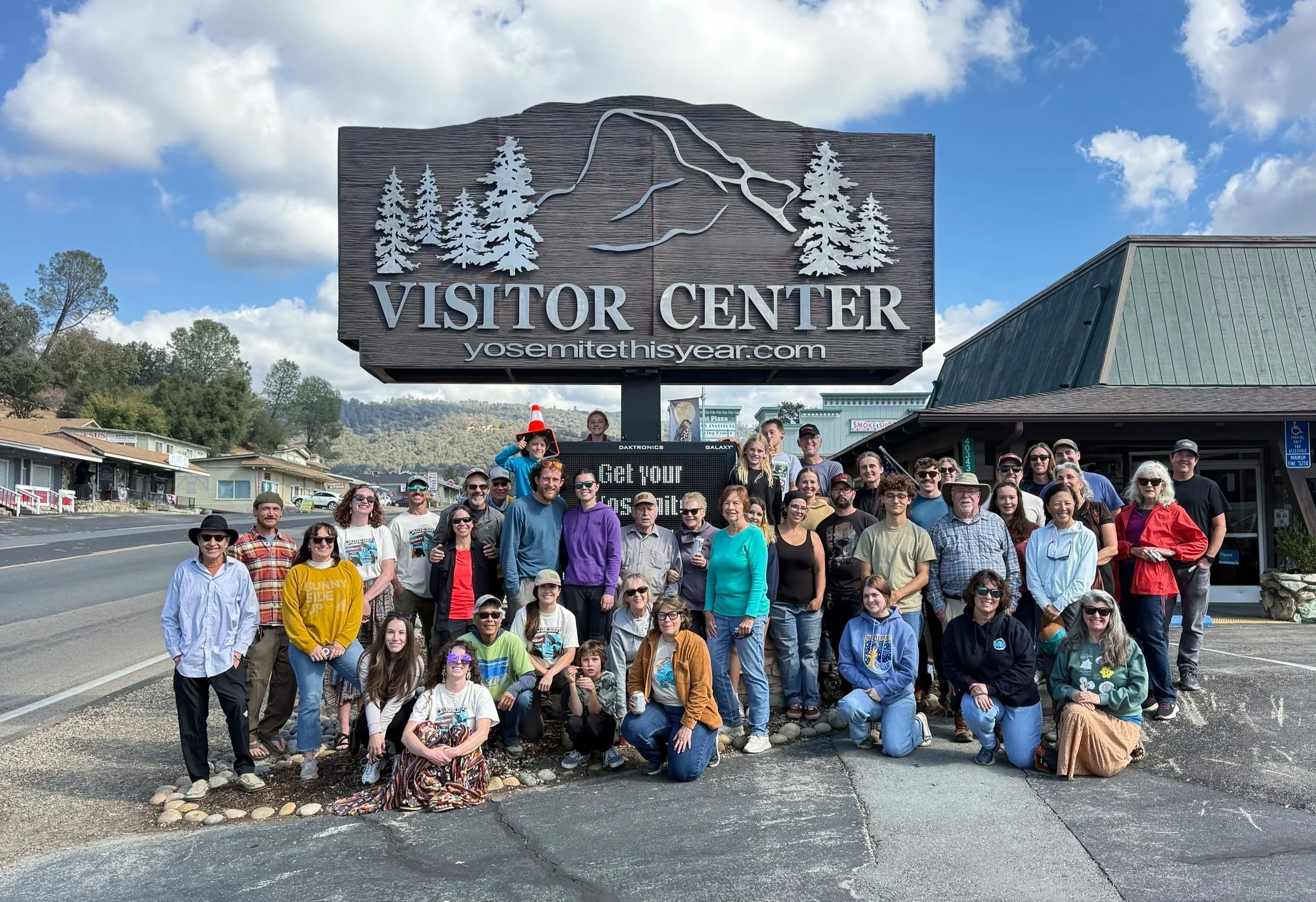
Oakhurst Facelift was a tremendous success! Thank you for joining us and helping us make a difference. We love this community!


Additional screenings of High Ground have been added at Tahoe Art Haus & Cinema!
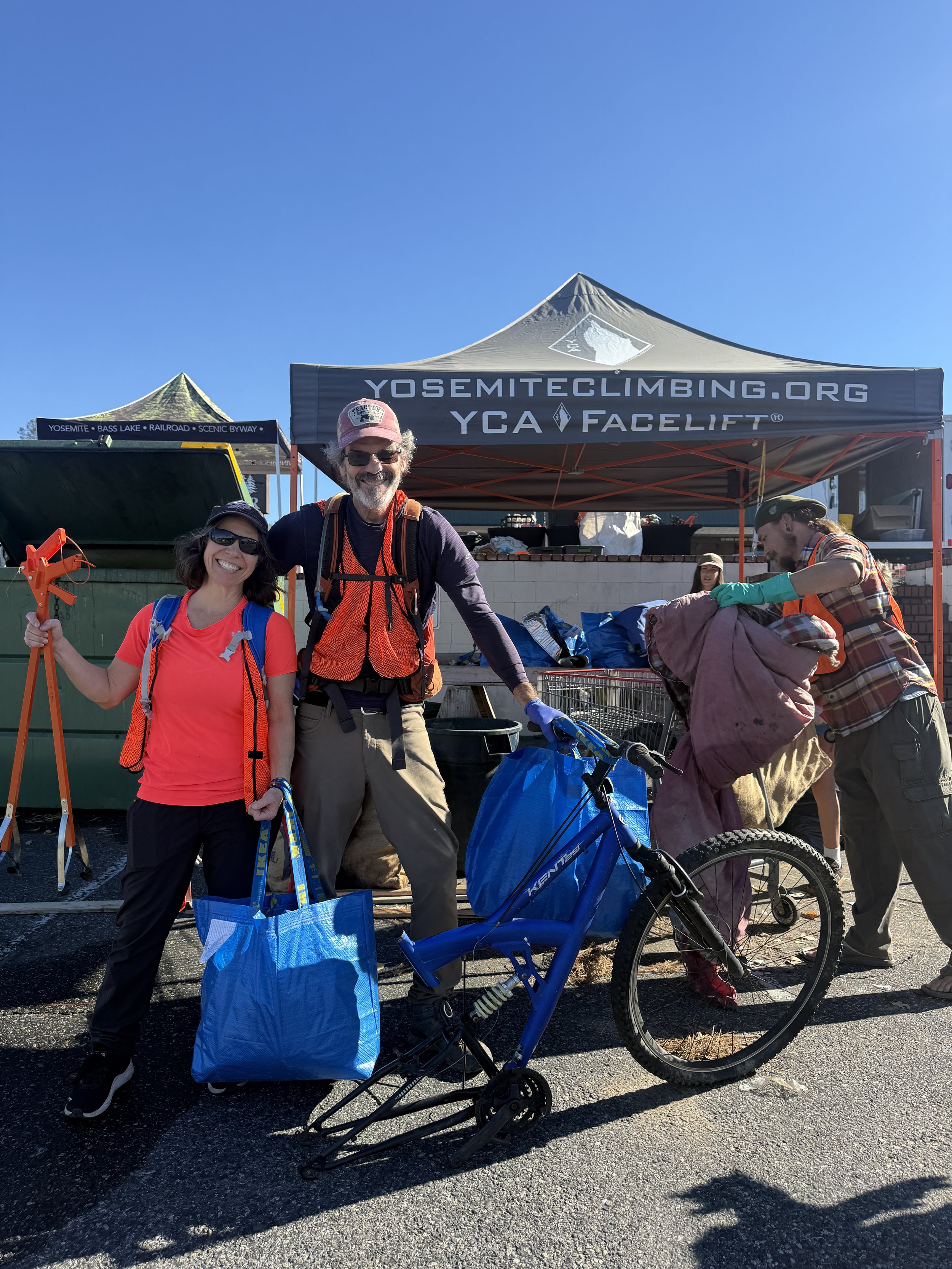
PHOTO OF
THE WEEK
Oakhurst Facelift event. Photo: Katie Getz

Stay up to date on the latest climbing closures in effect!
Get your permits, do your research, and hit the wall!
Visit the Yosemite Climbing Museum!
The Yosemite Climbing Museum chronicles the evolution of modern day rock climbing from 1869 to the present.
The YCA News Brief is made possible by a generous grant, provided by Sundari Krishnamurthy and her husband, Jerry Gallwas