
EDITION 74 - OCTOBER 12, 2026

Your window into the stories, history, and ongoing work to preserve Yosemite’s climbing legacy.
A Note from the Editor
The Yosemite Facelift 2026 numbers are in: 1,625 volunteers, 14,889 hours, 10,090 lbs of trash removed. Thank you to everyone who got involved and did their part to help keep our beautiful Yosemite clean. We hope to see you all again next year!
Speaking of next year, the Yosemite Climbing Film Festival will return to the Valley, this time in early Spring. The festival will run from April 8 to April 11 in Yosemite Valley, so save the date now. Film submissions for the festival are open now and can be accessed on the Yosemite Climbing Association website here.
The Dome Fire continues to burn, now at nearly 7,000 acres and 73% contained. While temperatures have been in the high 80s and low 90s in the Valley, the smoke hasn’t been as bad, and cooler temperatures brought relief over the weekend and into the start of this week.
370,228 public comments were posted in response to the U.S. Forest Service’s proposal to rescind the 2001 Roadless Area Conservation Rule. The public comment period ended October 6. 99.1% of those comments were opposed to the Trump Administration’s plan.
Two major El Cap rescues were performed smoothly and safely in the last week. Last Monday, a climber fell high on Freerider and sustained debilitating lower extremity injuries. Rescuers were flown to the summit and two attendants lowered to the injured climber. The patient was then lowered all the way to the ground and carried to the road in a litter, while the uninjured climber rappelled to the ground with the second attendant.
This past weekend a rope soloist broke a flake on Lost in America and was unable to continue. Rescuers hiked to the summit of El Cap and one attendant was lowered to the stranded climber before being raised back up to the summit.
As climbing season ramps back up here in the Valley we must remember to both continue to keep Yosemite clean and to ensure we are climbing safely and being considerate of other climbers and visitors surrounding us while out on the rocks.
In honor of Indigenous People’s Day, for this week’s feature I recount the traditional Miwok legend of how Tutokanula (El Capitan) came to be.
Yosemite Valley, known as Ahwahnee, is the traditional and ancestral homeland of the Ahwahneechee people and the Southern Sierra Miwuk Nation. We honor their deep, enduring connection to this land, pay respect to their elders past and present, and recognize the resilience of Indigenous peoples who have cared for this place since time immemorial.
Miles Fullman
Editor, YCA News Brief
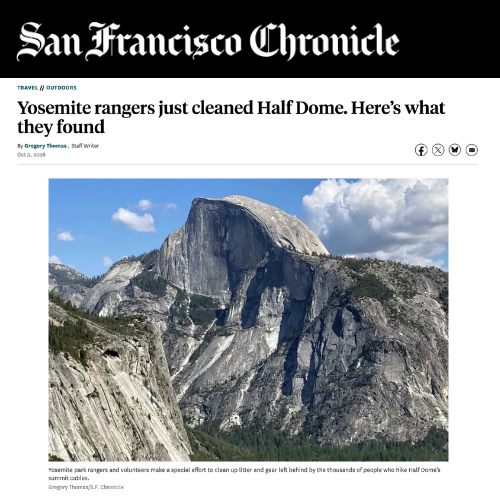
Yosemite Facelift in the News
“The Half Dome project was part of a larger annual trash pickup in the park called Yosemite Facelift, a five-day event in which thousands of volunteers fan out and remove as much litter as they can find.
This year’s event, in late September, rendered 10,090 pounds of litter — among the lowest weight totals of any Facelift, according to Yosemite Climbing Association President Ken Yager, whose group has hosted the cleanup for more than two decades. Other cleanups have generated upward of 19,000 pounds.” - Gregory Thomas
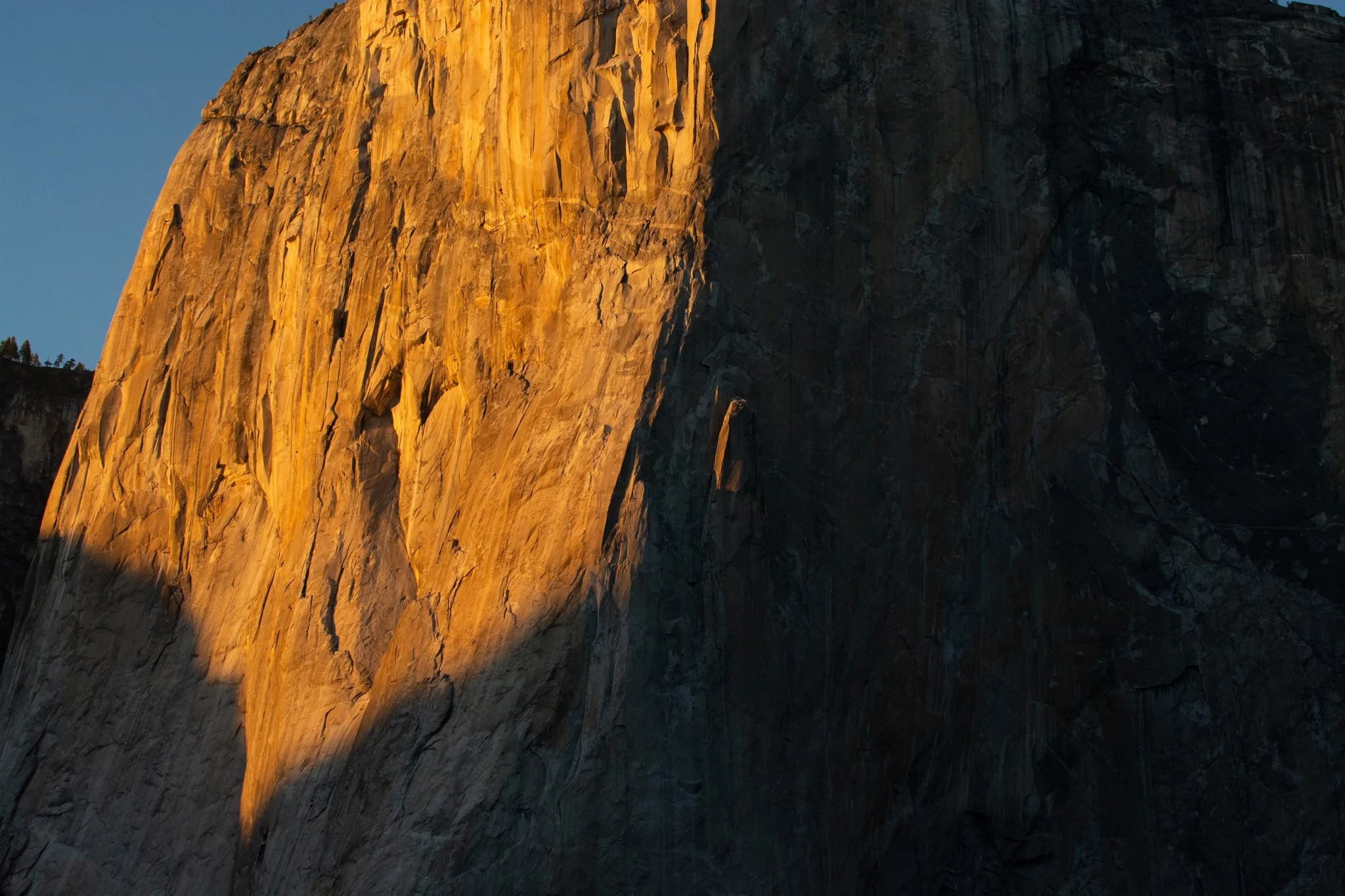
Tutokanula in the evening light. Photo: Miles Fullman
How El Cap Got Its Name
If you’ve spent any time climbing in the Valley, you know the feeling of looking up at the Big Stone. Whether you’re gearing up at the El Cap Bridge or just watching the headlamps flicker across the granite as dusk settles over the Valley floor, El Capitan commands attention. It’s the centerpiece of vertical history, the arena where big-wall climbing evolved both in technical innovations and in evolutions of tactics and style.
But long before Warren Harding, Wayne Merry, and George Whitmore spent 47 days pounding pitons to make the first ascent of The Nose in 1958, this monolith held a deep, sacred story that stretches back long before ropes and sticky rubber ever touched its stone.
To the Ahwahneechee and Southern Sierra Miwok peoples—the original stewards who have called Ahwahnee home for thousands of years—this 3,000-foot wall is known as TuTokaNula (often translated as "The Great Rock Chief" or "Great Rock Father").
It wasn’t until the arrival of the Mariposa Battalion that the granite monolith received the name it is now known by: El Capitan. The Battalion doctor Lafayette Bunnell translated Tutokanula as “rock chief” or “rock father”. Bunnell and the battalion used the Spanish phrase El Capitán, which means “the captain” or “the chief”.
Indigenous tradition tells the story of two bear cubs who fell fast asleep on a flat rock near the Merced River. As they slept, the rock pushed up out of the earth, carrying the cubs high into the sky until they brushed against the moon. The mother bear was frantic, and all the animals of the Valley tried to scale the sheer, slippery granite to rescue them. The mountain lion, the bear, and the fox all leaped and clawed at the wall—leaving the deep vertical grooves we still see etched in the base today—but none could reach the top.
Despite the animals best efforts, it wasn’t the strongest or the bravest that made it up the rock walls. It was Tutokanana, the humble measuring worm. Inch by inch, chanting its name, the measuring worm moved up the vast, blank face, reaching the summit, awakening the cubs, and guiding them safely back down. In honor of that heroic journey, the monolith became Tutokanula.
When you step back and look at that story through a climber’s eye, as someone who has spent countless nights cocooned on the side of its sweeping walls and inching one’s way upwards painstakingly, the story’s resonance feels profound. Long before Royal Robbins, Yvon Chouinard, or Lynn Hill ever looked up at the wall and saw a line, Indigenous culture recognized that moving up seamless granite requires patience, humility, and moving inch by inch.
As climbers and stewards of Yosemite, our history didn't begin with pitons and expansion bolts in the mid-20th century. It’s part of a much longer human connection to these walls. Recognizing names like TuTokaNula is about honoring the First Nations whose ancestral homelands we tread on every day we walk to the crag.
Next time you’re tying in at the base or looking up at the proud formation from the meadow, take a moment to look past the topo lines in the guidebook or the chalk marks on the wall. Remember the measuring worm, honor the Ahwahneechee heritage that grounds this place, and carry that respect with you up the wall.

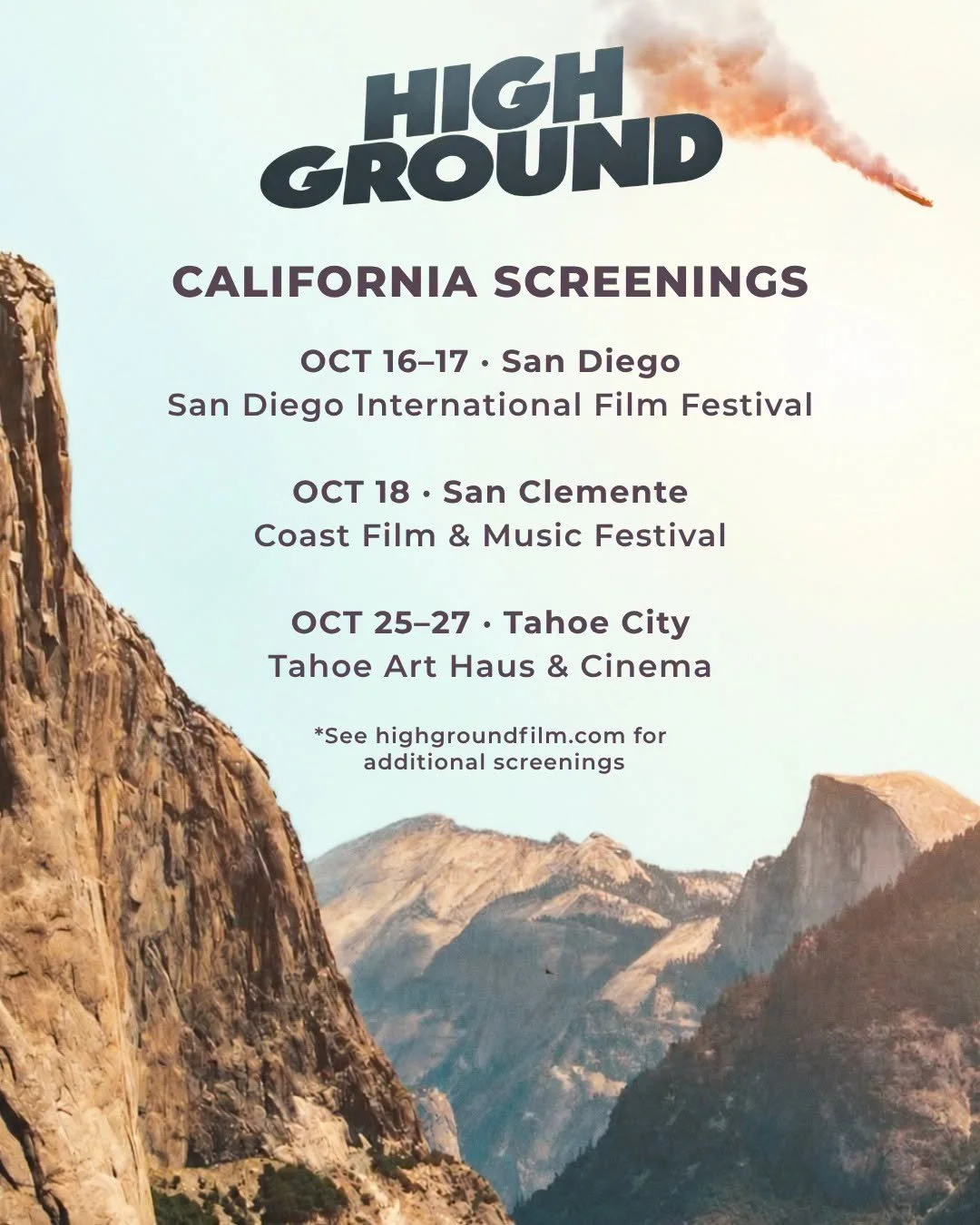
HIGH GROUND is hitting the big screen in three more California cities this month!
Missed our Yosemite screening? Here's your chance to catch the "dope lake" story on the big screen.
📍 San Diego | Oct. 16–17
📍 San Clemente | Oct. 18
📍 Tahoe City | Oct. 25–27
And for everyone who understands the importance of jumping in a lake, we've got shirts for that, too. Shop below. 🏔️
🎟️ Upcoming Screenings + Tickets
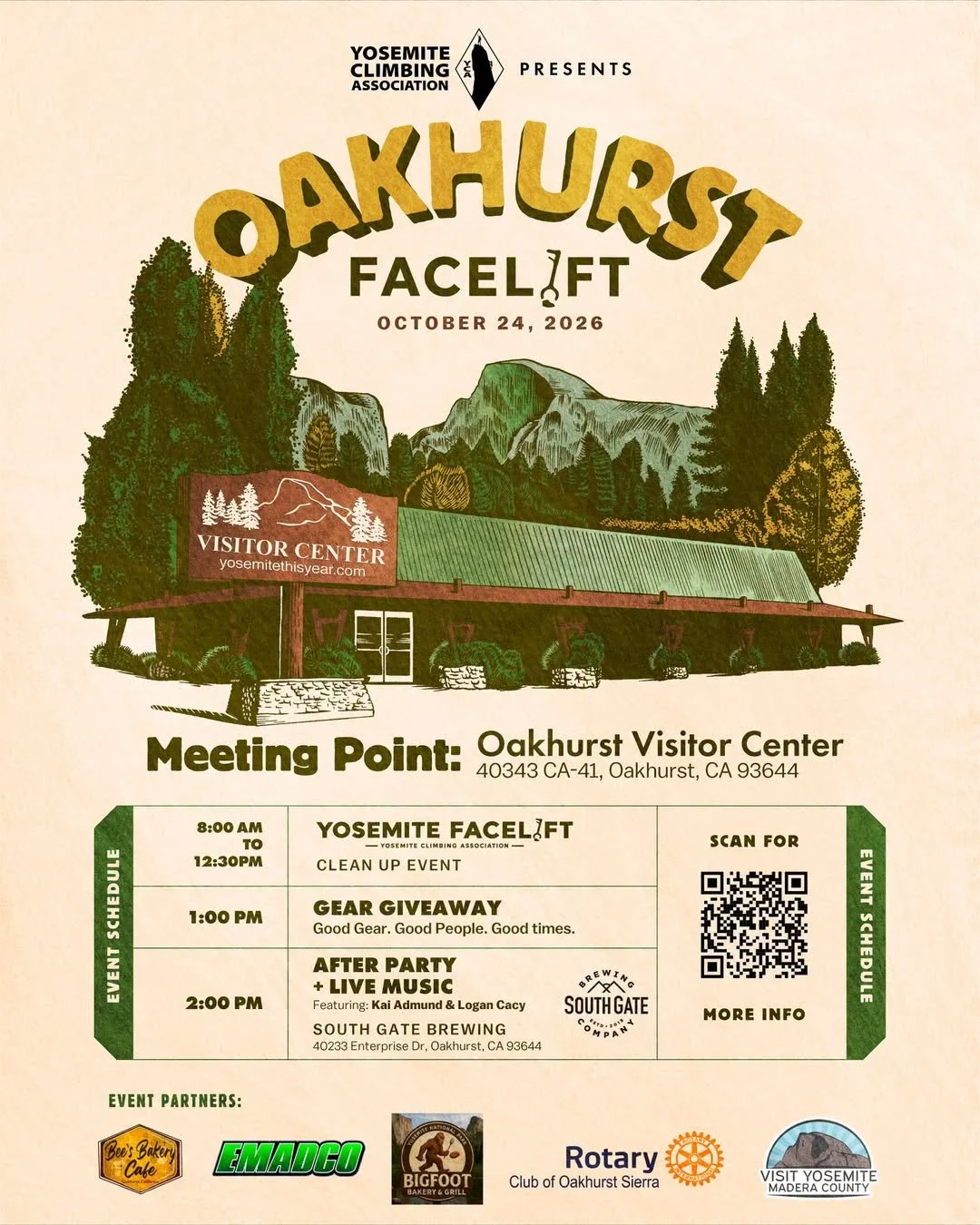
Yosemite Facelift is coming to Oakhurst on Saturday, October 24!
Come spend the morning giving our gateway community a little love! Stick around for the gear giveaway, and then celebrate with live music at South Gate Brewing. 🍻
📍 Oakhurst Visitor Center
🗓️ Saturday, October 24
🧤 8 AM – 12:30 PM: Community cleanup
🎁 1 PM: Gear giveaway
🎶 2 PM: After-party + live music at South Gate Brewing
A huge thank-you to our local event partners for helping make this day possible: Bee's Bakery Cafe, EMADCO, Bigfoot Bakery & Grill, Rotary Club of Oakhurst Sierra, and Visit Yosemite Madera County.
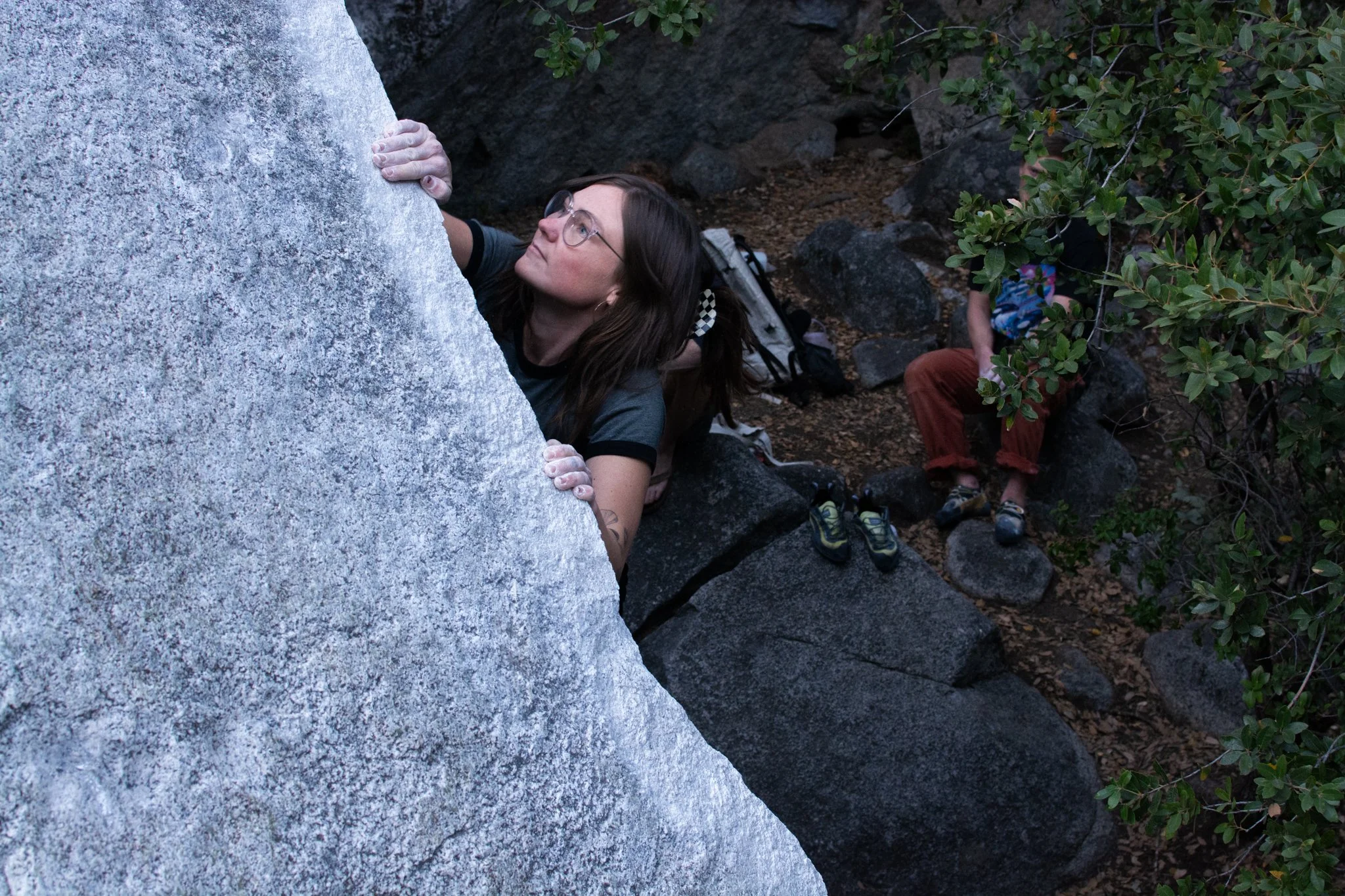
PHOTO OF
THE WEEK
Katy Stockton on Cocaine Corner, Camp 4. Photo: Miles Fullman

Stay up to date on the latest climbing closures in effect!
Get your permits, do your research, and hit the wall!
Visit the Yosemite Climbing Museum!
The Yosemite Climbing Museum chronicles the evolution of modern day rock climbing from 1869 to the present.
The YCA News Brief is made possible by a generous grant, provided by Sundari Krishnamurthy and her husband, Jerry Gallwas