
EDITION 72 - SEPTEMBER 27, 2026

Your window into the stories, history, and ongoing work to preserve Yosemite’s climbing legacy.
A Note from the Editor
The 2026 Facelift has come to an end, and the park is looking immaculate as the leaves continue to turn.
The Dome Fire has continued to spread. It is currently 30% contained at 4,637 acres with 781 personnel working to suppress it. Glacier Point Road has been closed due to smoky conditions and firefighting operations.
While the nearby wildfire has brought smoke into the Valley and created poor air quality, the slightly cooler temperatures have seen a return of climbers to the big walls. Fall is here!
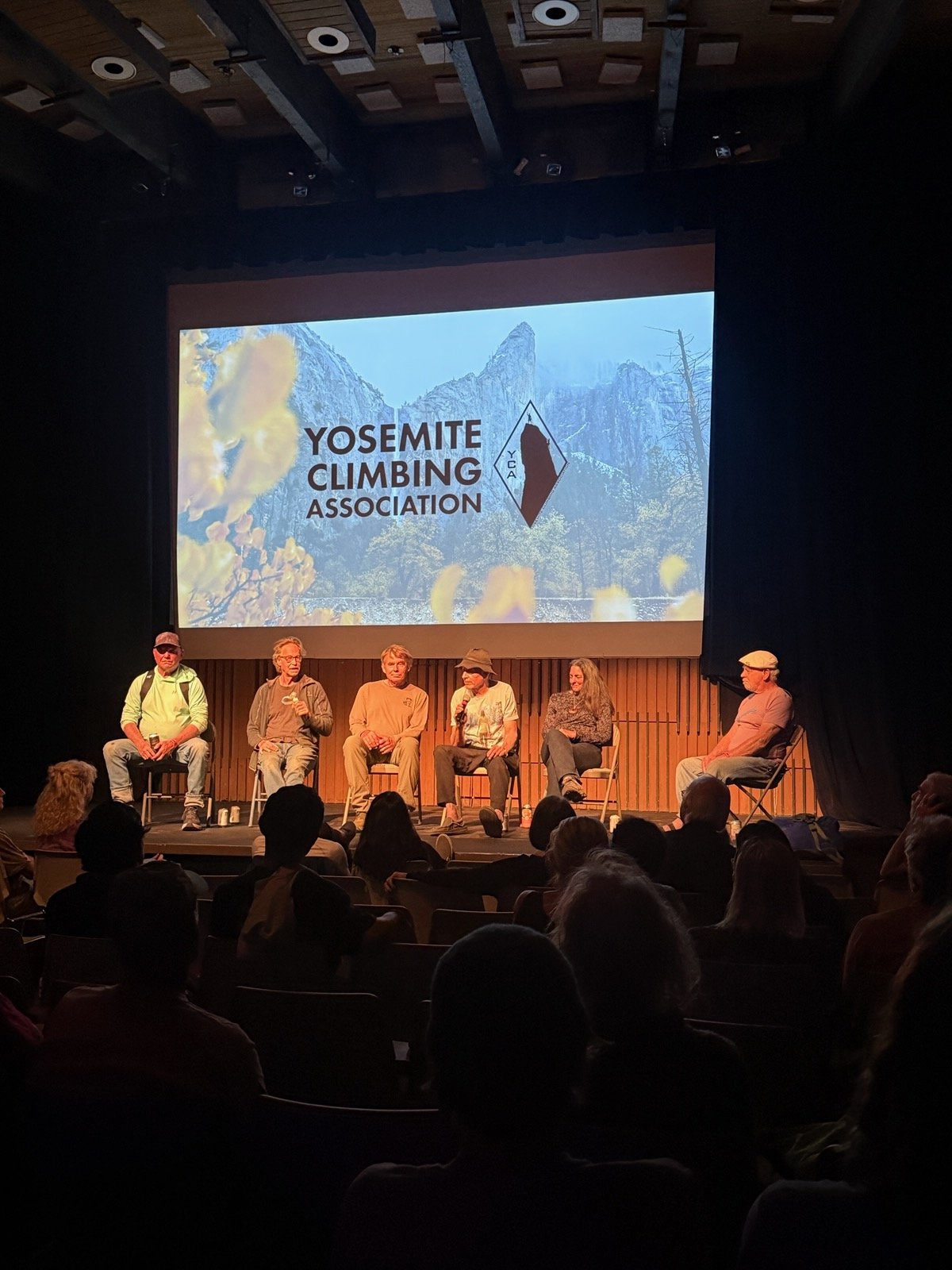
On Tuesday night Ken Yager had Doug Robinson introduce High Ground before its Facelift screening. Seeing him stand on stage in his iconic white flat cap, I was struck by how many generations of climbers have dedicated so much of their lives to giving back to this place that we love so much.
For this week’s feature, in the spirit of Facelift, I give a brief history of the clean climbing movement and outline how it has evolved and continued in Yosemite climbing over the decades, and how the same values that were being urged at the beginning of the 70s still have as much hold and importance today as they did back then.
Miles Fullman
Editor, YCA News Brief
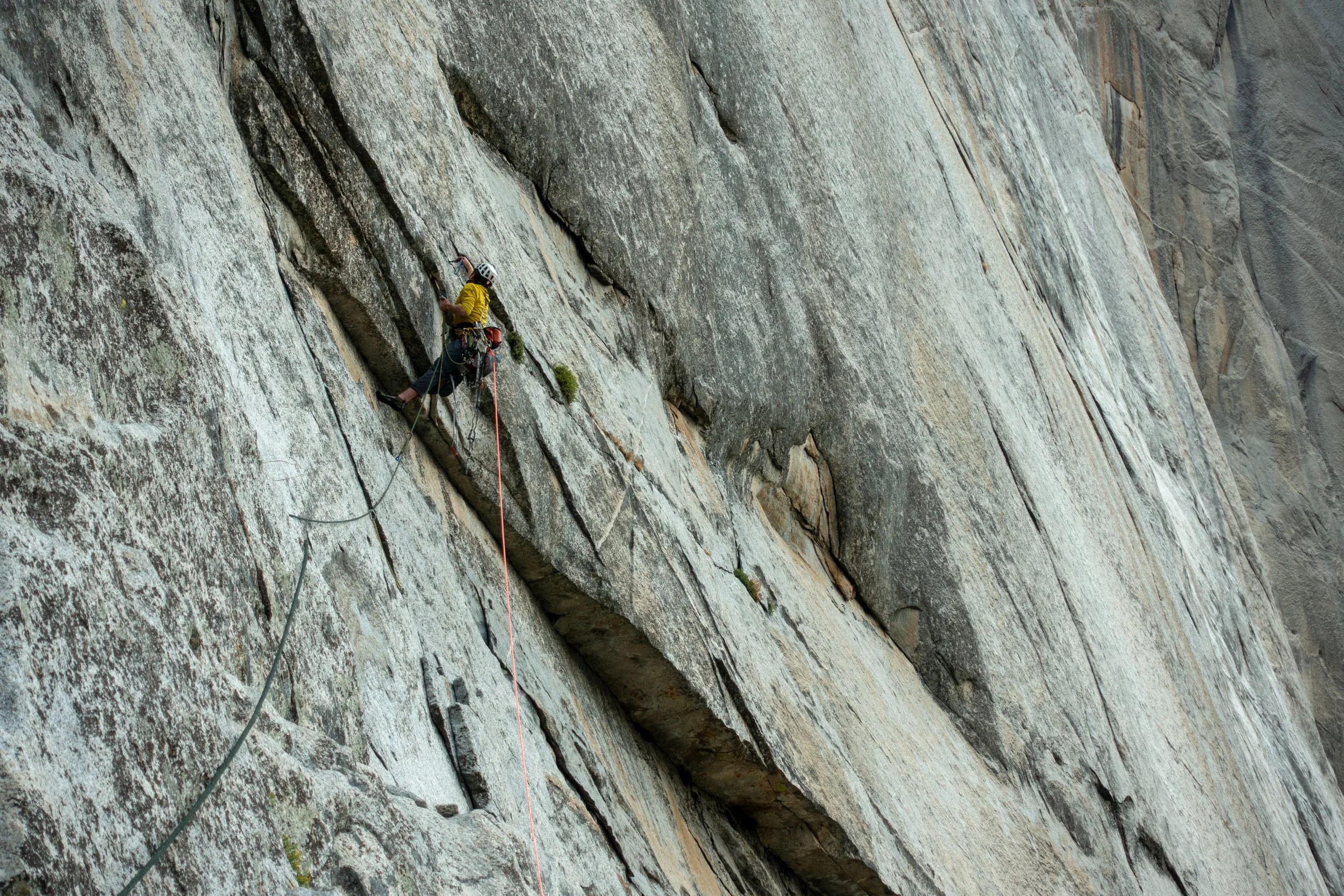
Owen Silitch climbing on El Capitan to retrieve abandoned gear during Facelift. Photo: Miles Fullman
A Brief History of Clean Climbing
In the 1940s, John Salathé hand forged high-strength steel pitons that would fit in Yosemite’s cracks. He often used scrap car axles for material. Unlike the soft iron pitons being used in Europe, Salathé’s pitons were hard enough to be nailed into Yosemite’s bullet hard granite without bending or breaking. This made them both more secure and more durable for long term use. His pitons enabled ground breaking ascents such as the Steck-Salathé.
Yvon Chouinard met Salathé in the Valley in the late 1950s, and was directly influenced by his blacksmithing techniques. In 1957 Chouinard bought a second-hand, coal-fired forge and a 138-pound anvil from a junkyard to hand-forge his own hardened steel-alloy pitons. Chouinard would load his tools into his car to travel and climb or surf, selling his handcrafted pitons out of the trunk for $1.50 each. His small roving operation would eventually evolve into Chouinard Equipment.
While American climbers hammered pitons into Yosemite’s walls throughout the 60s, British climbers had long been using small rocks and threaded knots and hardware nuts to use as passive protection when slotted into constrictions to preserve the soft rock they were climbing on.
In 1966 Royal Robbins visited the UK to climb and saw for himself how effective and non-destructive such use of passive protection was. He returned to the Valley and, converted to the cause, established the aptly named Nutcracker in 1967 with his wife Liz Robbins. They used only nuts for protection and thereby effectively proved that the same methods the British were using could be applied to the Valley’s granite walls to protect them from the egregious pin scars that were forming.
Chouinard, who had by this point been forging pitons for a decade, also recognized the impact climbers were having on the rock. Instead of the pitons from which he had made his company, he began producing tapered aluminum chocks and invented the six sided “hexcentric” with Tom Frost which was revealed in 1971.
The 1972 Chouinard Catalog premiered the new clean rock protection they were making. Yvon Chouinard and Tom Frost wrote an introduction to the catalog which included the following excerpt about practicing restraint while approaching climbing:
“We believe the only way to ensure the climbing experience for ourselves and future generations is to preserve (1) the vertical wilderness, and (2) the adventure inherent in the experience. Really, the only insurance to guarantee this adventure and the safest insurance to maintain it is exercise of moral restraint and individual responsibility.”
The 1972 catalog featured an article by Doug Robinson titled “The Whole Natural Art of Protection”. It expounded upon the techniques involved with clean climbing in enough detail to be usable as a kind of how-to manual, as well as discussed the accompanying environmental and philosophical benefits of the practice. He opened:
“There is a word for it, and the word is clean. Climbing with only nuts and runners for protection is clean climbing. Clean because the rock is left unaltered by the passing climber. Clean because nothing is hammered into the rock and then hammered back out, leaving the rock scarred and the next climber’s experience less natural. Clean because the climber’s protection leaves little track of his ascension. Clean is climbing the rock without changing it; a step closer to organic climbing for the natural man.”
Robinson concludes his article with the following warning:
“The increased popularity of climbing is clearly being felt in the vertical wilderness, and if we are to leave any of it in climbable form for those who follow, many changes will be necessary. Cleanliness is a good place to start.”
Robinson helped pave the way for the “clean climbing” revolution that began in the early 1970s. Having climbed in the Valley during the 60s when pitons were standard rock protection and seen first hand the damage that iron had on stone when repeatedly hammered into the same spots in the wall, he understood the impact that climbers were having on the natural environment. Robinson adjured his peers to leave the hammer and pitons behind and instead practice restraint when approaching a challenging route.
Both Chouinard and Robinson practiced what they preached. They made the equipment they needed for the climbs they wanted to do, and they made new protection when they began to realize the lasting impact that the original equipment was making. In 1973, Robinson made the first clean ascent of Half Dome with Dennis Hennek and Galen Rowell using only stoppers and no pitons or hammers. The ascent was featured in the 1974 National Geographic as its cover story: “Climbing Half Dome The Hard Way”, written by Galen Rowell. The clean climbing revolution was ignited.
Rowell wrote in the feature article:
“By the late 1960’s, thousands of climbers had placed and removed tens of thousands of pitons in Yosemite alone, wearing natural cracks into ugly white scars. Wild and once-remote cliffs were fast becoming worn peg-boards in an open-air gymnasium.
One could, of course, avoid crack damage by leaving the pitons in place. But that would rob a climb of much of its adventure. Climbing is essentially a wilderness activity, and a row of pitons snaking up a rock wall detracts greatly from the experience of being part of a natural scene untouched by man.”
Climbing clean isn’t just about protecting the environment. It’s also about preserving the natural adventure of the experience offered by a route for those who come after us. It’s about meeting a climb on its own terms and rising to the occasion, not bringing it down to our level.
Yosemite continued to be a locus for advancements in technology that helped promote the call for clean climbing. In the early 1970s, Ray Jardine began designing prototype camming devices which would better protect the parallel sided cracks found in the Valley and which would be easier to place one handed while free climbing. He refined his designs while testing his own prototypes on hard free routes in the Valley, nearly making the first ascent of the Nose in a Day and climbing The Phoenix in 1977, the first 5.13 in the Valley - an ascent which has been attributed to his advancements in clean climbing protection.
From the late 90s and into the early 2000s, hard aid routes on El Cap underwent a clean climbing revolution of their own when climbers began striving to make “hammerless” ascents. Routes that were commonly known to be difficult nail-ups began to be climbed without a hammer thanks to advancements in aid climbing gear, most notably the invention and refinement of beaks.
Despite advancements in climbing equipment helping reduce climbers’ impact on the rock, climbing continued to explode in popularity. The impact that climbing has had on the vertical wilderness in Yosemite is undeniable.
In 2022 Mailee Hung wrote a piece for Patagonia titled “Bring Back Clean Climbing”. In the article, she writes about how Chouinard acknowledged that the clean climbing movement failed to succeed. Hung writes:
“If clean climbing were indeed the dominant ethos of climbing today, we would not see the requisite crag cleanup day at every outdoor event. We would not need to remove hundreds of pounds of garbage and abandoned climbing gear every year at the Yosemite Facelift.”
While acknowledging that both the popularity of climbing today and its shift in emphasis from being a spiritual pursuit to being more about athletic achievement have had profound impacts on the vertical environment, Hung writes that the real lasting merit of clean climbing has to do with its ethical message:
“The value of clean climbing today is its provocation to examine what we want to get out of climbing, and what we should. It challenges climbers to remember that this rather selfish, occasionally solitary pursuit affects others, and there is a deeper and more meaningful experience to be found by meeting this challenge instead of singularly focusing on the desire to summit.”
Climbers in Yosemite today are still striving to uphold the values that the clean climbing revolution laid out: free climbing El Capitan from the ground up instead of rapping in, using as few bolts as possible when establishing a first ascent, not leaving fixed lines or caches in place to make a route more accessible to ourselves.
In 2024 the Yosemite Climbing Association created the Climber’s Credo to lay out these values, with a clear nod to the 1972 Chouinard Catalog. The 13 headlines of the Climber’s Credo are as follows:
Show Respect
Act with Humility
Seek Knowledge
Revel in the Experience
Prepare to be Safe
Exercise Restraint
Preserve Wilderness Character
Seek Adventures with Minimal Effect on Others
Be a Steward
Ask for Consent and Offer Civility
Embrace Community and Inclusivity
Take the Lead
Honor the Heritage and Legacy of Yosemite
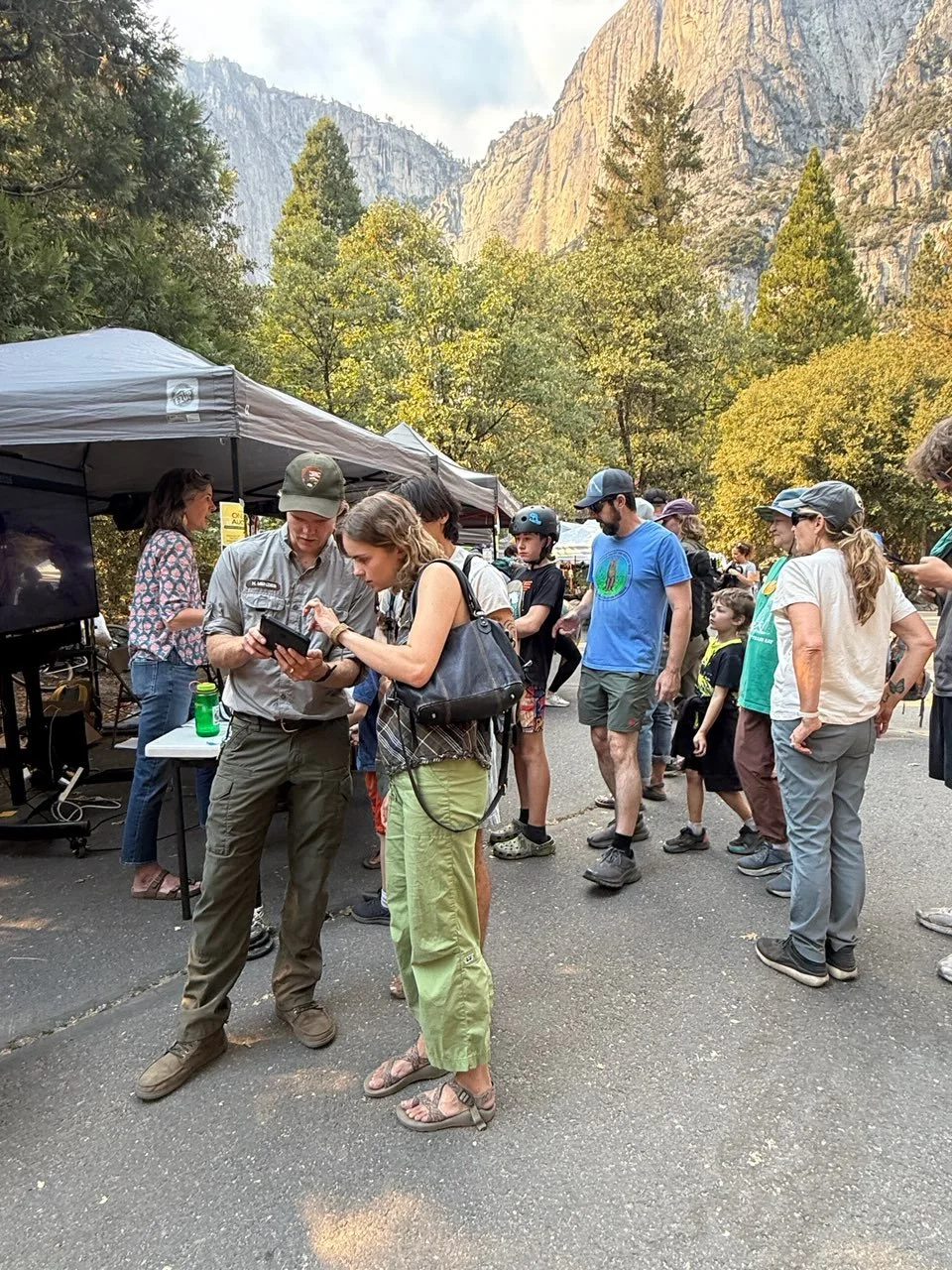
As a climbing community, it is our responsibility to take care of the places we love. This week, as I attended Facelift presentations, rappelled with haul bags full of abandoned ropes on El Capitan, saw people walking around with burlap sacks and trash pickers, and enjoyed the timeless beauty of the Valley, I felt an immense gratitude for the climbers who have come before me and who were thinking about these same things decades ago. I feel pride in having the opportunity to take hand in protecting this place in my own way, and I feel responsibility in ensuring that whoever comes after me gets to have the same experience.
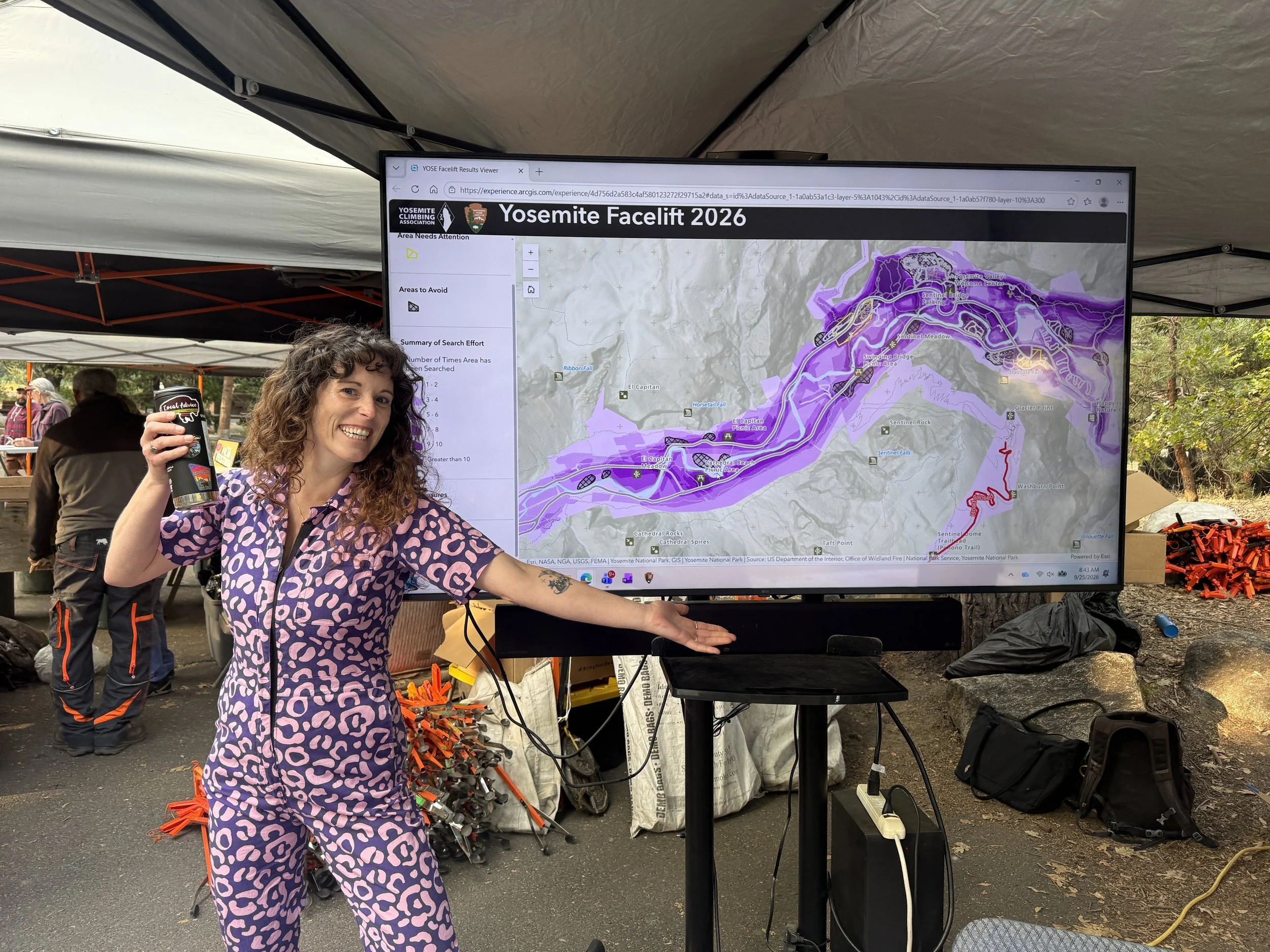
YOSEMITE FACELIFT 2026
SHOP THE YOSEMITE FACELIFT COLLECTION
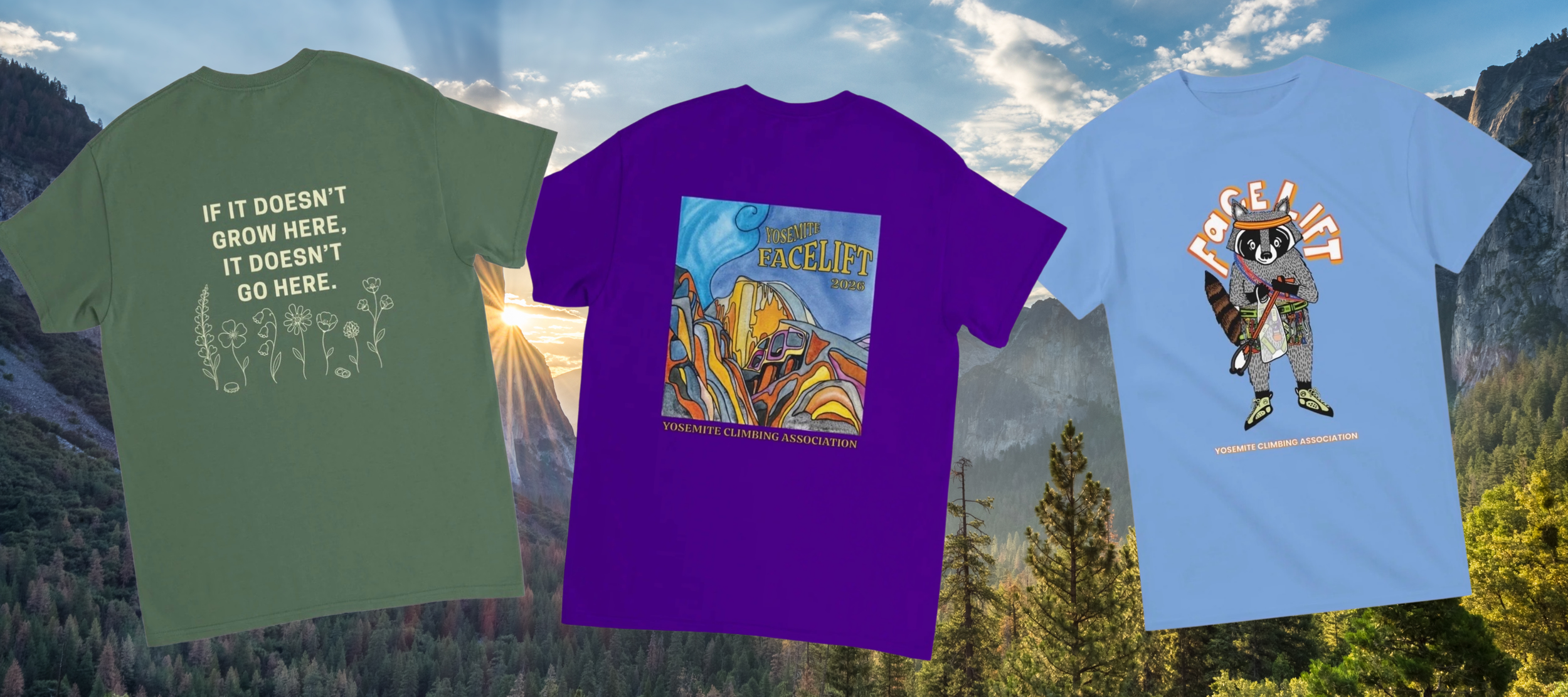
Did we miss you at Facelift this year? No problem! Shop our limited edition Yosemite Facelift apparel online and rep your support for YCA’S annual cleanup.
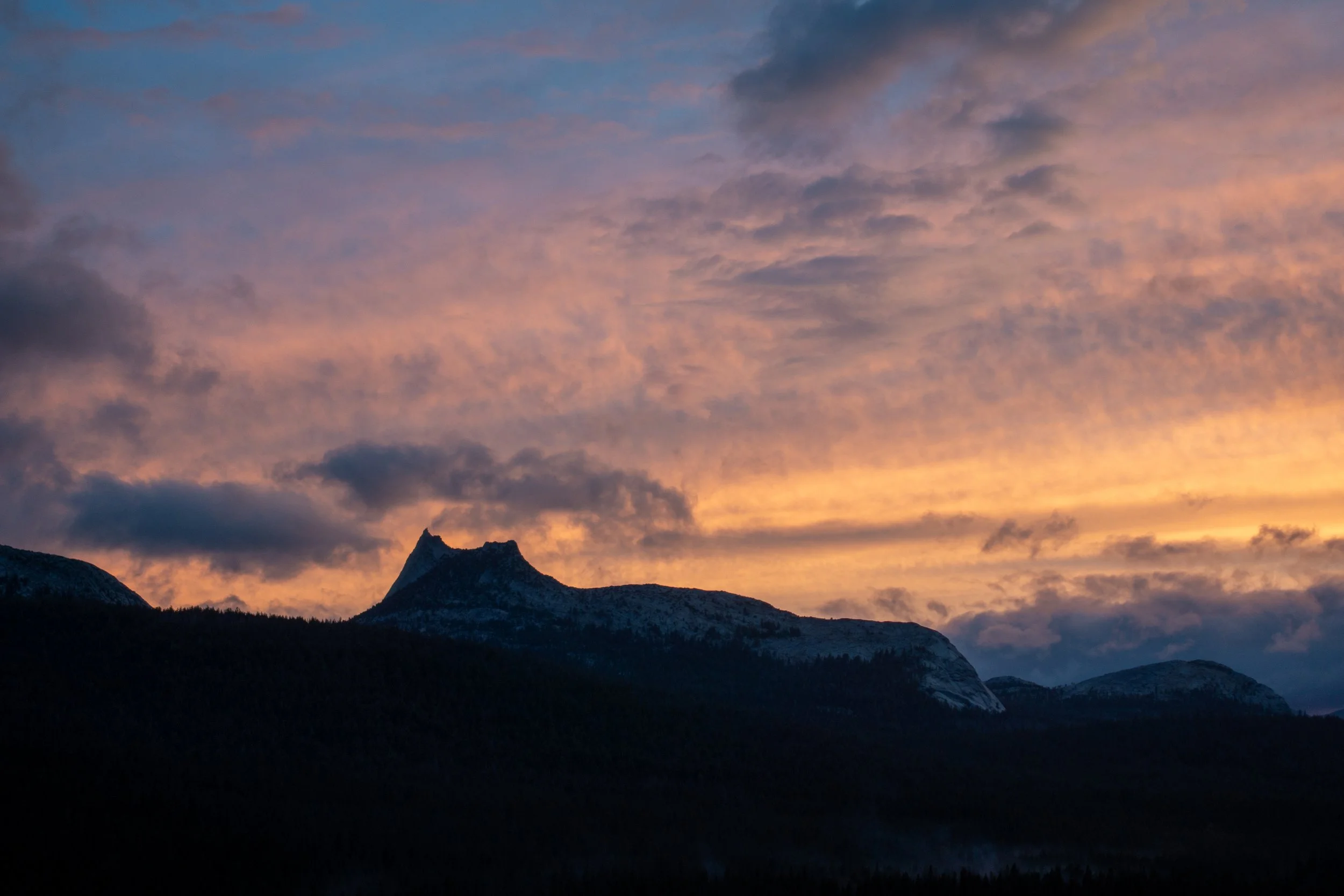
PHOTO OF
THE WEEK
Sunset over Cathedral Peak. Photo: Miles Fullman

Stay up to date on the latest climbing closures in effect!
Get your permits, do your research, and hit the wall!
Visit the Yosemite Climbing Museum!
The Yosemite Climbing Museum chronicles the evolution of modern day rock climbing from 1869 to the present.
The YCA News Brief is made possible by a generous grant, provided by Sundari Krishnamurthy and her husband, Jerry Gallwas