
EDITION 70 - SEPTEMBER 9, 2026

Your window into the stories, history, and ongoing work to preserve Yosemite’s climbing legacy.
A Note from the Editor
The first week of September brought a much welcome cold snap to the Sierra and to the park, lowering temperatures into a much more pleasant and manageable range and making nights up in Tuolumne and out in the backcountry begin to feel cold. Climbers are beginning to appear on El Capitan again and it feels as though Fall season is just beginning to pick up.
On Tuesday September 1, a wildfire started just west of Yosemite along Highway 140 in Mariposa County. The road closed for several days while crews worked to suppress and control the fire. The road reopened to one lane traffic on Friday, and normal traffic was restored on Saturday evening in time for the Labor Day weekend crowds. The fire is almost entirely contained by now, with crews remaining in the area to mop up and monitor.
On September 2, the park released a press announcement that a dead big brown bat found outside the Curry Village showers on May 18 tested positive for Rabies. The last rabies positive bat discovered in the park was in July 2025.
This week I sat down with park hydrologist and local climber Rachel Hallnan to talk about this season’s water level in the park from the winter snow melt, and balancing work and play while working and living in Yosemite National Park.
Miles Fullman
Editor, YCA News Brief
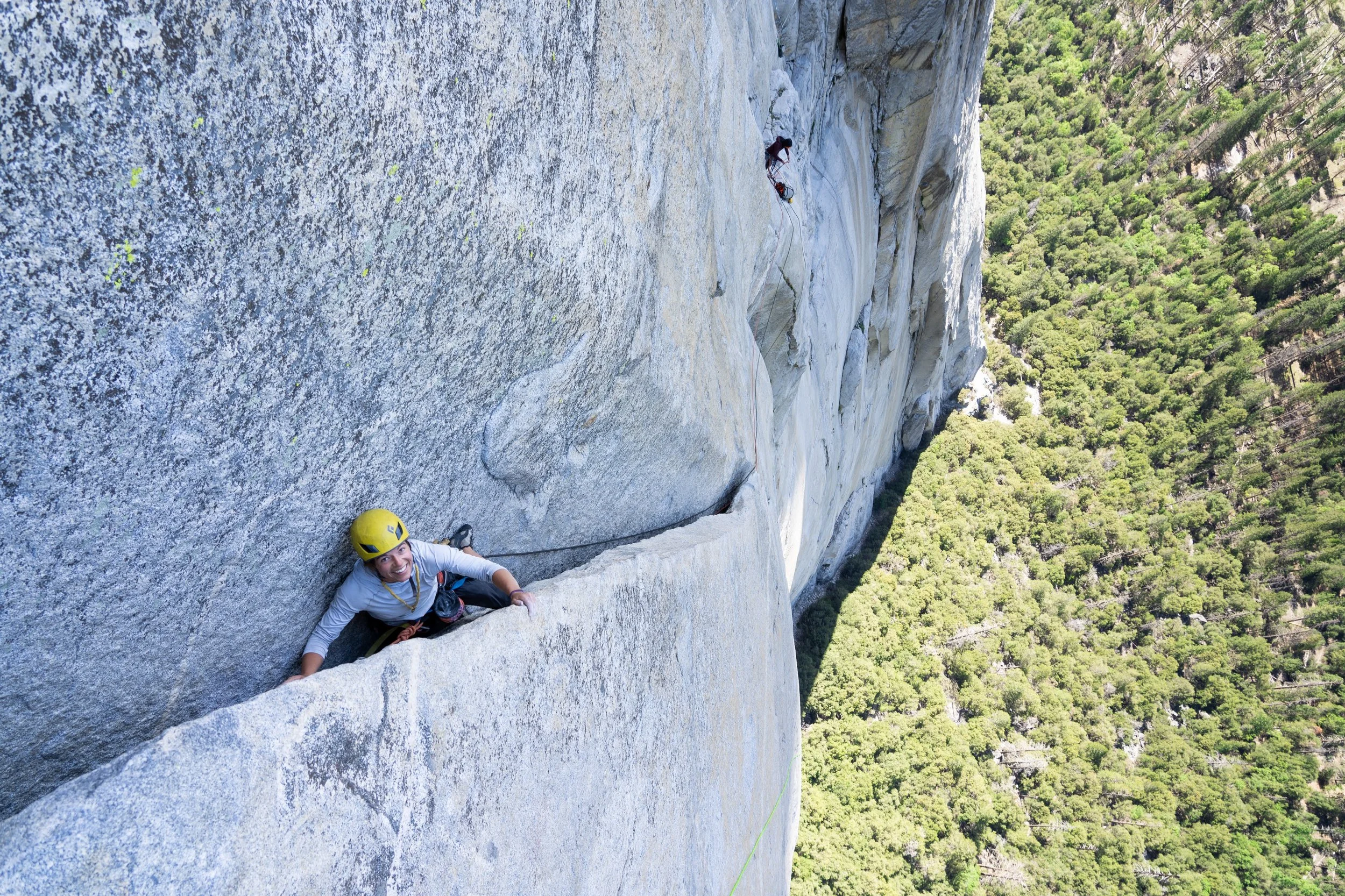
Rachel Hallnan leading the Hollow Flake on the Salathé Wall during the spring of 2021. Photo: Taken by Nick from a party above, last name unknown.
An Interview with Park Hydrologist Rachel Hallnan
Hallnan started working in Yosemite in 2018 as a seasonal physical science technician in Tuolumne, which is the position that she now supervises as a park Hydrologist. Since her beginnings in 2018 her responsibilities have steadily increased over the seasons. While working in physical science is what initially brought her to the park, Hallnan admits that the draw of getting to climb in Yosemite was also a major factor in deciding to move to Yosemite in the first place. When she saw the Hydrology job post, she knew she couldn’t pass up the opportunity to work in such a world-renowned climbing destination and experience the magic of the place.
In discussing this season’s water level, Hallnan said that it has been a very interesting year. A “water year” refers to the span of time between October 1 to September 30, because most of the precipitation falls during the winter. Last December through February there were some substantial winter storms that brought a relatively sizable snowpack. However, the record breaking heatwave over the Southwest in March caused an unprecedented melting event which left the snowpack on April 1st (which is typically considered peak snowpack) at an abysmal 18% across California. It also resulted in a unique runoff event, causing the earliest snowmelt driven streamflow peak in Yosemite Valley on record in late March.
In Yosemite National Park, the Maclure glacier is considered the last remaining true glacier in the park. It lies on the northern flank of Mount Maclure in the Cathedral range, along the border of Tuolumne and Madera counties. While the nearby Lyell glacier has ceased moving the Maclure glacier continues to move, though it is still shrinking due to climate change. Besides the Maclure glacier, there are also many perennial snow patches which are bodies of ice that might appear similar to small glaciers but don’t move under their own weight. Both glaciers and perennial snow patches play an important role in providing streamflow during the late summer months, and sustain water features like the Lyell fork of the Tuolumne. A recent study indicated that both the glaciers and snow patches are declining precipitously, but the rate of decline for snow patches is much more rapid.
Hallnan’s role is heavily focused on water quantity - and for Yosemite that means snowpack and streamflow monitoring. Park hydrologists have an extensive network of stations, and Hallnan’s crew works to maintain them. That involves a wide range of day to day activities, from backpacking deep into the wilderness to access them, to datalogger programming to climbing rohn towers. Hallnan’s favorite part of her job is stream gaging, which usually involves standing in or next to a beautiful alpine stream and basking in the majesty of the place. She also considers herself lucky to get to conduct snow surveys in the winter. The most fun survey in her opinion is the Falls Creek survey, which involves skiing from Hetch Hetchy to the northern boundary of the park and back over the course of four days. Hallnan delights in getting paid to be out in the wilderness during the winter and witnessing the changing snowpack through the seasons.
An avid outdoor recreator, Hallnan considers herself lucky to spend so much time outside on the job. On top of that time, she is always finding more time to get out bouldering or clipping bolts at the Tioga Cliff after work, or going on long runs or climbs in the High Sierra on her weekends. Living in the park makes it easy to access some of the best climbing and trail running in California without ever having to get in the car. Hallnan holds a deep well of gratitude for this gift of access and proximity to wilderness.
On top of all of that, Hallnan didn’t hesitate to assert that her favorite aspect of living and working in Yosemite is the community. She says she’s heard people say they came for the climbing and stayed for the people, and she couldn’t agree more. There are so many people she considers role models in the park, amazing scientists and rangers and climbers, and in this special place she celebrates the gift of getting to call them her neighbors, colleagues and friends.
When I asked Hallnan why hydrology is important in general and particularly in Yosemite, this is what she had to say:
“I think most people can easily relate to the importance of water: it quite literally sustains our lives. The snow that falls in Yosemite and drains through the Tuolumne and Merced rivers provides water to downstream users in the Central Valley and even San Francisco, critical wildlife habitat, and sculpts the majestic landscapes that we strive to protect here at the park.”
Hallnan’s favorite route in the park is Cathedral Peak, and her favorite trail run is from Tuolumne Meadows to Mammoth Lakes via the Pacific Crest Trail. Her proudest accomplishment from the time she has spent in the park is meeting her husband, KC Ellingford.
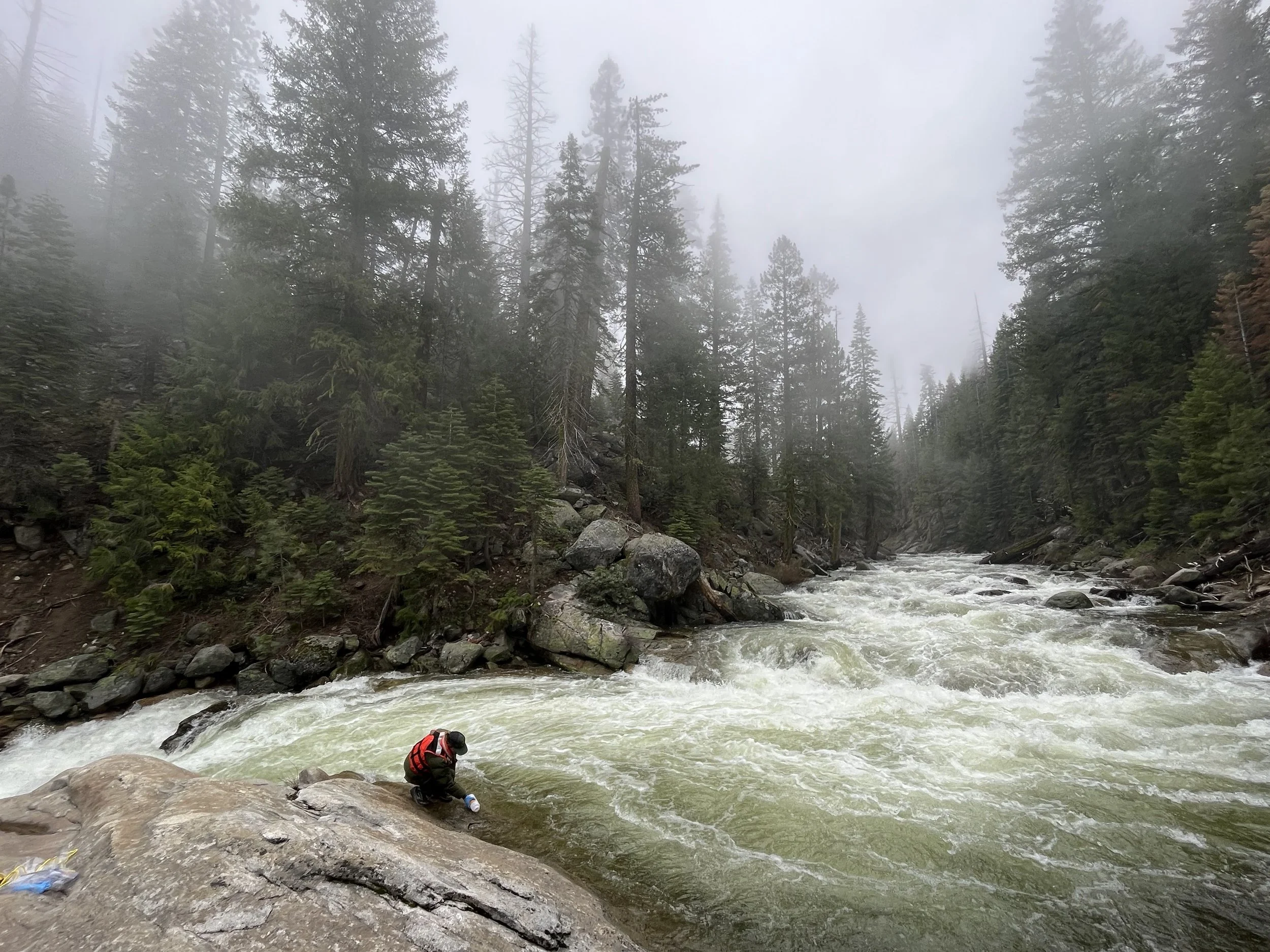
Rachel Hallnan conducting a springtime high flow measurement at Illilouette Creek during the record breaking 2023 Water Year. Photo: Annalise Decker
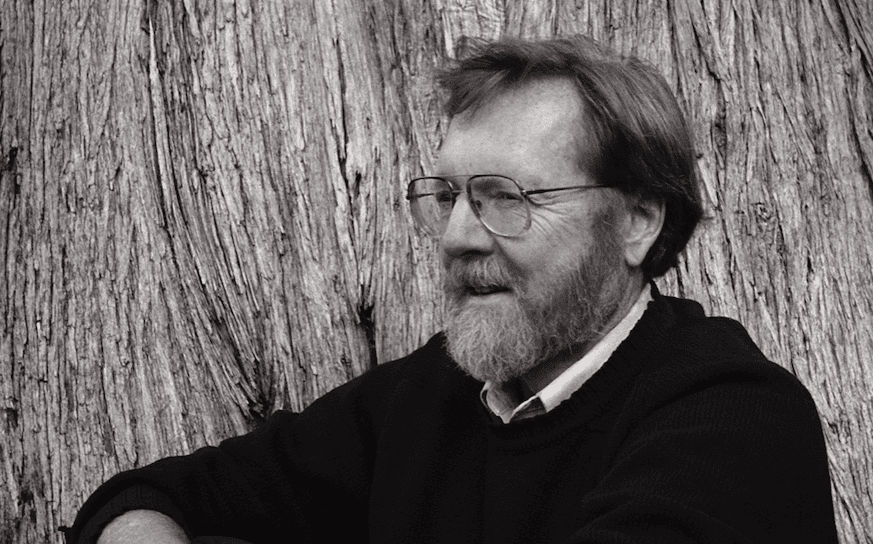
Glen Denny. Photo: Peggy Denny (Gripped Magazine)
Taos Film Festival - Glen Denny
In a way I met Glen Denny through Walt Shipley. Walt asked me if I had seen a tall older guy with a beard and glasses silently watching people boulder and climb near Camp 4. Walt was intrigued by him and asked If I knew who he was. Walt thought he might be a pervert. I had possibly seen this guy around but had just figured he happened to be walking by and had stopped for a few minutes to watch people climbing. I wasn’t even sure we were talking about the same guy. After Walt pointed him out, I saw him everywhere. He had an academic look about him. He was older and very tall with a stooped posture. He wore wire rimmed glasses. His buttoned short sleeve shirts had pens in the pocket. He gave off professor vibes. He would show up in the boulders and wouldn’t say a word. He always stood slightly back from everyone else, following the climbers from boulder to boulder. I never saw him interact with anyone. He would just watch silently. As if we were some sort of lab experiment. It was a bit strange, and it got my curiosity up too.
Walt became obsessed with him. Walt couldn’t stand it anymore and he finally walked up to him and in typical Walt fashion asked him point blank. “What is your deal? Are you a pervert?” The man replied, “Good god, no!” Walt apologized and asked him if he used to climb and he said that he did many years ago. With people named Harding, Robbins, and many other prominent climber names from the 1960’s. Walt asked him. “What is your name?”. “My name is Glen Denny.” Of course, we knew who he was. First ascents of Dihedral Wall, The Prow and West Face of Leaning Tower. Big routes from back in the day. He was a real powerhouse during the Golden Age of big wall climbing and his routes were very popular.
Once I knew who he was, I would chat with him when I ran into him. Which was often. Glen had a good memory, and it was wonderful to hear some of his climbing stories. We found that we had a mutual appreciation of Yosemite Climbing history. Glen had been heavily into photography, and one day he brought a binder up with some of his black and white photographs to share with us. They were incredible photos from an era that had passed. They needed to be made public for the world to see. I asked him what he planned to do with them. He mentioned wanting to put a book of his prints together. I told him I could scan them for him, and it would give him something to send to potential publishers. I suggested we send one to Jane Sievert at Patagonia and that might be a good place to start. He agreed and we made plans for him to visit me at my home with the photos he wanted scanned.
He showed up with several binders full of 8x10 prints encased in sleeves. We spent 2 days scanning them. I was blown away by his photos. They were not only historic images, but they were also art. After numbering and labeling them, I burned a bunch of DVD’s for him. We sent one off to Patagonia for Jane to look at and I let her know it was coming. She is a busy person, and it sat in her office for a while. She heard about Glen’s work through another source. When she did look at his images, she was as impressed as everyone else and Glen got his book, Yosemite in the Sixties.
While Glen was working out book contracts with Patagonia, I had been begging NPS to give me a space to do a temporary climbing themed exhibit in the park. I didn’t care where; I would take any place in the Valley that they offered me. I met with Chris Stein in his office. He was Chief of NPS Interpretation. I asked if I could do an exhibit in the Yosemite Museum. I happened to know that they hadn’t anything planned during the winter slot yet. The space is accessed after entering the Indian Museum in Yosemite Village. It is hidden and hard to find. The Yosemite Renaissance art exhibit is installed there every year. There are other exhibits that get rotated during the year when it is not being used by the Yosemite Renaissance. I was amazed when he said yes. I couldn’t believe it. I had been asking for fifteen years.
I did not have a lot of time to put it together, so it had to be simple. I asked Glen if I could do an exhibit of his photos. He was pleased and said yes. It would dovetail nicely with his new book. We picked out over 90 images to print and frame. Steve Roper wrote text for some of the wall panels. I got the images matted and framed. I had the labels and text panels made up. I painted the walls and installed the exhibit. I was able to do it all for $10,000.
Glen could be hard to work with. None of his images were the same size. Each one had been cropped slightly differently to his liking. This is the framer’s nightmare. Normally prints would have standard matting sizes which fit into standard size frames. This meant each print had to have a different sized custom matting and framing. It is not only slow but easy to waste material if not paying attention. Glen was a perfectionist, to the point it could be annoying. He insisted on talking to Randy the framer in Oakhurst I was working with for the exhibit. Glen was unaware of how irritated the framer was until he started yelling. I ushered Glen outside and asked him to wait while I went back inside to smooth things out. Randy almost quit the job. I am super thankful he didn’t. The exhibit came out well and it received great reviews. The exhibit was good enough that I was able to get permission later that year for another exhibit after the Yosemite Renaissance, the Yosemite climbing history exhibit I titled “Granite Frontiers”.
I worked with Glen on several different projects during our friendship. He was always willing to help me with any exhibits and projects I worked on. He donated photographs and offered encouragement for my goal of having a climbing exhibit in the park even though he doubted it would ever happen. He donated photos for the annual silent auction at the Ansel Adams Gallery that raised money for the Yosemite Climbing Association. One thing about Glen was he may have been difficult to work with, but you could count on his photographs being perfect.
After Patagonia published his book “Yosemite in the Sixties”, Glen was invited to the 2004 Taos Film Festival to do a presentation and book signing. I was asked to go and set up a Yosemite climbing history exhibit at the festival to support Glen and the Yosemite climbing theme. I was excited as I calculated how many travel cases I could fit in my vehicle. I fabricated a special exhibit in about a dozen 2-foot by 4-foot redwood cases. After loading up my Honda CRV I hit the road to New Mexico, a state I had only driven through once before when I went climbing in Hueco Tanks. I had folded my seats down to make room for the exhibit, and my car was stuffed to the gills.
I have always liked road trips and exploring new areas. As I approached Albuquerque there were bright colors floating over the city. As I got closer, I could see hundreds of vibrant hot air balloons in the sky. I had never seen so many at one time. I was unknowingly driving through during their balloon festival. I pulled over to watch and take photos. It was quite beautiful.
After reaching Taos, I checked in with the event organizers, and they gave me a key to my accommodations which was right in the center of town. Taos is a cute artsy town with old school charm. It reminded me of some of the gold mining towns in the California foothills. Narrow streets, old well-kept buildings and lots of tourist attractions. I was given a nice three-bedroom adobe house on the main street. I was being treated like royalty and I was enjoying myself.
After I set up the exhibit, other than a few scheduled presentations, I was free to enjoy the festival. I saw a lot of movies and went I went out at night to enjoy the festivities. I met a lot of people and did a lot of networking. I saw Henry Barber sitting at the bar. He slapped the empty stool next to him and motioned me over. I had never met him before. We enjoyed a few beers together and talked about climbing history and I asked him questions about his Yosemite climbs. There were a few other familiar faces. Bob Charmichael was at the festival. He was showing a digitized and cleaned up version of his movie about the Naked Edge. I recognized the talented artist that did the soundtrack for his movie. I had worked with Bob on a David Lee Roth video. After catching up I asked how he was able to get Tommy Bolin to do a recording for him. Bob told me Tommy used to play regularly on the streets of Boulder. Bob just asked him one day if he would and Tommy agreed. Tommy Bolin was a favorite musician of mine and like Jimi Hendrix, Janis Joplin, Jim Morrison and many other talented musicians died at a young age as their careers were taking off.
Jim Bridwell and John Bachar were also at the festival. I knew them the best and since I had the largest and most centrally located house we gathered every evening there for beers with Glen and storytelling. John introduced me to his friend Mike Reardon who was an energetic and colorful character. The four of us hung out watching movies together and staying up late every night. It was a lot of fun, and it is sad that the three of them are no longer with us. I took a bunch of pictures of the trip and somehow lost or deleted them all. I hope they are just lost and that I will eventually find them again someday.
In 2018 I received a call from Joyce that Tom Frost had passed. It hit me hard as Tom was on the Yosemite Climbing Association Board and was one of my biggest supporters. Feeling down, a couple hours later I got a phone call from Mike Reynolds the Park Superintendent. Mike said he had signed off on our request for a permanent climbing exhibit in the park. It was a very emotional day.
We put a committee together and started to design an exhibit for the Visitor Center (now called the Exploration Center). During the installation of the exhibit Covid hit adding more challenges slowing things down. The exhibit was completed for a while before things started opening back up again. The exhibit was opened for the public on May 1, 2022. A reception was held on May 5 and I invited all the folks that had helped and stood behind me all these years. Glen was one of them. He looked the same with his professor type vibe dressed in his button shirt. He was standing off by himself which wasn’t unusual. What was unusual was he was beaming. I went up and talked to him, and he slapped me on the back and said “You did it! I don’t know how you talked NPS into it, but you did it. I never thought it was possible. Good job” After all the effort and years I had put into this it was really nice to hear, especially from Glen.
I didn’t know at the time that that would be the last time I would talk to him. Glen got sick and it was suspected he had Covid and or possibly Meningitis. By the time they identified what was wrong, it was too late. It was the outdoors that got him. He liked sitting on his porch at dusk. Through a mosquito bite he contracted West Nile Disease and the climbing community lost another great one.
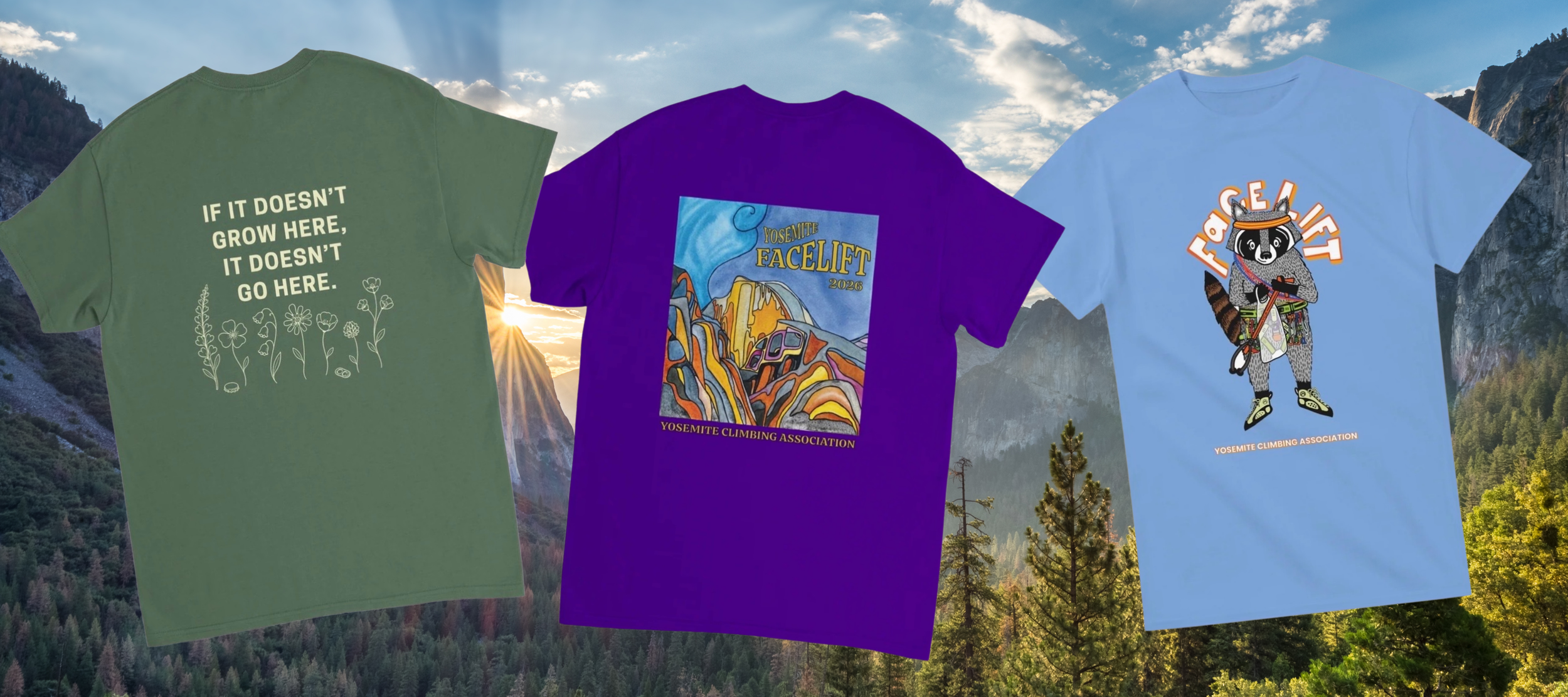
Facelift shirts are hitting the shop early this year!
For the first time, we’re launching a collection of Facelift shirts online before the event, with this year’s artwork available in a variety of colors and styles.
Coming to Yosemite? We’ll still have our traditional Facelift event t-shirt available during the week, with one design and color made specifically for the event.
Shop your favorite now, grab the event t-shirt in Yosemite, or do both. Every purchase supports YCA and helps make Facelift possible.
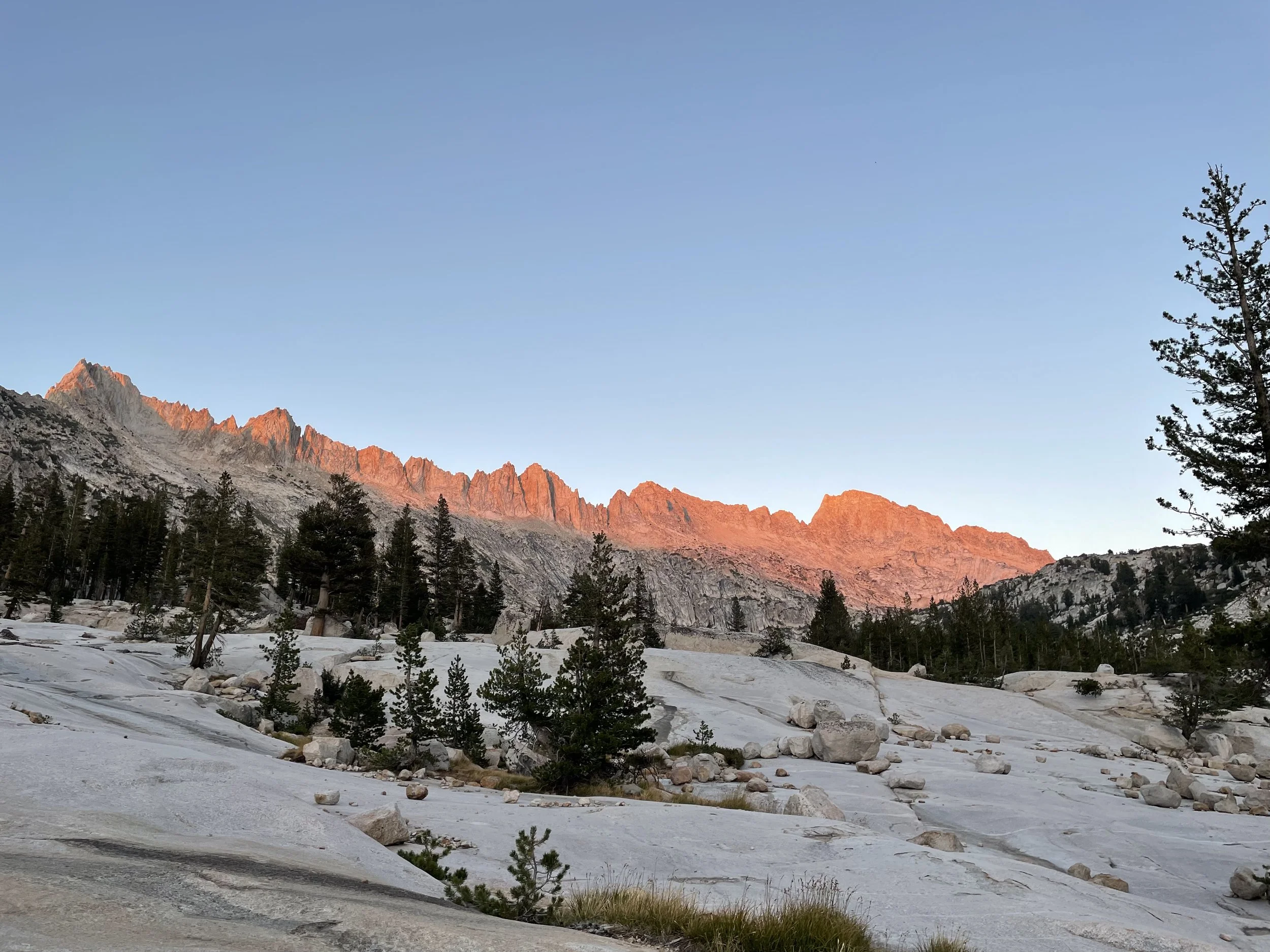
PHOTO OF
THE WEEK
Sunset on the western aspect of the Sawtooth range in northern Yosemite. Photo: Miles Fullman

Stay up to date on the latest climbing closures in effect!
Get your permits, do your research, and hit the wall!
Visit the Yosemite Climbing Museum!
The Yosemite Climbing Museum chronicles the evolution of modern day rock climbing from 1869 to the present.
The YCA News Brief is made possible by a generous grant, provided by Sundari Krishnamurthy and her husband, Jerry Gallwas