
EDITION 64 - JULY 28, 2026

Your window into the stories, history, and ongoing work to preserve Yosemite’s climbing legacy.
A Note from the Editor
First Ascent of the Salathé Wall
The Salathé Wall, still referred to as the “greatest rock climb in the world”, is one of the crown jewels of Yosemite Valley. Long, meandering and wide, it comprises what is probably the most natural line up El Capitan. The manner in which it was first established and the legacy of its significant subsequent ascents, which have charted the development of climbing style over the years, make it a touchstone for the sport of climbing.
When Warren Harding, Wayne Merry and George Whitmore climbed onto the summit and completed The Nose in November 1958, they proved that climbing El Capitan was possible. To make it to the top, they had used 3000 feet of fixed ropes and placed 125 bolts over 45 days spread out over a year and a half of effort.
Two years after the first ascent, Royal Robbins Joe Fitschen, Tom Frost and Chuck Pratt set out to improve upon the style of the first ascent. They made the second ascent of The Nose and the first continuous ascent, remaining on the wall for seven days and only returning to the ground after having reached the top.
In September 1961, Royal Robbins returned to El Capitan and established the first ascent of the Salathé Wall with Tom Frost and Chuck Pratt. Robbins wrote the following of their style of ascent:
“Although the first ascent of the Nose had required a prolonged siege with thousands of feet of fixed ropes, we wished to avoid such methods if possible so as to keep the element of adventure high with at least a moderate amount of uncertainty. It was perfectly clear to us that given sufficient time, fixed ropes, bolts and determination, any section of any rock wall could be climbed. To remove this certitude which tends to diminish our joy in climbing, we had planned an attempt involving two major efforts.”
The trio climbed from the ground to Lung Ledge over three and a half days before fixing ropes and returning to the ground, a section of El Capitan that is now perennially fixed and referred to as the “Heart lines”. A few days later the team returned to ascend and remove their fixed lines, committing themselves to the wall. They spent six days of what Robbins called “the most rewarding climbing we had ever done” before reaching the top, having only placed 13 bolts (all on the Freeblast slabs) in 3,500 feet of climbing.
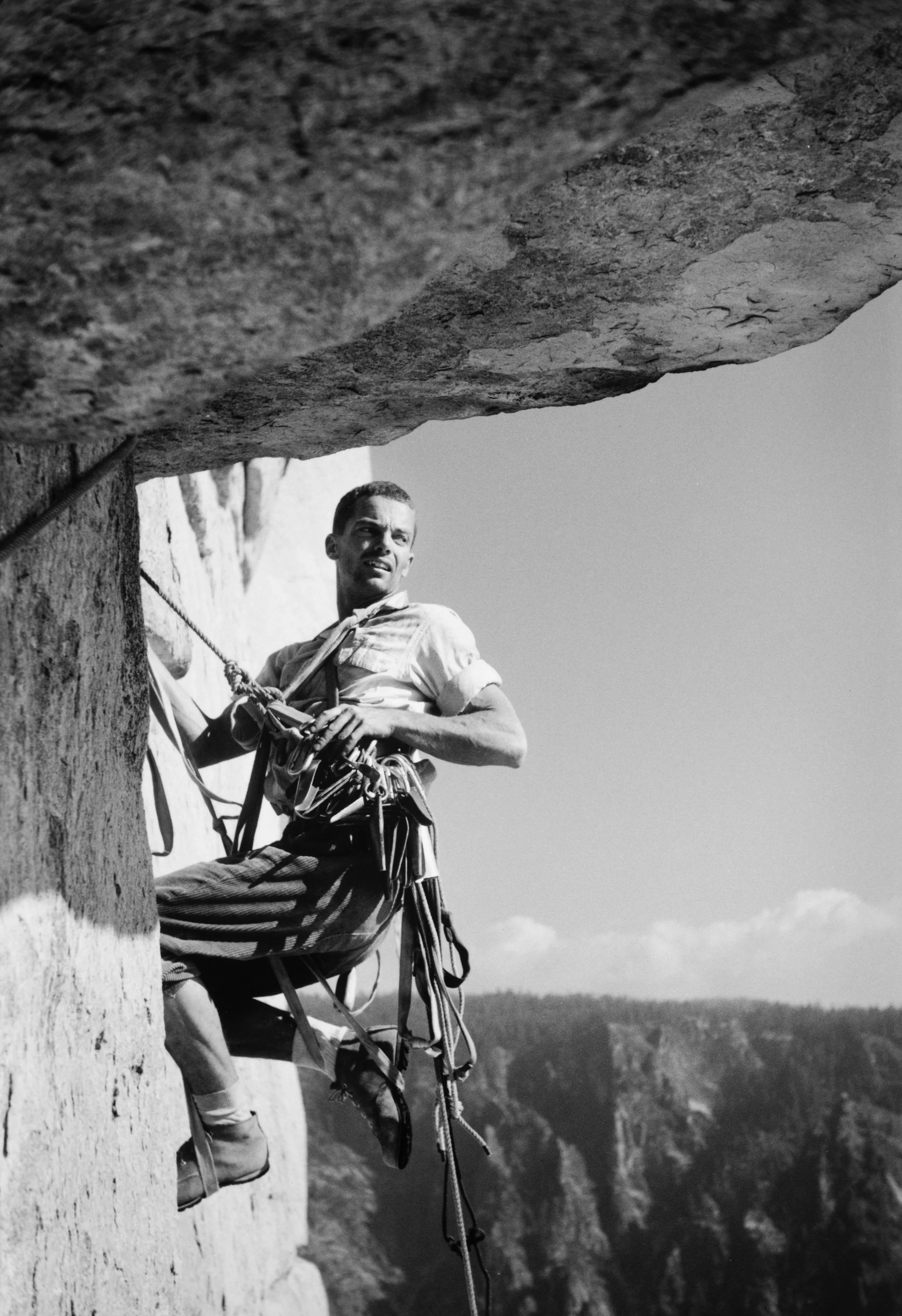
Tom Frost pulling the Salathé Roof. Photo: Image provided by the Frost - NACHA Archive
Despite El Capitan’s second route already marking a leap forward in style, Robbins was not yet fully satisfied. He returned in September 1962 with Tom Frost and T.M. Herbert to attempt the second ascent of the Salathé Wall and its first continuous ascent. After falling ill and weathering a severe storm, they aborted the attempt.
In mid October, Robbins and Frost pared down their equipment to a bare minimum of essentials and committed to the wall once again. On their first day they climbed to Hollow Flake Ledge, a pace which most wall teams today endeavor to keep. They spent their second night on top of El Cap Spire, climbing through scattered showers throughout the day. They spent their third night huddled on the very small Sous Le Toit ledge, at the base of the famous Enduro Corners. A long fourth day battling strong winds up the headwall ended at “Thank God Ledge”, now more commonly referred to as “Long Ledge”. Awaking covered in a dusting of snow, they climbed to the summit where several inches of fresh snow lay. After their five day effort, Robbins wrote:
“We were feeling spiritually very rich indeed as we hiked down through the grand Sierra forests to the Valley.”
Miles Fullman
Editor, YCA News Brief
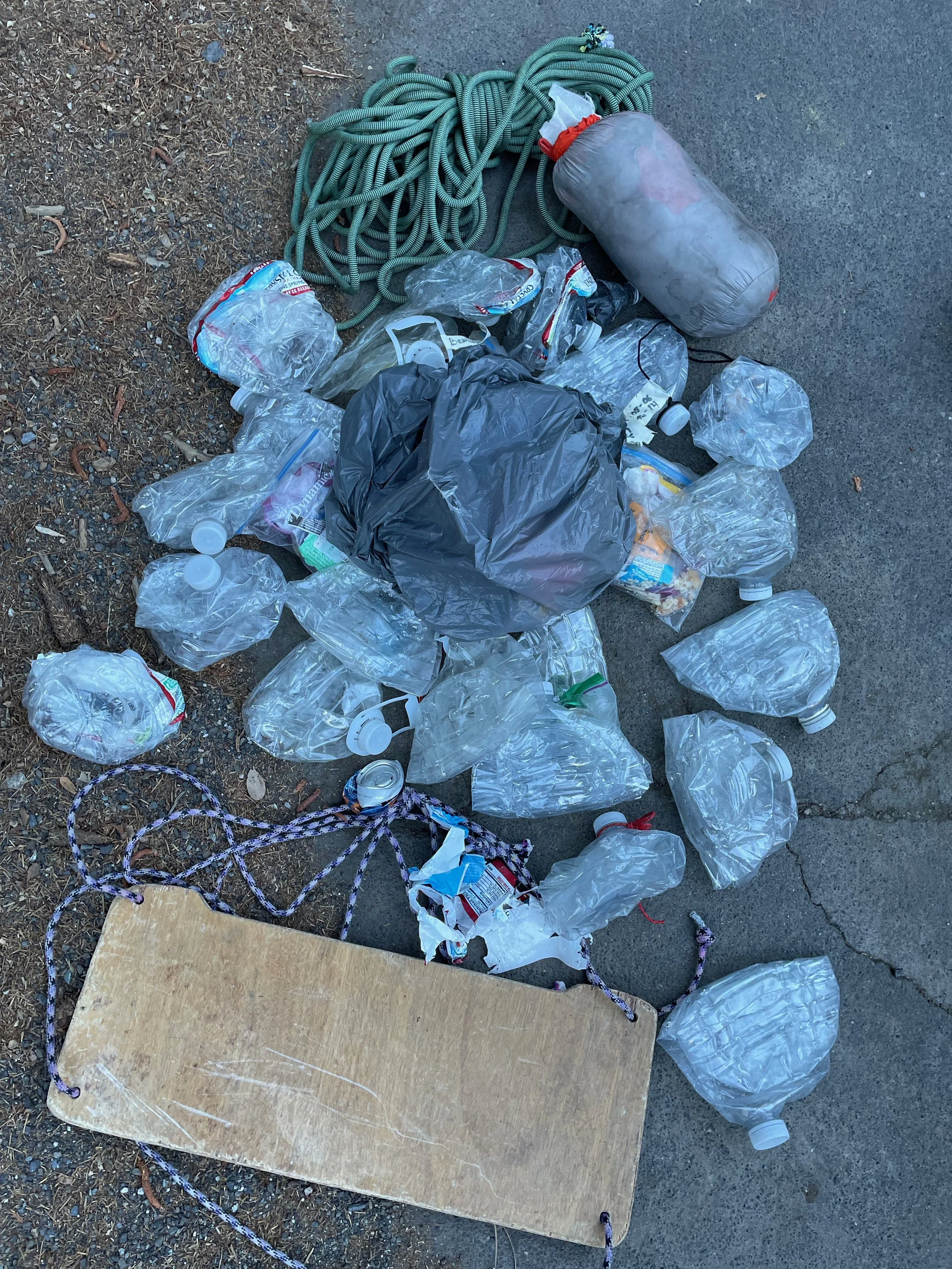
Some of the abandoned garbage removed from the Salathé Wall during our patrol in June. Photo: Miles Fullman
Extreme Janitorial Services | An Uphill Battle: Keeping El Capitan Clean
Climbing continues to explode in popularity, and increasingly large numbers of climbers are crowding Yosemite’s most popular free routes. As big wall free climbing continues to grow, so does the number of plastic gallon water jugs abandoned on El Capitan.
Yosemite Climbing Rangers have been battling the accumulation of garbage left behind by climbers on El Capitan for over two decades. The cleanliness of the world famous cliff comes in cycles with the busy Spring and Fall climbing seasons. When the weather becomes unfavorable for climbing, the climbing masses leave the Valley and rangers, stewards, volunteers and other good samaritans do all they can to keep the cliff in good condition before the next climbing season.
Twenty years ago, Yosemite Climbing Rangers performed the first ‘Nose Wipe’, a thorough cleanup of the upper corners of the classic route where garbage is often discarded and crammed into the cracks or left on ledges. Rangers rappel into the route from the top with haul bags, garbage bags, and long poles to fish out garbage from the cracks where they have been dropped or buried.
Dave Campbell wrote about the Nose Wipe in an article for Patagonia in 2013. He and several climbing rangers and stewards removed 120 pounds of garbage from the upper half of The Nose and its summit. He wrote the following about the annual cleanup:
“I find myself circling back to Yvon Chouinard’s quote. Although climbers are physically ascending something tangible, there’s also a metaphysical transformation taking place, leading toward spiritual growth. However, this process is compromised if we disregard our environment. Perhaps YC’s words show us the true Sisyphean task, because there isn’t much difference between perpetually rolling a rock up a hill and climbing a mountain if neither produces the desired result: to not come home the same asshole we were when we started.”
Jane Jackson wrote another article for Patagonia about the 2019 Facelift El Capitan summit cleanup with Yosemite Climbing Rangers and volunteers. That day they removed 500 pounds of garbage from the top of the Salathé Wall. Jackson wrote the following about being humbled by the amount of garbage left behind by climbers she encountered that day:
“Annie, a wilderness ranger and climber who in summer patrols the Yosemite backcountry, breaking down fire rings and checking backpackers’ wilderness permits, said, ‘Can you imagine if backpackers were doing this? If there were caches in other parts of the Yosemite Wilderness with hundreds of pounds of backpacking gear?’ ”
As climbers, we tend to think of ourselves as the exception to the rule, believing that we have a close connection with wild places and tend to have more respect and take better care of them. But year after year the garbage continues to accumulate on El Capitan. Why can’t we take as good care of one of our most beloved mountains as the countless people who are going backpacking take care of the wilderness?
Last month another climbing ranger and I patrolled the Salathé Wall, removing close to fifty pounds of trash along the way. As we climbed the route we emptied abandoned half full gallon water jugs, coiled long sections of stuck ropes, picked up used wag bags tucked behind rocks, pulled trash out of cracks, took abandoned gear with us and gallon jugs full of rancid piss, and even cut an enormous belay seat out from under the Salathé Roof and hauled it out with us.
The Salathé Wall is one of the finest routes on El Capitan and in the world. Its history of proud ascents serves as an example of all of the best that climbing has to offer: honest challenge and good style that doesn’t impact the environment and leaves the mountain in the shape it was first encountered so that others can have the same wild experience. A route like the Salathé commands respect, and it deserves to be treated as such.
We as a community can, and must, do so much better.
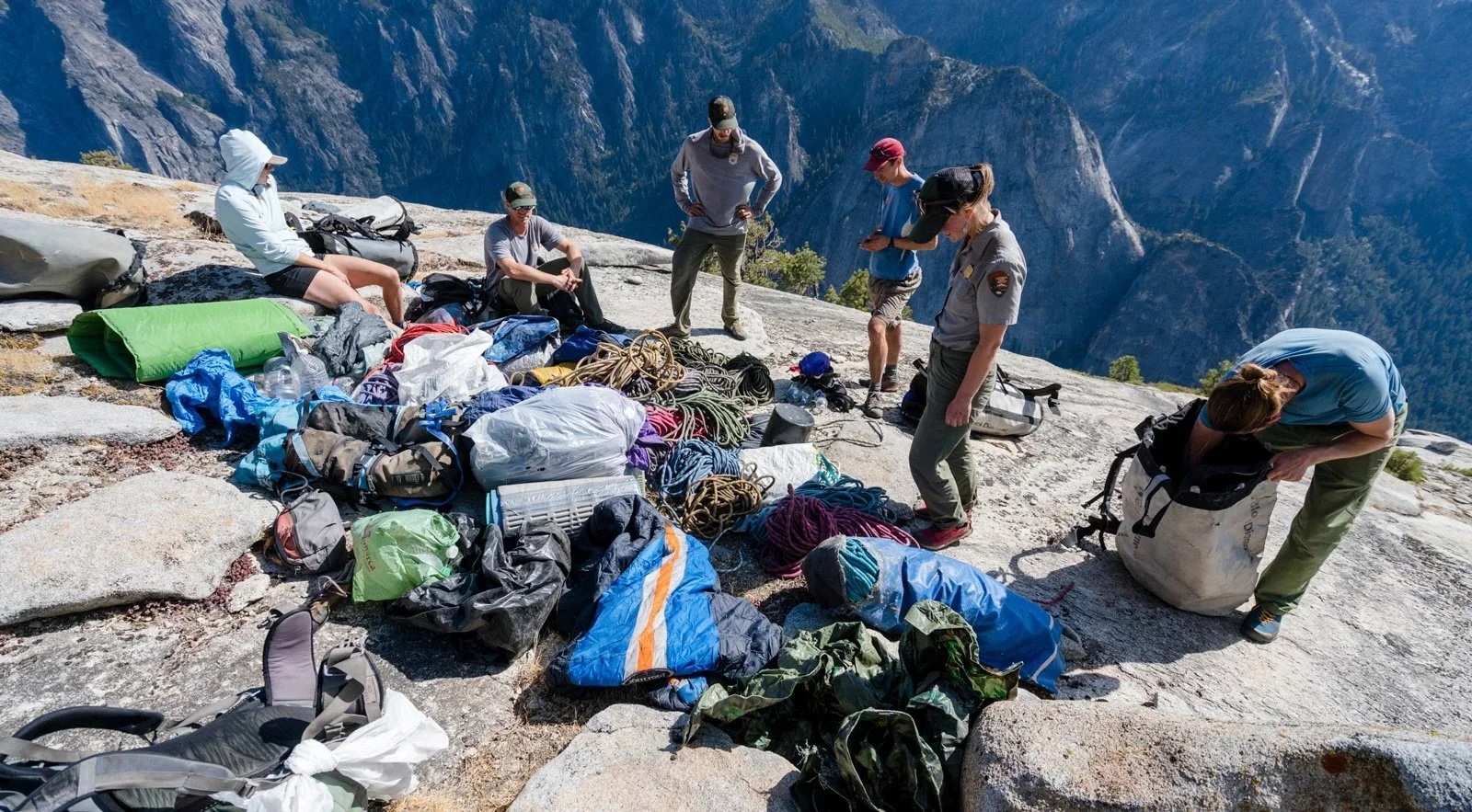
Climbing rangers, climbing stewards and volunteers look at the pile of trash amassed from one of many caches atop El Capitan in 2019. Photo: Eric Bissel
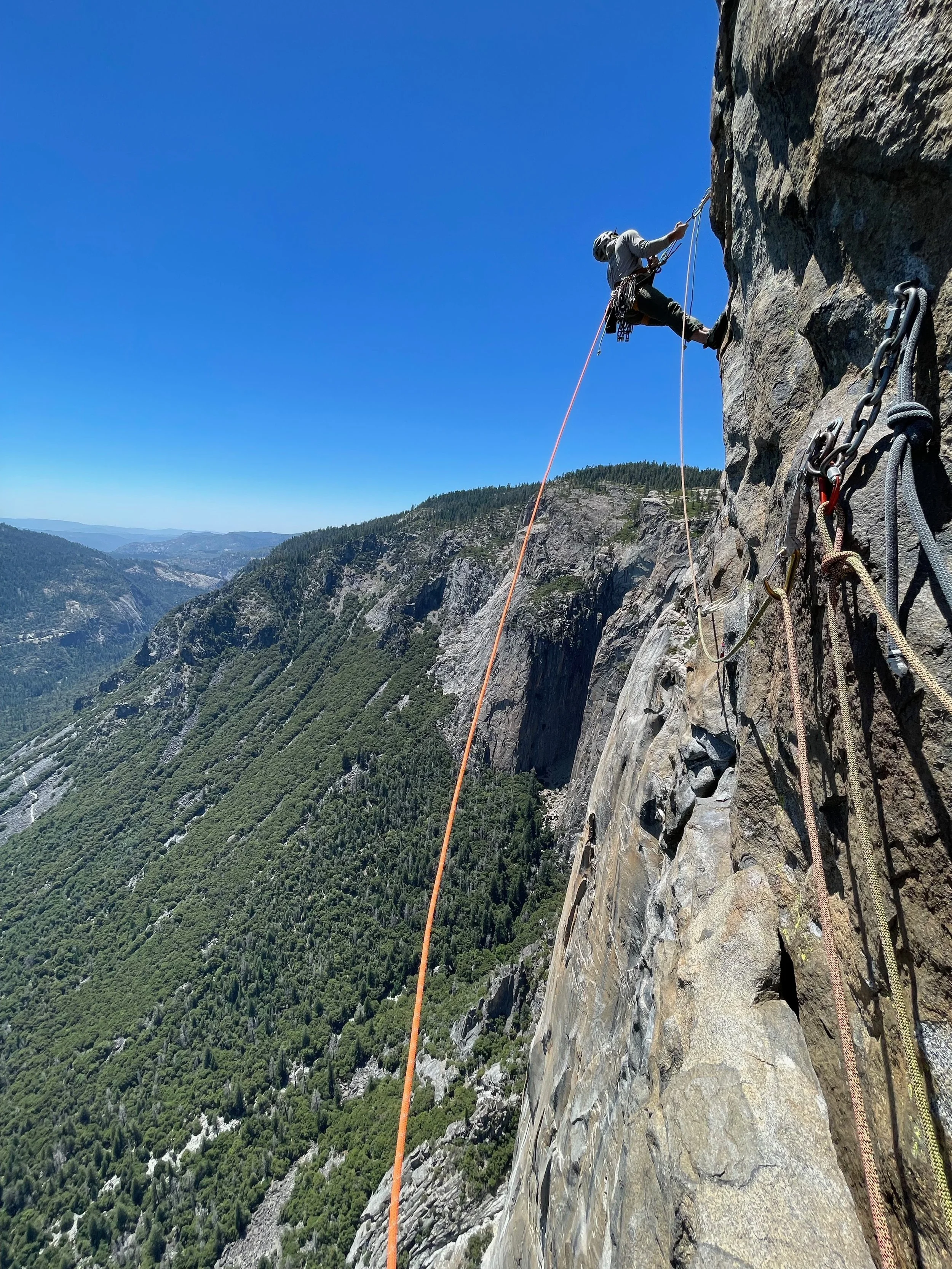
PHOTO OF
THE WEEK
Soaking in the exposure and wind while climbing off of Long Ledge on the Salathé Wall. Photo: Miles Fullman

Stay up to date on the latest climbing closures in effect!
Get your permits, do your research, and hit the wall!
Visit the Yosemite Climbing Museum!
The Yosemite Climbing Museum chronicles the evolution of modern day rock climbing from 1869 to the present.
The YCA News Brief is made possible by a generous grant, provided by Sundari Krishnamurthy and her husband, Jerry Gallwas