
EDITION 56 - MAY 22, 2026

Your window into the stories, history, and ongoing work to preserve Yosemite’s climbing legacy.
A Note from the Editor
Temperatures have cooled back down a bit this week, with strong winds even making climbing in the sun reasonable for a few days. Tuolumne has opened, allowing for an escape route for climbers once things start to become unbearably hot down in the Valley. A group of friends and I enjoyed an early season lap up Cathedral Peak, surprised to find that the trail was almost entirely clear of snow already. There is still a lot of snow covering the surrounding high elevation areas, but most climbing in Tuolumne Meadows is already good to go.
El Capitan continues to be the scene of much action, and Taylor Martin and Olliver Tippett have continued their spring tear of speed climbing by breaking two more speed records. On Sunday the 17th, they climbed Shortest Straw (5.7 A4, 1800’) in 9:51. Martin wrote about their ascent “It feels really cool to not need a headlamp on a route that once took me around 5 days to climb.” Continuing their spree, on Tuesday May 19 they headed back up and made the first one day ascent of Hole World (5.9 A4) in 14 hours and 45 minutes.
In other park news, the Yosemite Bike Share Program will start up for the summer season beginning on Saturday, May 23 for this Memorial Day Weekend. Visitors wishing to rent bikes can download the LINKA GO app and create an account. In the app, scan the QR code on the bike basket to unlock the bike. Rentals are limited to two hours and may be returned to a designated Bike Share Hub. There are hubs located at Yosemite Village Day Use Parking and Camp 4.
Several ongoing construction projects will be happening in the park this season which will cause road delays. On May 17, pavement restoration began on El Portal Road. There will be other projects occurring on the Valley Loop Road to keep pavement in good condition. These projects will occur between May 17 and through August 31st.
For this week’s feature I interview Nick Ehman, longtime Valley local and SAR member, to talk about his love of Yosemite and how he has been able to continue to live, work and play in the Valley.
Miles Fullman
Editor, YCA News Brief
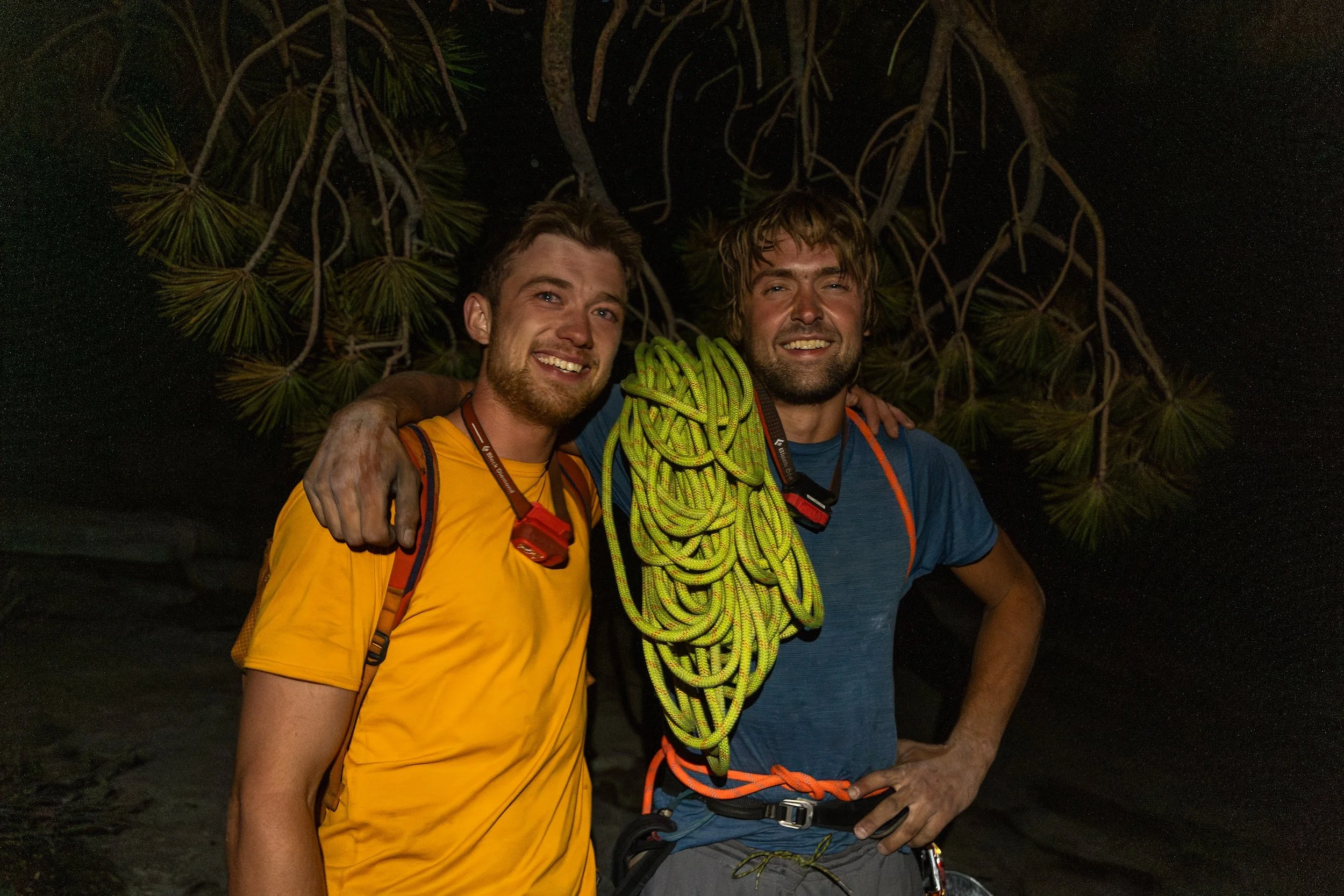
Miles Fullman and Nick Ehman atop El Capitan after climbing The Nose twice in a day and enduring a hailstorm. Photo: Jack Cramer
Interview with Nick Ehman of Yosemite Search and Rescue
Nick Ehman was on the Valley SAR team when I joined in 2021. We immediately started sharing innumerous memories while roped up together over the years. So many moments stick out to me when I think of Nick: cowering under a tiny roof at Camp 4 on The Nose in shirts and shorts on our second lap of the day and getting pelted by large hailstones, swapping leads up Angel Wings or linking multiple routes on The Hulk in the Sierra, scrambling along the Sawtooth Traverse, lapping El Capitan repeatedly, bringing a guitar up Sea of Dreams, hauling him off the face of Half Dome after a snowstorm coated the wall in verglas, seeking out the Valley’s obscurities or scampering up Swan Slab or After Six on countless evenings.
Many of my finest days of climbing have been shared with Nick. At times he is more myth than man, someone who regularly goes climbing all day without food or water and whose diet for a time consisted exclusively of red meat. I’ve seen him slip off the Midnight Lightning mantle while climbing it barefoot and watched him eat a raw egg that broke on the ground. He has gone on countless rescues after six years of service in the park, helping hundreds of people at their lowest moments. He is a bear in human form, a true friend, and a local hero.
Over years of climbing in Yosemite Nick has notched several impressive accomplishments, from breaking speed records on El Capitan, to climbing the Triple Crown in 2022 with Danford Jooste, and most notably setting the solo speed record on The Nose in 2023 in a total time of 4 hours and 39 minutes.
When not guiding clients, Nick still pursues big adventures on the Valley’s walls. Just this past Monday, Nick started up his most beloved route The Nose with friends Jake Squier and Al Wilson. They reversed the Triple Direct / Muir pitches from Crossroads and continued up The Shield, shivering the night away on Quixote Ledge until the sun returned and topped out midday Tuesday.
Where did you grow up?
Bloomington, Indiana
How did you get into climbing?
My dad introduced me to climbing at an early age. We would take trips to the Red River Gorge in Kentucky, and we climbed a lot at our hometown gym.
When did you first hear about Yosemite and what brought you to the valley?
I first heard of Yosemite through my dad’s climbing stories. He held the place in such high regard. To be able to climb the big stuff in Yosemite was the unspoken end goal to all the climbing we did together, at least in my head. I was absolutely floored by my first climbing trip to the Valley in 2015. I couldn’t take not living there, and in January 2017 I drove to Yosemite looking for a job. I couldn’t find a job, and ended up working at Starbucks in Fresno. I spent as much time as I could climbing in the Valley and fell deeply in love with the place. I decided to take an EMT course in the hopes of building my resume for SAR. I worked as an EMT in Denver in 2019. I applied for SAR in 2020 and landed a spot on the Tuolumne SAR site.
How long were you on SAR?
I spent one year on Tuolumne SAR and five years on Valley SAR.
What other jobs have you held in the park?
I worked as the Ski Patrol Lead at Badger Pass in 2023 and was rehired for the position in 2024 but ended up working as barista at the Starbucks in the Lodge due to Badger not opening. This winter I was the supervisor of the downhill rental shop at Badger. Currently, I am a rock climbing guide for the Yosemite Mountaineering School.
What do you most love about living, climbing, and working in the valley?
I love that wherever I am in the valley, I can walk five minutes and be alone in a stunning natural setting touching perfect rock. I love the relationship I have to the landscape. There are so many emotions and memories associated with every place I look. It’s so cool to wonder what it’s like up there, and then get to find out. I love moving over rock that I’ve moved over hundreds of times. I appreciate the variety of experiences and pursuits you can have climbing here. Yosemite is such an epic canvas for experience. I am so grateful for the friends I have made and the community I get to be a part of. They make the place home.
What is your favorite route and how many times have you climbed it?
My favorite route is The Nose of El Capitan. I have climbed it 52 times.
What are some standout Yosemite memories?
My most memorable positive experiences usually include: a high level of ambition and uncertainty at the start, a sense of control and safety during, a growing feeling of giddiness as the plan becomes realized, and a strong vein of levity throughout. One standout memory happened in the summer of 2022. My SAR teammate Zach Little and I climbed The Nose naked and barefoot. We brought no clothes or shoes with us. We had zero idea if we would be able to do it, but somehow it wasn’t that bad! However, hiking down the hot granite slabs with our raw feet afterwards was pretty bad. Another incredible memory was guiding my Aunt and Uncle up the Sunnyside Bench climbing route with my girlfriend Kenzie. It was an unforgettable and empowering experience for all of us. Another amazing time was climbing The Nose with the SAR team last fall. The goal was to stay connected with our ropes as a single team, and have everyone lead a 2-4 pitch block. We spent hours at the whiteboard and weren’t sure we would be able to pull it off. We ended up having an amazing day up there together.
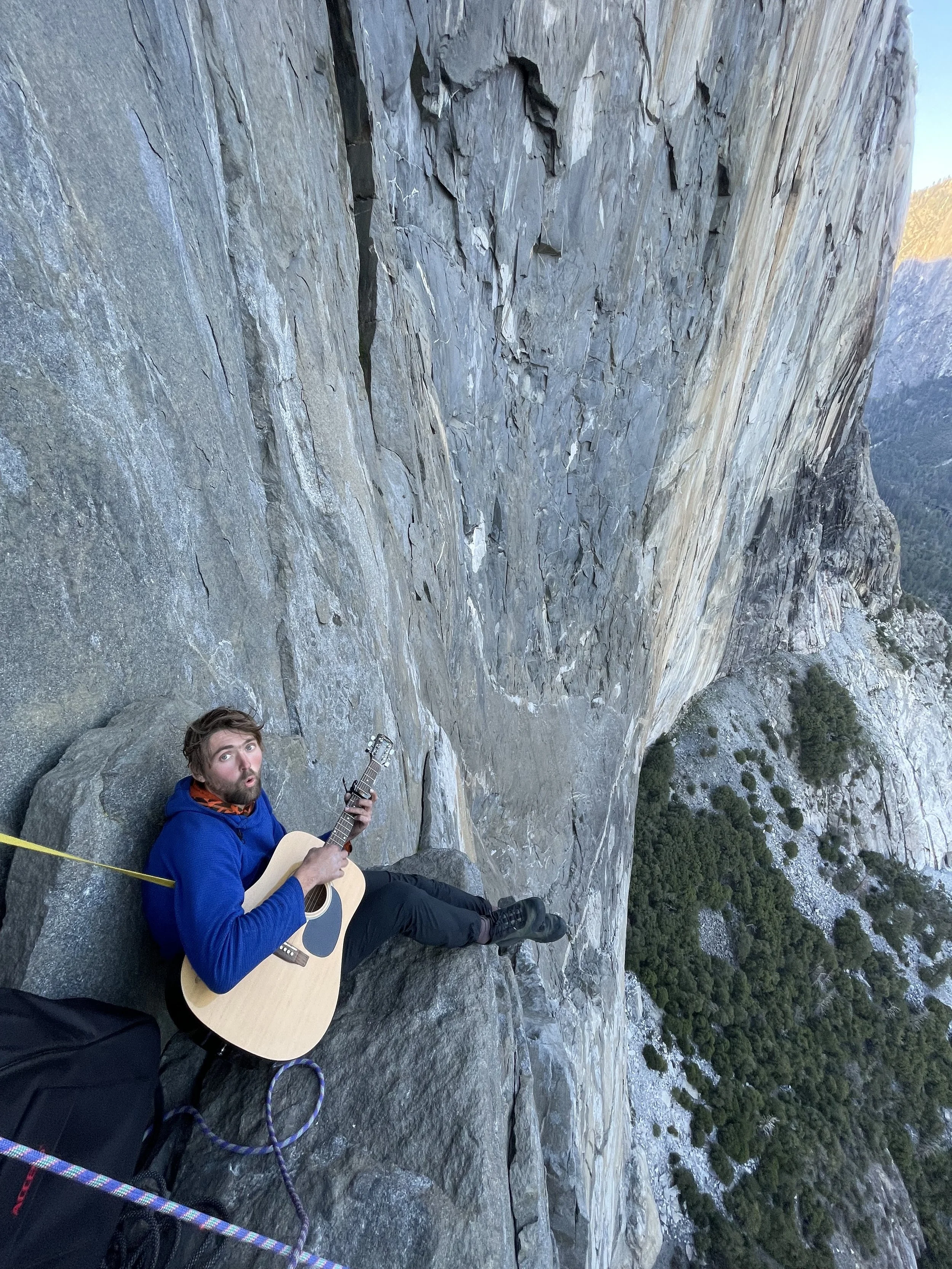
Nick Ehman playing the guitar on Big Sur during an ascent of Sea of Dreams. Photo: Miles Fullman
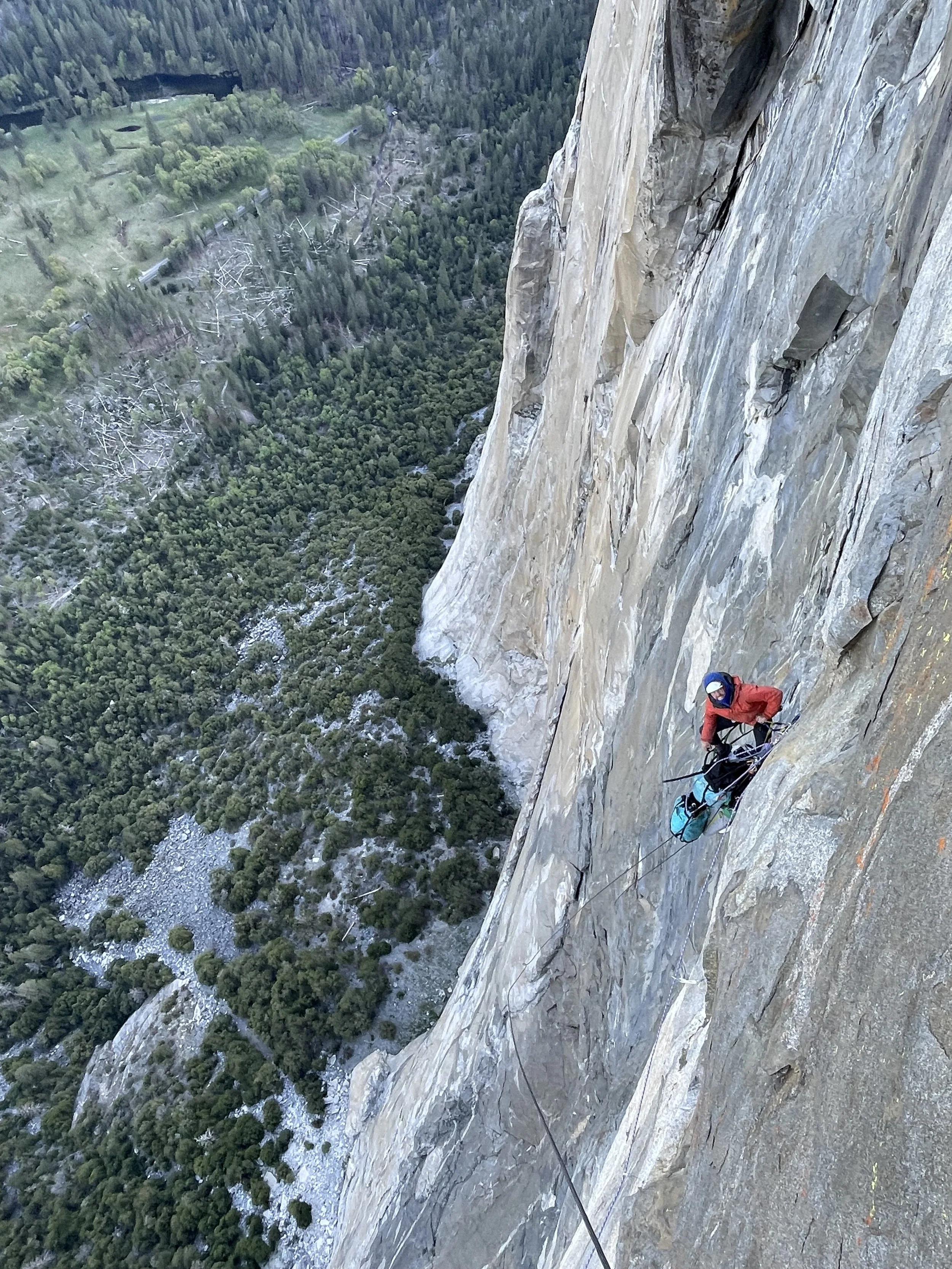
Nick Ehman tends the bags on Sea of Dreams. Photo: Miles Fullman
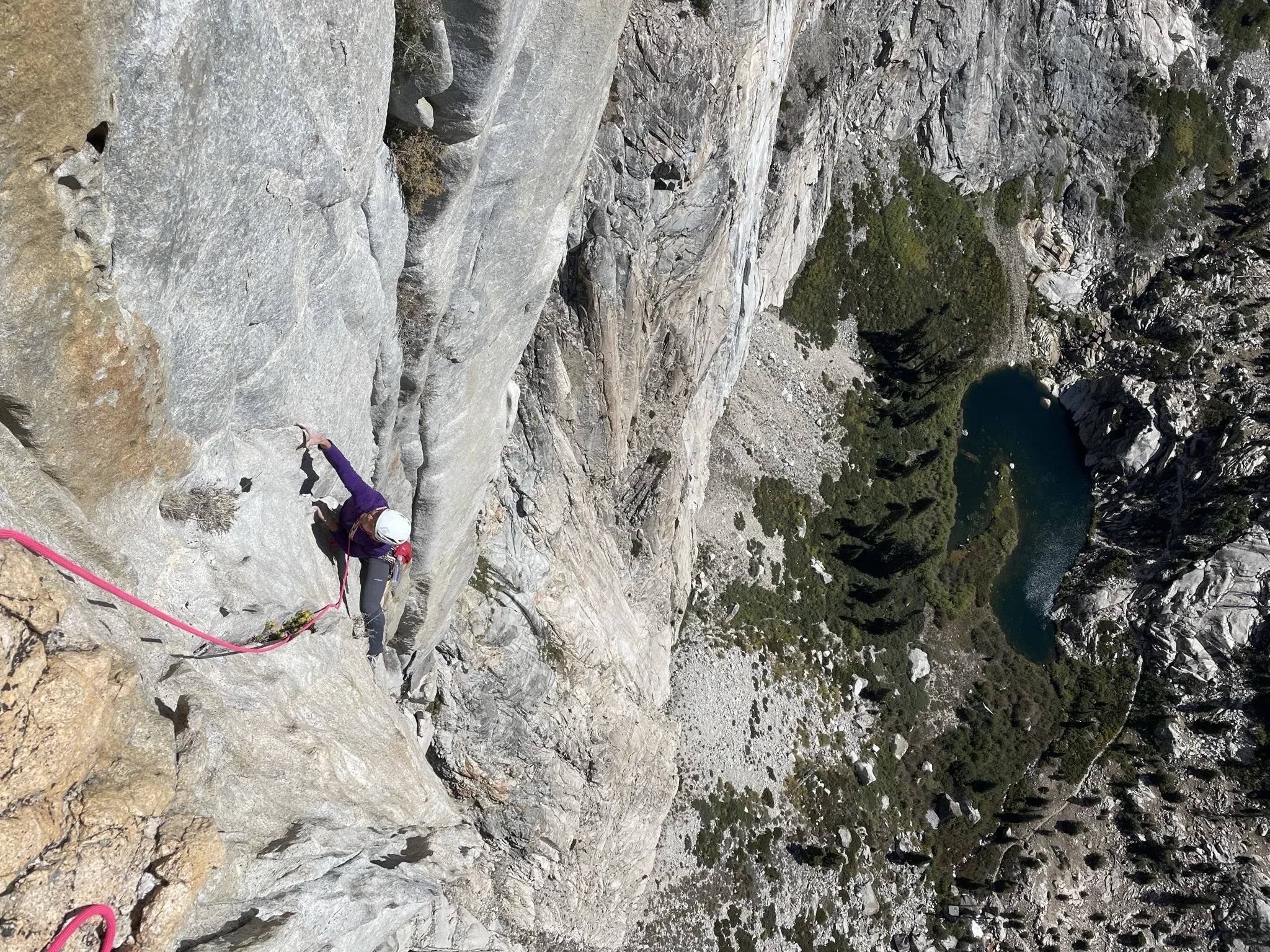
Nick Ehman climbing Valkyrie on Angel Wings. Photo: Miles Fullman

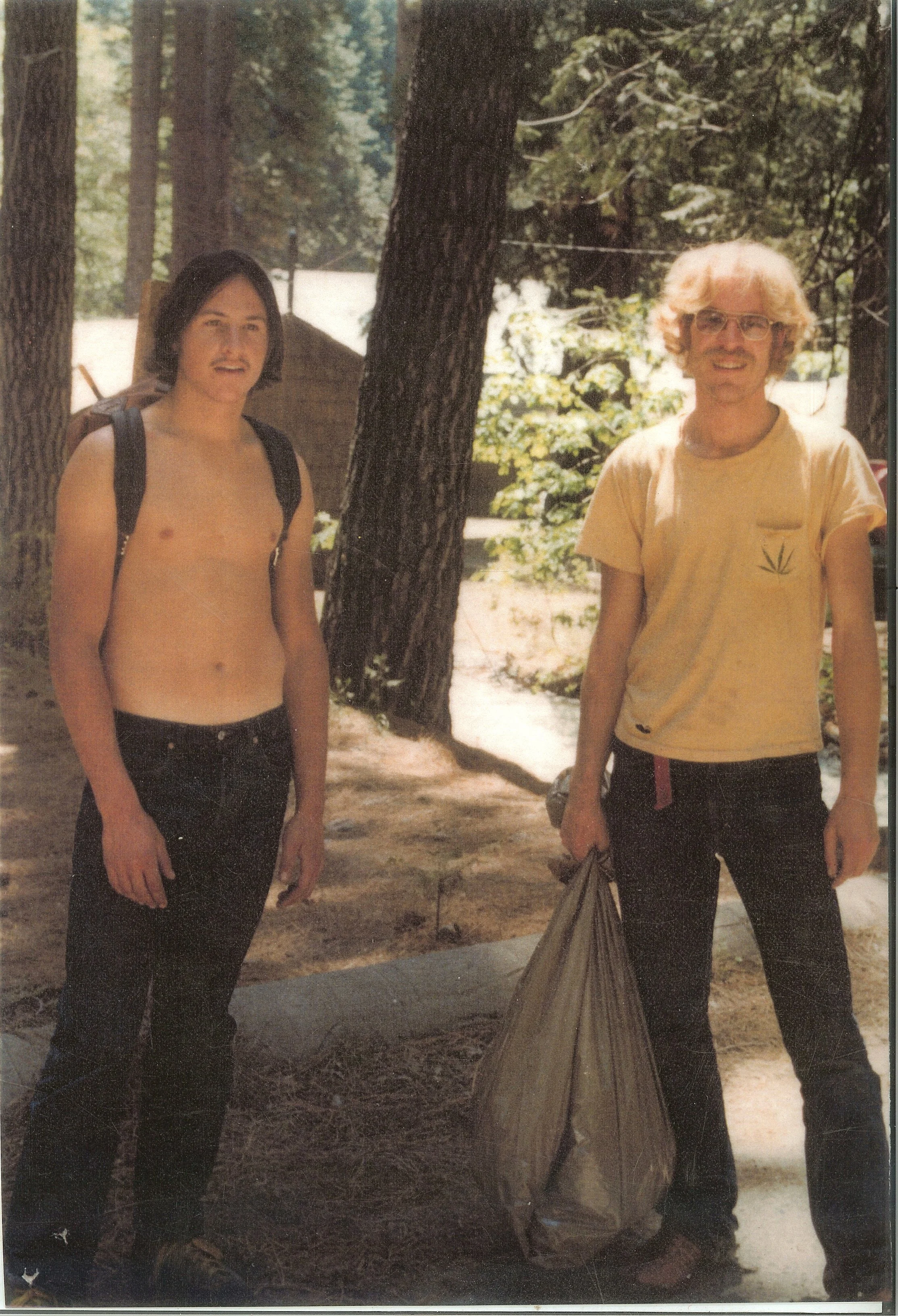
Grant Hiskes and Ken Yager. Photo: Ken Yager Collection
Confessions of a Dirtbag
I admit it, I was a dirtbag. I was a dirtbag back when it was considered a derogatory term, unlike today where the term is proudly worn as a romantic status symbol. As the name suggests, it was coined for people that slept in the dirt. It wasn’t nice. The only other requirement was to be unemployed, which was also frowned upon.
It now refers to anyone living out of their vehicle. Many of these are large vans outfitted with solar panels, Starlink, full kitchens and roomy quarters. They are living like kings and queens with all the modern amenities and working remotely. The modern dirtbag is not hurting for comfort or money.
Times have changed. The climbing community has grown and now has a good relationship with the Park Service. Many park employees are climbers themselves. Climbing has become mainstream. The original dirtbag life is long gone. It wasn’t the most comfortable at times and could be embarrassing. It took commitment and dedication. My best memories were the climbing and the amazing friends I made. It made all the uncertainty and hardship worth it.
I moved to Camp 4 on December 6th, 1976. I was dropped off by my father with all my belongings. Climbing gear, tent, sleeping bag, food, etc.… I had no idea what to expect. I just knew I wanted to climb El Capitan. I could carry everything on my back. I slowly walked into camp to set up my tent for the winter. There were a few other scruffy looking dirtbags living in camp and they eyed me suspiciously as I set up my camp. They snickered knowingly when I hung my food up high in a tree. There were no bear boxes back then. The bears and the racoons ran rampant every night like clockwork. They were horrendous. After three sleepless nights, I lost all my hanging food to the critters. I learned life was a lot easier if you didn’t have food in your campsite.
There were three different levels of the 1970’s dirtbag. The lowest level dirtbag did not own a vehicle. This was the category that I fell under. The next level up was the dirtbag that owned a non-operational vehicle with a trunk. These were owned by SAR members or someone that had been around a while. Sometimes these vehicles changed owners but never moved. Vehicles were sturdy back then and food could be stored in the trunk and climbing gear locked up. There were a few dirtbags that qualified at the highest level. These people owned an operational vehicle and in some cases a VW van with a kitchen and bed inside. They lived in style but had to pay for it by leaving to work occasional jobs. We were all here for the climbing and we bonded quickly. We became our own small tight knit community. Dirtbags were looked down on by some of the tourists and many of the employees. The other derogatory term we were called was Camp 4 Bum or C4B for short. We ignored the insults and did our best to stay under the radar so we could continue to climb.
One problem for the dirtbag was that we were generally dirt poor and had to hustle to eat. I learned the dirtbag life from my new friends. From them I learned the tricks of the trade. I learned which shower house door didn’t lock properly and which employees to avoid. I learned to recognize the Curry Company Security guards and the Rangers out of uniform. It was important to have a low profile and try not to be noticed. I learned the survival tricks of living with no job and no income. The dirtbags had a few basic scams with variations.
The tourists had a full meal option that could be added to their hotel room purchase. Many tourists took this option. The meals were huge and a lot of the food would end up in the dumpsters in the back dock. There was a conveyor belt that ran to the back of the kitchen. Patrons would bus their own tables and set the trays onto the conveyor belt to be sorted by the employees in the kitchen. The dirtbags would take over any table along the conveyor belt, preferably one close to the kitchen. I would buy a 60-cent baked potato and load it up with butter, sour cream and chives during the evenings. Or I would purchase an endless cup of coffee in the morning. We would inspect the trays as they headed toward the kitchen. We would grab anything left untouched as the tray moved by. Fruit and yogurts were the most abundant. This was done as discreetly as possible. We called it scarfing. In the Summer the scarfing was good at the Curry Village pizza deck too. People left untouched pizza in the boxes left on the tables.
There were other scams. Yosemite Lodge had two full-service restaurants with a dingy dark bar between them. The cheaper restaurant was called the Four Seasons, and the more expensive steakhouse type restaurant was called the Mountain Room Broiler. The Mountain Room Bar was a favorite hang for us. It was dark enough that it was easy to order one beer or a glass of wine and refill them from our own alcohol that was smuggled in. It had one table in particular that was coveted. It was a two-person table with an opening into the Mountain Room Broiler. Some of the waiters were sympathetic to us and would pass basket after basket of delicious cheese bread to us through the opening. There was a faulty cigarette machine in the lobby in front of the restaurants and bar. The change lever when pulled would drop quarters into the coin slot. A pack of cigarettes could be purchased and your change retrieved. Anytime I walked by I would pull the lever. It was generally good for 5 dollars a day.
Yosemite had introduced a new recycling program that was unique at the time. Each can and bottle was stamped with blue ink. This ink would rub off or smear easily making the stamp almost unidentifiable. The cashiers would charge a nickel per container. The purchaser would get their nickel back if they turned it back in. Nobody was used to recycling so they were mostly thrown in the trash cans. I am sure that Curry Company made a lot of money from the program. There was competition and timing was crucial. It was illegal to dig through the trash looking for cans and bottles. We did it anyway and called it canning. Lifting the heavy trash can lids was noisy. It was important to take a good look around for law enforcement before opening them up. My best day I gathered $80 worth in a couple hours with my friend Grant Hiskes. That was good enough for a dinner at the Mountain Room Broiler with plenty left over. We called this type of canning dumpster diving. We would lift the top up and jam a 4” x 4” board in to hold it up enough to climb over the side. Some dumpsters had enough to fill up a giant plastic bag after smashing the cans. It was committing and it would be difficult to escape quickly but the rewards were high. Grant was in a dumpster at Lower Yosemite Falls parking lot tossing cans out of the dumpster as I loaded them into a large plastic bag. With horror I saw a law enforcement ranger on horseback heading our way. He stopped 20 feet behind the dumpster. He was answering questions from park visitors and had not seen or heard us. I whispered to Grant and he hopped out of the dumpster, and we gently lowered the top, grabbed our bags of cans and slowly slinked away so that the bag of cans didn’t make any noise. We couldn’t believe we had not been caught.
There were other canning scams. Chuck Goldman was able to get his hands on a blue inkpad. He made a stamp out of a potato and would use it to mark cans that were purchased outside the park. This worked until he was arrested and the inkpad was found. Cans could be returned in all the stores where they could be purchased. They were hand counted by the cashiers. Some didn’t want to touch them so they would ask how many we were turning in. Some of us may have exaggerated their counts. One day dropping down from the trail behind the warehouse we discovered a giant pile of plastic bags of cans and bottles. They were stored there until there was enough for a truckload to transport to a recycling plant. When in a pinch you could grab a bag or two in the dark and walk up the talus to the trail. It was a little risky as it was adjacent to NPS housing. It was very difficult to do quietly.
The dirtbag life was a carefree one with the biggest challenge being avoiding the rangers. Between scarfing and canning a person could eat well. Before Christmas and after New Years were the slowest times of year and it would get a little lean. I went three days without food during one stretch. Three of us went to Mariposa during one of those lean times and applied for food stamps. It was the only time in my life I ever applied for them. All three of us were called into offices after filling out our paperwork. We each had a different person to verify our eligibility. The older woman that called me in looked at me with disdain and I felt self-conscious. I probably did look homeless. She got right down to business. It says right here you are making $20 -$50 a month from canning. “What’s that mean?” I explained what canning was and she rolled her chair back a little from her desk giving us a little more space. Next, she asked me how I can get enough to eat on only $50 a month. I answered “Scarfing”. She asked what that was. As I explained, she cut me off and slid the food stamps toward me while rolling her chair back further. She had a look of disgust on her face. I went outside and waited a half hour for my friends to get their food stamps. It had taken me only 5 minutes. We traded stories as we headed to the store. They wanted to know how I got out so quickly. They had been questioned extensively. I explained the scarfing comment, and we had a good laugh.
I met dirtbags that would pretend they were Yogi Bear. This entailed walking through the campgrounds looking for ice chests that had been left out. Huffing and puffing mixed with heavy loud grunting to simulate bear noises while battering the ice chest about. Food and beer would disappear.
If you were lucky, there were occasional jobs hiking loads or rigging for film crews. They paid well but were short term gigs. Sometimes people leaving would give us their leftover food or you could get a plate of food from the occasional church group picnic. It was a simple life. All you needed was a meal and a place to throw your sleeping bag. There was plenty of time for lots of climbing and getting to know Yosemite intimately. You never knew for sure when you would eat next, but somehow that didn’t matter. Yosemite always provided.
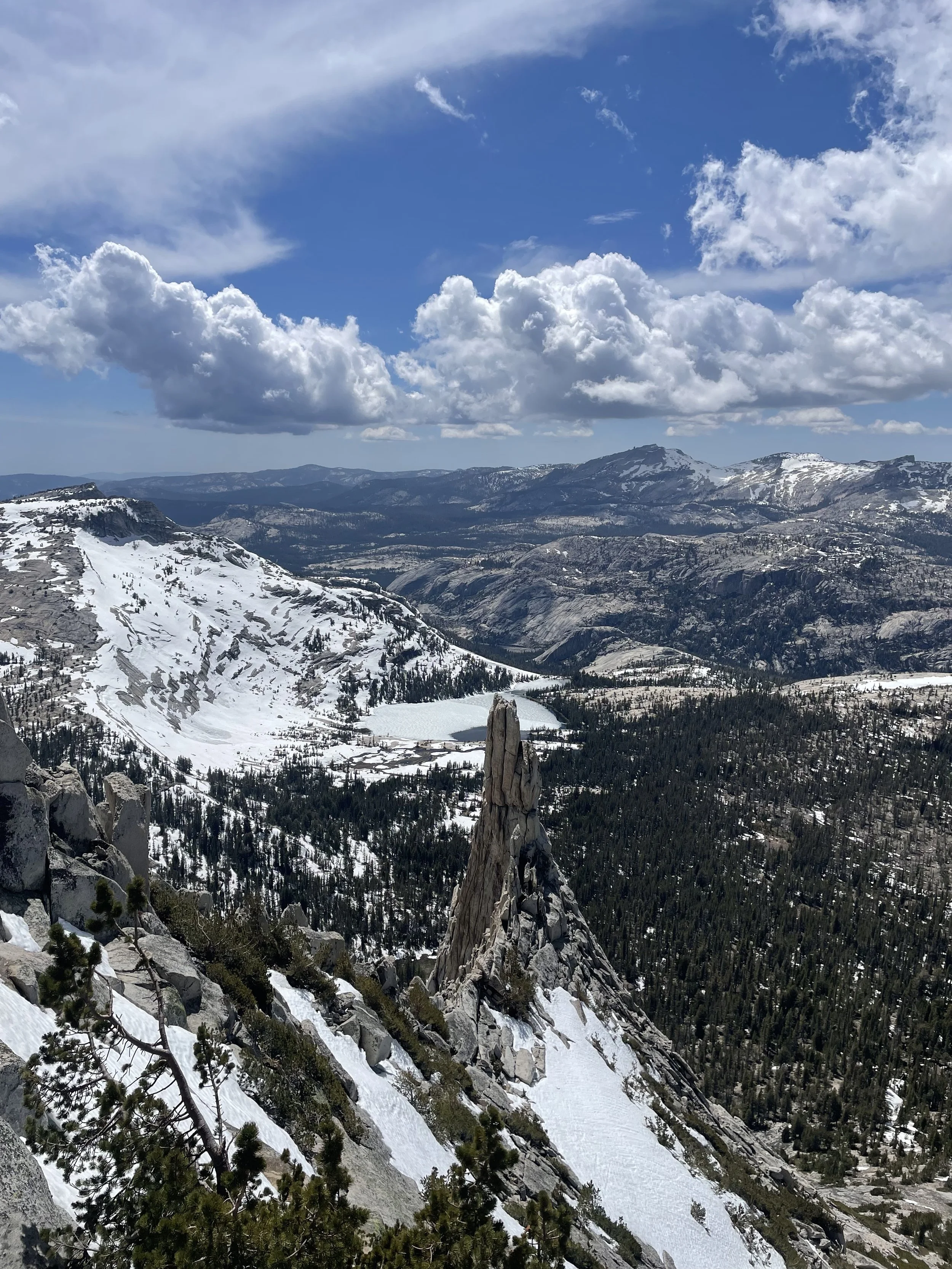
PHOTO OF
THE WEEK
The view from atop Cathedral Peak on Saturday May 16, overlooking Eichorn’s Pinnacle with snow still covering high elevation areas. Photo: Miles Fullman

Stay up to date on the latest climbing closures in effect!
Get your permits, do your research, and hit the wall!
Visit the Yosemite Climbing Museum!
The Yosemite Climbing Museum chronicles the evolution of modern day rock climbing from 1869 to the present.
The YCA News Brief is made possible by a generous grant, provided by Sundari Krishnamurthy and her husband, Jerry Gallwas