
EDITION 55 - MAY 16, 2026

Your window into the stories, history, and ongoing work to preserve Yosemite’s climbing legacy.
A Note from the Editor
The Valley is heating up quickly, with temperatures hovering in the high 80s for most of this week. The Bend fire near Coulterville brought the first wave of smoke into the park, a concerning sign for the hot summer soon to come.
Yosemite Search and Rescue has been gearing up for a busy season, holding swiftwater training to be prepared while the Merced is still flowing strong. The helicopter rescue team spent three days training in El Cap meadow, rehearsing short haul operations to be prepared for the busy summer season.
This last week saw some impressive climbing, including a repeat of the Yosemite Triple Crown by Chris Deuto and Eric Andersen. They linked the three major formations on May 9th on foot and by bicycle for a total time of 22 hours and 16 minutes. They started on Mt Watkins, climbing Half Dome next and finishing on El Capitan. The pair had prepared by climbing the double last Fall and rehearsing each route this spring.
El Cap has been busy with wall climbers and was also the scene of another notable ascent. A new speed record was set on Lost in America by Olly Tippett and Taylor Martin on May 7th. For this week’s feature I had a chance to catch up with the two of them to hear about their experience on the route.
Finally, Tioga Road is officially opening to traffic this Friday, May 15 at 8am. It was open to bike only traffic on Thursday the day before, as has been the case with previous years. Glacier Point road also opened on May 9th.
Check out our latest addition to the News Brief titled, “Friends of the YCA Museum,” with our first contribution from YCA’s Executive Director, Jim Thomsen. Don’t worry, Ken’s Founder’s Log isn’t going anywhere.
Miles Fullman
Editor, YCA News Brief
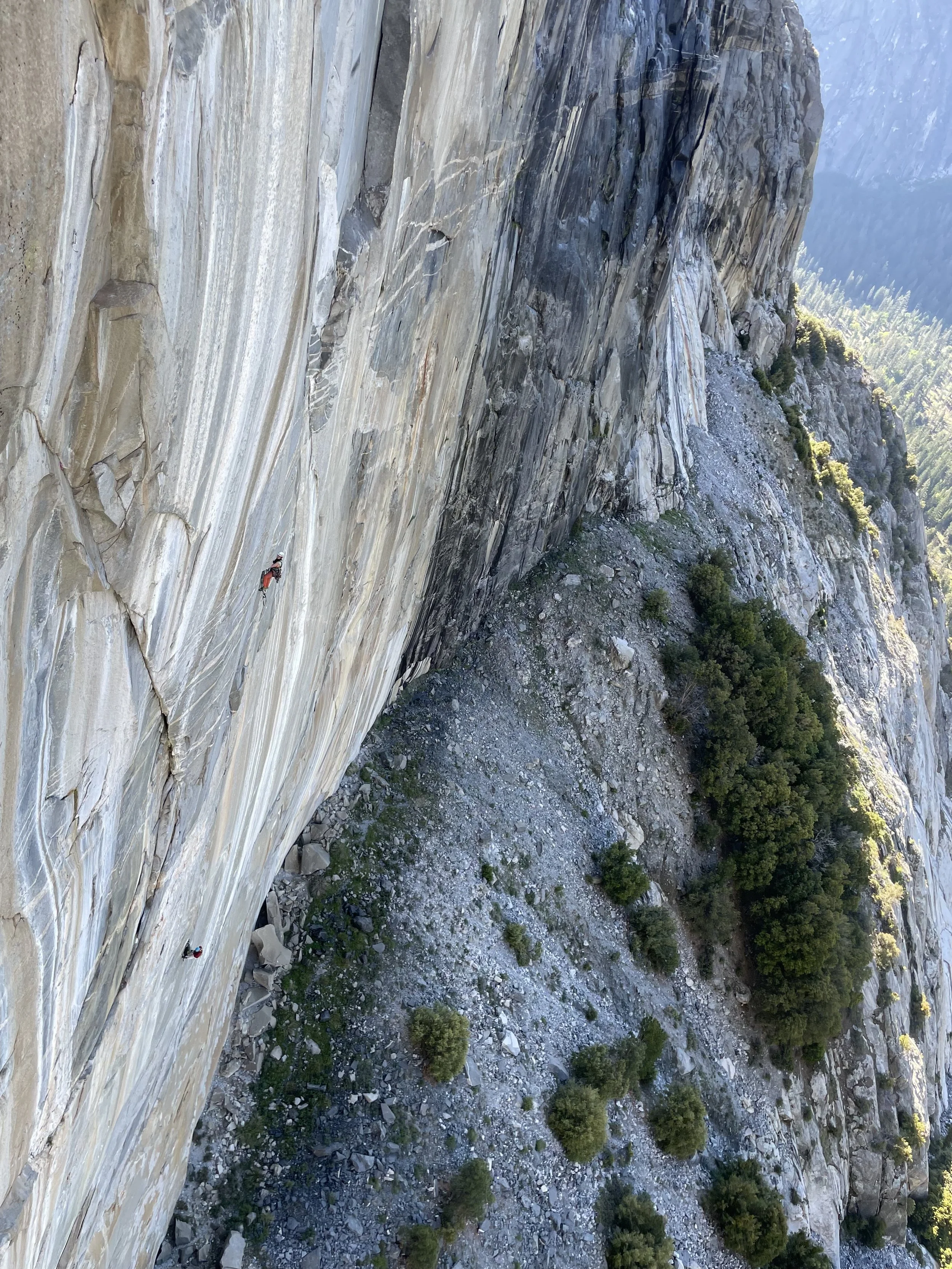
Taylor Martin leads the first block of Lost in America while setting a new speed record with Olly Tippett. Photo: Claire Maurey
Olly Tippett and Taylor Martin Set a New Speed Record on Lost in America, El Capitan
Last week, Olly Tippett and Taylor Martin set a new speed record on Lost in America (5.10 A4 2000ft) on El Capitan. The route was put up by Greg Child and Randy Leavitt in 1985. It ascends steep terrain on the southeast face between Zodiac and Tangerine Trip.
El Cap veterans Ammon McNeely and Brian McCray set the previous speed record of 18 hours and 4 minutes in 2004, a proud time put up by two of the most experienced El Cap speed climbers at the time. The impressive time of the previous record holding team made for an appealing challenge to Martin and Tippett.
No strangers to the hard aid routes on El Capitan themselves, Martin and Tippett started climbing just before six in the morning on May 7th. Martin took the first block of eight pitches in ten hours, with Tippett finishing the remaining eight pitches in another seven hours. They climbed most of the route in daylight, only pushing into the night for the last three hours or so. They finished just under seventeen hours after leaving the ground, shaving an hour off the previous record.
Tippett and Martin have both been highly active in the Yosemite big wall scene over the last few years. Martin is a member of the Yosemite search and rescue team and has been steadily putting up first ascents on each of the major formations in the valley. Tippett has been making the pilgrimage to the valley every spring and fall for the last few years, mostly focusing on soloing El Cap’s hardest routes and establishing a new route on the highly developed formation himself.
Both climbers have dedicated a significant amount of time to rope soloing difficult aid routes, and have quickly become two of the most prominent aid climbers in the current scene. Both Tippett and Martin have become increasingly interested in pushing El Cap routes, partly for the challenge but largely just for the sake of being able to climb more routes in a season without having to haul equipment and spend nights on the wall. There are simply too many routes to climb and too little time to climb them.
The ascent went mostly smoothly according to Tippett, though Martin took a big fall on pitch 8 when a piece blew, falling about seventy feet after a carabiner came unclipped from a piece of protection. Feeling rattled but determined to finish strong, she jugged back up the lead line and finished her block without much of a pause in the team’s pace.
Tippett thought the route was enjoyable, particularly the long stretch of beaks before rejoining Zenyatta Mondatta near the top of the wall (a section he is less enthused about, having previously not enjoyed it on an earlier ascent of Zenyatta). Tippett went the wrong way on the A4 pitch and had to do some downclimbing to get back on track. He also amusedly informed me that he even aid climbed the final 5.7 pitch to the summit.
When asked why his climbing has been so focused on El Capitan, Tippett mentioned its enormity and accessibility as the factors that keep him coming back for more. This marks his twentieth different route and his fifth speed record on the formation. The pair stated that conditions were favorable while on the wall, with temperatures being quite warm in the sun but not too uncomfortable.
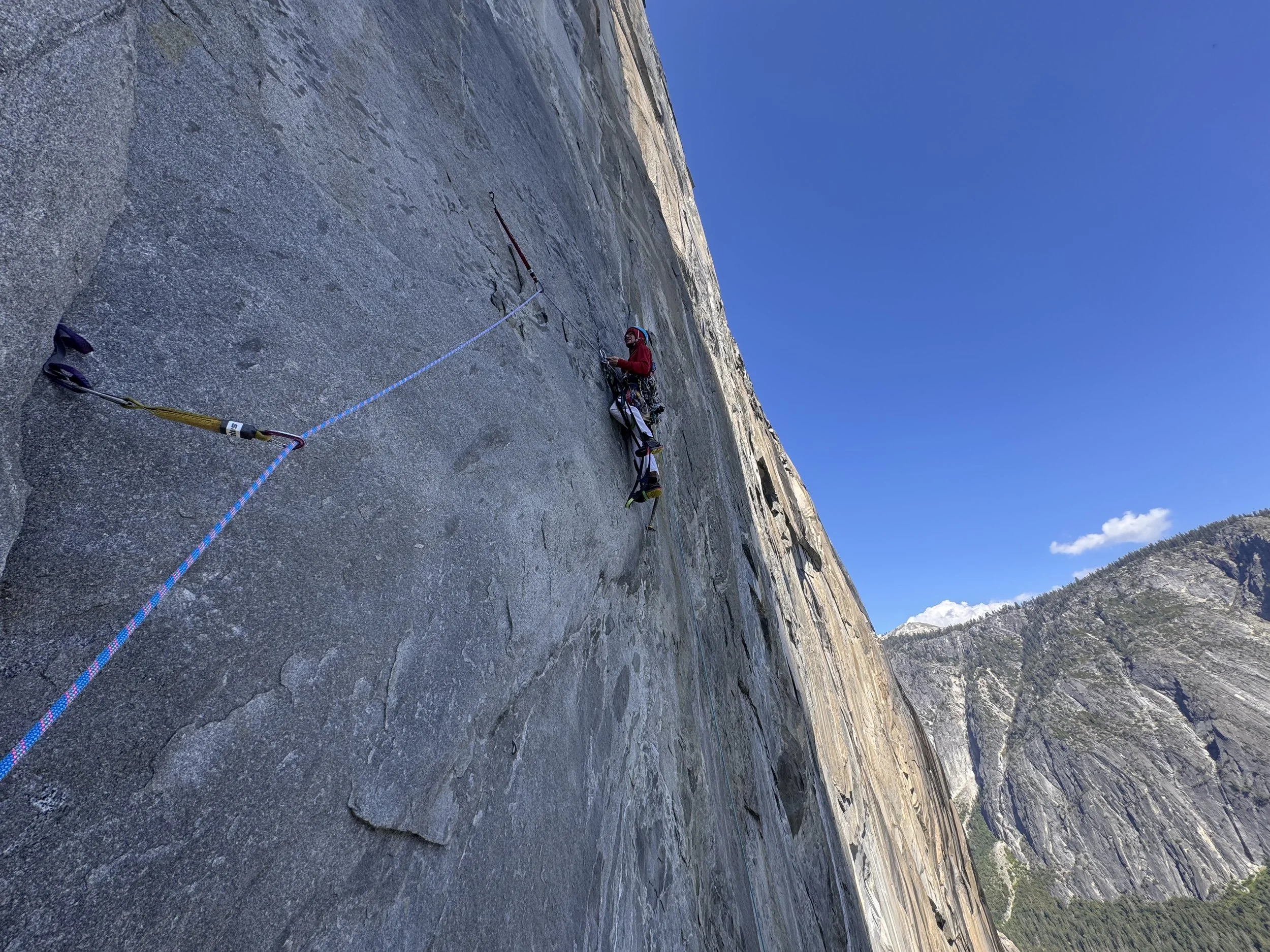
Olly Tippett leading out while setting a new speed record on Lost in America with Taylor Martin. Photo: Taylor Martin

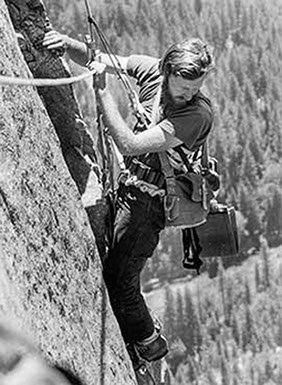
Glen Denny filming El Capitan. Photo: YCA Collection
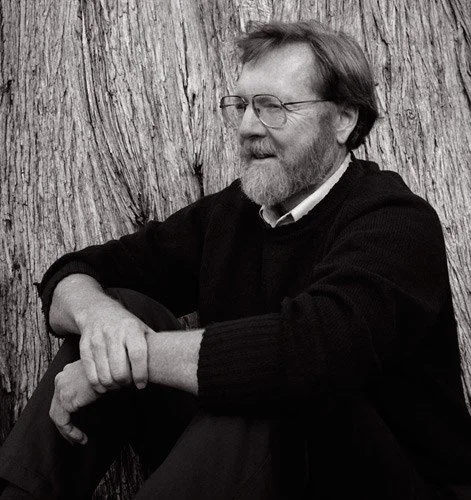
Glen Denny. Photo: YCA Collection
Glen Denny, A Student Film, an Award, and a 58-Year Journey: Nyala Enters the YCA Permanent Collection
By Jim Thomsen
In spring 2026, a reel of 16mm film completed a journey that began in autumn 1966, from a university classroom, to an international stage in Italy, through decades of private storage, and finally into the permanent archival collection of the Yosemite Climbing Museum in Mariposa, California. The film is Nyala, a short silent climbing film shot by Glen Denny featuring his friend Steve Miller soloing a steep face on Cathedral Peak. Spare, wordless, and set to guitar music, it is a landmark of American climbing cinema.
A Student Project That Won International Recognition
Glen Denny made Nyala as a class project for Professor Fred Padula's experimental filmmaking course at San Francisco State in autumn 1966. He named the film after the African antelope and submitted it to the Trento Film Festival, where it won an award. Founded in 1952, Trento is the oldest and most prestigious international mountain film festival in the world. For a student film from California to earn recognition there speaks directly to Denny's cinematic instincts, even at the very beginning of his filmmaking career.
Glen Denny: Climber, Photographer, Filmmaker
Denny moved to Yosemite in 1958 and witnessed the first ascent of the Nose on El Capitan. He went on to make significant first ascents of his own, including the Dihedral Wall (1962) on El Capitan, the Prow on Washington Column (1969), and the West Face of Leaning Tower (1961). Recognizing that documentation mattered as much as the climbing itself, he began photographing Camp 4 and Yosemite's big walls in the early 1960s. His prize-winning 2007 book Yosemite in the Sixties and his memoir Valley Walls remain definitive records of the era. Nyala was his proving ground, it led directly to his collaboration with Padula on the 1968 film El Capitan, now considered a classic of climbing cinema. Glen Denny passed away on October 10, 2022, at age 83.
The Preservation
The physical film had been in private hands for decades. In March 2026, Peggy Denny, Glen's widow, donated the film to the Yosemite Climbing Museum. It was sent to a professional film lab specializing in archival work. There it was prepped, cleaned, and advanced laser scanned, producing a ProRes 422 HQ master file. The physical reel will be transferred to a plastic archival reel and placed in a film archival container, stored in the YCA Archived Films location.
Preserve the History — Donate to the Museum
Nyala is exactly the kind of artifact that disappears quietly, a reel in a box on a shelf, its significance unknown to anyone outside a small circle. The Yosemite Climbing Museum exists to prevent that loss.
If you have climbing films, photographs, equipment, correspondence, or personal journals connected to Yosemite's climbing history, the museum wants to hear from you. Professional archival storage, digitization, and cataloguing ensure that items donated today will be accessible to researchers, filmmakers, and climbing communities for generations. Donations are tax-deductible through the Yosemite Climbing Association, a registered 501(c)(3) nonprofit.
The Golden Age of Yosemite climbing produced some of the most consequential ascents in the history of mountaineering. The people who lived it are aging, and the physical records of that era are fragile. A film reel, a rack of pitons, a hand-drawn topo, a stack of black-and-white prints, these are primary sources. Once they're gone, they're gone.
Please consider donating to the Yosemite Climbing Museum, where Yosemite's climbing history will be professionally preserved, honored, and shared.
To inquire about donations, contact the YCA at: museum@ yosemiteclimbing.org
NYALA will be shown at the Yosemite Film Festival (June 25-28, 2026). For more information: https://www.yosemiteclimbing.org/film-festival
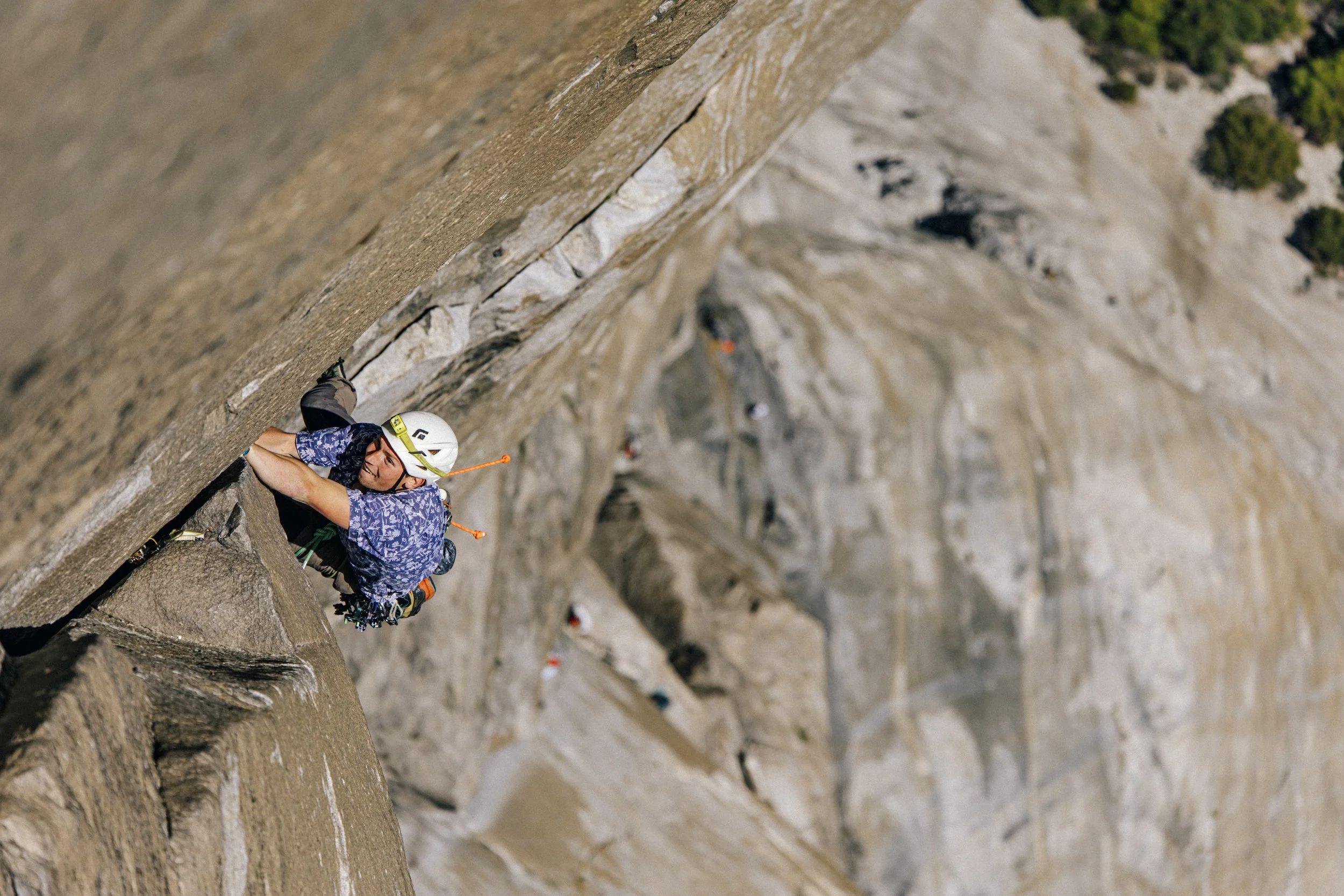
PHOTO OF
THE WEEK
Chris Deuto about to finish the Triple Crown on the Nose with Eric Andersen. Photo: Daniel Teitelbaum

Stay up to date on the latest climbing closures in effect!
Get your permits, do your research, and hit the wall!
Visit the Yosemite Climbing Museum!
The Yosemite Climbing Museum chronicles the evolution of modern day rock climbing from 1869 to the present.
The YCA News Brief is made possible by a generous grant, provided by Sundari Krishnamurthy and her husband, Jerry Gallwas