
EDITION 45 - FEBRUARY 15, 2026

Your window into the stories, history, and ongoing work to preserve Yosemite’s climbing legacy.
A Note from the Editor
Though it’s sunny outside today, it’s cool, so I’m inside keeping warm. The high in Yosemite Valley today is around 40°F, and conditions are expected to stay cool. Snow is forecast early next week and may continue for a few days.
After what felt like May weather in February, the winter storms—“just wait, they’re coming,” Ken Yager told me—are finally on their way. It’s been unseasonably warm in the Sierra foothills, where I’m writing, and in Yosemite.
Last weekend I climbed both days in Yosemite. Saturday, I took my friend Eric up his first multipitch route at Manure Pile Buttress, and it went swimmingly. Even more impressive: it was his second day of climbing. He never slowed down; it must be the mountain biker in him, just going, going, going.
Sunday, I climbed with Pat Curry and company at Chapel Wall, where we worked on Tom Herbert’s new route for the season, Prometheus.
Tanner James wrote of his climbing experience on Mountain Project: “This is an awesome addition to an already stacked wall! Looks profoundly challenging from the ground, but once climbing, you discover lots of small pockets to crank on in the thin crack. 12a felt quite stiff, but I might have been having a bad day. Thanks, Tom!”
On Saturday in the Manure Pile parking lot, before heading up to the After 7 start of After 6, I ran into Remy Mitchell and his climbing partner, Cailey Baker. They were headed for the same route, and when we met again at the base, we ended up climbing side by side for the next few hours. Remy and I talked at the anchors, and I had him gently heckle Eric with his high school nickname as he worked his way up: “Go Bull Dog, Go!” Eric loved it.
Remy and Cailey were excellent climbers, and we kept the conversation going without slowing each other down. Remy told me he’s a big fan of the Yosemite Climbing Museum in Mariposa and stops in often during his weekly trips from San Francisco. I asked if he’d like to receive the weekly News Brief, but I think he heard, ‘Would you like to be in it?’ and he said yes.” I snapped a few photos, including him on lead, and after the climb, we swapped info and set up an interview for this week’s News Brief. See the feature on Remy Mitchell lower in this email. Looking forward to climbing with him soon.
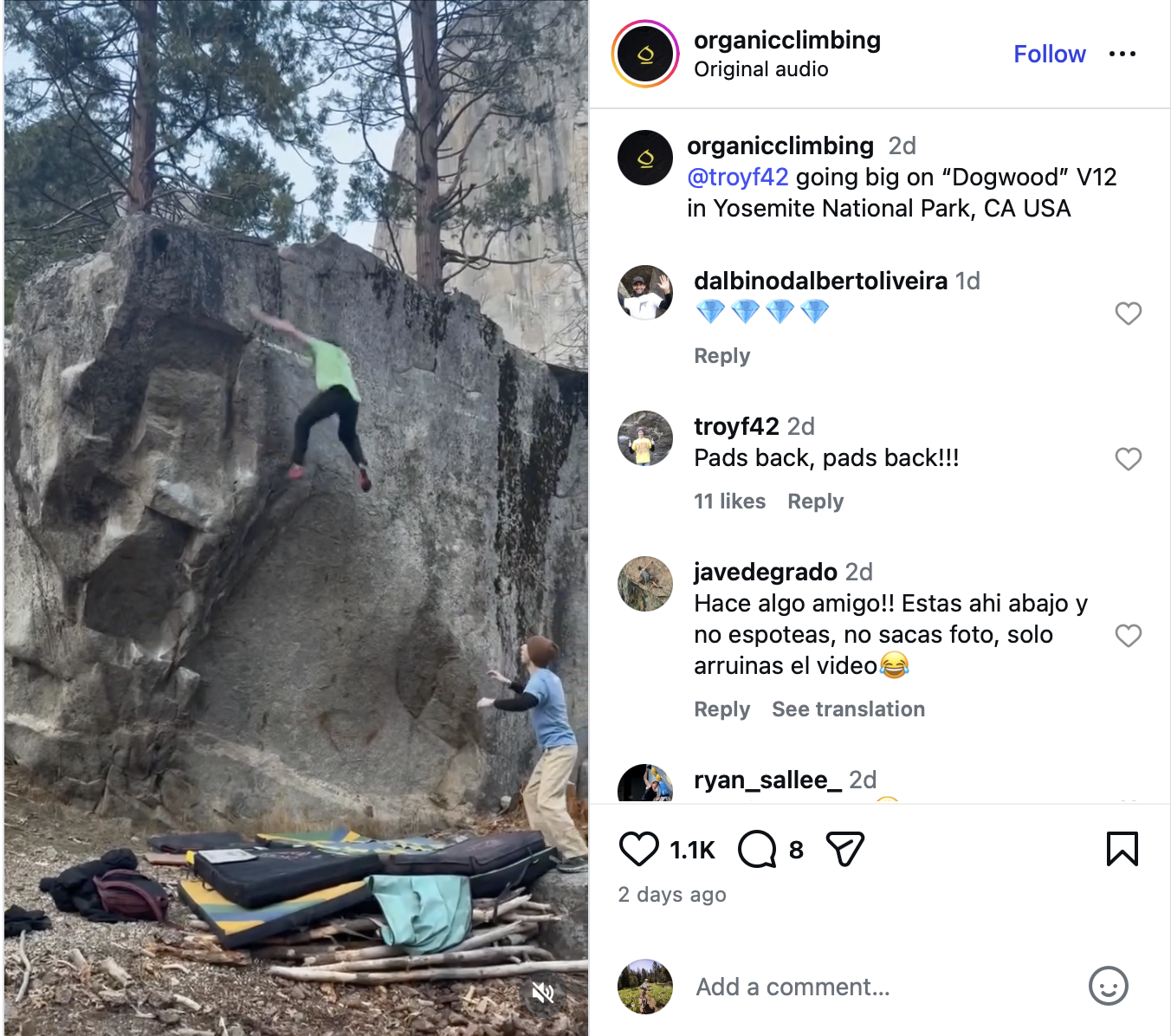
Now onto the news. This clip recently came up on my phone. Very cool:
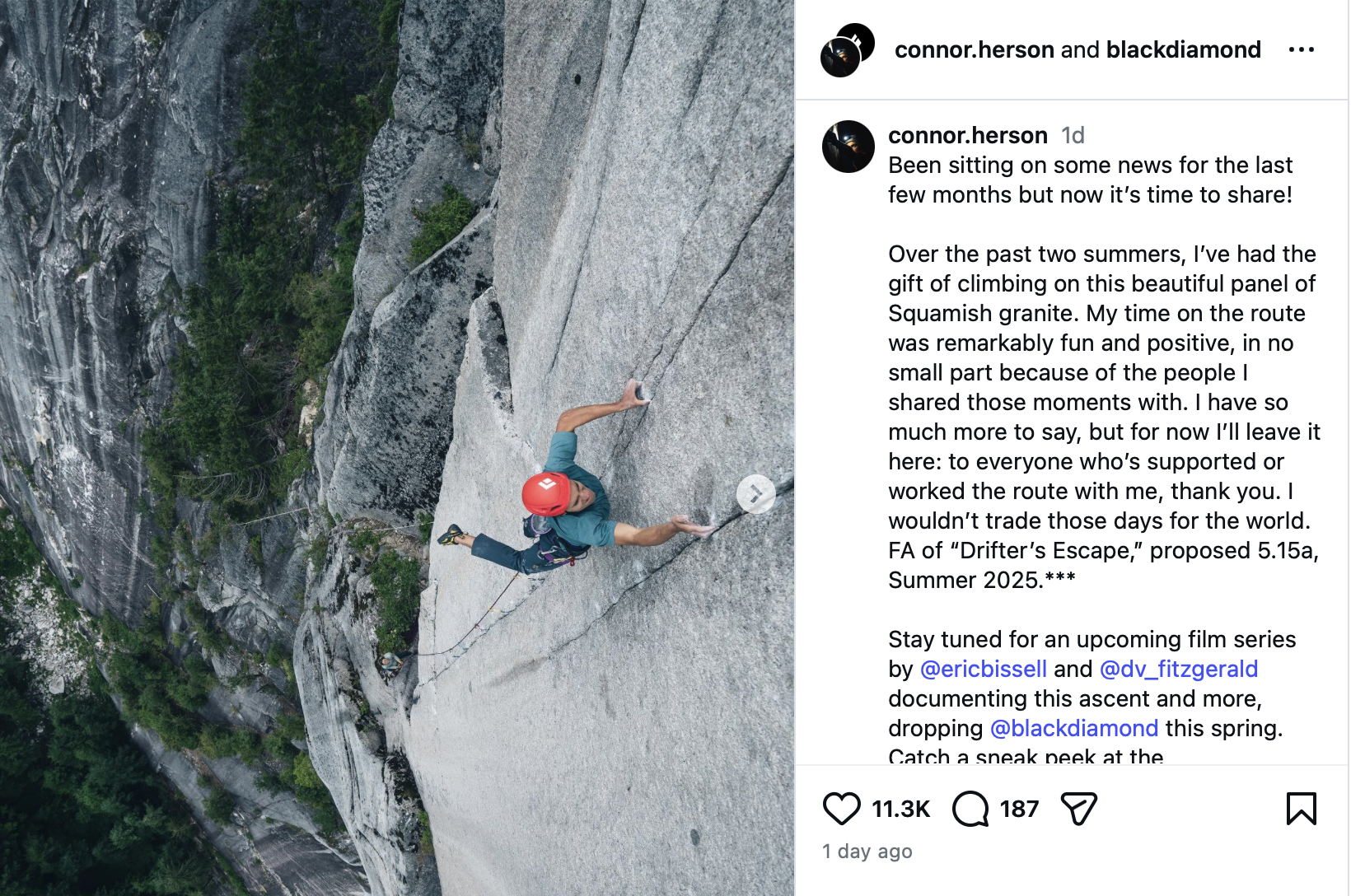
And though it’s not directly Yosemite-related, legendary Yosemite climber Connor Herson just posted about his first free ascent of Drifter’s Escape (5.15a) in Squamish—one, if not the hardest trad line in the world.
Lucie Rathbun at Backbone wrote me:
Black Diamond athlete Connor Herson has shattered the ceiling of what's possible in trad climbing with the FA of Drifter's Escape (5.15a) in Squamish: his hardest to date, and quite possibly the hardest trad climb in the world right now. I swear, every time I think Connor's maxed out, he steps it up another notch and establishes his absolute dominance all over again.
In birthday news, Glen Denny and George Whitmore were both born on Feb. 8.
To learn more about Denny, check out my story in Gripped called Glen Denny: The Golden-Age Documentarian.
Born February 8, 1939, the legendary Sierra climber, photographer, cameraman, and writer passed away on October 10, 2022.
Among his significant first ascents were the West Face of Leaning Tower (1961), the Dihedral Wall (1962) on El Capitan, the Kor-Denny route on Sentinel Rock (1963), and the Prow on Washington Column (1969). In addition, he made the third ascent of the Nose along with Layton Kor and Steve Roper, cutting three days off the time of the second ascent. Five years later, Denny made the seventh ascent of the Nose while filming the movie El Capitan with Gary Colliver, Richard McCracken, and Lito Tejada-Flores.
As for George Whitmore (February 8, 1931 – January 1, 2021), Daniel E. Slotnik at the New York Times writes: George Whitmore, Climber Who Vanquished El Capitan, Dies at 89.
Early on the morning of Nov. 12, 1958, George Whitmore, Warren Harding and Wayne Merry accomplished something many climbers considered unthinkable: They reached the top of El Capitan.
Conquering El Capitan, a 2,900-foot-tall sheer granite wall that looms over Yosemite National Park in California, seemed practically impossible given the limited tools and techniques available to alpinists of the day. The effort took the climbers 45 days, spread out over about a year and a half.
“The type of climbing had not been done before,” Whitmore said in an interview for [Wayne] Merry’s obituary in 2019. “We had to improvise as we went.”
In firefall news, an hour ago (it’s Feb. 12 at 2 pm as I write this), Los Angeles Times staff writer Alex Wigglesworth published Yosemite’s famed ‘firefall’ returns. Here’s how to see it for yourself.
Each February, there's a window in which the setting sun may illuminate a waterfall so that it looks like fire. The phenomenon has grown to draw thousands of visitors.
The so-called firefall phenomenon takes place each February at Horsetail Fall, which flows over an eastern ridge of El Capitan. This year, the projected viewing period began Tuesday and runs to Feb. 26.
Still, a number of conditions must align for the waterfall to glow. Water must be flowing, skies must be clear and the setting sun must hit at the right angle. Park officials encourage travelers to plan to be there multiple evenings to make sure they see it.
No reservations are required this year, but visitors are encouraged to carpool and use commercial vans and shuttles. People should park in eastern Yosemite Valley and walk to the viewing areas along a temporary pedestrian lane on Northside Drive, the National Park Service said in a news release.
Below is Ken Yager’s Founder’s Note, where he recalls working as KPIX’s assistant during Mike Corbett and paraplegic climber Mark Wellman’s 1991 Half Dome ascent of Tis-sa-ack, juggling rope rigging, filming support, and repeated hikes to deliver footage to the Valley.
Following that is the feature on Remy Mitchell, who shares why Yosemite keeps drawing him back through different life chapters—community, history, and that endless “new again” feeling.
Chris Van Leuven
Editor, YCA News Brief
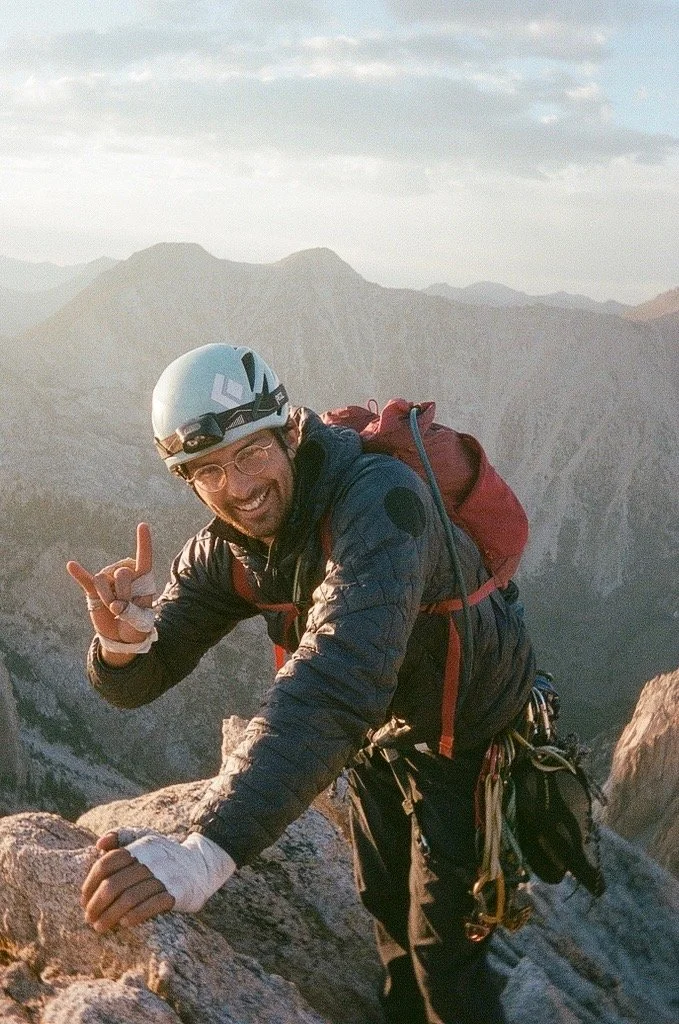
Remy Mitchell on top of the Incredible Hulk after doing the Red Dihedral car to car in a day. He calls it the hardest day of climbing of his life. Photo: Josh Hampshire
Remy Mitchell: What Draws Him to Yosemite
The San Francisco landscape designer keeps coming back for winter’s sticky granite, Tuolumne’s balance-and-runout lessons, and Yosemite’s climbing history, community, and counterculture.
It’s not like you run into a lot of climbers in the dead of winter. This is the time of year when there simply aren’t lines on the classics—Central Pillar of Frenzy, After 6, The Grack, and so on. You might see the odd team, but generally it’s easy, at least for me, to strike up a conversation because we’re the only ones there. It feels like we’re on the same page: when conditions are right, this is the time to climb. The rock is sticky, most routes are wide open, and it’s gorgeous out.
That’s how I met Remy Mitchell, a San Francisco landscape designer who picked up climbing in 2019 while working at REI in San Luis Obispo. His coworkers invited him to the climbing gym, and he didn’t think he’d like it, but he did. And once he climbed outside, it really clicked. He knew it was the sport and lifestyle for him. He was hooked.
In addition to learning by doing, he says, “I guess I learned by reading. All of those Mountaineer’s books, like How to Rock Climb and stuff like that.”
He describes his approach as seasonal: Yosemite in spring, Joshua Tree in winter, alpine in summer. A weekend warrior, he’ll hit Castle Rock in Santa Cruz or Ring Mountain in Tiburon when time is tight, but he often prefers the longer drives: Yosemite, Tahoe, and spots near Sonora and Hwy 108, including The Grotto and other obscure areas. He plays bass in a punk band called Town Bully, and he’s aiming to climb 5.12a sport, hopefully this year.
What he likes about climbing is how it narrows your world down to what matters: “Climbing really makes you focus on the small things. And I like being able to explore and see new places that nobody else can. It feels a little bit exclusive in that way.”
After studying forestry and later landscape architecture at Cal Poly in SLO and wrapping up his time at REI, he tried office and design jobs for a bit, but he didn’t love the environment. That’s when he shifted to residential landscaping, work that keeps him outside during the week, helps with fitness, and gives him more flexibility.
The downside is the wear and tear. Lifting heavy pots all day and then climbing at Planet Granite (now Movement) under the Golden Gate Bridge near Crissy Field can be too much. He developed tendonitis in his biceps and inner elbows and had to back off for a while. Rest helped. He’s feeling good again, and this winter has been a solid reset.
What draws Remy to Yosemite is the balance-focused climbing—the glacier-polished slabs, the smears, the subtle movement. Tuolumne is his favorite, even though he admits the runouts “raise the hair on his arms.”
He grew up in Southern California, in the LA suburbs, but his grandparents live in Madera near Bass Lake. As a kid, he spent summers in Madera and took trips to Yosemite with his family. As a teen, it was hikes and hanging out in the park with his friends. Later, an interest in forestry and natural resources led me to learn about ecosystems and plant identification in the Sierra.
And then, as a climber, it became something else entirely: named formations, named routes, and the depth of history. Yosemite keeps feeling “new again” because he keeps returning as a different person, and each era reveals a different Yosemite. He’s also drawn to the history of climbing and to how it overlaps with broader counterculture, art, and music.
He loves the Yosemite Climbing Museum for the old gear, photos, the Camp 4 “lost boys” vibe, and the storytelling. And he values the climbing community, too, the unexpected encounters, the shared experiences, and how Yosemite keeps pulling people together.
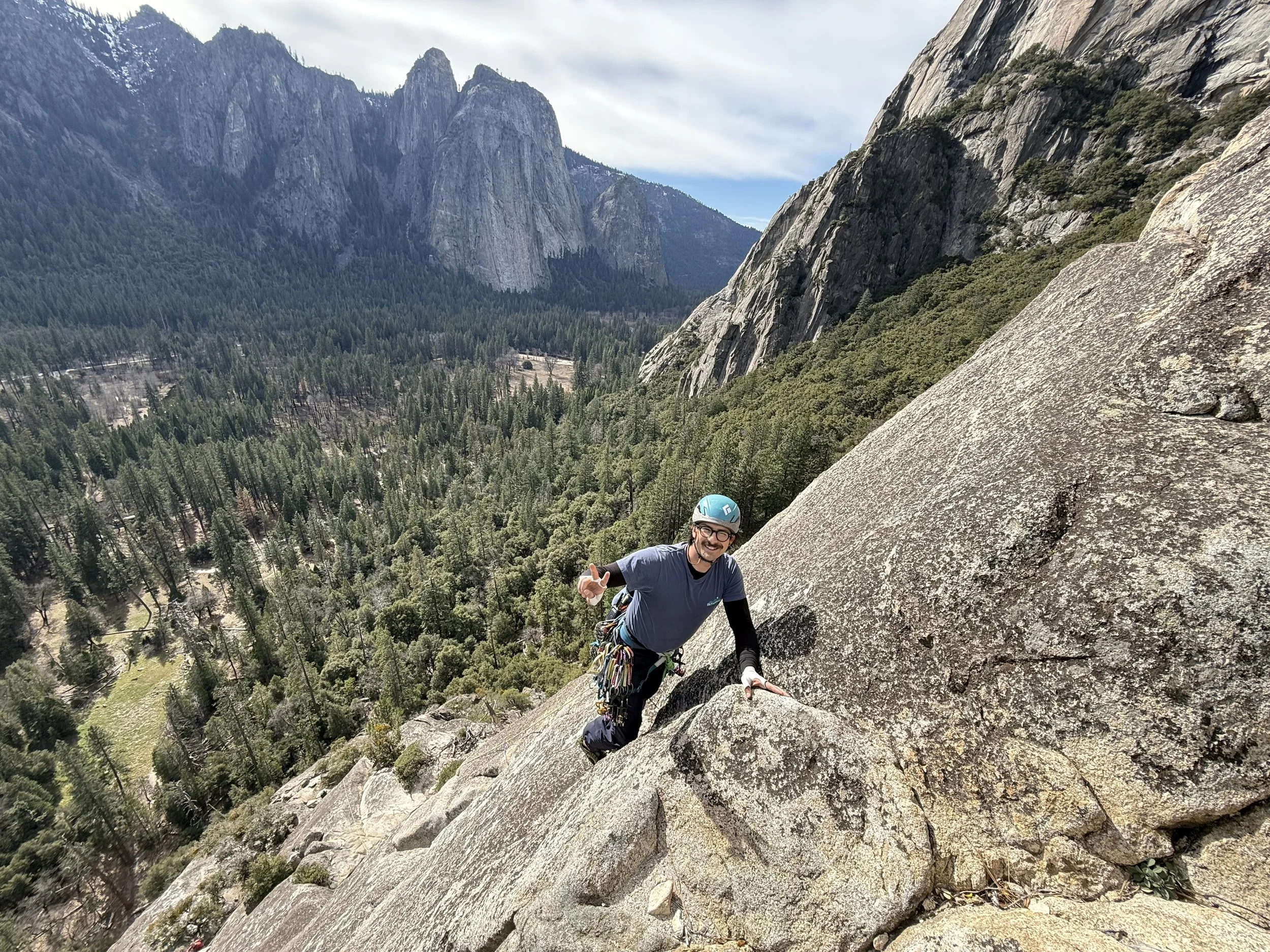
Remy Mitchell on After 6, Manure Pile Buttress. Photo: Chris Van Leuven
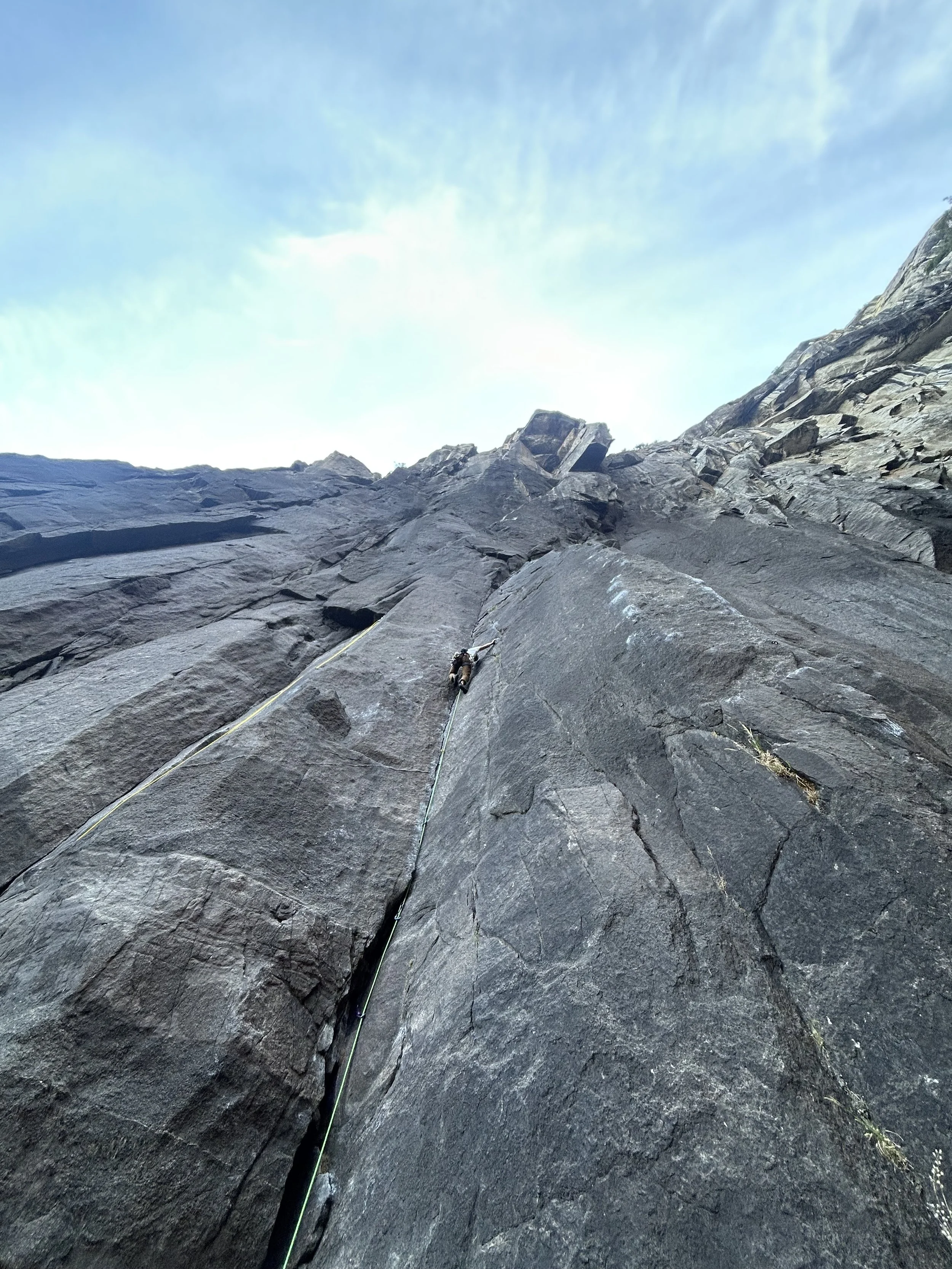
Remy is climbing at Lower Falls Amphitheatre during a rare warm winter day. Photo: Zoë Latezer
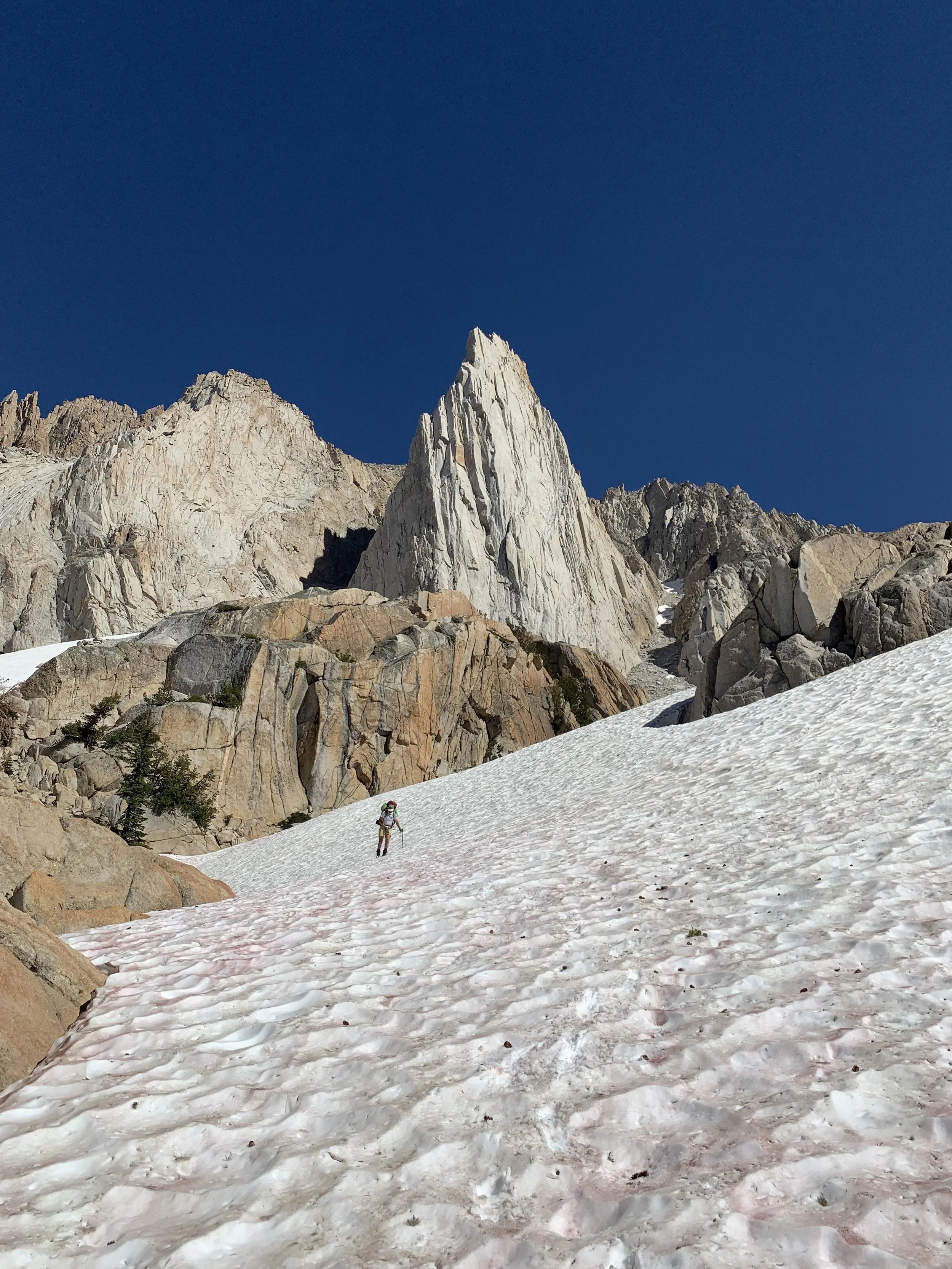
Remy approaching the Incredible Hulk. Photo: Josh Hampshire
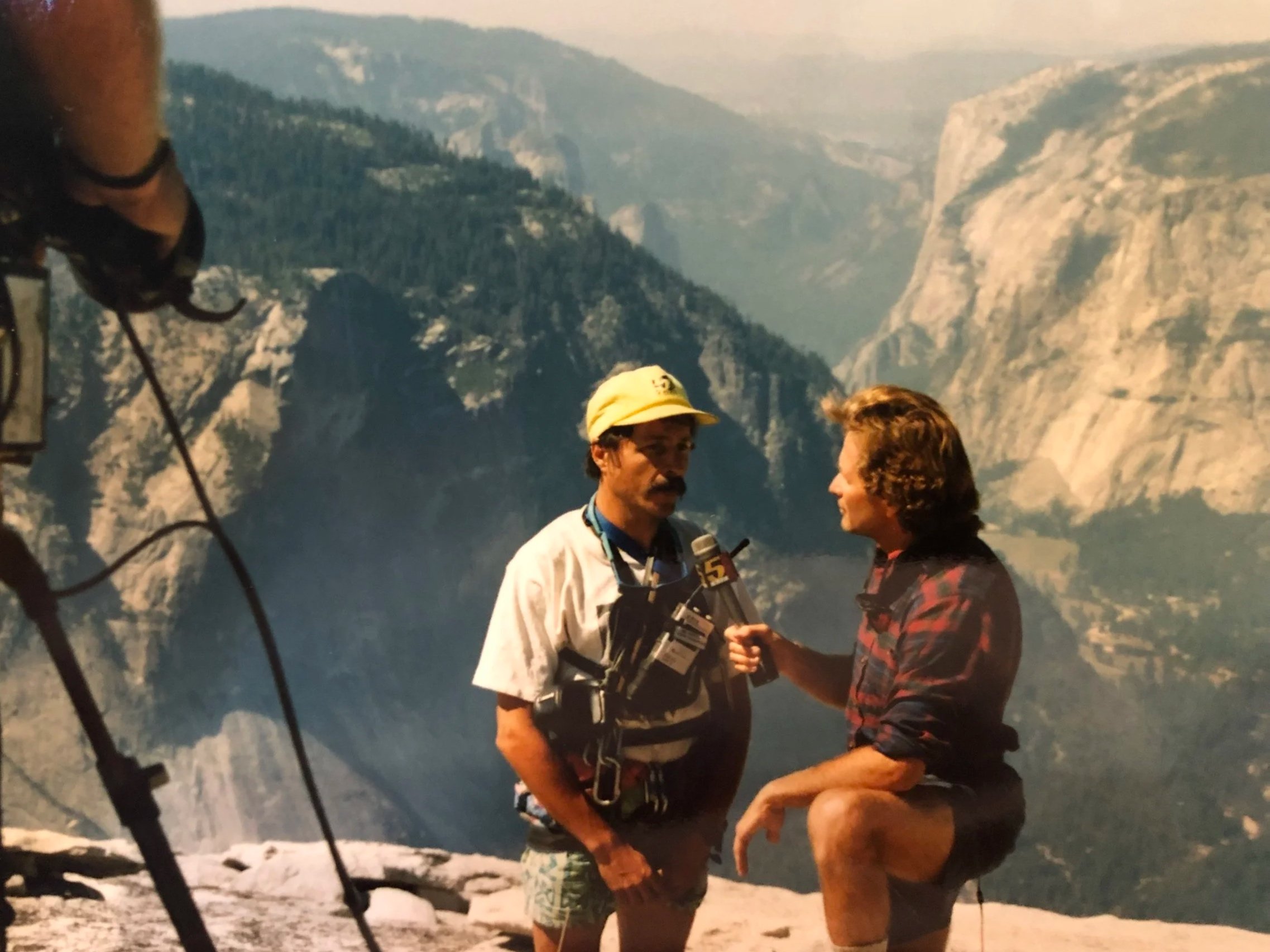
Photo: Ken Yager Collection
Tis-sa-ack
Founder’s Log | By Ken Yager
In 1991, a couple of years after Mike Corbett and Mark Wellman’s successful ascent of El Capitan, they decided to climb Half Dome. They chose the route Tis-sa-ack, figuring it would be easier for paraplegic Mark for two reasons: it had less traversing than the Regular Route, and it would have less traffic. The real challenge was getting Mark to the base once we left the main trail.
KPIX TV out of San Francisco wanted to cover the climb, and I was hired as their main assistant. One of my responsibilities was running footage down to the Valley floor to the PacSat truck in time for the evening news. Another task was rigging ropes for Chris Falkenstein, the cameraman. A friend of mine, Steve Hare, had just climbed Tis-sa-ack and offered to help. It was a good thing he did, because it was not easy to find the top of the route to rappel down. His presence saved us a lot of time.
KPIX set up its PacSat truck at Camp 6, which at the time was an employee housing area with tent cabins in Yosemite Village. I went over and introduced myself. The reporter who would be on camera was Ken Bastida. Tall, dark-haired, with a big mustache, and that classic “made for radio” voice. He was friendly and took charge right away, introducing me to the crew. I liked him immediately.
I met Molly McRae, who ran the broadcast from the satellite truck. She was constantly busy and seemed like the type who quietly kept everything together. Les Keane was normally the cameraman for 49ers games, and he carried himself like a pro. Bob Horn was the sound engineer, outgoing and always smiling, with his left arm in a cast. I asked what happened. Weeks earlier, they had hired a packer and some horses to go up to the saddle for reconnaissance. It got late, and on the way back, the sprinklers came on at Happy Isles. The horses bucked like they’d seen a rattlesnake. Everyone got unsaddled, including the hired packer. The only serious injury was Bob’s broken arm.
Early the next morning, Mark and the KPIX crew saddled up for the ride to the saddle, where we would split off trail and drop down toward the face. Mike hiked with Mark and the pack train carrying the gear. I carried my pack up the Death Slabs to the saddle with Chris and Tom. It is a full 3,000 feet of elevation gain. We got there first and set up camp.
When Mark and the others arrived, we started putting harnesses on so we could bring Mark down the steep terrain below. Ted Farmer had hiked up with Mike and Mark. Ted worked security for the concessionaire. He was a big guy, strong as an ox, and he carried Mark more than any of us while we belayed the pair down the rocky incline with spotters on all sides. Chris filmed whenever he was not helping. It was grueling work.
I had to leave before they reached the base because I needed to run the footage down to Molly in time for the 5:00 p.m. broadcast. Then I loaded up and hiked back up for the second time that day. I reached Mike and Mark at dark, chatted with them, then dragged myself back to the saddle where my tent and sleeping bag were waiting. I crawled into my bag and passed out.
The next morning, Chris and I hiked down to the base, and he started filming as they began climbing. Mike and Mark climbed to a comfortable ledge below the right-facing corners. Once again, I ran down in the afternoon to deliver footage to Molly, then hiked back up to camp. My legs were screaming at this point, but it got a little easier as the days went on.
Mike had left ropes fixed so Chris and I could get up to the ledge to film. We hung out watching Mike fix pitches above us, then rappel back to the ledge. At one point, Mike and I passed a pipe around before I rapped down with the footage.
When I turned the tape in to Molly, I found out they had taken telephoto footage of us from the Valley floor. It was a live shot, and they happened to catch us smoking out on the ledge. They got Mike on camera blowing out clouds of smoke. The broadcast was watched on every TV in the Valley. All the locals saw it and knew exactly what it was. Mike hit legendary status that day, and KPIX learned not to do a tight live shot of Mike ever again.
The climb took longer than planned, and we had to come up with different angles to keep the news from getting monotonous. Other affiliates started camping near us, both radio and TV. Every night we had a campfire, and it turned into a fun gathering with lots of storytelling. With every daily trip to the Valley, I brought supplies back up. Usually, it was batteries the size of a lunch box, and I would fill the rest of my pack with beers for the evening.
NPS had two law enforcement rangers camped near us. One was Claudine, whom I already knew. Dark-haired, vibrant, outgoing, comfortable in the backcountry. The other guy I had never met. He worked road patrol in the Valley and carried himself totally differently.
He showed up a day or two into the climb and set his camp up close to ours. Dark hair, big bushy eyebrows that nearly met in the middle. He went to hang his food on the communal bear wire. I already had a haul bag and several backpacks of food hanging up there, at least 200 pounds, and I had used my jumars to rig a mechanical advantage. He started tugging on the rope, and I told him that was our food. He said he wanted to use my rope to hang his. I offered to help him release the bags. He declined.
So I sat down with Chris, Claudine, and Tom, and we watched. He struggled for a while, then succeeded in unclipping the knot. He went flying into the air as the bags dropped to the ground. We found it hilarious. I walked over, still chuckling, and helped him haul everything back up. Somebody nicknamed him “Bushy Brows,” and it stuck.
In the morning, he would crawl out of his tent wearing a flak vest. I asked him if he slept in it, and he said he did. “Why?” He said, “You never know when someone could be out to get you.” That answer stayed with me. He also had a habit of standing in the darkness near the campfire until someone noticed him, then he would wander in like he had just arrived. One night, we decided not to acknowledge him and see what happened. The answer was: he stood there the whole evening—strange dude.
Once Mike and Mark were over halfway, Steve and I set ropes from the top so Chris could rappel and get better footage. Ken Bastida wanted to do a live shot from the summit of Half Dome, which he claimed had never been done. We had everything set up, and then clouds moved in and started building thunderheads in the distance. We could see occasional lightning bolts. I almost cancelled it, but the clouds never got closer and started to retreat as broadcast time approached.
The crew had a huge cell phone, the kind I had never seen before. Ken handed it to me and said I could call anyone I wanted. The only number I could remember was my dad’s. It felt futuristic, sitting atop Half Dome, calling home.
Near the end of the climb, Ken had to leave due to a family health scare, and Doug McConnell stepped in to take his place. A couple of days later, Mike and Mark reached the summit, greeted by a big crowd and a champagne welcome. Mike’s wife, Nikyra, was very pregnant, so Mike slipped away quickly and ran down the trail to see her.
We still had to get Mark down to camp so he could get to a horse. After tying two ropes together, I lowered Mark while he slid down the cables to the top of Sub Dome. Ted Farmer, the beast, carried him the rest of the way down.
We broke down camp, loaded our packs, and headed down the Death Slabs to the Valley floor. I stopped by the PacSat truck as they were packing up to say goodbye. After two weeks of working together, it was a little sad to see it end.
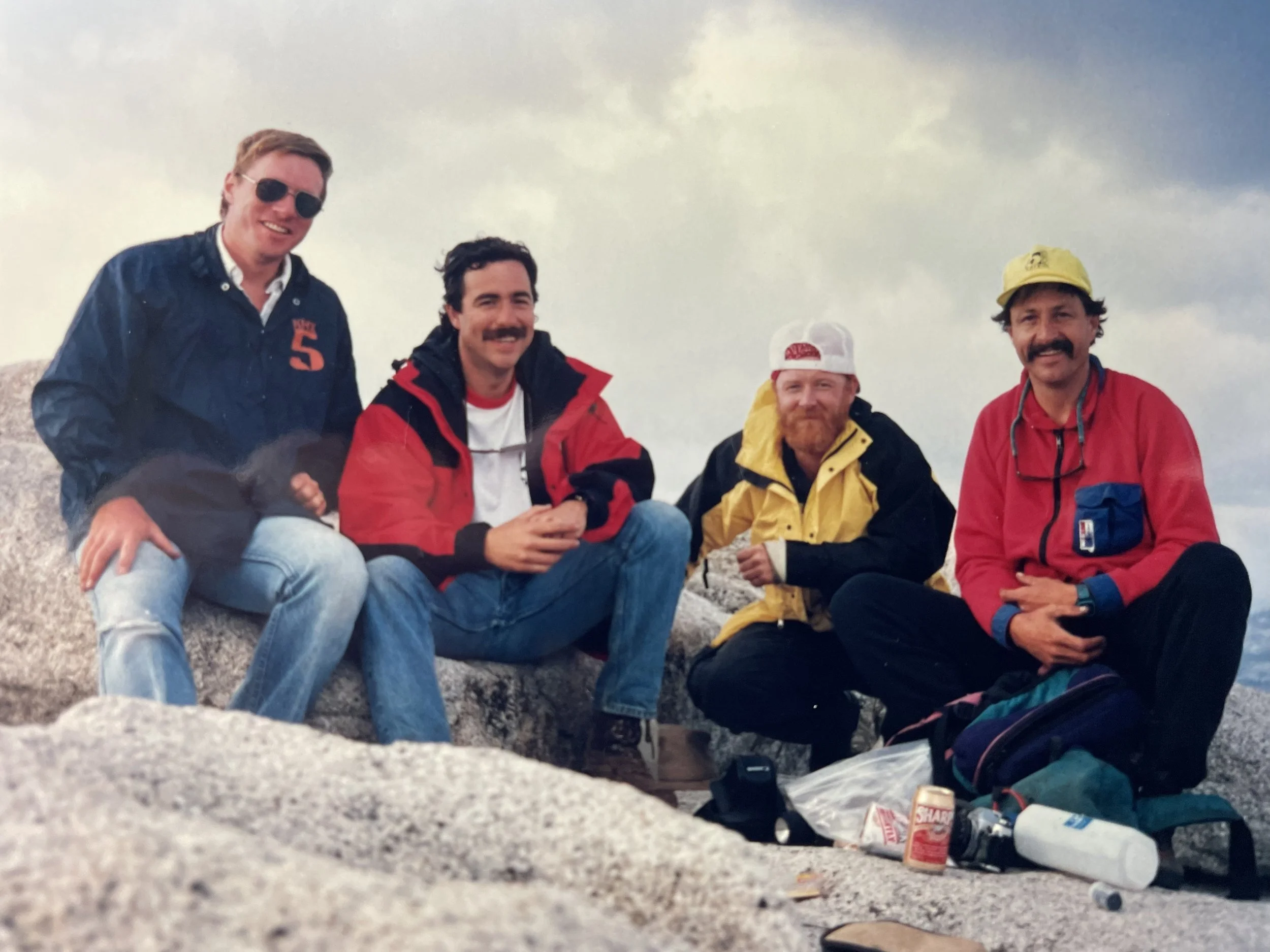
Photo: Ken Yager Collection
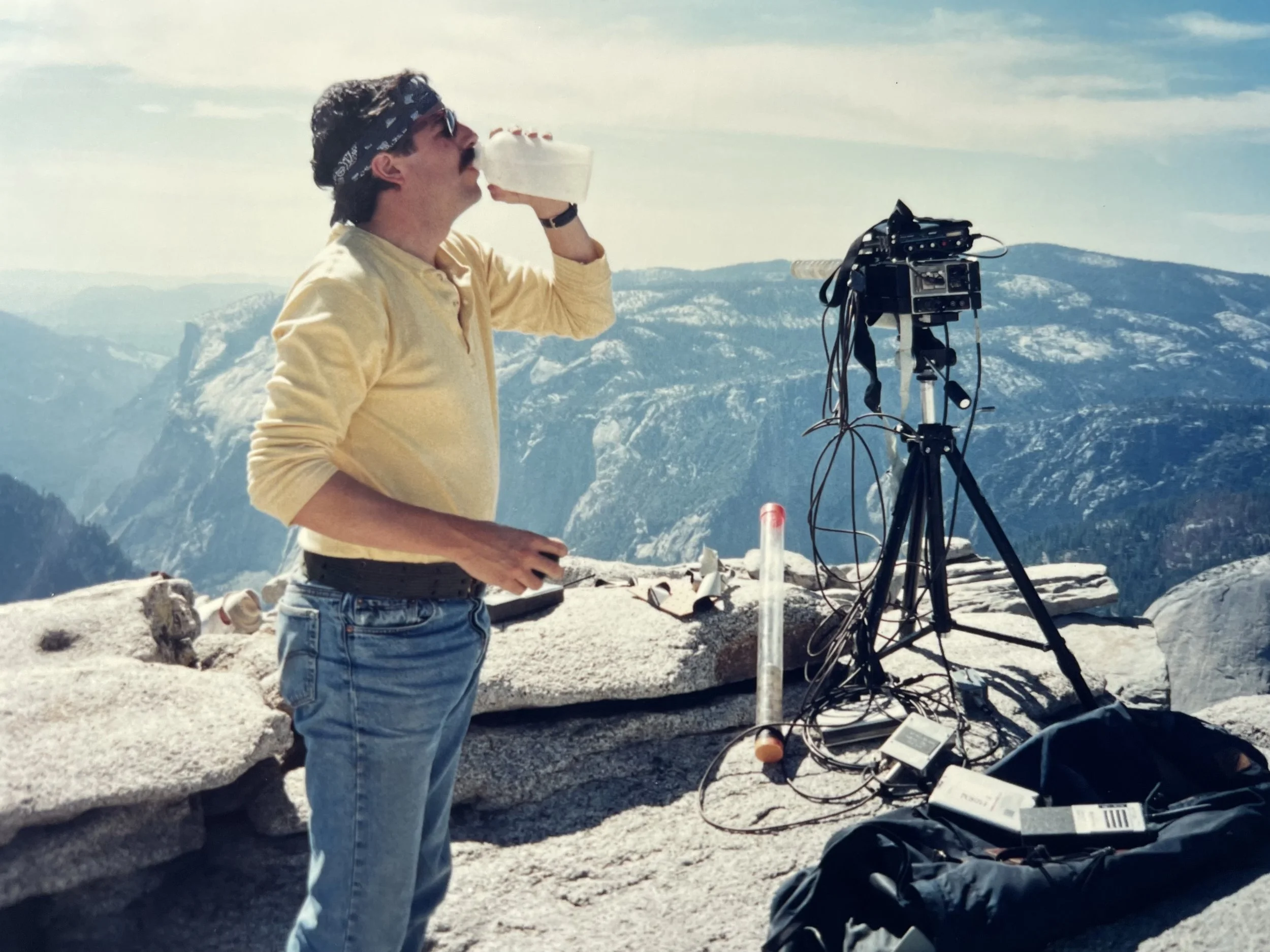
Photo: Ken Yager Collection
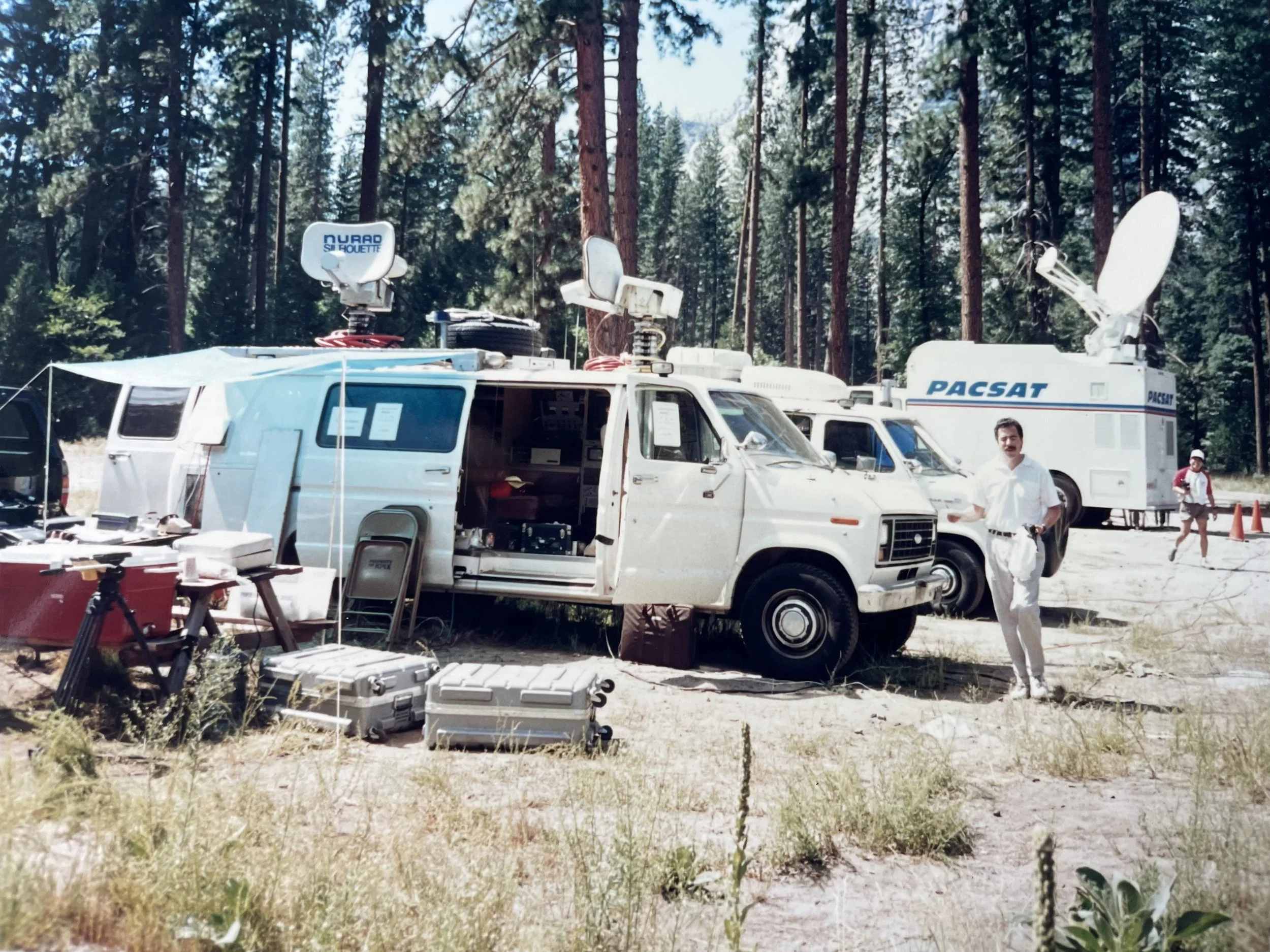
Photo: Ken Yager Collection
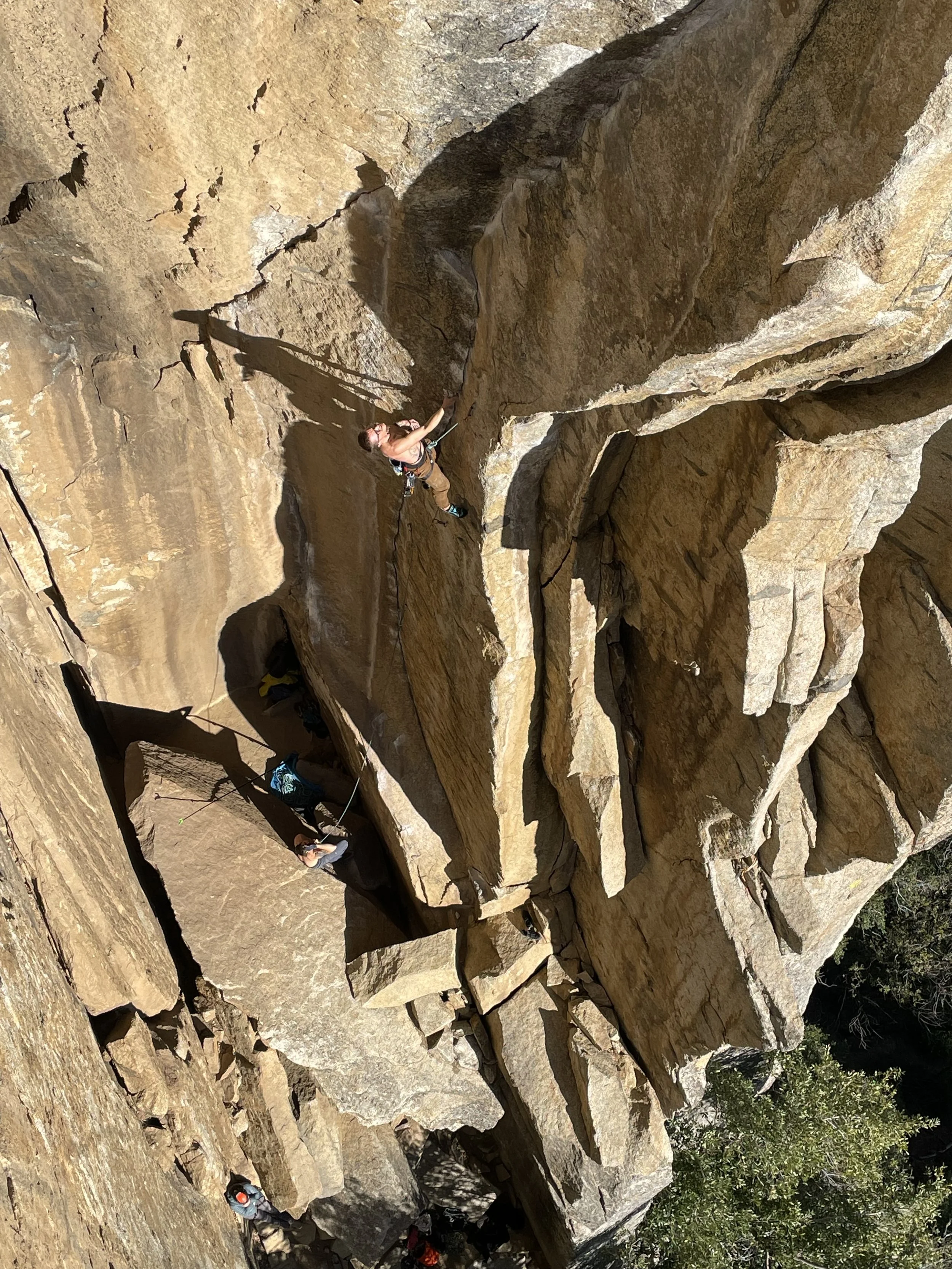
PHOTO OF
THE WEEK
An unknown climber on Cookie Monster, Cookie Cliff. Photo: Chris Van Leuven

Stay up to date on the latest climbing closures in effect!
Get your permits, do your research, and hit the wall!
Visit the Yosemite Climbing Museum!
The Yosemite Climbing Museum chronicles the evolution of modern day rock climbing from 1869 to the present.
The YCA News Brief is made possible by a generous grant, provided by Sundari Krishnamurthy and her husband, Jerry Gallwas