
EDITION 37 - DECEMBER 11, 2025

Your window into the stories, history, and ongoing work to preserve Yosemite’s climbing legacy.
A Note from the Editor
The weather has been splitter in Yosemite lately. Driving into the park yesterday morning, the roads were a bit icy, so I took it slow to avoid sliding. Low-lying fog filled the Merced River Canyon, but when I reached the Cathedral Spires pull-out, the fog had lifted. John Scott and I looked up at our objective, Lower Cathedral Spire, and my first thought was how chilly it looked — especially compared to El Capitan across the river, which was glowing in full sun.
But we romped up there anyway. We climbed South by Southwest in light layers, and by the time we reached the top, we were fully in the sun. We joked that the conditions were so ideal — high 50s to low 60s — climbing somewhere like the Cookie Cliff in direct sunlight might even feel too hot. The warm, dry weather is expected to hold in Yosemite for at least the next week.
Climbing News
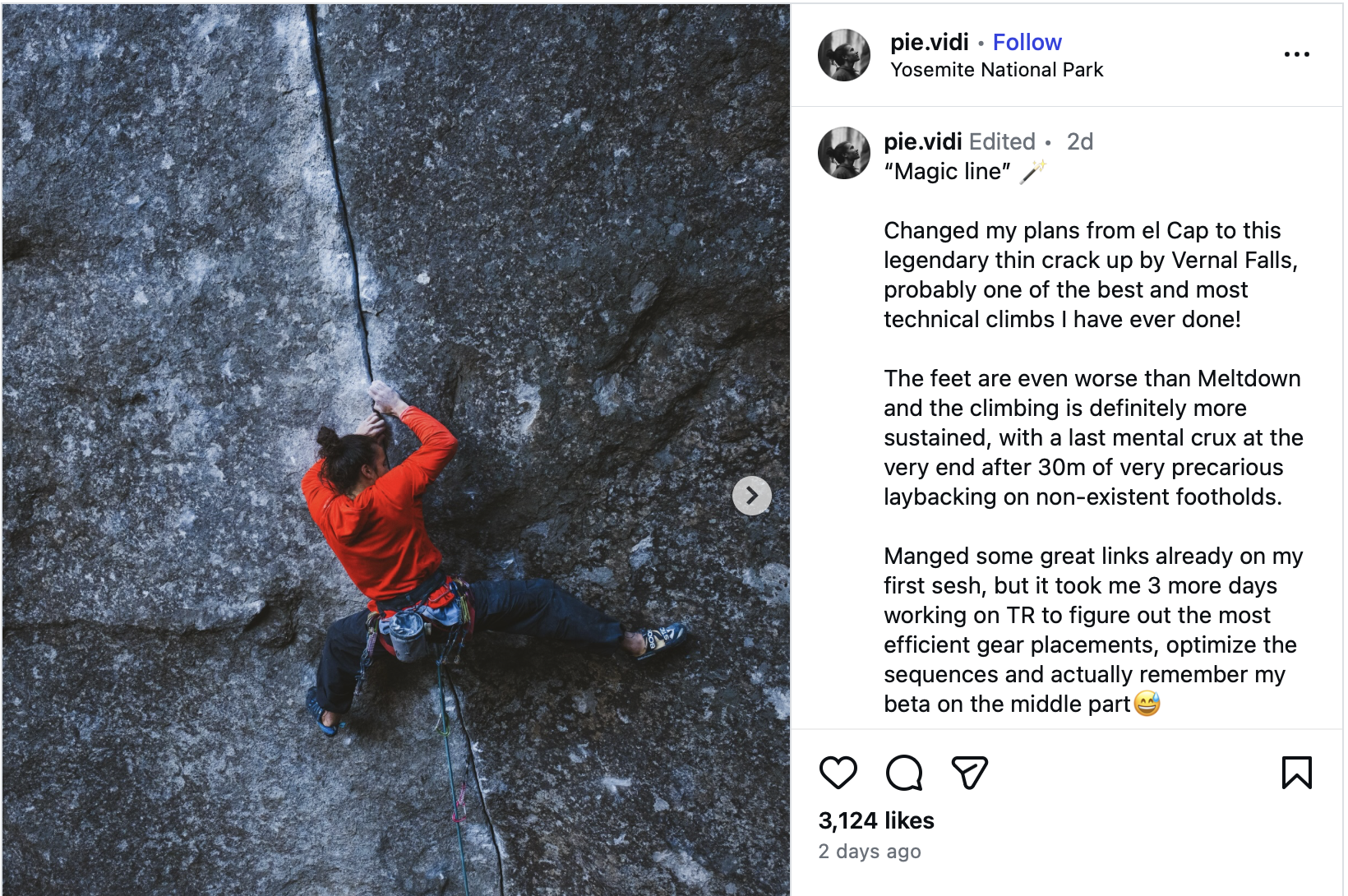
Pietro Vidi sends Magic Line (5.14c) — Dec. 8
Pietro Vidi Climbs Yosemite’s Magic Line 5.14c Trad
The Italian climber told Gripped:
I found the route actually suited me really well – with a hard intro boulder, followed by some very delicate laybacking on really bad smears and little edges, and then a final no-hands rest before the last boulder.
For sure, one of the best, most aesthetic, and most technical lines I’ve ever climbed. Really happy to have climbed both this and Meltdown in the same trip, but I’ll definitely have my focus back on the bigger walls for my next trip to the Valley.
National Park Service announces fee-free day changes — Dec. 6
Aidin Vaziri at the San Francisco Chronicle wrote:
Yosemite loses MLK Day and Juneteenth free entry as Trump adds his birthday.
The National Park Service’s updated 2026 schedule eliminates two of the nation’s most prominent civil rights holidays from the fee-free days…
In their place, the National Park Service has designated June 14, which marks both Flag Day and Trump’s birthday, as a new free-entry date for U.S. residents.
The change comes as the agency raises costs for international visitors and restructures how and when tourists can access public lands.
Founder’s Note — Ken Yager on Royal Robbins
This week, Ken shares his memories of Royal Robbins. I’ve written about Robbins in Men’s Journal and Climbing, noting:
Royal Robbins was one of the world’s most influential and accomplished climbers during the 1950s and 1960s.
In 1971 he wrote Basic Rockcraft, and in 1973, he followed with Advanced Rockcraft — both foundational works advocating for clean climbing. In 2009, he published the first volume of his memoir, My Life: To Be Brave. My Life, Volume Two: Fail Falling appeared in 2010, and My Life, Volume Three: The Golden Age in 2012.
Feature: Laura Pineau on Wet Lycra Nightmare
For this week’s feature, we talked with Laura Pineau, who — belayed by John Kasaian — completed the first female ascent of Wet Lycra Nightmare on Leaning Tower.
Planet Mountain reports:
The route, first ascended by Jim Hewitt and Todd Skinner in 2004, the 9-pitch 8b [5.13d] is known for being the steepest big wall in the USA. The 25-year-old French climber led all pitches.
The pitch-by-pitch details:
The route begins with a 200-foot bolt ladder (A0) with a few moves of aid.
Free climbing starts at Pitch 2, shared briefly with Westie Face to reach Ahwahnee Ledge.
Pitch 2 is 5.12c, Pitch 3 is 5.12d, finishing with either a 5.13a crux (which Pineau chose) or a 5.11+ R variation.
Above Ahwahnee, Wet Lycra Nightmare climbs independently:
5.12d
5.13d
5.13a
5.13a
5.10
Final 5.13a Bombay “Broken Wing” pitch to reach Dano Ledge
An easy slab leads to the summit.
Great work, Laura!
YCA News
Help bring Yosemite’s stories to life! This holiday season, we’re raising $10,000 to upgrade our AV equipment and museum space as we prepare to launch the first-ever storytelling summit. Please consider supporting our efforts and DONATE TODAY.
Chris Van Leuven
Editor, YCA News Brief
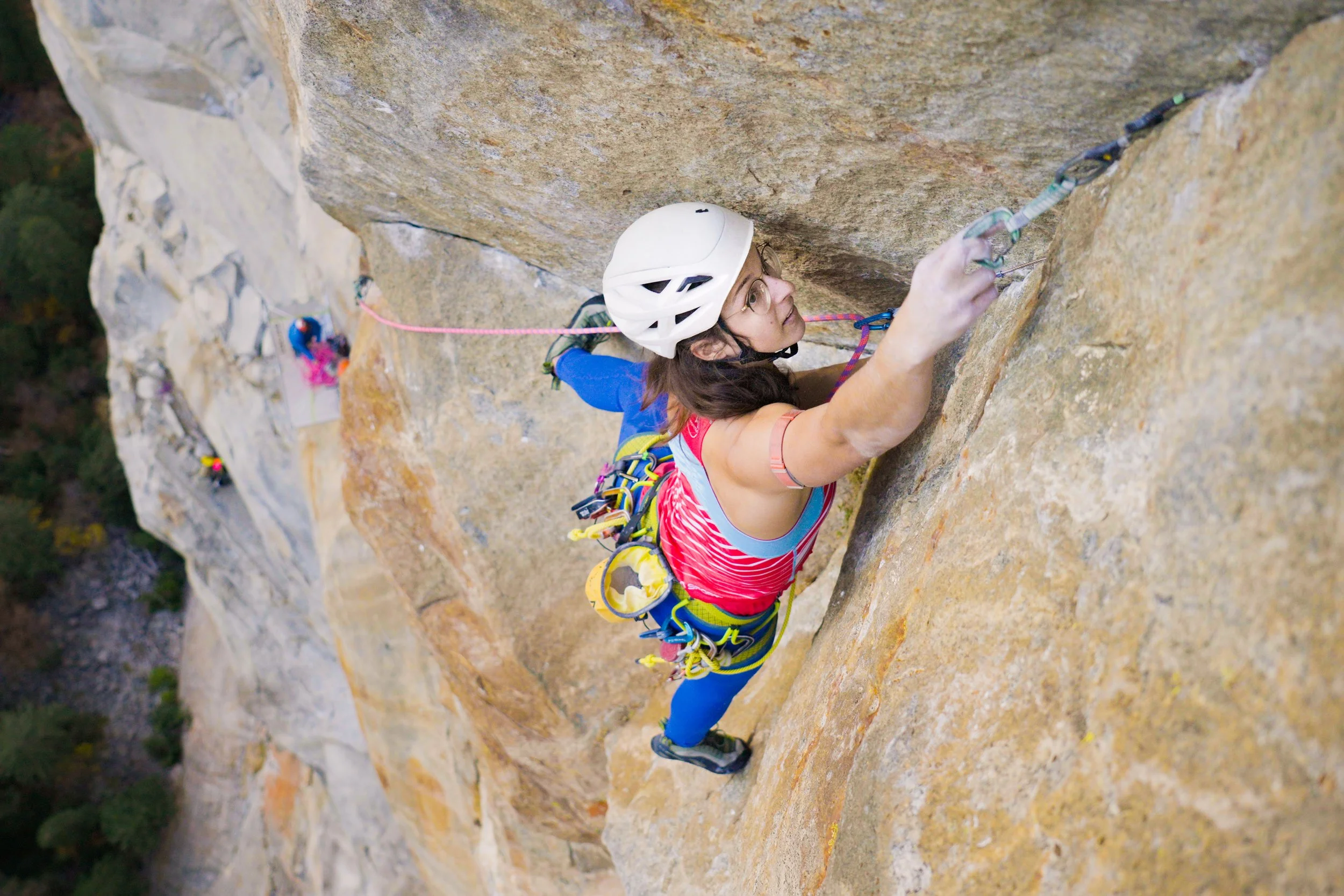
Photo: Logan Calder
Laura Pineau Makes First Female Ascent of Wet Lycra Nightmare on Leaning Tower
Starting on Nov. 25 and topping out two days later on Nov. 27—Thanksgiving Day—Laura Pineau made a free ascent of Wet Lycra Nightmare on Leaning Tower.
After completing the Yosemite Triple Crown last June—speed-climbing The Nose, Regular Northwest Face on Half Dome, and the South Face of Mt. Watkins in under 24 hours with Kate Kelleghan, “I wanted something slower. I wanted to haul bags, sleep on the wall, and really live the vertical camping experience,” Pineau says.
“I wanted this ascent to feel big — not rushed — something I could really immerse myself in.” Because the route bakes in afternoon sun, making the granite slick and the cruxes harder to hold, she climbed each morning and waited for the next day to try higher pitches.
Day 1 (Nov. 25): Warmup to Crux
After ascending the bolt ladder, she fired the first free pitch on her first attempt and sent the next one on her second try.
Reaching Ahwahnee Ledge, she continued up the next pitch, a 12d stemming corner, which she called “my favorite pitch by far.” She fell on her first two attempts, pulled the rope each time, and sent it on her third try. With two hours of shade remaining, she began working the crux.
“I was like, okay, I’m gonna give it a try, maybe do it in a day,” she says of the 5.13d/V9 sequence. But the powerful crux drained her quickly, especially after five attempts in a row.
“Very quickly I realized I was tired — really tired.”
She checked her Coros watch, which was connected to her arm-mounted heart-rate sensor, to learn, “I burned 4,700 calories the first day. That number blew my mind. When I realized how much energy I’d spent, I forced myself to eat two dinners!”
That night on Ahwahnee Ledge, she tried to psych herself up for day two.
“I went into a dark place. I thought, ‘Maybe that was my only chance, and I just blew it. My mental coach, Laure Morlaix, had me practice visualizing moments like this. That helped me reset.”
She listened to ABBA, the Bee Gees, and even the Macarena to take the pressure off.
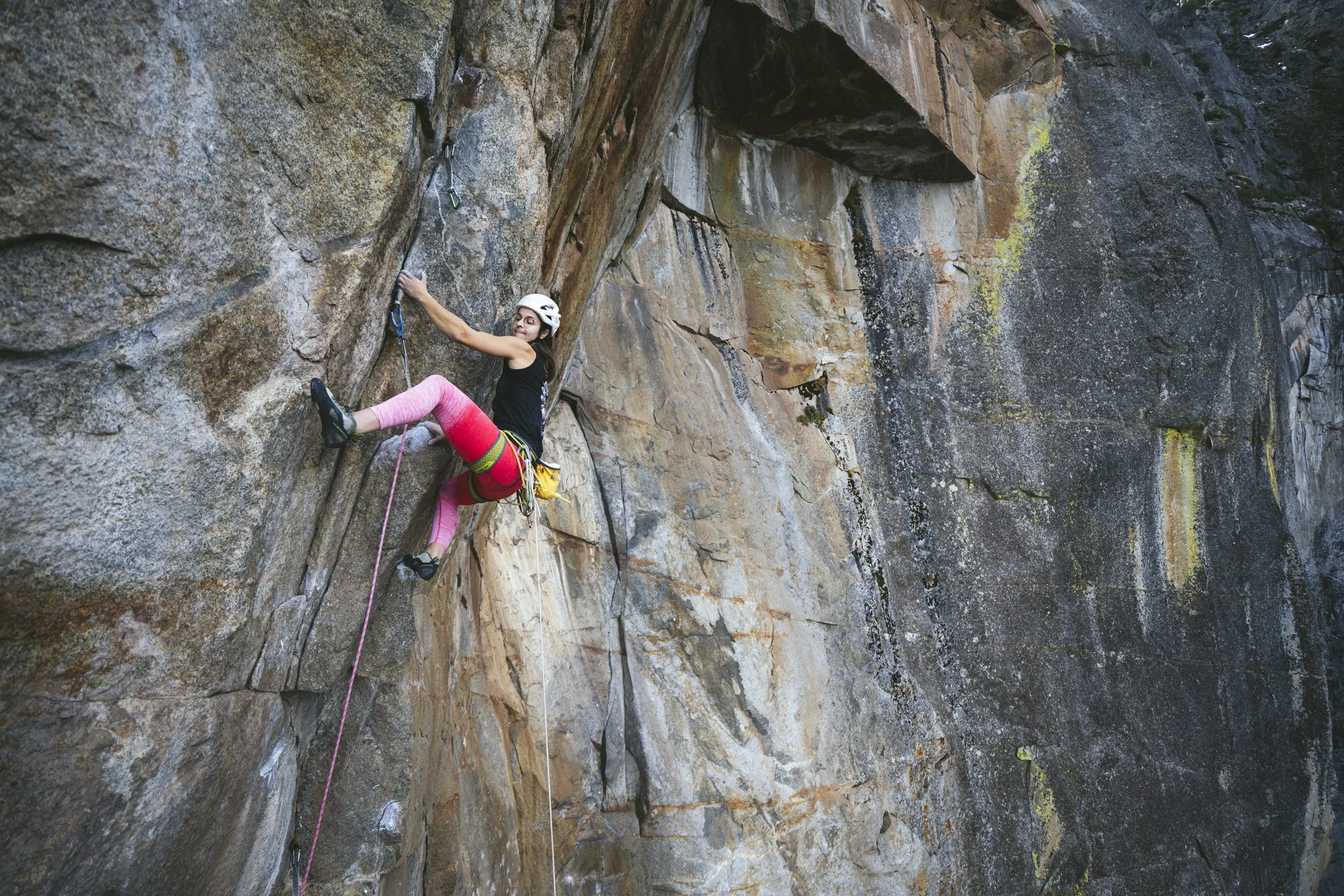
Photo: Miya Tsudome
Day 2 (Nov. 26): Crux → Second Crux
The cool morning conditions were ideal as she began more redpoint attempts.
“I had a heartbreaking low moment on try number 7, on day 2,” she says. “I finally did the mental move, passed the crux, and then slipped three moves later. I’d never fallen there before. I thought maybe that was my only shot.” But on her fifteenth attempt over two days, she stuck the crux sequence.
“I still had to do the final dyno after the crux. I told myself: commit fully — and I did.” Just after sticking the dyno, she yelled: “Oh, it goes!” She didn’t even remember saying it until she saw Miya Tsudome’s footage.
Historical context:
As Jim Thornburg wrote in Climbing about the 2004 first ascent by Jim Hewitt and Todd Skinner, “Todd worked out a wild sequence at the crux that involved pulling over the roof with a right heel hook and his right hand pinching the ‘hideous taco.’ The sheer forces wrecked his back, so he would start each redpoint day by crushing a dozen ibuprofen and sprinkling them on his Wheaties.” Alex Honnold made the second ascent in 2015.
Gripped noted that the free version climbs on or near the aid route Wet Denim Daydream (5.6 A3, Hatton/Thuermer, 1977).
Second Crux — Pitch 5, 12d/13a
Energized after sending the crux, Pineau set off on Pitch 5—a hard corner with tiny finger pods and sustained stemming. “It was a very hard-stemming corner with bad holes for your fingers. I thought: ‘Let’s just give it one more try today,’ and I did it on the first go.”
Day 3 (Nov. 27, Thanksgiving): Send Day
“Day 3 was probably the best climbing day of my life,” she says. “I was in pure climbing flow — no thoughts whatsoever.” She sent pitch 6 (13a) first try, despite being “flash-pumped out of my mind.” The next pitch, a 5.10, “never felt easier.” Then came the notorious final 13a chicken-wing roof/offwidth.
She hesitated on her first go, hung on the rope, and took a 20–30-minute rest.
Because the pitch stays in the shade all day, she felt no time pressure. On her second try, she locked into the chicken-wing crux: “I fought so hard not to let go, I almost wanted to throw up,” she says. But then, stuck in place midway out the enormous roof, “Finally I realized: oh, you need to bump your back up,” which worked.
But the pitch wasn’t in the bag yet. “There’s one more final crimp move at the end — no one knows because it’s never been filmed — but you have to commit to it.”
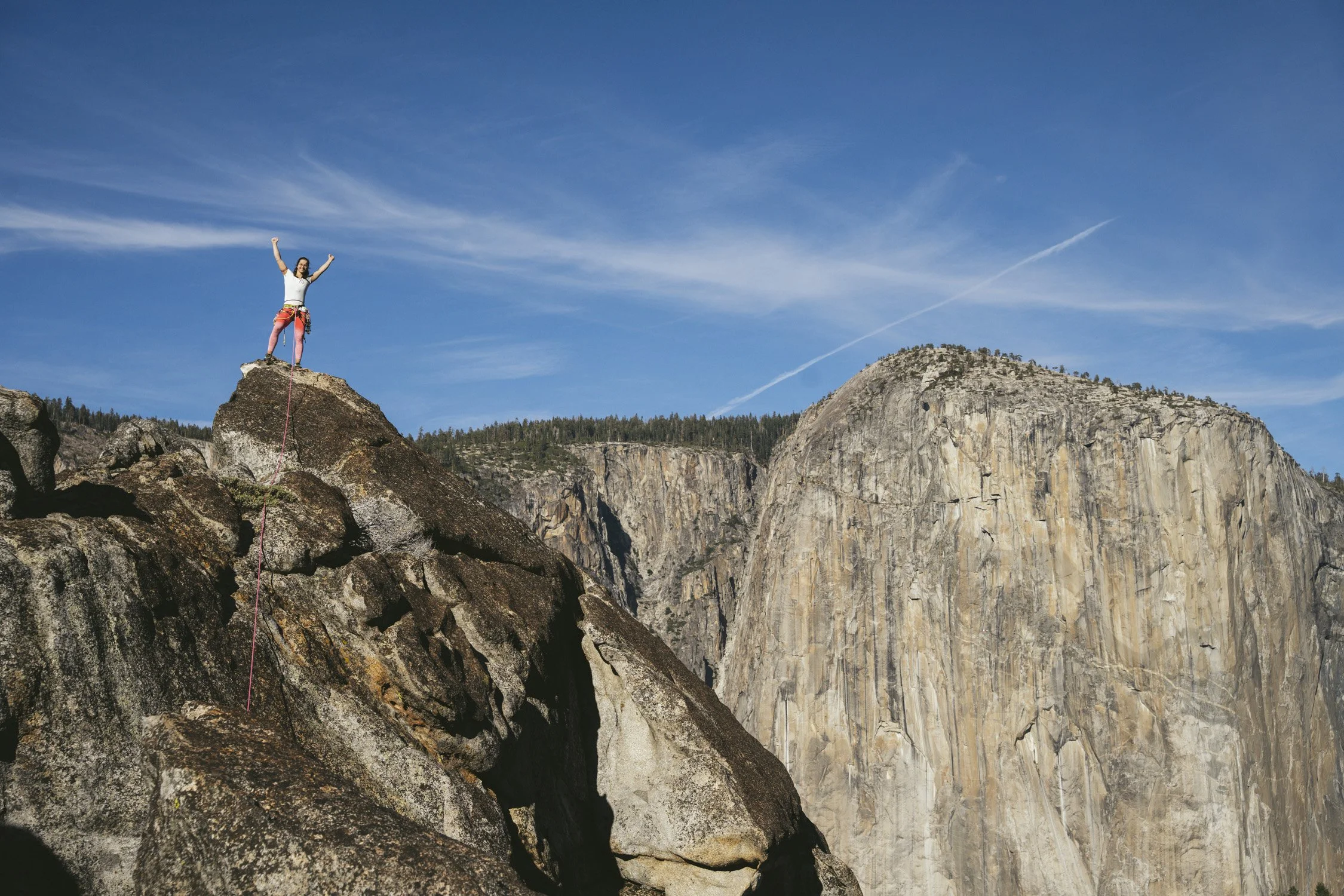
Photo: Miya Tsudome
Summit
“Once I did that crimp move, I knew it was over. I got to enjoy the glorious slab to the top. I gave my friend Miya a big hug — we got to share this special moment.”
Reflecting on the climb, she says, “I thought about all the days I’d worked on this. I felt really proud for not giving up.”
A 15-minute film by Logan Calder documenting Laura’s ascent of Wet Lycra Nightmare is due out this January.
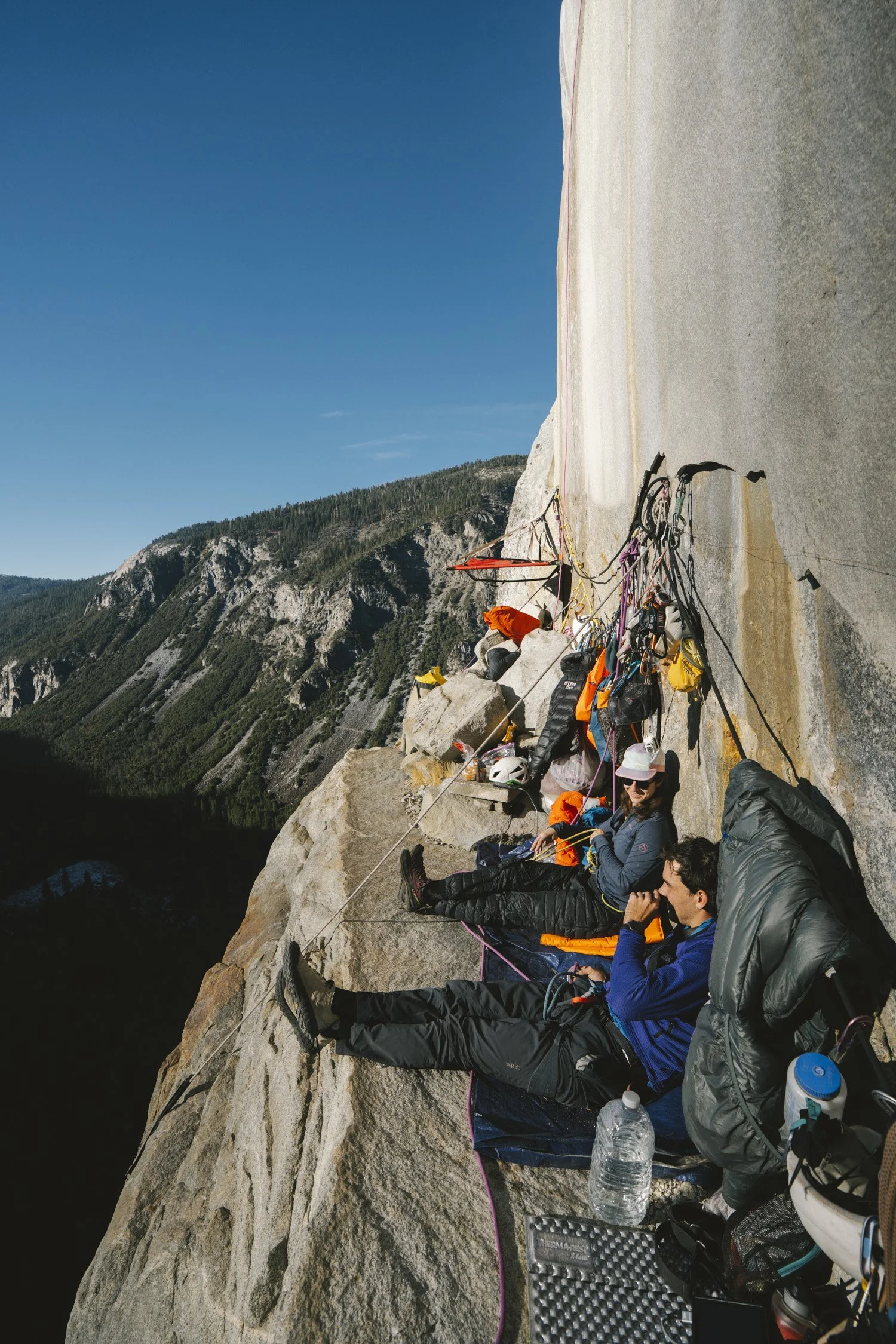
Photo: Miya Tsudome
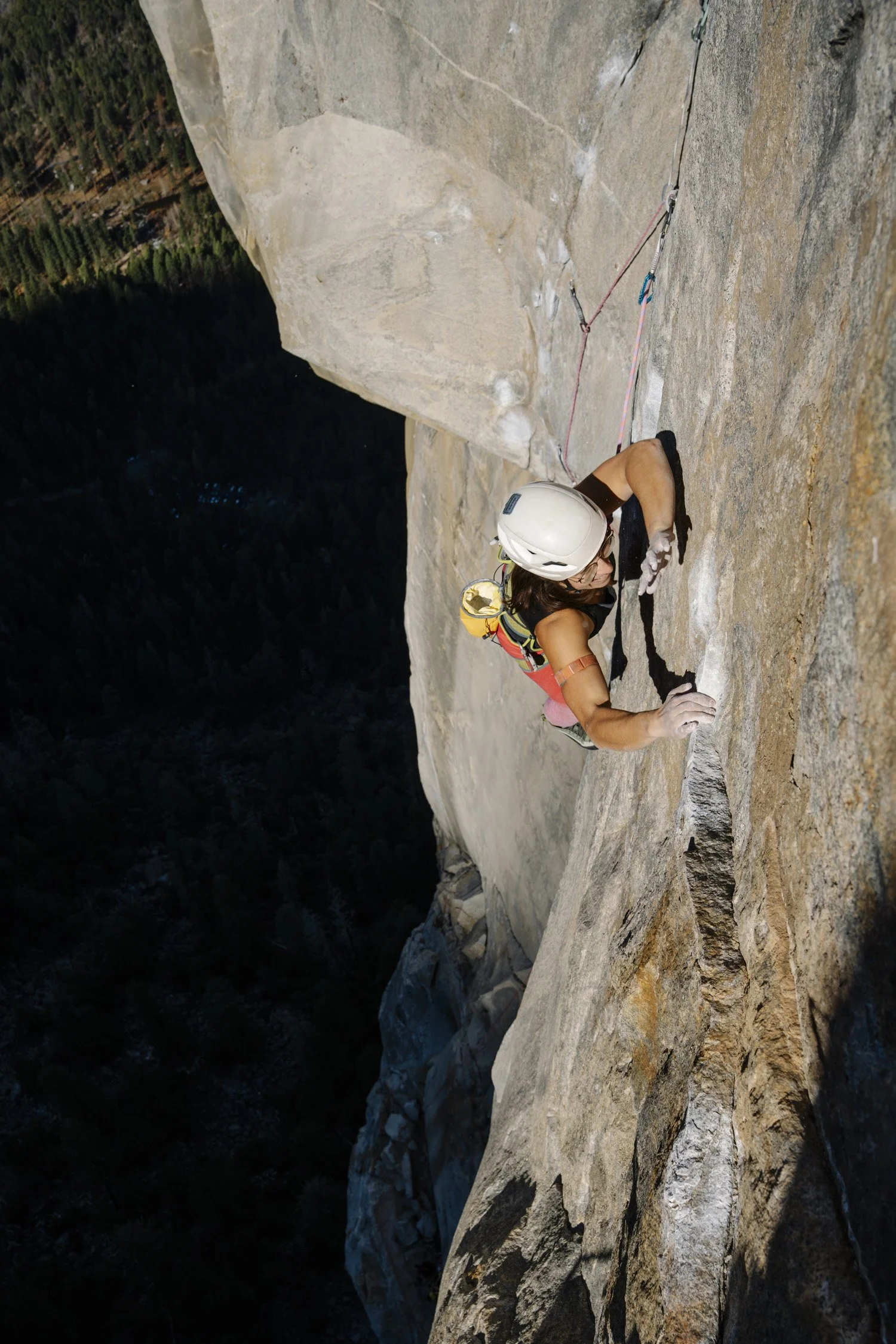
Photo: Miya Tsudome
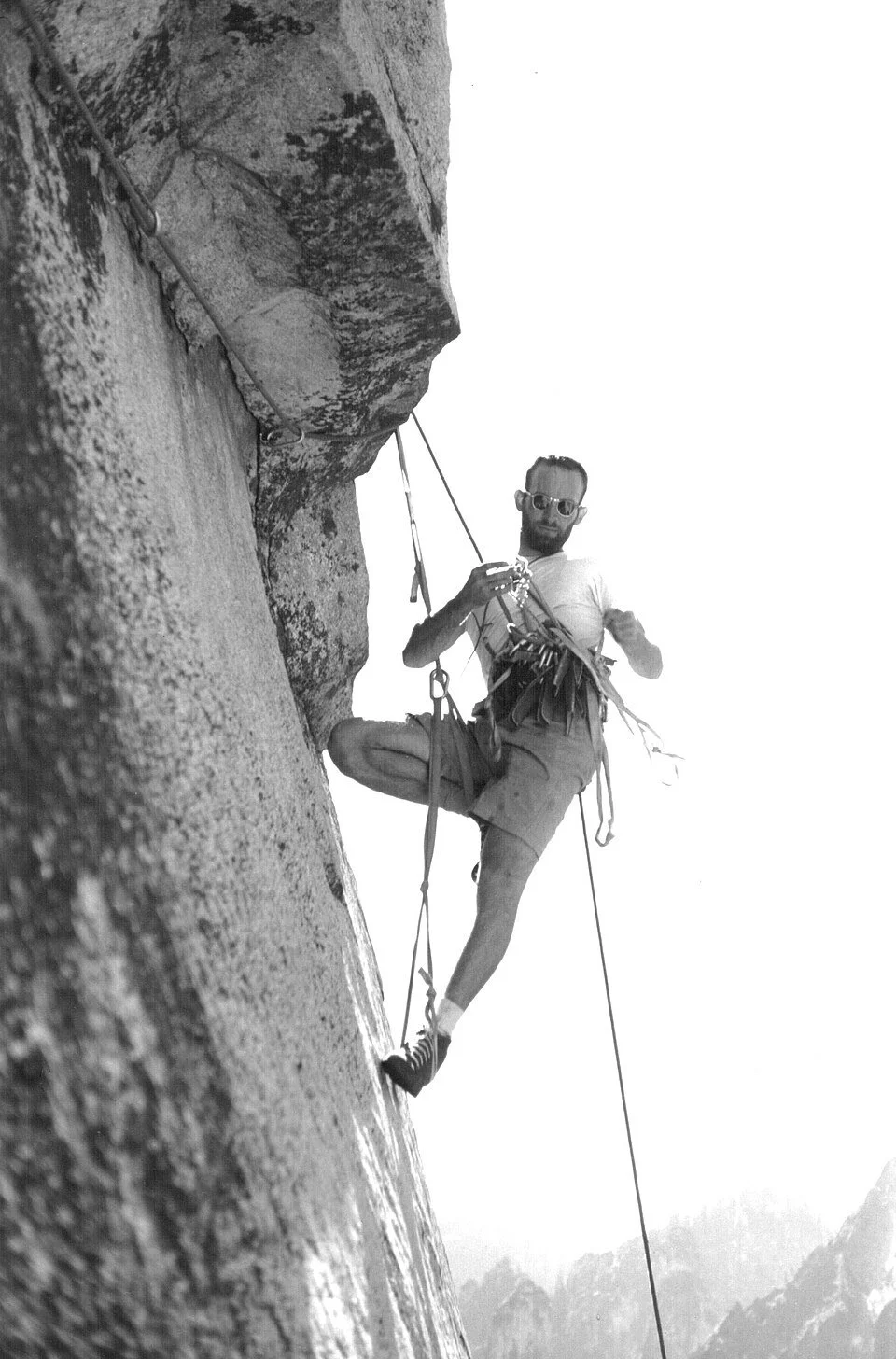
Royal Robbins
Royal Robbins climbs the third pitch of the Salathé Wall, El Capitan, Yosemite National Park, California, first ascent by Robbins, Pratt, and Frost, in 9½ days of September 1961. Photo: Tom Frost/Wiki Commons
Founder’s Log | By Ken Yager
I first met Royal in 1973 when I was 14. I had been climbing for two years and couldn’t get enough of it. I would climb whenever I had the chance, and it didn’t matter who I climbed with, only that they had a driver’s license, a vehicle, and were willing to keep my outings a secret from my parents.
I was climbing with Gene Drake on a hot weekend at Lover's Leap. We completed three routes on Saturday and three more on Sunday. At that time, Gene was by far the most experienced climber I had ever climbed with. He took me on climbs that were well outside my comfort zone, and I learned a lot from him.
That weekend, he brought me up The Line (5.9), my first 5.9 ever. I managed to get through it in a hand-me-down pair of blue Galibier Robbins boots. They weren’t great for free climbing, but they were all I had besides a pair of Hush Puppies I used for smearing on low-angle climbs. We also climbed Corrugation Corner, Haystack, Surrealistic Pillar, and a few others. It was the most productive climbing weekend I’d ever had. I was on cloud nine.
Before heading back to Davis, Gene and I stopped at the river to cool off. We met two other climbers who had the same idea. Back then, climbers were scarce, and there was an unspoken rule: you introduced yourself. You never knew when you might need each other’s help.
I asked what they had climbed that day. One of the men — glasses, white hat — rattled off five climbs and said they might do one more after their swim. I was impressed and suddenly felt a little deflated. I didn’t mention our “piddly” three climbs. These guys were doing twice that.
As we walked back to the car, Gene said, “Do you know who that was?” I told him I didn’t. “That was Royal Robbins.”
Suddenly, I felt like a geek. Royal was considered the top climber of his time. I owned both of his instructional books, Basic Rockcraft and Advanced Rockcraft, and had read them countless times. They were the best how-to climbing books available then — and they’re still worth reading today. I was in awe and wished I’d made a better impression.
Nearly 20 years went by before I saw him again. Mike Corbett and I were gathering historical climbing equipment to create a climbing museum. I called the Royal Robbins office in Modesto and asked if we could interview him. To our surprise, he said yes.
The office was unlike any I’d seen, full of plants, with birds chirping in cages. It felt almost outdoors. Mike and I sat down with Royal and explained what we were trying to do, and he was incredibly supportive. He gave us several years’ worth of Mugelnoos (Royal Robbins’ company newsletter) and a couple of beat-up pitons. He gave us his phone number and told us to call if we had more questions.
A while later, I read an article in Climbing Magazine that listed the birthdays of well-known climbers. It turned out Royal and I shared the same birthday. I started calling him every year on February 3rd. His answer was always the same:
“Thanks, Ken. How did you know?”
And mine was always the same: “It’s easy for me to remember.”
After many years, I finally laughed and confessed: “Royal, I have the same birthday.”
In 2003, I completed the nonprofit paperwork for the Yosemite Climbing Association. Our goal was to build a permanent climbing museum in Yosemite National Park. The problem was that both the National Park Service and the concessionaire weren’t especially fond of the climbing community at the time. It was clear this wasn’t going to be easy.
Royal and Liz generously offered their cabin at Pinecrest for a weekend planning retreat. We invited Jim McCarthy, Linda McMillan, Tom Frost, and Jerry and Sandy Gallwas. We spent two days listing what needed to be done and in what order. Evenings were spent sharing good meals and red wine.
At one point, Royal asked if anyone wanted to play darts. Everyone stayed quiet, so I volunteered. I hadn’t played in a while, but I used to enjoy it. We had a close match, and I ended up winning. Royal immediately challenged me to a game of foosball, not knowing I had spent six months at a school in France and had played a lot with my classmates. Those were the only two games I was good at. I won again, feeling a little guilty. I expected him to challenge me to chess, but he didn’t. Instead, we had another glass of wine and called it a night. It was a wonderful weekend.
In 2011, as part of the Legends of Stone series, I invited Royal and Tom Frost to give a presentation on the Salathé Wall to celebrate the 50th anniversary of their ascent. That night was the first time I noticed Royal’s health declining. Tom helped him up the stairs to the stage. But once they started reminiscing, both men lit up. If Royal paused, Tom filled in. Their affection and respect for one another were clear. It was an extraordinary evening. Tom later told me it would be the last time he presented: “I’ll never be able to do it better than that night.” I’m grateful I recorded it.
The last time I saw Royal was in Modesto at a downtown theater, where his son, Damon, had arranged a screening of Valley Uprising. Royal was in the lobby signing books. He wasn’t his usual self and seemed only partially aware of his surroundings. It was hard to see.
I said hello, and he smiled and told me, “Keep up the good work, Ken.” I told him I would. We chatted for a few moments, and as I walked away, Damon approached and introduced himself — we had never met. He said, “My dad must really like you. He was more coherent with you than he usually is.” It made me happy to hear that, even though it was painful to see Royal’s decline.
When he passed, Liz and I went to look at venues for his memorial. Royal meant so much to so many people. To me, he was a huge influence. I’m convinced that reading his books kept me alive. He taught me that climbing wasn’t just about getting to the top — style mattered. Adventure mattered. Challenge was essential.
I think of Royal every birthday. I miss him. He started out as a hero, and then we became friends.
I feel like I’m a small part of his family. Liz now serves on the YCA board, and sometimes I get birthday calls from his daughter Tamara.
This life has gone full circle.
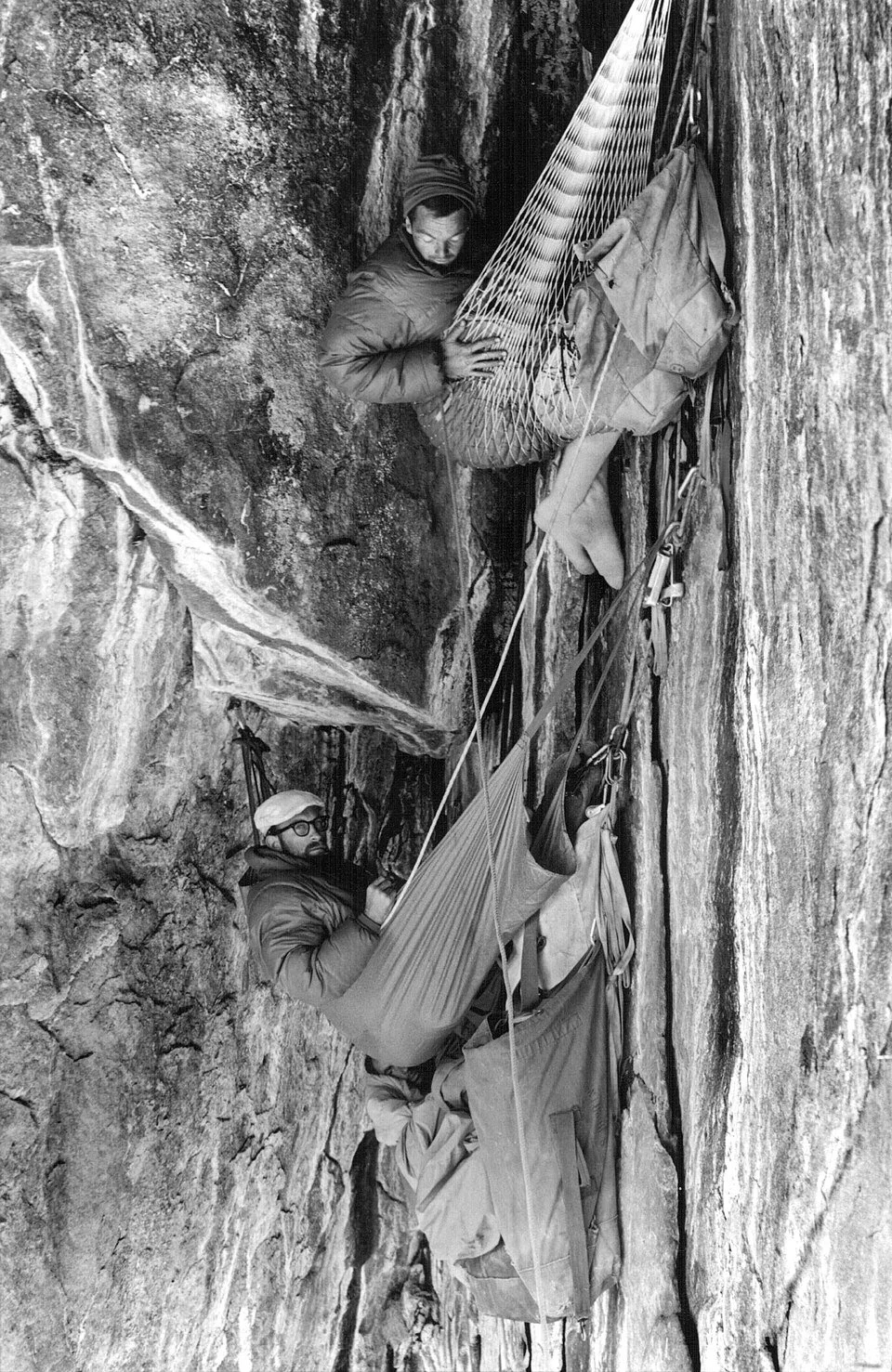
Black Cave bivouac, Tom Frost, Royal Robbins, and Yvon Chouinard, North America Wall. Photo: Tom Frost
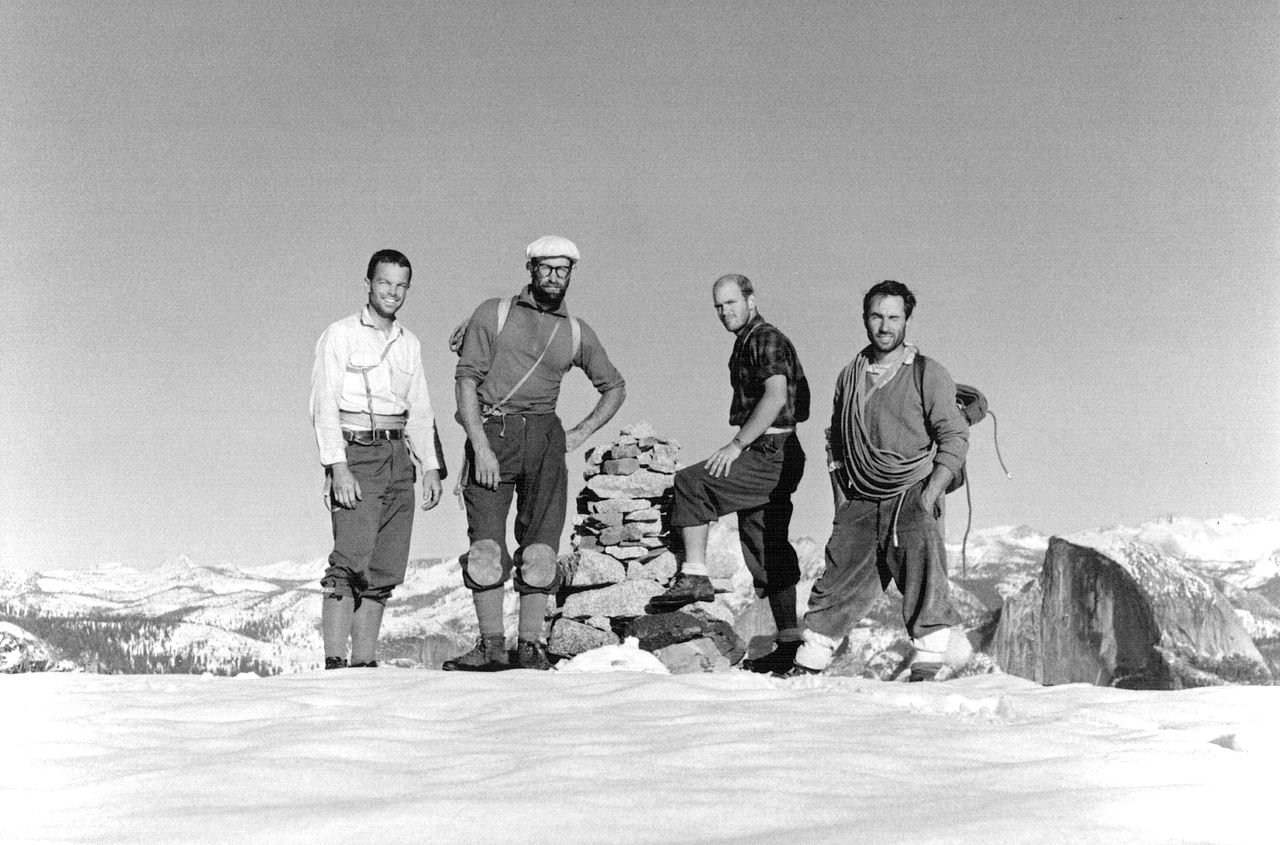
(L to R): Tom Frost, Royal Robbins, Chuck Pratt, and Yvon Chouinard on the summit of El Capitan on 30 October 1964, following the ten-day ascent of the North America Wall, Yosemite. Photo: Tom Frost/Wiki Commons
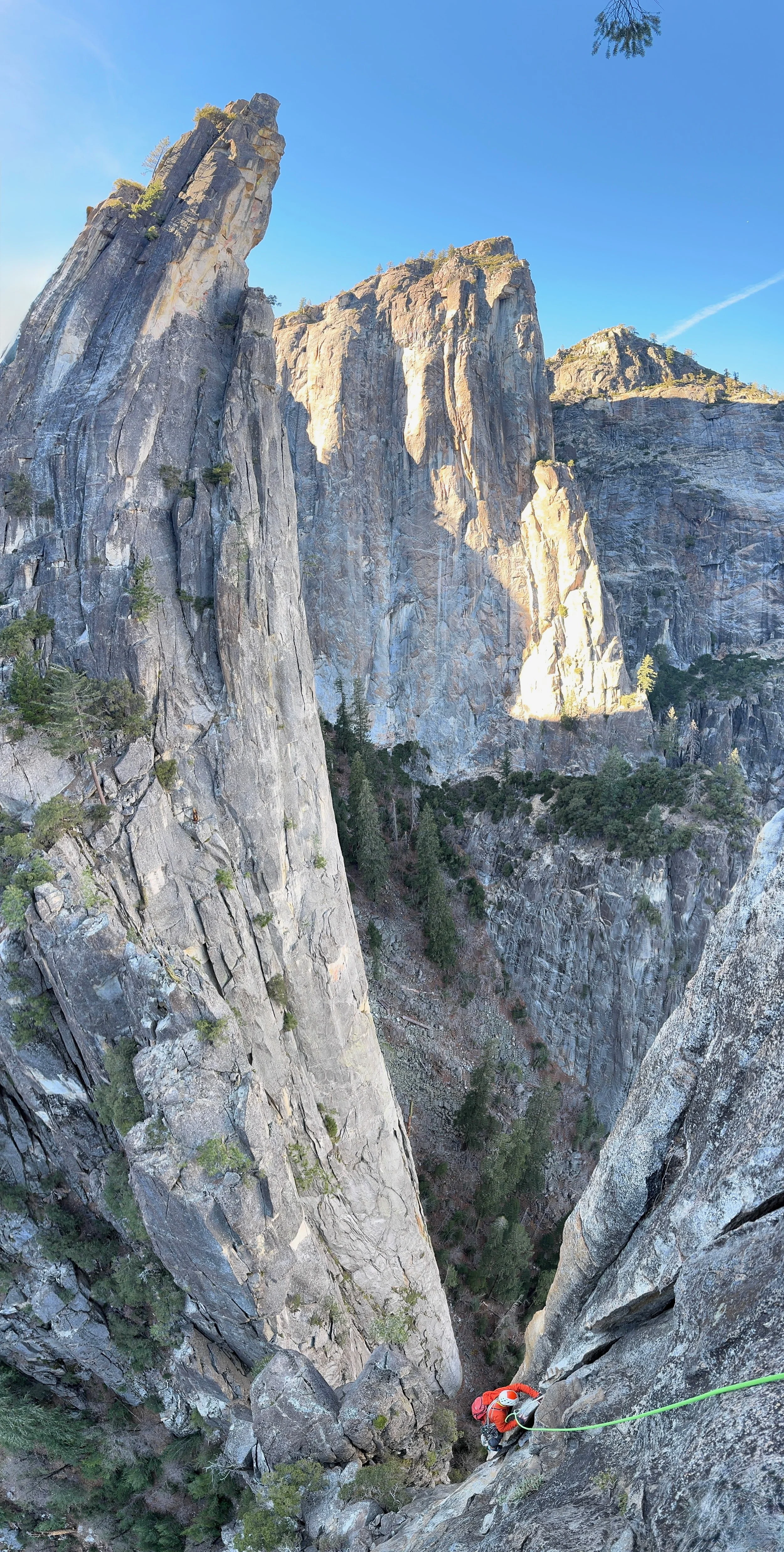
PHOTO OF
THE WEEK
Chris Van Leuven on South By Southwest, Lower Cathedral Spire. Photo: John Scott

Stay up to date on the latest climbing closures in effect!
Get your permits, do your research, and hit the wall!
Visit the Yosemite Climbing Museum!
The Yosemite Climbing Museum chronicles the evolution of modern day rock climbing from 1869 to the present.
The YCA News Brief is made possible by a generous grant, provided by Sundari Krishnamurthy and her husband, Jerry Gallwas