
Your window into the stories, history, and ongoing work to preserve Yosemite’s climbing legacy.
A Note from the Editor
Hello YCA Community,
Autumn in Yosemite never transitions quietly, and this past week delivered both historic big wall achievement and an abrupt shift in the seasons.
Before the weather turned, Connor Herson pulled off an extraordinary single-day El Cap free double (becoming the second person to ever have done so, after Tommy Caldwell). Supported by Tommy Caldwell and Alex Honnold (who had just sent the Prophet himself in a 28 hour push), Herson freed The Prophet (5.13d/5.14a R) in a single morning—flashing its notorious A1 Beauty crux pitch and nearly flashing the entire route besides a single foot slip on the exit pitch. Feeling disappointed at the near flash on top, Honnold and Caldwell goaded him into linking directly into a free ascent of Freerider (5.13a) within the same 24-hour push.
Just as quickly as the fall sending window peaked, winter made its early arrival. Recent storm cycles have brought snow all the way down to the Valley floor, with more wet weather on the horizon. While the fresh dusting has transformed the granite walls and temporarily halted climbing for the moment, it serves as a welcome reminder of the Valley’s dramatic seasonal rhythms—and gives everyone a brief excuse to rest and catch up with the community.
With outdoor climbing on pause, this week’s feature shifts focus from the vertical walls to the wildlife that shares this landscape with us. I spoke with Silvia Stambaugh about her work with Yosemite’s bear team and the ongoing effort to keep Yosemite’s bears wild. From understanding seasonal bear behavior to the critical role climbers, campers, and visitors play in proper food storage, her perspective highlights how everyday habits directly protect the Park's black bear population—especially during late-fall foraging seasons before hibernation.
Whether you are waiting out the storms in the Valley or following along from afar, thank you for being part of this community and helping steward the place we love.
Miles Fullman
Editor, YCA News Brief
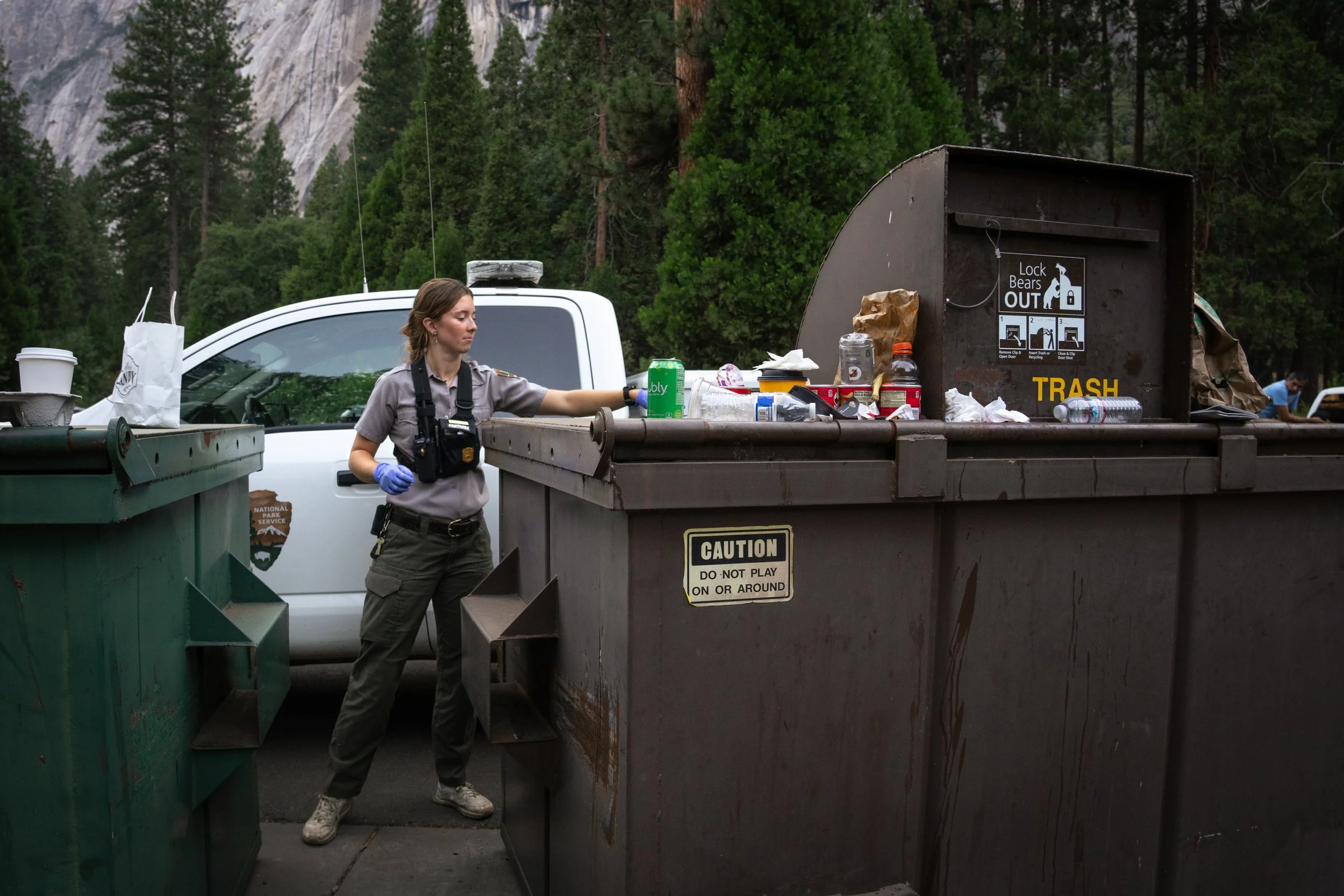
Silvia Stambaugh ensures food and waste gets stored and disposed of properly to protect bears from becoming habituated to human food. Photo: Jessica Hadley
Keeping Bears Wild: Inside Yosemite’s Wildlife Management Team with Silvia Stambaugh
Black bears are an iconic and essential part of Yosemite National Park. Getting to see them foraging in the forest or bumping into one on the trail while alone in the backcountry can be a magical and impactful wild experience.
Behind the scenes, a dedicated crew works around the clock to keep those bears wild—and to keep both people and wildlife out of harm’s way. Among them is Silvia Stambaugh, a member of the Yosemite Wildlife Management bear team whose path to the Sierra began with climbing, a summer camp, and a deep pull toward wild places.
From Climbing Dreams to the Bear Crew
When Silvia began climbing in 2021, Yosemite felt like a distant dream of big granite walls and lofty ambitions. The following summer, she took a job at a summer camp near the park and felt an immediate pull toward the Sierra Nevada.
"I had never felt so connected to a place before," Silvia says. "The Sierra Nevada felt magical, welcoming, and inspiring."
Once she knew she wanted to spend serious time in the park, she set her sights on joining Yosemite’s Wildlife Management program. Ahead of her final year of undergraduate study, she spotted the internship posting and knew right away what it meant. To build her resume for the next application cycle, she spent a summer working with mountain lions in Nevada and stayed in touch with bear crew supervisors throughout the year. By the time she applied again in 2025, she had her degree and her first large carnivore role under her belt.
"When I was offered the position I knew it was an incredible opportunity that would change my life and career in all the ways I was hoping for," she says. "I can happily say all of these hopes were exceeded."
A Century of Shifting Approaches
Today’s bear team operates within a dramatic historical shift in how Yosemite manages human-wildlife interactions. In the 1920s and 1930s, the park maintained "bear pits" as visitor attractions, feeding bears trash in an effort to draw them away from campgrounds and lodging. Instead, the practice food-conditioned and habituated bears on a broad scale, leading to widespread conflict and the deaths of many bears for visitor safety.
The Yosemite Human-Wildlife Management program launched in 1975 with a clear mandate: keep bears wild. Since a record high of 1,584 human-bear incidents in 1998, incidents have dropped by 98 percent—down to an average of fewer than 100 per year—through bear-resistant food storage, public education, negative conditioning, and capturing, tagging, and collaring bears that repeatedly enter developed areas.
"Bear management in Yosemite has changed quite a bit throughout the park’s history and it feels very rewarding to participate in a program that has been so successful in its effort to reshape the human-bear dynamic in this park to help keep bears wild," Silvia notes.
Behind the Scenes on the Bear Team
Roughly 300 to 500 bears inhabit Yosemite at any given time, though numbers and perceived activity shift across the seasons as bears follow spring green-up, berries moving into the high country, and fall acorn drops. A mild winter and strong fall acorn crop can also influence cub and yearling survival, raising visible activity.
Daily work for the bear team spans early morning checks of overnight incidents, Save-A-Bear hotline calls, radio telemetry tracking, food-storage patrols, visitor education, and late-night sweeps to secure food. When moving bears out of developed areas, the crew relies on negative conditioning techniques such as, voice, yelling and chasing, paintball guns, starter pistols, and less-than-lethal shotgun rounds—choosing tools based on positioning, timing, and an individual bear’s history.
"By the end of each season, our captures, ability to locate and negatively condition bears into safer spaces, and make effective visitor contacts highlights our synchronicity," Silvia says.
Not every part of the job looks like a field operation. Much of the work happens quietly out of view, from clearing roadkill so it does not draw scavengers near traffic to fixing clogged dumpsters.
"My least favorite part of the job is finding and fixing clogged dumpsters," she admits. "This has included clearing soiled bedding clogging a dumpster at 3am, which we fixed, and I think speaks to the level of dedication that myself and the team have to keeping bears wild."
Her favorite part brings her right back to the field alongside a tight-knit crew that has largely returned across seasons.
"My favorite part of the job is working with the team doing telemetry to locate and move bears out of development," Silvia says. "It feels almost as if you and the bear are doing a dance, that although can be chaotic, is ultimately doing good for that bear’s continued survival in the park."
Why Keeping Bears Wild Is Everyone’s Job
Bears in Yosemite face natural pressures—disease, weather, conflict among themselves—alongside human-driven threats like vehicle collisions, habituation, and food conditioning. When collisions occur, the Wildlife Management program places yellow "Speeding Kills Bears" signs at the site as part of the "Red Bear, Dead Bear" effort to encourage slower, more attentive driving.
Equally critical is preventing habituation—when a bear grows comfortable around people without a negative stimulus—and food conditioning, where a bear learns to associate people, gear, or development with calories. Even a single pack left unattended at the base of a climb with food inside can teach a bear to investigate packs for a reward. When habituation and food conditioning overlap, bears can approach people for food, creating dangerous encounters that often end with the bear being killed to protect public safety.
"Single food rewards and any time near a bear is shaping their future behavior," Silvia says. "Our goal is to allow Yosemite’s bears to live full, wild lives—while accommodating for the park’s visitation. The way to balance this situation is through people’s compliance and care."
For climbers, hikers, and visitors alike, the takeaway is straightforward: pack out food and scented items, use bear lockers and canisters properly, give wildlife space, and don’t linger for photos.
"Although climbing was my original draw to this place, it has been the people and work that have made this place home and kept me returning," Silvia says. "Wildlife, vegetation, climate, and all natural systems are interconnected, so in order for places like Yosemite to continue to hold their magic, each piece of the puzzle needs to be cared for."
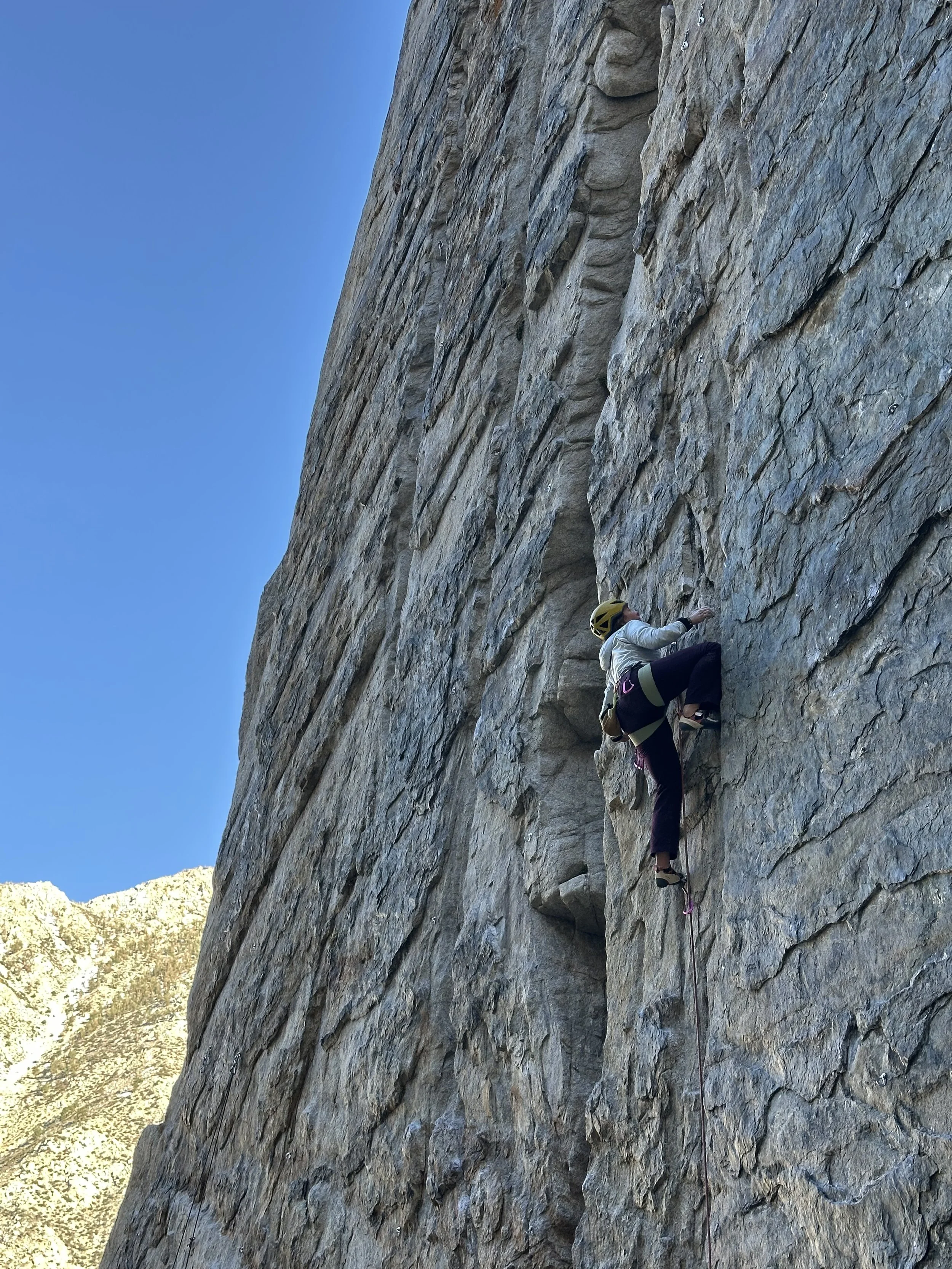
Silvia Stambaugh climbing on Stigmata in Pine Creek, Bishop. Photo: Jake Dalton
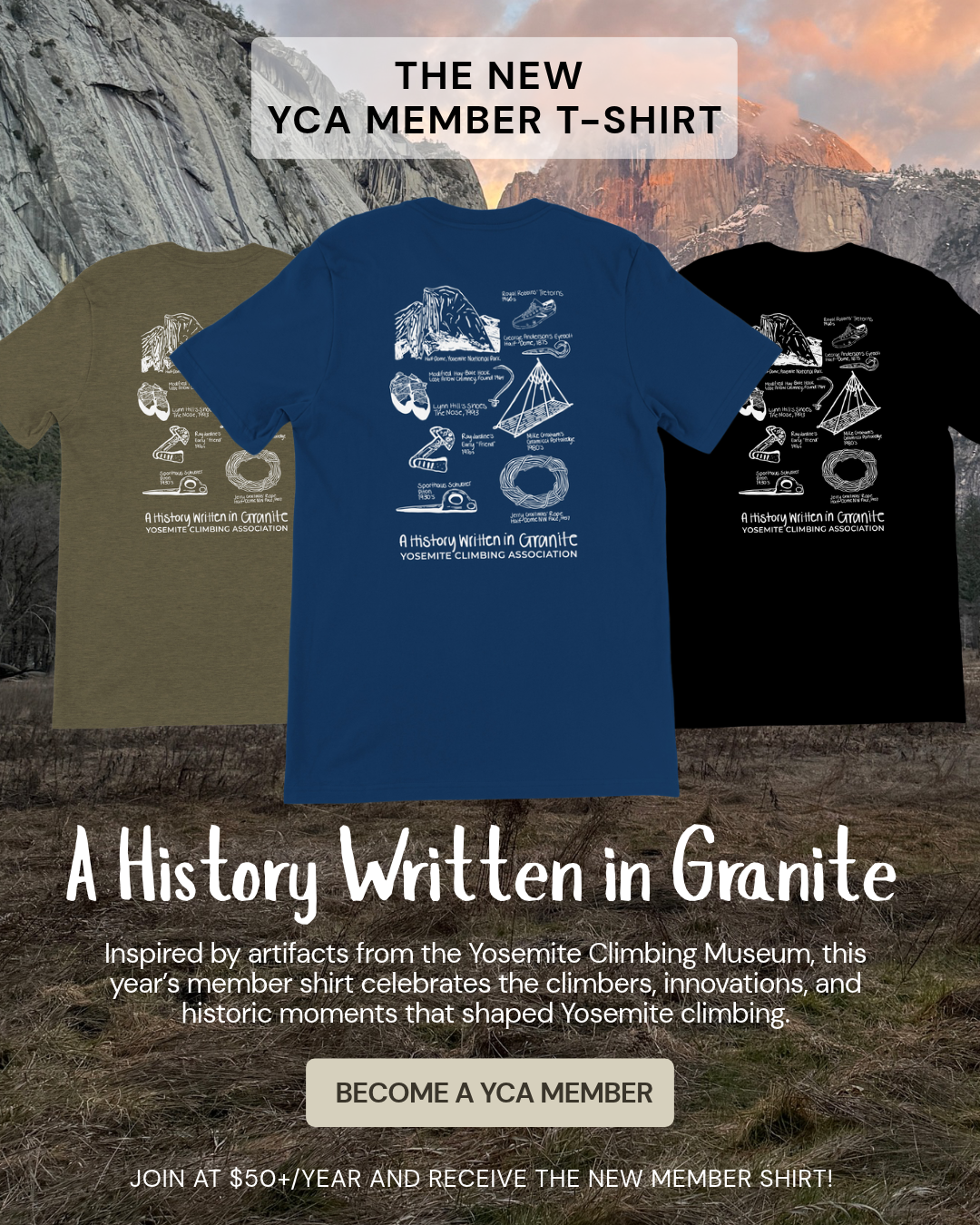
Join at the $50 level or above and receive our new member t-shirt!
While our November Membership Drive has come to a close, our new member t-shirt is still available to new YCA members.
Join the YCA at the $50 annual membership level or higher and receive our new member t-shirt as a thank-you for supporting Yosemite climbing history, stewardship, and community. Available in black, blue, and heather olive.
Want to gift a YCA membership?
Please complete the online checkout process on behalf of your giftee. Enter their name, address, and email / contact information when completing the online form.
They will be enrolled in all member benefits, email newsletters, and any member swag will be sent directly to their doorstep! Want to make it a surprise? Email us at: membership@yosemiteclimbing.org
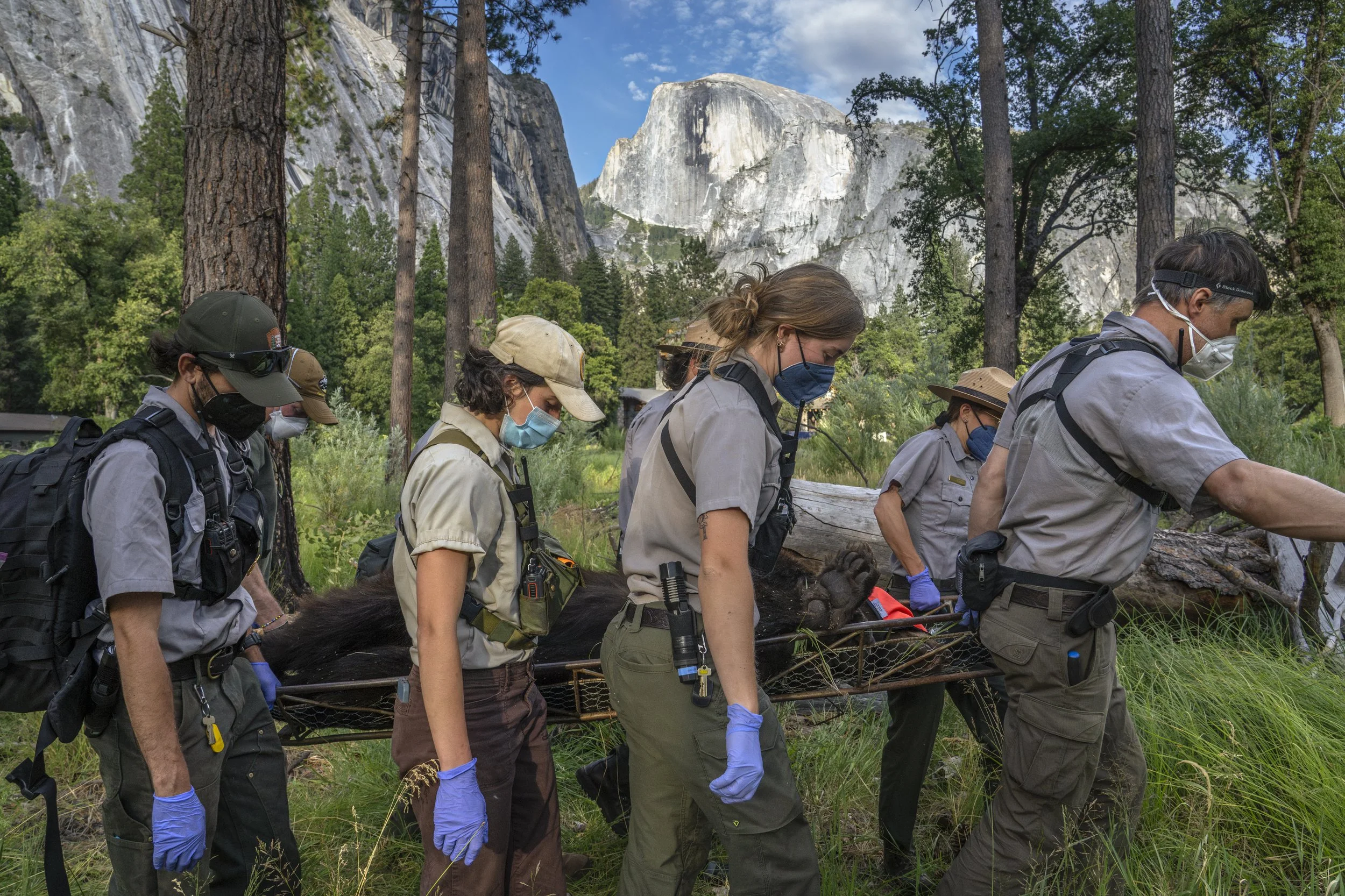
PHOTO OF
THE WEEK
Park Biologists carefully move a sedated bear to a safe location for data collection, collaring, and tagging before release and continued monitoring. Photo: Jessica Hadley

Stay up to date on the latest climbing closures in effect!
Get your permits, do your research, and hit the wall!
Visit the Yosemite Climbing Museum!
The Yosemite Climbing Museum chronicles the evolution of modern day rock climbing from 1869 to the present.
The YCA News Brief is made possible by a generous grant, provided by Sundari Krishnamurthy and her husband, Jerry Gallwas